
Data Enrichment Tools in 2026: 8 Compared for RevOps and GTM Teams
Data enrichment tools add missing fields, such as job title, company size, email or phone number, to the contact and company records in your CRM. The right one depends on the field you are missing: contact-data tools like Apollo, ZoomInfo and Cognism fill emails and phones, Clay chains many providers, and Datamagnet returns current role and company data from a profile URL.
Disclosure: Datamagnet publishes this article and is one of the tools ranked. Every price and vendor fact links to the vendor's own pricing page or docs, checked between July and November 2026.
For RevOps teams, the choice is less about database size and more about fit: which identifiers you hold, how the tool writes back to your CRM, how fresh each answer is, and whether you pay per seat or per record. The table compares eight tools on those terms.
| # | Tool | Best for | Data types | Starting price | Free tier |
|---|---|---|---|---|---|
| 1 | Datamagnet | Current role and company data from profile or company page URLs, by API | People/role, firmographic, funding rounds, posts. No emails or phones | $39/mo for 1,000 credits; pay-as-you-go from $0.02/credit | 10 credits, no card |
| 2 | Clay | Waterfall enrichment and GTM workflows | Contact, firmographic, people and signals, through 150+ data partners | Launch from $185/mo | 500 actions + 100 data credits/mo |
| 3 | Apollo.io | Contact data plus sequencing on a budget | Contact, firmographic, people, buying intent | Basic $49/user/mo, billed annually | 900 credits/yr |
| 4 | ZoomInfo | Enterprise contact coverage and org charts | Contact, firmographic, org charts, intent | Platform by custom quote; GTM AI API $0.38/data credit at the $1,000 tier | ZoomInfo Lite 10 credits/mo; GTM AI 1,000 data + 1,000 AI credits |
| 5 | Cognism | Phone-verified mobiles and European coverage | Contact, firmographic, technographic, intent | CRM Enrichment from $12,000/yr; prospecting plans by quote | None published |
| 6 | HubSpot data enrichment (formerly Clearbit) | Teams already running HubSpot | Contact and company properties such as job title, industry and company size | Included with HubSpot Starter and higher | Needs a paid Starter edition or higher |
| 7 | People Data Labs | Developer API and bulk person/company datasets | Person and company records, emails, phones | Pro from $98/mo for 350 person records | 100 records/mo, contact data obfuscated |
| 8 | Coresignal | Bulk datasets, history and job postings | Employee, company and job-posting records | Mini $49/mo for 2,500 credits | 2,000 credits |
How we ranked them. We make Datamagnet, so weigh its placement accordingly. It ranks first on price per profile and on freshness, and last on contact fields: it returns no emails or phone numbers, so if those are what you need, start at #2. The rest are ordered by our judgment of how well each fits a RevOps team enriching CRM records: field coverage, CRM write-back, pricing model and published prices taken together. Prices are each vendor's published entry point; volume quotes will differ.
What Is a Data Enrichment Tool?
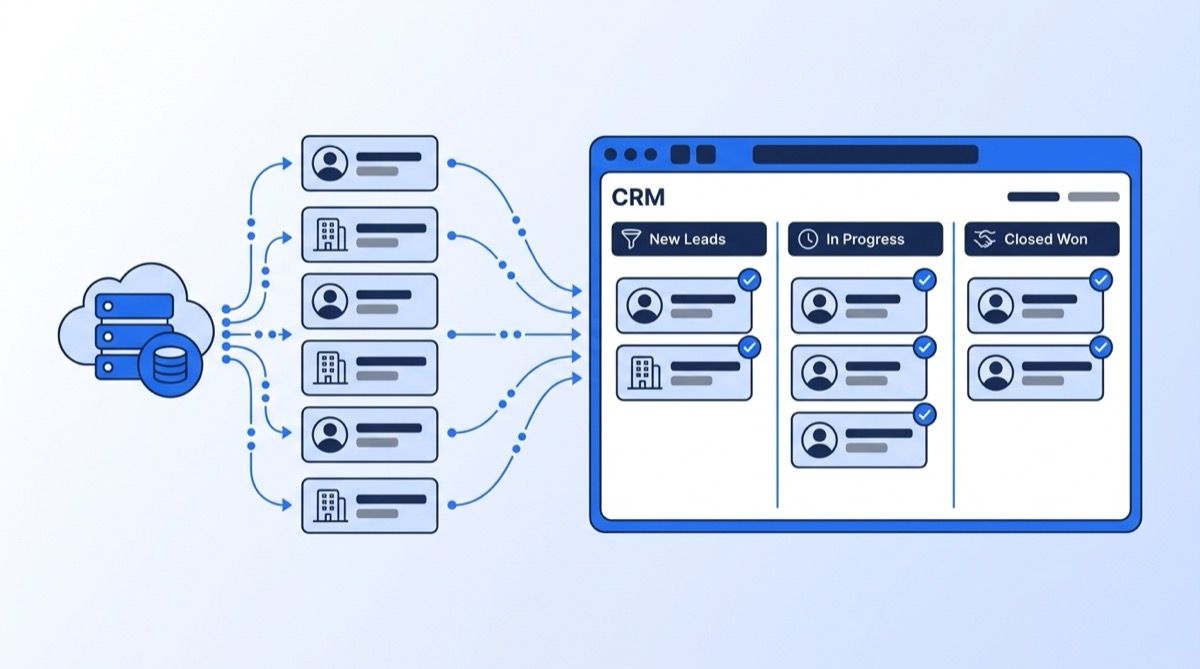
A data enrichment tool takes an identifier you already hold, such as a work email, a company domain or a profile URL, matches it to a record, and returns the fields you are missing. Some hold their own database, some read sources at request time, and some orchestrate other providers. All write results back to your CRM or warehouse.
The fields fall into five types: firmographic (company facts), people and role (title, employer, history), contact (email and phone), technographic (software in use) and intent or signals (research activity and changes such as job moves). No tool on this list covers all five equally well, which is why the "Data types" column above matters more than any headline database size. Our guide to what B2B data enrichment is explains each type, the match step and batch versus real-time delivery in more depth.
Tools also differ in how they are delivered:
- Platforms with CRM apps (Apollo, ZoomInfo, Cognism, HubSpot) enrich records inside the CRM with little or no code.
- Workflow tools (Clay) chain many providers and let you build enrichment logic in tables.
- APIs and datasets (Datamagnet, People Data Labs, Coresignal) return JSON or files that your own code or workflow tool writes back.
What Should RevOps Teams Look For in a Data Enrichment Tool?
RevOps teams should judge enrichment tools on six things: the field types they return, the identifiers they accept, how cleanly they write back to the CRM, how fresh each answer is, how they bill, and what happens when a lookup finds nothing. Database size matters less than fit.
That framing matters because RevOps budgets are under scrutiny. In a Wakefield Research survey of 400 U.S. RevOps and executive decision-makers commissioned by Salesloft, 89% said the function lacks clearly defined strategic goals, and 87% plan increased RevOps investment (Salesloft/Wakefield Research, 2025). An enrichment tool is easier to defend when it maps to one defined gap.
- Field coverage. Contact data, firmographics, people data, technographics and intent rarely come from one vendor at equal quality. Name the field you are missing first.
- Accepted identifiers. Email, domain, profile URL or name plus company. A tool that cannot take what you hold will not match it.
- CRM write-back and dedup. Native Salesforce or HubSpot apps with field-level mapping reduce build work. Decide whether enrichment may overwrite a value a rep corrected, or only fill empty fields.
- Freshness. Stored databases return a record collected earlier. Ask how often records refresh and whether you can request a fresh read.
- Pricing model. Per seat scales with headcount; credits scale with records enriched. Check whether credits expire.
- Billing on misses. Some tools charge nothing when a lookup returns no result; others charge a minimum per request.
The 8 Data Enrichment Tools Compared
Each entry below covers what the tool is, the data it returns, its published pricing and the main reason it might not fit. Clay, Apollo, ZoomInfo, Cognism and People Data Labs return emails and phones. Datamagnet does not, and Coresignal is built for profile, company and dataset records rather than contact data. HubSpot enriches records inside HubSpot.
1. Datamagnet: Current Role and Company Data by API
Datamagnet is a people and company data API. You send a public profile URL and get the person's current title, employer, work history, education and skills as JSON for 1 credit; a company page URL returns the company profile for 1 credit. You are charged only on successful requests.
Freshness is something you choose per request. With use_cache: "never", the API reads the profile at the moment you call. By default it may return a stored copy, which is faster; for companies that copy can be up to 30 days old. Other endpoints cover funding rounds by domain (5 credits) and post engagement, activity and search pages (10 credits). Job-change and engagement webhooks come through the Signal API, which is sales-led, so you book a demo. An MCP server at https://mcp.datamagnet.co/mcp lets Claude, ChatGPT, Cursor and other assistants call the same data.
Plans are $39 for 1,000 credits, $99 for 10,000 and $199 for 25,000, with pay-as-you-go from $0.02 per credit and 10 free credits with no card (Datamagnet pricing).
Where it falls short: no email or phone lookup, no email verification, no waterfall across vendors, no technographics and no revenue estimates. Your own code or workflow tool writes results to the CRM. Teams that need contact data pair it with one of the tools below. See the people enrichment API and company enrichment API, or go straight to the docs: person endpoint, company endpoint, webhooks, credits and the API quickstart.
2. Clay: Best for Waterfall Enrichment
Clay is a GTM workspace that does not hold its own data. It runs enrichment across a marketplace of 150+ data partners in spreadsheet-style tables, so if the first provider misses an email or phone number, the next one tries. That waterfall is the main reason teams buy it, and it is the strongest option here for raising fill rate on contact fields.
Pricing uses two currencies: Data Credits buy data and Actions meter platform work. Clay's pricing page lists a free plan with 500 actions and 100 data credits a month, Launch from $185/month (15,000 actions and 2,500 data credits), and Growth from $495/month (40,000 actions and 6,000 data credits). Clay states that an enrichment returning no result costs neither Data Credits nor Actions. CRM auto-sync to Salesforce and HubSpot starts on Growth, and Clay also sells signals for job changes and web intent.
Where it falls short: cost per record depends on how many providers a waterfall calls, which makes budgets harder to predict. Clay's per-record people and company lookup API is Enterprise-only, so teams that want to call enrichment from their own code on a self-serve plan need another tool. Compare: Datamagnet vs Clay.
3. Apollo.io: Contact Data and Sequencing on a Budget
Apollo combines a contact database with outbound sequencing, a dialer and a Chrome extension. Its own site cites 230M+ contacts, and it returns work emails and phone numbers alongside firmographic and people fields, with buying intent topics on accounts from the Basic plan up.
Apollo's published annual-billing prices are Free with 900 credits a year, Basic at $49/user/month with 30,000 credits a year, Professional at $79/user/month with 48,000, and Organization at $119/user/month with 72,000 and a 3-seat minimum (Apollo pricing). Credits reset each billing cycle and do not roll over. All plans include API access, and an API person enrichment costs 1 to 9 credits depending on the fields returned.
Where it falls short: pricing is per seat, so cost tracks headcount rather than records enriched, and unused credits expire each cycle. Records come from a stored database, so each has an age you cannot see. Compare: Datamagnet vs Apollo.
4. ZoomInfo: Enterprise Contact Coverage
ZoomInfo is the default enterprise choice for contact data. It lists 120M+ direct dials and 200M+ verified business emails, plus org charts, intent data and website visitor tracking. For a large sales team that wants one vendor for contacts, hierarchy and buying signals, it covers the most ground.
The main platform has no published list price: ZoomInfo says it is quoted per organization and billed annually, and ZoomInfo Lite is a free tier with 10 credits a month. Its GTM AI product, which exposes ZoomInfo data through an API, MCP server and CLI, does publish rates: a free tier with 1,000 data and 1,000 AI credits, and data credits at $0.38 each at the $1,000 spend tier. Under Records Under Management, one data credit covers a record for twelve months, so re-enriching it inside that window costs nothing.
Where it falls short: the platform is an annual contract sized by a sales conversation, which is a heavy commitment for a small RevOps team. Compare: Datamagnet vs ZoomInfo, or read our ZoomInfo pricing breakdown.
5. Cognism: Phone-Verified Mobiles and European Coverage
Cognism is a contact database built for teams that call prospects, especially in Europe. It reports 10m+ phone-verified contacts, adds Bombora buying intent with up to 12 topics chosen from more than 11,000 (Cognism pricing), and covers 20,000+ technologies for technographic targeting. It has native integrations with Salesforce, HubSpot, Pipedrive and Microsoft Dynamics.
For RevOps, the relevant product is CRM Enrichment, from $12,000 a year, the only price on Cognism's own site. It detects job moves and reuses credits only when key details change. The prospecting plans, Standard and Pro, each include five seats and are quoted after a demo, and Cognism's pricing page states that API access requires a Prospecting seat.
Where it falls short: pricing is mostly unpublished and starts at an annual commitment, so it is hard to test small. Compare: Datamagnet vs Cognism.
6. HubSpot Data Enrichment (Formerly Clearbit): Best If You Run HubSpot
Clearbit is now part of HubSpot and is closed to new standalone subscriptions. Its enrichment ships as HubSpot data enrichment, which matches contacts on first name, last name and work email and companies on domain, and fills properties such as job title, industry and company size (HubSpot Knowledge Base).
Data enrichment is included with Starter, Professional and Enterprise editions of Marketing, Sales, Service, Data and Content Hub, and HubSpot says it does not consume HubSpot Credits. AI smart properties are a separate feature that does use credits. Former Breeze Intelligence credits were converted to general HubSpot Credits in June 2025. For a team already on a paid HubSpot edition, that makes it the lowest-effort option here: enrichment appears on records with no integration work.
Where it falls short: it is tied to HubSpot. Teams on Salesforce, or that want enrichment through their own API calls, need a different tool. Compare: Datamagnet vs Clearbit.
7. People Data Labs: Developer API and Bulk Datasets
People Data Labs sells person and company data by API and as bulk files. Its docs list 2.47 billion person records, with 658 million emails and 897 million phone numbers on those records, and 76.9 million companies. It accepts emails, phone numbers, names with companies or profile URLs as inputs (Person Identify API), which suits CRMs with patchy identifiers.
Pricing is published: a free tier of up to 100 records a month with contact data obfuscated, a Pro person plan from $98/month for 350 records, and a Pro company plan from $100/month for 1,000 records, with enterprise data licensing by quote (PDL person pricing). API data is refreshed monthly.
Where it falls short: it is built for developers and data teams, not as a plug-and-play CRM app, and records reflect the latest monthly release rather than the moment you call. Compare: Datamagnet vs People Data Labs, or read our People Data Labs pricing breakdown.
8. Coresignal: Bulk Datasets, History and Job Postings
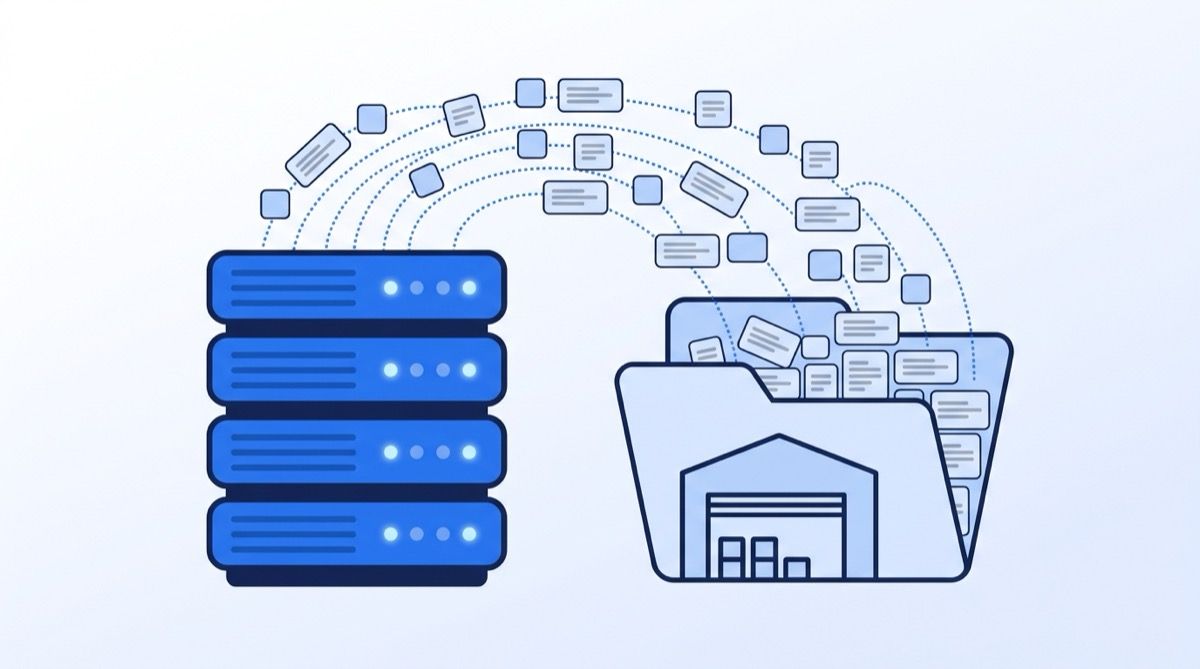
Coresignal is a data provider for teams that want large volumes of company, employee and job-posting records in a warehouse. Its homepage cites 5B+ records, including 921M+ employee records, 72M+ companies and 580M+ jobs, and it keeps history that supports time-series analysis.
Its pricing is a monthly credit pool: a free 2,000 credits, Mini at $49/month for 2,500 credits (about 250 core records), Starter at $199, Pro at $499, and larger plans up to $5,000, with full datasets from $1,000/month on a yearly contract. A core employee or company record costs 10 credits and a full record 20. A Real-time Employee API fetches a profile on demand for 12 credits per request.
Where it falls short: it is shaped for data engineering, not for enrichment inside a CRM, and email and phone data are not its focus. Compare: Datamagnet vs Coresignal, or read our Coresignal pricing breakdown.
Stored Databases vs Request-Time Reads: Why Freshness Matters
Most enrichment tools answer from a stored database refreshed on a cycle, so every record has an age. B2B data decays at about 2.1% a month, or 22.5% a year, per MarketingSherpa research cited by HubSpot. A tool that reads the source at request time returns the record as it stands when you call.
HubSpot's database decay page gives the 2.1% monthly and 22.5% annualized figures. People Data Labs refreshes API data monthly; Coresignal's FAQ says its datasets update daily, weekly or monthly depending on the dataset. Between refreshes, a person who changed jobs still shows the old title.
Request-time reads have trade-offs. They are slower than a database lookup, and they only return what the source page shows, so they cannot fill emails or phone numbers. Datamagnet reads the profile at call time only when you send use_cache: "never"; otherwise it may return a stored copy. Coresignal's Real-time Employee API and ZoomInfo's twelve-month Records Under Management window are other ways vendors handle the same problem.
Freshness also affects dedup. When a title or employer changes, a stored record and a new lead can look like two people. Matching on a stable identifier, such as a profile URL or email, and filling only empty fields by default keeps enrichment from creating a second record every time someone is promoted.
Per-Seat vs Credit Pricing: Which Model Fits a RevOps Team?
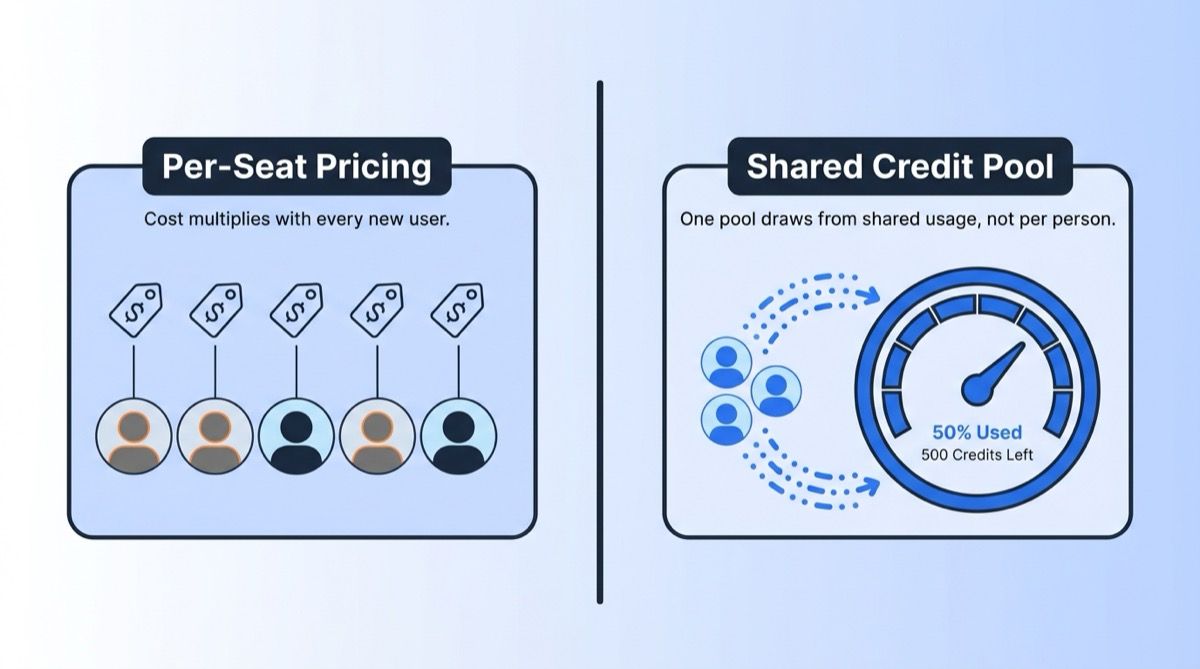
Per-seat pricing charges for each user whether or not they enrich anything that month; credit pricing charges for records enriched. Per-seat suits teams where every rep prospects daily and usage tracks headcount. Credits suit lean ops teams, spiky volume and enrichment run by code rather than by reps.
On this list, Apollo is per seat, from $49/user/month billed annually, and Cognism allocates credits per seat with five seats included. ZoomInfo's platform is an annual organization-level contract. Clay, People Data Labs, Coresignal and Datamagnet price by credits or records, and HubSpot includes enrichment in the edition you already pay for.
Credit models have their own fine print:
- Expiry. Apollo credits reset each billing cycle. Ask whether unused credits carry over.
- Charges on misses. Clay says a lookup that returns no result costs nothing (Clay pricing); Datamagnet charges only on successful profile and company requests. Not every vendor works this way, so check.
- Credits per field. Apollo's API charges 1 to 9 credits per person depending on the data returned; Coresignal charges 10 credits for a core record and 20 for a full one (Coresignal pricing).
To compare fairly, convert each option to cost per enriched record at your real monthly volume. Our programmatic CRM enrichment guide covers building that business case, and our ranking of the best data enrichment APIs works out price per record for API-first tools.
Which Data Enrichment Tool Should You Choose?
Pick by the field you are missing. For emails and phones inside the CRM, start with Apollo, ZoomInfo or Cognism; for the highest fill rate across many providers, Clay; for HubSpot-only teams, HubSpot data enrichment; for bulk datasets, People Data Labs or Coresignal; for current role and company data by API at 1 credit per profile, Datamagnet.
Then run a fair test. Take 100 records where you know the correct answer, run them through two or three shortlisted tools, and score match rate and field accuracy yourself. Most tools on this list have a free tier or trial large enough for that. If current titles and company details are your gap, you can test Datamagnet with 10 free credits and no card on the pricing page.
Frequently Asked Questions
What are data enrichment tools?
Data enrichment tools add missing fields to records you already have. You supply an identifier such as a work email, company domain or profile URL, and the tool returns fields like job title, company size, industry, email or phone number, then writes them back to your CRM. Some hold their own database, some read sources live, and some chain other providers.
What is the best data enrichment tool for RevOps teams?
It depends on the gap. Apollo, ZoomInfo and Cognism suit teams that need emails and phones inside the CRM; Clay suits teams that want a waterfall across many providers; HubSpot data enrichment suits teams already on a paid HubSpot edition. Datamagnet suits teams that need current role and company data by API, and it returns no emails or phones.
What is the difference between a real-time enrichment API and a stored database?
A stored database returns a record collected earlier and refreshed on a cycle, such as People Data Labs' monthly API updates. A real-time read fetches the source page when you call. Datamagnet does this when you send use_cache: "never"; otherwise it may return a stored copy, with company data up to 30 days old.
Are credit-based tools cheaper than per-seat tools?
Credit-based tools are usually cheaper when usage is uneven or run by code, because you pay for records enriched rather than users. Per-seat tools can be better value when every rep prospects daily and uses the full allowance. Check whether credits expire and whether failed lookups are charged before comparing prices.
Does Datamagnet have email or phone data?
No. Datamagnet has no email or phone lookup, no email verification and no waterfall across vendors. It returns people and company profile data, such as current title, employer, work history and company details, for 1 credit per profile, charged only on successful requests. Teams that need contact data pair it with a contact-data tool.
Sources
- Datamagnet, Pricing: https://www.datamagnet.co/pricing/
- Clay, Pricing: https://www.clay.com/pricing ; Using Clay as an API: https://university.clay.com/docs/using-clay-as-an-api ; Signals: https://www.clay.com/signals
- Apollo.io, Pricing: https://www.apollo.io/pricing ; About credits: https://www.apollo.io/pricing/about-credits ; API pricing: https://docs.apollo.io/docs/api-pricing ; Developer FAQs: https://docs.apollo.io/docs/developer-faqs ; Apollo acquires Pocus: https://www.apollo.io/magazine/apollo-acquires-pocus
- ZoomInfo, How much does ZoomInfo cost: https://pipeline.zoominfo.com/sales/how-much-does-zoominfo-cost ; What is ZoomInfo: https://pipeline.zoominfo.com/sales/what-is-zoominfo ; GTM AI pricing: https://gtm.ai/pricing ; GTM AI credits: https://gtm.ai/docs/mcp/credits
- Cognism, Pricing: https://www.cognism.com/pricing ; CRM Enrichment: https://www.cognism.com/enrich ; Diamond Data: https://www.cognism.com/diamond-data ; Our data: https://www.cognism.com/our-data ; Integrations: https://www.cognism.com/integrations
- HubSpot, Clearbit by HubSpot: https://www.hubspot.com/products/clearbit ; Get started with data enrichment: https://knowledge.hubspot.com/records/get-started-with-data-enrichment ; HubSpot Credits and billing: https://knowledge.hubspot.com/account-management/understand-hubspot-credits-and-billing ; Database decay: https://www.hubspot.com/database-decay
- People Data Labs, Person pricing: https://www.peopledatalabs.com/pricing/person ; Company pricing: https://www.peopledatalabs.com/pricing/company ; Person stats: https://docs.peopledatalabs.com/docs/stats ; Company stats: https://docs.peopledatalabs.com/docs/company-stats ; Data updates: https://docs.peopledatalabs.com/docs/data-updates
- Coresignal, Pricing: https://coresignal.com/pricing/ ; Homepage: https://coresignal.com/ ; Real-time Employee API: https://docs.coresignal.com/employee-api/real-time-employee-api ; FAQ: https://docs.coresignal.com/introduction/faq
- Salesloft/Wakefield Research, RevOps study 2025: https://www.salesloft.com/resources/guides/wakefield-revops-study-2025
