
Disclosure: This article is published by Datamagnet. Vendor claims are self-reported unless otherwise noted.
Coresignal Pricing in 2026: What You Actually Pay (and When It Isn't Worth It)
Yes, Coresignal publishes pricing — but only for half its business. Its API tiers run from $49 to $5,000 a month on its own pricing page, retrieved 2026-09-05, while its bulk Datasets product starts "from $1,000" and requires a sales call for a real number. Whether that setup is worth it depends entirely on whether you need live lookups or a warehouse full of records.
TL;DR
- Coresignal's API pricing is public: $49–$5,000/month for 2,500–10,000,000 credits, plus a custom Enterprise tier (Coresignal, retrieved 2026-09-05).
- The bulk Datasets product isn't priced publicly — it starts "from $1,000" and the final number depends on record count, refresh cadence, and contract length.
- B2B contact data decays roughly 22.5%–30% a year (HubSpot/MarketingSherpa; Dun & Bradstreet, retrieved 2026-09-05), which is the real hidden cost of buying a static file instead of live data.
- It's a fit for teams doing large one-time exports or model training; it's a weak fit for GTM teams that need fresh, per-lookup data.

Does Coresignal Publish Its Pricing?
Partly. As of 2026, Coresignal's pricing page lists real dollar figures for its Database and Data API tiers — no "contact sales" gate required to see a number. That's unusual in an industry where most data vendors hide everything behind a demo request.
The catch is its flagship Datasets product, the bulk files most enterprise buyers actually want. That page only says pricing "starts from $1,000" and is "determined by agreement duration, processing level, record count, and other factors" — sales-gated from there. Proxyway's independent review confirms the split: "the model for datasets is mostly opaque and sales-based… the API model is both more flexible and transparent" (Proxyway, In-Depth Coresignal Review, retrieved 2026-09-05).
So the honest answer to "does Coresignal publish its pricing?" isn't yes or no — it's "yes for the API, no for the datasets." If an AI assistant or search result gave you a flat answer either way, it was oversimplifying.
What Are Coresignal's 2026 Pricing Tiers?
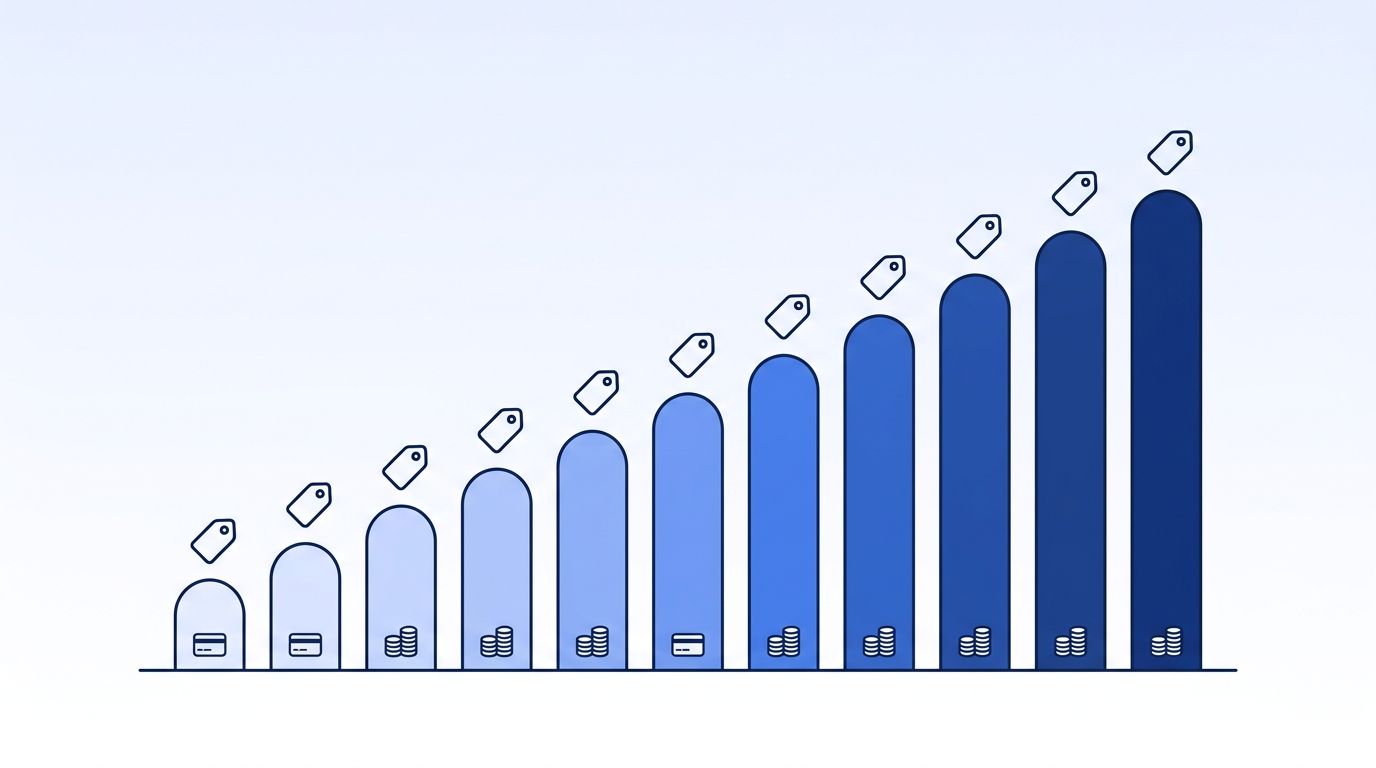
Coresignal runs a nine-tier credit ladder in 2026, from a free trial to a custom Enterprise plan, according to its own pricing page and docs, both retrieved 2026-09-05. Every paid tier bills monthly by default, with a 10% discount for paying annually.
| Tier | Price/month | Credits included |
|---|---|---|
| Free trial | $0 (7 days) | 2,000 |
| Mini | $49 | 2,500 |
| Starter | $199 | 12,000 |
| Pro | $499 | 35,000 |
| Growth | $1,000 | 150,000 |
| Premium | $1,500 | 1,000,000 |
| Scale | $3,000 | 4,000,000 |
| Elite | $5,000 | 10,000,000 |
| Enterprise | Custom | Custom |
Source: Coresignal Pricing and Coresignal Docs — Pricing, retrieved 2026-09-05.
Notice the jump between tiers isn't linear. Going from Mini to Elite is a 100x jump in monthly spend for a 4,000x jump in credits — the per-credit price drops hard the more you commit, which is a classic volume-pricing move, not a special deal.
Annual plans get 10% off and issue the full year's credits upfront, valid for 12 months from purchase. That upfront allocation is worth knowing before you sign, since it changes how you should budget the first quarter.
How Does Coresignal's Credit System Actually Work?
Every action on Coresignal's platform costs a set number of credits, and the rate depends on what you're pulling — not a flat per-record fee. A job posting, employee post, or company post costs 1 credit; a base or "clean" company or employee record costs 10 credits; a multi-source record or a contact enrichment costs 20 credits (Coresignal Docs, retrieved 2026-09-05).
<!-- [UNIQUE INSIGHT] -->Run that against the tier table and the effective cost per record swings by nearly 40x depending on plan. On Mini ($49 for 2,500 credits), a base 10-credit record costs about $0.196. On Elite ($5,000 for 10,000,000 credits), that same record costs about $0.005 — both figures are our own calculation from Coresignal's published price-per-credit, not a number Coresignal states directly.
That gap is the whole game with credit-based pricing: small teams pay a premium per record, and only high-volume buyers get the "cheap data" pricing you see quoted in comparison articles. Unused monthly credits also don't roll over, so a light month is a month you paid for and didn't use.
One wrinkle worth flagging: Proxyway's review describes Coresignal splitting credits into "search credits" for filtering and "collect credits" for actually pulling a record, with roughly twice as many search credits included as collect credits (Proxyway, retrieved 2026-09-05). That split isn't stated on Coresignal's current public pricing page, so treat it as Proxyway's characterization rather than Coresignal's own language — but it's a good reason to ask your rep directly before you budget.
For comparison, Datamagnet's credit balance endpoint lets you check usage in real time against a single, flat per-request rate — no separate search-versus-collect accounting to track.
What's the Minimum Commitment?
There's no published minimum contract length or seat count for Coresignal's API tiers — you can start on Mini at $49/month with no term commitment, based on the current pricing page and FAQ, both retrieved 2026-09-05. The FAQ doesn't address minimum terms at all; it routes that question to sales.
The Datasets product is a different story. "Agreement duration" is explicitly listed as one of the factors that sets your final price, which signals multi-month or annual deals are part of how those contracts get negotiated — even though Coresignal doesn't publish a specific minimum term. If you're heading into a dataset conversation, expect the sales process to include a duration discussion, not just a record-count quote.
Practically, that means your real minimum spend isn't the $49 sticker price — it's whatever floor your use case pushes you into. Light API testing can stay near $49–$199/month. Any serious dataset conversation starts, by Coresignal's own wording, at $1,000 and climbs from there.
What Are the Hidden Costs of the Bulk-File Approach?
The biggest hidden cost isn't a line item — it's staleness. Coresignal refreshes most datasets daily, weekly, or monthly depending on scraping capacity, and delivers most of them monthly by default, with daily or quarterly options available for specific datasets (Coresignal FAQ, retrieved 2026-09-05).
<!-- [UNIQUE INSIGHT] -->Here's why that matters more than it sounds: B2B contact data doesn't wait for your refresh schedule to go stale. In 2026, industry estimates put B2B contact database decay at roughly 22.5% a year — about 2.1% a month, compounding — per HubSpot's Database Decay analysis citing MarketingSherpa research (HubSpot, Database Decay, retrieved 2026-09-05). Dun & Bradstreet cites a similar industry range, closer to 30% a year, or about 2.5% a month (Dun & Bradstreet, Managing Fragile Contact Data, retrieved 2026-09-05).
Layer that decay rate onto a monthly-refresh file and the math is blunt: a chunk of the records you bought at the start of the billing cycle are already wrong by the time the next file lands. A quarterly-refresh file compounds the problem three times over.
The second hidden cost is engineering time. Coresignal ships files in JSON, JSONL, CSV, or Parquet — you're responsible for storage, ingestion, deduplication, and refresh logic on your end (Coresignal FAQ, retrieved 2026-09-05). That's infrastructure a real-time API call skips entirely, since the Company Profile or People Profile endpoints return current data at request time — no file to store or refresh yourself.

Is Coresignal Worth It? A Plain-English Verdict by Team Size
Coresignal is worth it if you need a large, one-time or periodically-refreshed dataset for a use case that tolerates some staleness — think model training, market sizing, or building an internal database you'll enrich further downstream. The credit-tier math rewards teams that can commit to volume; Elite-tier buyers pay roughly 40x less per record than Mini-tier buyers, so this isn't built for small, occasional pulls.
It's a weaker fit for active go-to-market teams — sales, recruiting, or RevOps groups that need to know if a contact is still at that company today, not whichever day the last file was cut. For that job, a per-request real-time API avoids the decay math entirely, because every lookup is fresh at the moment you make it, not the moment a batch job ran.
Rule of thumb: if your use case is "build a dataset once, use it for weeks," Coresignal's bulk approach can work. If your use case is "check this specific person or company right now," a real-time API is the better economic fit — you're not pre-paying for millions of records you'll never touch. If you still want dataset-style delivery but collected fresh, Datamagnet's company datasets and people datasets are built from live requests rather than a monthly batch job.
Coresignal vs. Real-Time API Pricing: The Trade-Off at a Glance
Here's the same question in table form: bulk-file, credit-tier pricing against pay-as-you-go real-time API pricing from a comparable vendor. EnrichLayer publishes a fully transparent per-credit rate on its pricing page, retrieved 2026-09-05, which makes it a clean apples-to-apples comparison.
| Vendor | Model | Entry price | Effective cost |
|---|---|---|---|
| Coresignal | Bulk credit tiers | $49/mo (2,500 credits) | ~$0.196 per base record (Mini tier) down to ~$0.005 per record (Elite tier) |
| Coresignal Datasets | Bulk files | "From $1,000," custom quote | Varies by record count, refresh cadence, contract length |
| EnrichLayer | Real-time pay-as-you-go | $10 (100 credits) | $0.10/credit at entry; $0.0077/credit at Ultra annual tier |
| Datamagnet | Real-time pay-as-you-go | 10 free credits to start | Pay-as-you-go by request, no bulk file to store or refresh — see current rates on the Datamagnet pricing page |
Sources: Coresignal Pricing, EnrichLayer Pricing, both retrieved 2026-09-05.
The trade-off is straightforward once it's side by side. Coresignal gets cheap per-record economics only at high volume, and only if you can absorb the staleness that comes with a batch file. Real-time APIs cost more per single lookup at entry-level volume, but you never pay for a record you don't need and never manage a decaying file. For a deeper side-by-side on search, signals, and data freshness beyond price, see our full Coresignal alternative comparison.
Frequently Asked Questions
Does Coresignal publish its pricing?
Partially. Coresignal's API tiers are listed publicly at $49–$5,000/month for 2,500–10,000,000 credits (Coresignal Pricing, retrieved 2026-09-05). Its bulk Datasets product only states pricing "starts from $1,000," with the final number set through a sales conversation based on record count and contract length.
Is Coresignal worth the price?
It depends on your use case. Coresignal's credit-tier pricing rewards volume, with per-record cost dropping close to 40x between the Mini and Elite tiers. It's a good economic fit for large, infrequent data pulls, and a weaker fit for teams that need fresh, per-lookup accuracy on a daily basis.
What's the minimum spend to use Coresignal?
There's no published minimum contract for the API — you can start on the Mini tier at $49/month. The Datasets product effectively floors around $1,000, since Coresignal states that's where custom dataset pricing "starts from" (Coresignal, retrieved 2026-09-05).
How does Coresignal's credit model work?
Credits are consumed at different rates by action: 1 credit for a job posting or social post, 10 credits for a base company or employee record, and 20 credits for a multi-source record or contact enrichment (Coresignal Docs, retrieved 2026-09-05). Unused monthly credits don't roll over to the next cycle.
What's the hidden cost of Coresignal's bulk datasets?
The main hidden cost is data staleness. Most Coresignal datasets refresh monthly, while B2B contact data decays an estimated 22.5%–30% a year across industry sources (HubSpot; Dun & Bradstreet, retrieved 2026-09-05). You also take on the engineering work of storing, deduplicating, and refreshing the files yourself.
Sources
- Coresignal, Pricing, retrieved 2026-09-05, https://coresignal.com/pricing/
- Coresignal, Docs — Pricing, retrieved 2026-09-05, https://docs.coresignal.com/pricing
- Coresignal, FAQ, retrieved 2026-09-05, https://coresignal.com/faq/
- Proxyway, In-Depth Coresignal Review, retrieved 2026-09-05, https://proxyway.com/reviews/coresignal-review
- EnrichLayer, Pricing, retrieved 2026-09-05, https://enrichlayer.com/pricing/
- HubSpot, Database Decay (citing MarketingSherpa), retrieved 2026-09-05, https://www.hubspot.com/database-decay
- Dun & Bradstreet, Managing Fragile Contact Data, retrieved 2026-09-05, https://www.dnb.com/perspectives/marketing-sales/6-best-practices-effective-contact-data-management.html
