
Disclosure: This article is published by Datamagnet. Vendor and tool claims are self-reported or drawn from public documentation, retrieved 2026-09-17, unless otherwise noted.
Synthetic Data Testing: How to Stress-Test Your Data Quality Rules Before Production
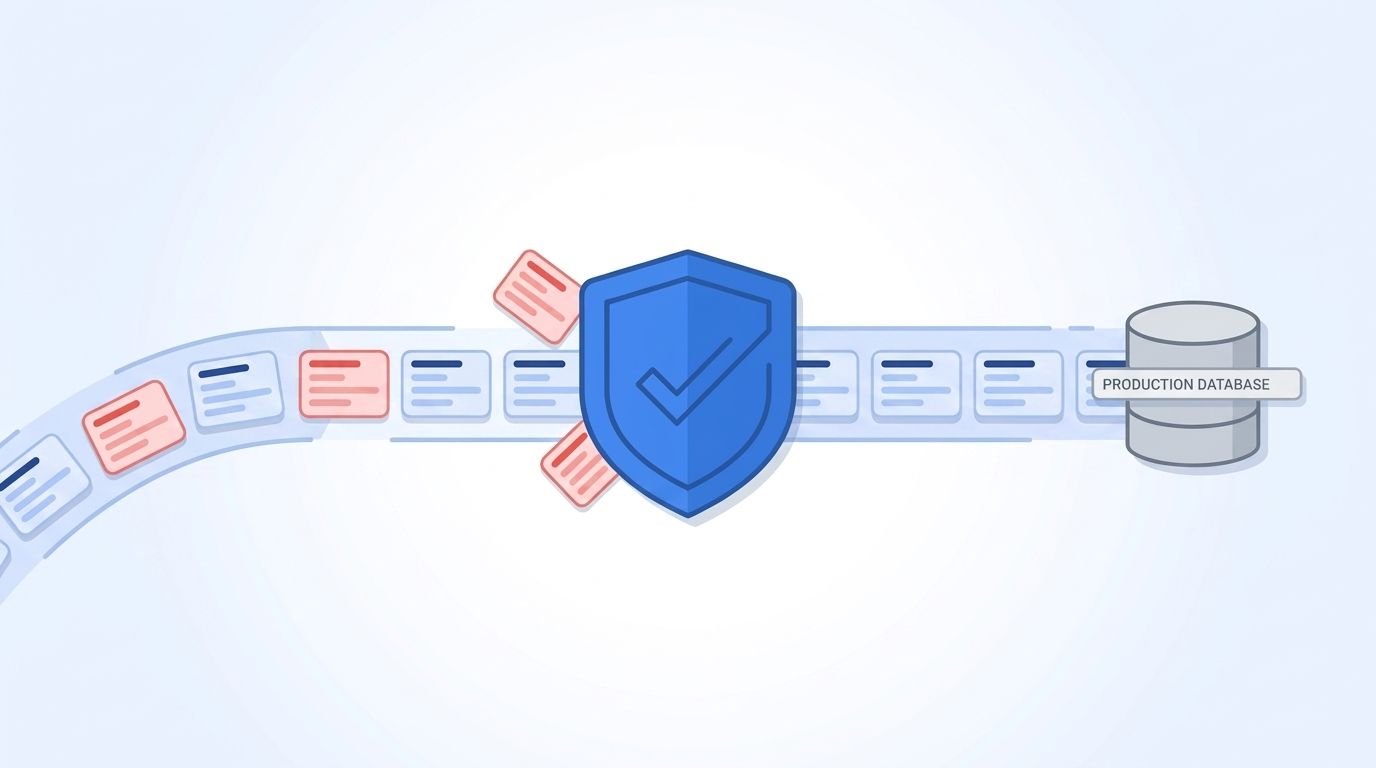
Most data quality rules get tested on the data that's already sitting in the warehouse — the clean, familiar stuff. Then a new lead source, a merged CRM, or a partner feed sends in something the rule never saw coming, and it breaks in production instead of in a test suite. In 2026, dbt Labs found that only 24% of data teams prioritize AI-assisted pipeline management, testing, and quality controls, compared to 72% who prioritize AI-assisted coding (dbt Labs, State of Analytics Engineering 2026). Synthetic data testing closes that gap. This guide walks through building synthetic edge cases on purpose, running your rules against them before anything touches a live pipeline, and wiring the whole thing into your deploy process so it doesn't quietly rot after month one.
TL;DR
- In 2026, dbt Labs found only 24% of data teams prioritize pipeline testing and quality controls, versus 72% who prioritize AI-assisted coding (dbt Labs, State of Analytics Engineering 2026) — most rule failures are a testing gap, not a rule-writing gap.
- Monte Carlo Data's 2023 survey found teams averaged 67 data incidents a month, up from 59 the year before, with 68% taking 4+ hours just to detect one (Monte Carlo Data, State of Data Quality Survey, 2023).
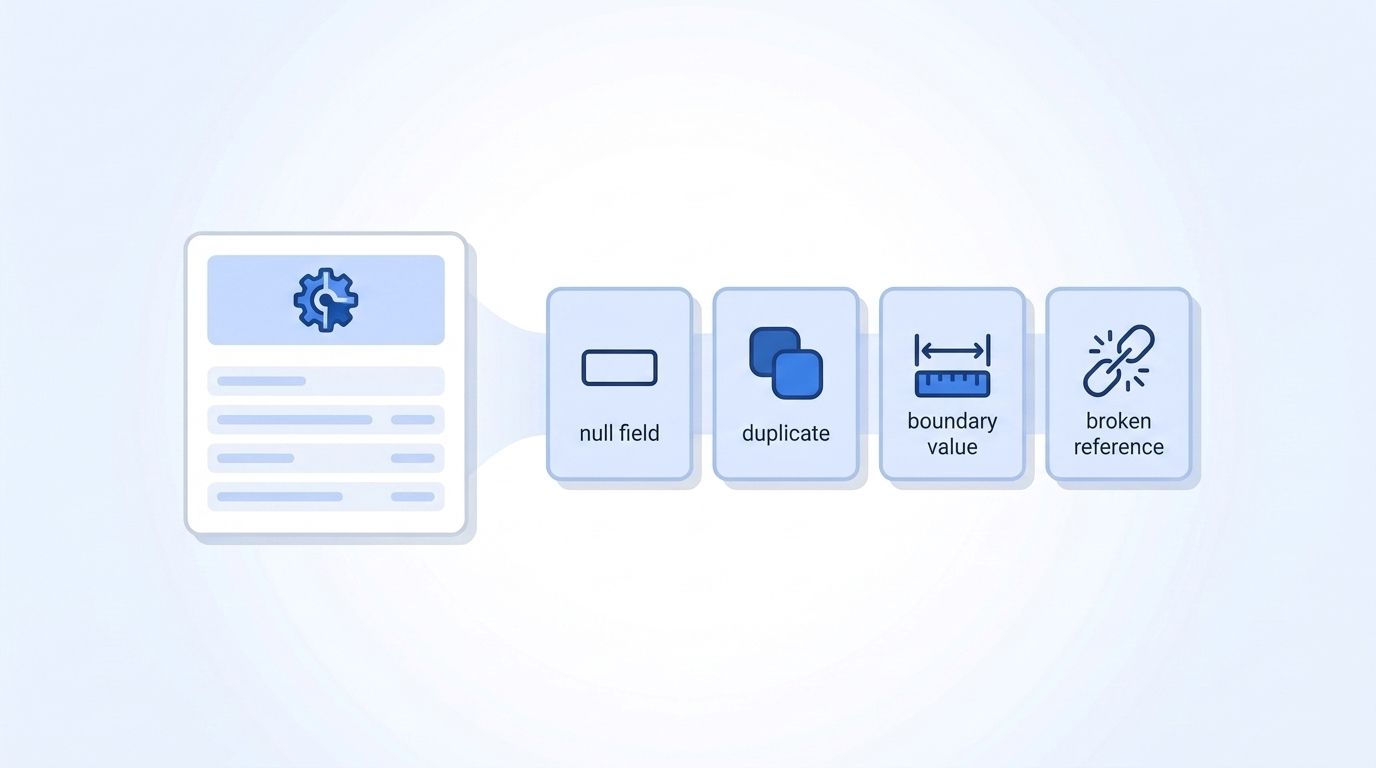
- Build synthetic records around specific edge cases — nulls, duplicates, malformed formats, referential breaks — not random fake data. Random noise misses the failures that actually reach production.
- Score false positives and false negatives before you ship a rule, not after a rep or analyst flags a bad record downstream.
- Gate deploys on a synthetic test pass, the same way you'd gate on unit tests — a one-time audit decays the moment someone edits a rule.
What Do You Need Before You Start?
You need a documented list of data quality rules, a synthetic data generation tool, and a place to run the test outside production — most teams can set this up in under a day for a first pass. Here's the checklist:
- A rule inventory. Every validation, deduplication, format, and referential-integrity check your pipeline currently enforces (or should).
- A synthetic data tool. Something schema-based like Mockaroo or code-based like Faker for simple field generation, or a statistical tool like the Synthetic Data Vault if you need records that preserve real distributions and relationships.
- A staging environment or sandbox schema. Somewhere synthetic records can run through your rules without touching customer-facing systems.
- Time: 3-6 hours for the first build-out; 15-30 minutes per rule update after that.
- Difficulty: Intermediate — you should be comfortable writing basic scripts or schema definitions, even if you're not a data engineer by title.
Step 1: What Data Quality Rules Are You Actually Enforcing?
By the end of this step, you'll have a single document listing every rule your pipeline runs, not just the ones you remember. Most teams discover rules live in three or four disconnected places — a dbt test file, a Python validation function, a CRM workflow, an API-side check — and nobody has looked at all of them together.
- Pull every
dbt test, custom SQL assertion, or validation function from your pipeline code. - List every CRM-side rule (required fields, picklist constraints, dedupe matching logic).
- Note every rule enforced by an external API you depend on, including filters like the ones in Datamagnet's ICP People Search, which constrain what a "valid" job title, seniority, or industry value looks like.
- Tag each rule by type: format, uniqueness, referential integrity, range/bounds, or business logic.
Verification: You should end up with a spreadsheet or doc where every rule has an owner, a type, and the specific field(s) it touches. If you can't name the owner, that's your first finding — orphaned rules are the ones nobody tests.
Most "data quality" postmortems don't actually find a missing rule. They find a rule that existed, worked fine on the data it was written against, and never got re-validated once the input shape changed. The inventory step isn't busywork — it's the only reason Step 2 through 6 target the right things.
Step 2: What Edge Cases Will Your Production Data Eventually Throw at You?
By the end of this step, you'll have a written list of specific failure scenarios for each rule, not a vague sense that "bad data happens." A rule is only as good as the worst input it's been tested against, and most rules have only ever seen the best input.
For each rule in your inventory, write down:
- The boundary case. If a field requires a headcount between 1 and 500,000, what happens at exactly 0, exactly 500,001, and a negative number?
- The malformed case. What happens when a required string field arrives empty, null, or with only whitespace?
- The duplicate case. What happens when two records represent the same person or company but with slightly different formatting — "VP Sales" versus "Vice President, Sales"?
- The referential break. What happens when a foreign key points to a record that doesn't exist yet, or existed and was deleted?
Isn't it usually the case that the edge case nobody wrote down is exactly the one that ships? That's not bad luck — it's a predictable result of only testing the cases someone thought to write down. Writing the list down first, before generating any data, is what makes Step 3 targeted instead of random.
Step 3: How Do You Generate Synthetic Records That Target Those Edge Cases?
By the end of this step, you'll have a synthetic dataset built specifically to hit the edge cases from Step 2 — not a generic batch of fake names and addresses. This is the step most teams skip past, reaching for a random data generator and calling it done.
- Pick a tool that matches your need. Faker is fast for simple field-level fixtures (names, emails, dates) in unit tests. Mockaroo works well when you need a schema-defined CSV or JSON batch with field-level rules applied at generation time. The Synthetic Data Vault (originally from MIT's Data to AI Lab) uses models like CTGAN to learn the statistical shape of your real data and generate synthetic records that preserve those patterns — useful when "random" data doesn't stress your rules the way real distributions do.
- Build one synthetic batch per edge case category, not one giant mixed batch. Isolate boundary cases, malformed cases, duplicates, and referential breaks so a failure tells you exactly which category broke.
- Model your fields on real API responses. If a rule validates a person's current employer, structure your synthetic records the way a live source like Datamagnet's People Profile endpoint actually returns that field, and do the same for firmographic fields using the shape of the Company Profile endpoint. A synthetic record that doesn't match your real schema tests nothing.
- Keep volume proportional to risk, not arbitrarily large. A few hundred targeted records per edge case category beats a hundred thousand random rows that mostly duplicate the happy path.
Citation capsule: Enterprise-focused synthetic data tools like Tonic.ai are built to preserve referential integrity across an entire relational schema, not just single-table field values, which matters once your data quality rules span multiple joined tables — a synthetic record that breaks a foreign key in isolation won't reveal a rule that only fails once two tables are joined.
Step 4: How Do You Score Your Rules Against the Synthetic Batch?
By the end of this step, you'll have a false-positive and false-negative count for every rule, not just a pass/fail summary. A rule that flags too aggressively costs your team hours chasing phantom errors; a rule that misses too much lets bad records straight into production.
- Run each synthetic batch through the actual rule logic — the same code path production traffic hits, not a simplified copy.
- For each edge-case category, log: did the rule catch it (true positive), miss it (false negative), or wrongly flag a valid synthetic record (false positive)?
- Calculate a simple score per rule: catch rate on the edge cases it's supposed to catch, and false-flag rate on the valid records it shouldn't touch.
- Flag any rule with a catch rate under your team's threshold (most teams start around 90-95% for critical fields like email format or duplicate-key checks) for a rewrite before it ships.
Sales and RevOps teams don't see a "false negative rate" — they see a lead routed to the wrong rep because a dedupe rule missed a near-match. Scoring the rule against synthetic edge cases before it ships is what turns that abstract metric into a concrete, fixable number.
Step 5: How Do You Push Synthetic Data Through the Full Pipeline, Not Just the Rule Engine?
By the end of this step, you'll know whether a rule failure breaks anything downstream, not just whether the rule itself passed. Testing a rule in isolation tells you half the story — the other half is what happens to a webhook, a CRM sync, or a scoring model when that rule lets something bad through.
- Route your synthetic batches through the same integration path real data takes — including any webhook delivery your pipeline uses to push validated records or signal events downstream.
- Check what a downstream system does with a record your rule should have caught but didn't. Does it silently accept a malformed value, or does it throw an error that alerts someone?
- Confirm a record your rule correctly rejects doesn't still leak partial data into a CRM field or reporting dashboard through a separate code path.
Watching teams debug a "the rule worked but the data's still wrong" ticket is a familiar pattern: the validation rule rejected the bad record correctly, but a separate enrichment step upstream had already written a partial value to the CRM before the rejection fired. The rule wasn't broken — the pipeline had a second path it never covered. End-to-end synthetic testing is the only way that gap shows up before a customer-facing report does.
For more on how enrichment pipelines interact with CRM sync logic, see how programmatic CRM enrichment handles record writes at scale.
Step 6: How Do You Gate Deploys on the Score and Wire It Into CI?
By the end of this step, synthetic testing stops being a manual exercise someone remembers to run and becomes a required check before any rule change ships. A stress test you only run once is a snapshot; a stress test wired into CI is a standing guarantee.
- Save your synthetic edge-case batches as fixtures in your repo, versioned alongside the rules they test.
- Add a CI step that runs every rule against its fixture set on every pull request that touches validation or pipeline code.
- Set a hard threshold — for example, no PR merges if catch rate on critical-field edge cases drops below your target.
- Pair the CI gate with ongoing production monitoring, like a job-change or engagement signal feed, so drift that synthetic tests didn't anticipate still gets flagged once real records start arriving.
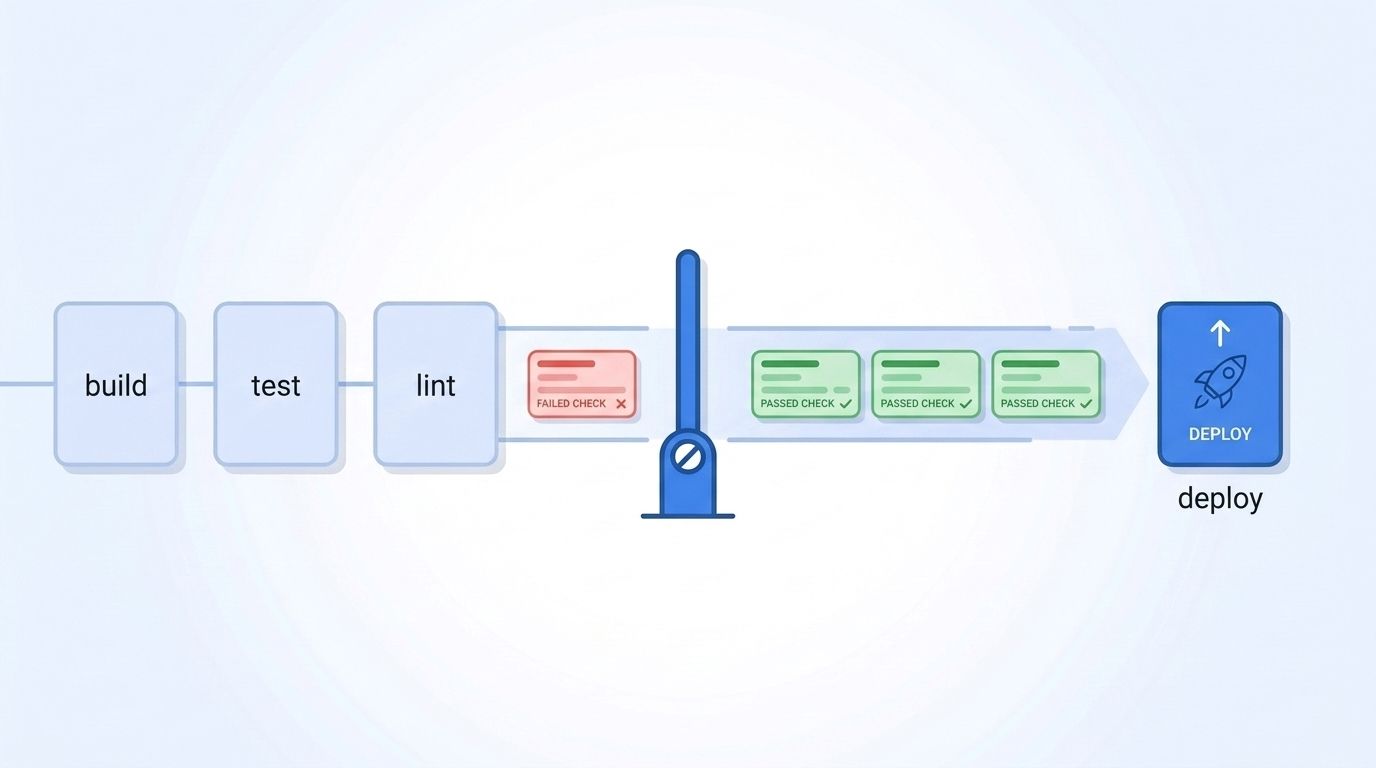
Teams that move synthetic testing into a CI gate instead of a quarterly manual audit report catching rule regressions the same day a change ships, rather than weeks later when a downstream report looks wrong — the fix moves from "who broke this and when" archaeology to a failed build someone addresses before merge.
What Mistakes Should You Avoid When Stress-Testing With Synthetic Data?
Most synthetic testing programs don't fail because the tool was wrong — they fail because the test data didn't resemble the failure modes that actually matter. Here are the mistakes that show up most often.
1. Testing only the happy path. Teams generate a thousand valid-looking synthetic records, confirm the rule accepts them, and call the job done. That only proves the rule doesn't reject good data — it says nothing about whether the rule catches bad data, which is the entire point.
2. Using purely random fake data instead of targeted edge cases. Random field generation is fast, but it rarely reproduces the failure shapes — near-duplicate names, boundary values, broken references — that cause real incidents. Build batches around the edge-case list from Step 2, not random noise.
3. Never re-testing after a rule changes. A rule that passed in January can silently regress after a refactor in June. Without a versioned fixture set and a CI gate, nobody notices until a real record slips through.
4. Treating it as a one-time audit instead of a continuous check. Data quality incidents keep climbing — Monte Carlo Data found average incident detection time exceeded four hours for 68% of teams, and resolution time hit 15 hours, a 166% jump year over year (Monte Carlo Data, State of Data Quality Survey, 2023). A test suite outside your deploy process ages out of relevance the same way a stale rule does.
What Does Success Look Like?
If everything went correctly, you now have a versioned synthetic fixture set, a documented catch rate per rule, and a CI gate that blocks a merge when that rate drops. That's a testable, repeatable claim — not just "we validate our data."
- Concrete outcome: Every critical rule has a synthetic edge-case fixture and a passing CI check tied to it.
- Key metric: Catch rate on targeted edge cases (target 90-95%+ for critical fields) and false-positive rate on valid synthetic records (kept low enough that reps or analysts aren't chasing phantom flags).
- Stretch goal: Extend synthetic coverage to full-pipeline integration tests, including downstream CRM writes and webhook payloads, not just the rule engine in isolation.
Poor data quality still carries a real cost once it reaches production — Forrester research cited by IBM found more than 25% of organizations lose upward of $5 million a year to it, with 7% losing $25 million or more (IBM Think Insights, 2025). Synthetic testing doesn't eliminate that cost. It moves the failure from a production incident to a failed CI check, which is a far cheaper place for it to happen.
For a deeper look at how real-time verification complements pre-production testing once records are live, see how real-time B2B people enrichment keeps records current after they've already passed your rules.
Frequently Asked Questions
What is synthetic data testing for data quality rules?
Synthetic data testing means generating fabricated records that deliberately target edge cases — nulls, duplicates, boundary values, broken references — and running your validation rules against them before real data does. It catches rule gaps in a test environment instead of letting a rep or analyst find them in production.
How is synthetic data testing different from regular data validation?
Validation checks whether a specific record is accurate right now. Synthetic testing checks whether your validation rules themselves work correctly, by feeding them known failure patterns on purpose. One protects a record; the other protects the rule that's supposed to protect every future record like it.
Which synthetic data tool should I use — Faker, Mockaroo, or SDV?
It depends on scale. Faker is fastest for simple, code-based field fixtures in unit tests. Mockaroo suits schema-defined batches with field-level rules and no coding required. The Synthetic Data Vault fits when you need records that preserve real statistical relationships across multiple related tables, not just single-field values.
How much synthetic data do you need to stress-test a rule set?
Less than most teams assume. A few hundred targeted records per edge-case category catches more real rule gaps than tens of thousands of randomly generated rows that mostly repeat the happy path.
Can synthetic data testing replace testing against real production data entirely?
No — treat it as a first gate, not a full replacement. Synthetic testing catches known and hypothesized edge cases before deploy, but production data eventually surfaces failure modes nobody anticipated. Pair synthetic CI gates with ongoing production monitoring, like signal-based alerts, so unanticipated drift still gets caught.
Start Testing Your Rules Against Failure, Not Just Against Success
Your data quality rules are only as strong as the worst input you've tested them against, and most teams have only ever tested the best. Inventory your rules, define the edge cases that actually break them, generate synthetic data on purpose, score the catch rate, test the full pipeline, and gate every deploy on the result. Review Datamagnet's security and data practices before building synthetic fixtures from any real customer data, since compliance obligations vary by jurisdiction. See how live people and company data keeps validated records accurate after launch on the People API page — then pressure-test your next rule change against a synthetic batch before it ships.
Sources
- dbt Labs, State of Analytics Engineering 2026, retrieved 2026-09-17, https://www.getdbt.com/resources/state-of-analytics-engineering-2026
- Monte Carlo Data, The State of Data Quality Survey, retrieved 2026-09-17, https://montecarlo.ai/blog-data-quality-survey
- IBM Think Insights, The Cost of Poor Data Quality, retrieved 2026-09-17, https://www.ibm.com/think/insights/cost-of-poor-data-quality
- Datamagnet, People Profile endpoint, retrieved 2026-09-17, https://docs.datamagnet.co/api-reference/endpoints/people
- Datamagnet, Company Profile endpoint, retrieved 2026-09-17, https://docs.datamagnet.co/api-reference/endpoints/company
- Datamagnet, ICP People Search, retrieved 2026-09-17, https://docs.datamagnet.co/api-reference/endpoints/icp-people-search
- Datamagnet, Webhooks, retrieved 2026-09-17, https://docs.datamagnet.co/api-reference/webhooks
- Datamagnet, Create Signal, retrieved 2026-09-17, https://docs.datamagnet.co/api-reference/endpoints/signal-create
