
Disclosure: This article is published by Datamagnet. Vendor claims are self-reported unless otherwise noted. Datamagnet is a data layer, not a sales acceleration platform.
Sales Acceleration Software: An Honest Evaluation Framework
Sales acceleration software is any tool that gets reps more selling time: sequencing, dialing, conversation intelligence, forecasting. Judge it on seven criteria: workflow fit, data inputs, integration depth, adoption cost, AI actions, reporting, and total cost. Most failures trace back to the data underneath, not the platform. Last verified: 2026-10-25.
Key Takeaways
- Sellers spend only 40% of their time selling (Salesforce, State of Sales 2026), so judge tools on hours returned, not features listed.
- Score every candidate on seven criteria with a weighted scorecard, and run a two-week pilot on your own records.
- Check the data layer first: 76% of CRM users say under half their data is accurate and complete (Validity, 2025).
- Buy something else when your problem is process, headcount or a single missing channel.
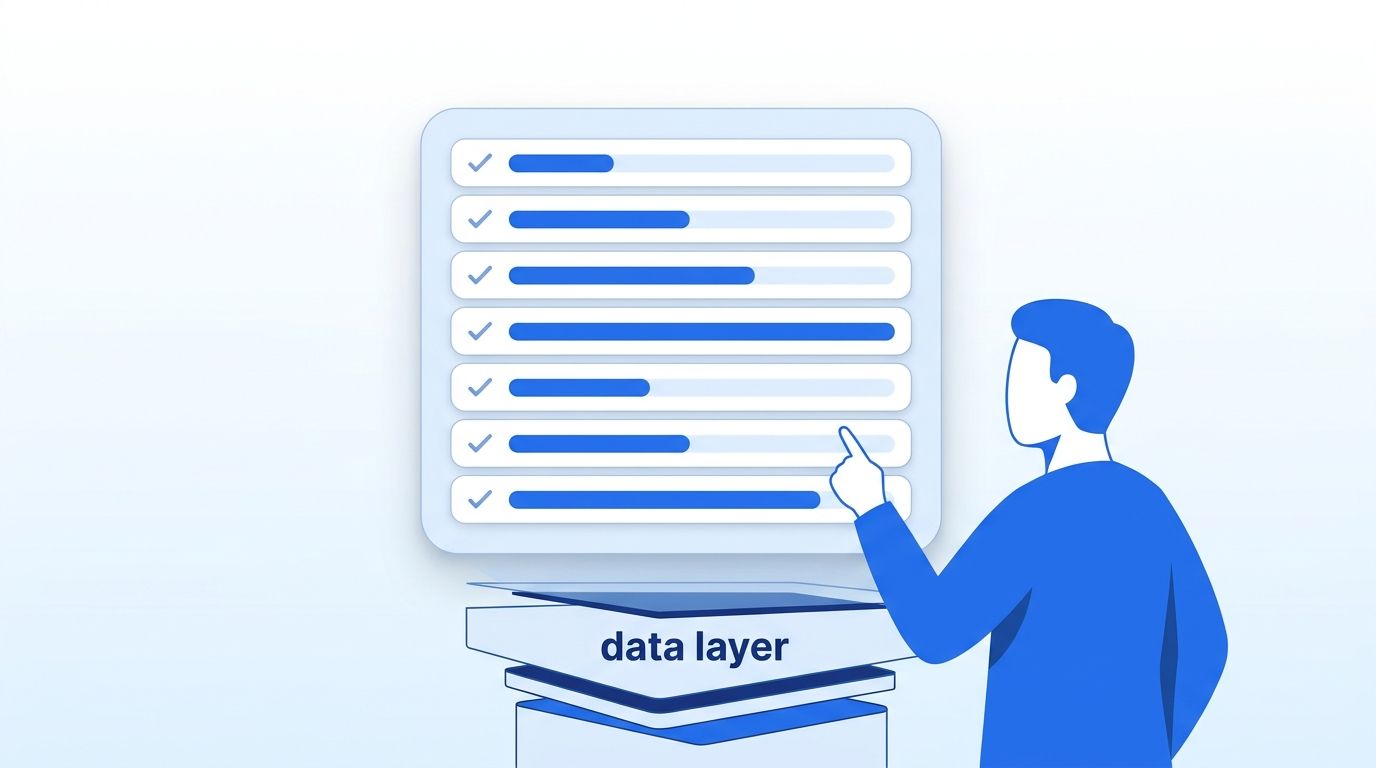
What Is Sales Acceleration Software, Really?
No analyst owns the phrase "sales acceleration software." It's an umbrella term. Gartner's 2025 Magic Quadrant for Revenue Action Orchestration (published 15 Dec 2025) defines the newer category as bringing revenue signals into one data model, with the platform acting as the seller's main hub. Older Gartner guides called the same idea "sales engagement."
That matters because vendors stretch the label. In practice, six feature groups sit under it:
| Feature group | What it does | Typical buyer pain it solves |
|---|---|---|
| Sequencing and engagement | Multichannel outreach from one console | Manual follow-up |
| Dialer | Click-to-call, call logging | Low connect volume |
| Conversation intelligence | Records and analyzes calls | Coaching blind spots |
| Data and intent | Enrichment, signals, contact info | Bad or stale records |
| Forecasting and pipeline analytics | Deal scoring, roll-ups | Surprise quarters |
| Deal management and coaching | Next-step guidance | Stalled deals |
Last verified: 2026-10-25. Sources: Gartner market guides and Magic Quadrant, see Sources below.
Here's the useful reframe: you're not buying "acceleration." You're buying hours back. Pick the feature group that attacks your biggest time leak, then check the rest.
What Should You Assess When Evaluating Sales Acceleration Software?
In 2026, Salesforce's State of Sales survey of 4,050 sales professionals found the average seller spends 40% of their time selling. Evaluate software by how many of the other 60% hours it returns. A tool that adds a login and a tab costs you the hours it promises to save.
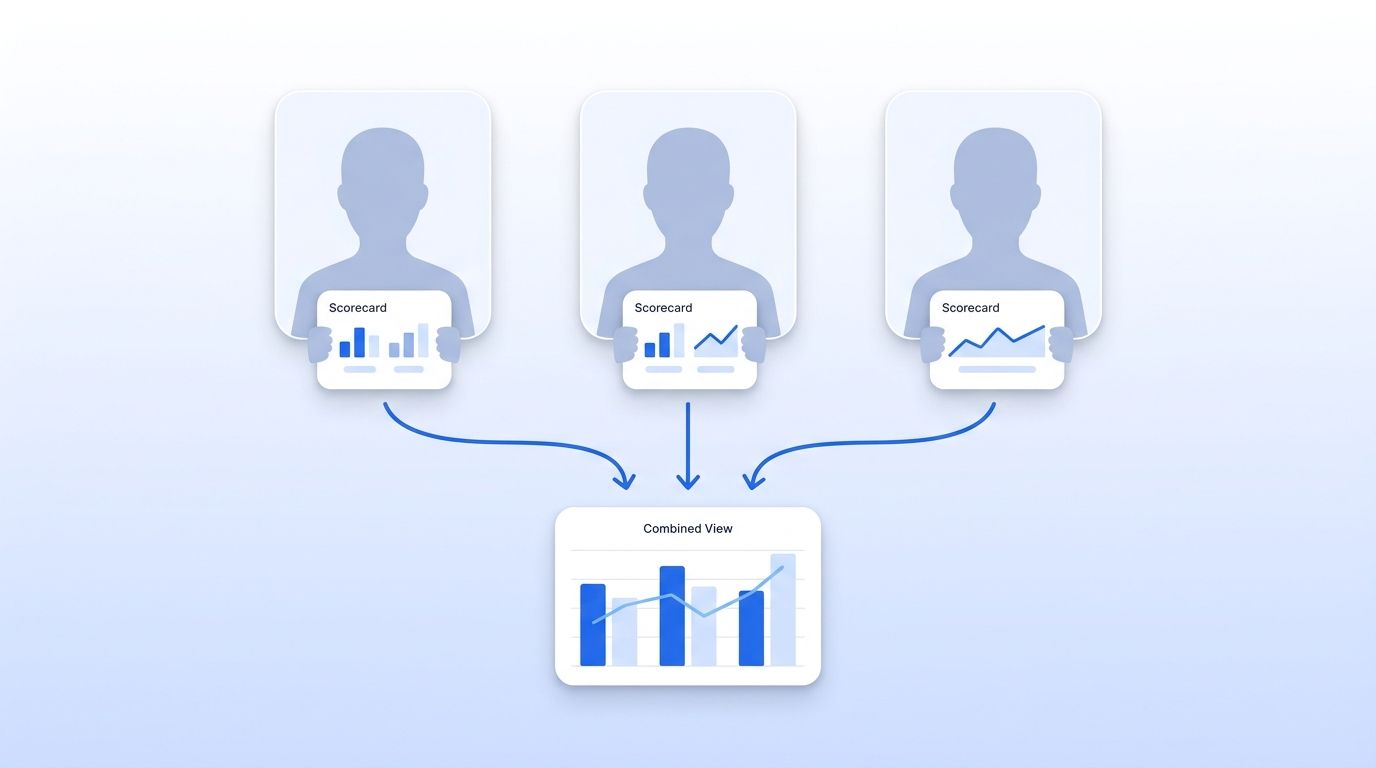
Use this scorecard. Weight the criteria to your situation; the weights below are a starting point, not a standard.
| # | Criterion | The question to ask | Suggested weight | Red flag |
|---|---|---|---|---|
| 1 | Workflow fit | Does it remove a step you do daily? | 20% | Needs a new tab per task |
| 2 | Data inputs | Where does its contact and account data come from, and how fresh is it? | 20% | Vendor can't name sources |
| 3 | Integration depth | Does it write back to your CRM, or only read? | 15% | One-way sync |
| 4 | Adoption cost | Hours to onboard a rep, per rep | 15% | Training measured in weeks |
| 5 | AI actions | Does AI do the task, or just suggest it? | 10% | "AI" is a label on templates |
| 6 | Reporting | Can you tie activity to pipeline? | 10% | Activity counts only |
| 7 | Total cost | Seats, add-ons, data credits, services | 10% | Data sold as a separate meter |
Last verified: 2026-10-25. Weights are editorial suggestions.
Notice that two of the seven criteria (data inputs and integration depth) are about data, and a third (AI actions) depends on it. Weighting those at 55% combined is deliberate. A cheap platform with weak inputs scores lower than a pricier one with clean inputs.
How do you score the scorecard?
Rate each criterion 1 to 5, multiply by its weight, and total it. Do it as a group: a rep, a manager and an ops owner each score separately, then compare. Gaps between their scores are the real findings.
How Do You Run a Two-Week Evaluation?
Salesforce also found sellers use an average of 8 tools to close deals, and 42% feel overwhelmed by the number (Salesforce, 40 Sales Statistics, Feb 2026). Gartner's page "Sellers need tech as a teammate" adds that overwhelmed sellers are 43% less likely to attain quota. A pilot should prove a tool replaces something, not adds to the pile.
Follow this procedure:
- Pick one leak. Name the single task that eats the most rep time. Write the current hours per week.
- Pull 200 of your own records. Use real accounts and contacts, not the vendor's demo data. Include messy ones.
- Run the same task in both worlds. Half the pilot reps use the tool; half don't.
- Check the inputs. For 25 random records, verify title, company and email by hand. Count the misses.
- Measure hours, not clicks. Compare time on the task before and after.
- Count the logins. If the pilot adds a tool without retiring one, mark it down.
- Ask for the exit. Request the data export format and contract terms in writing.
Last verified: 2026-10-25.
Step 4 is the one teams skip, and it's the one that changes decisions. A 25-record hand check takes under an hour and tells you more about a platform's real output than any demo.
Where Does Data Quality Sit in the Sales Acceleration Stack?
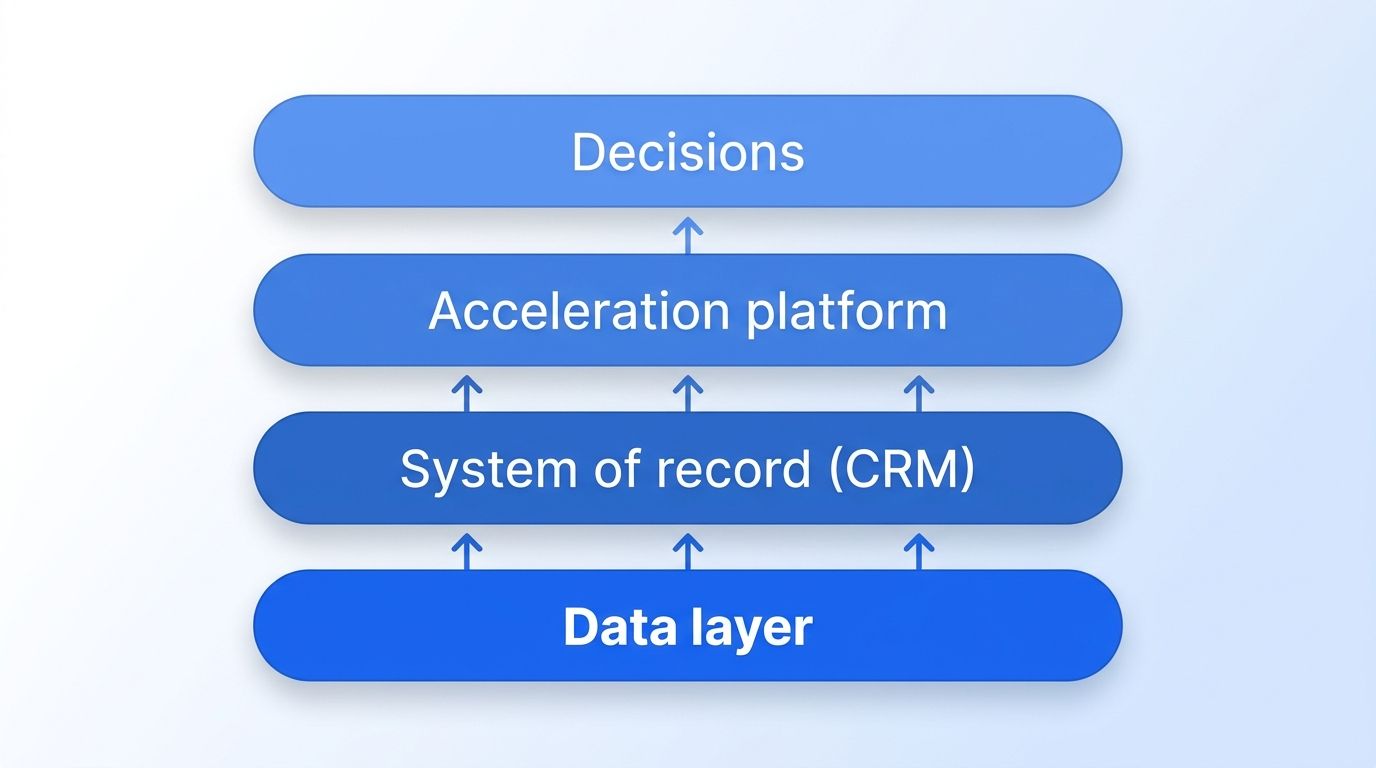
In 2025, Validity's CRM data survey of 602 users found that 76% say less than half their CRM data is accurate and complete. Data sits at the bottom of the stack: every sequence, dial, score and forecast reads from it. A bad record doesn't fail once; it fails in every tool that touches it.
Picture the stack as layers:
| Layer | Examples | What breaks when the layer below is bad |
|---|---|---|
| Decisions | Forecasts, coaching, territory plans | Numbers that look precise and aren't |
| Acceleration platform | Sequencing, dialer, conversation intelligence | Bounced emails, wrong-person calls |
| System of record | CRM | Duplicates, stale titles, missing fields |
| Data layer | Enrichment, search, signals | Everything above |
Last verified: 2026-10-25.
The same Validity survey found 37% say their firm loses revenue to poor data, and for 25% that loss is at least 10% of annual revenue. It also found employees spend about 13 hours a week tracking down data. Salesforce's 2026 survey tells a similar story: 74% of sales professionals are focusing on data cleansing, and 79% of high performers prioritize data hygiene versus 54% of underperformers.
How fast does data rot? Honestly, nobody has an independent number. We couldn't find a study that confirms an exact annual rate, so we won't quote one. Treat any "X% decays annually" claim as a rough vendor estimate, including from us, and measure decay on your own records with the 25-record test.
Where does Datamagnet fit?
Datamagnet is a data layer. It isn't a sales acceleration platform and doesn't compete with one. It sits under whichever platform you choose, supplying live LinkedIn-sourced people and company data fetched at request time. You can wire it into your CRM through the HubSpot integration or into a table through the Clay integration. For the product itself, start with the People API and the sales intelligence overview. The People Profile docs show the exact fields returned.
If you want the CRM mechanics, our guide to programmatic CRM enrichment walks through them.
What Does a Data-Layer Check Look Like Before You Buy?
Run these five tests on any platform's data, or on the data you plan to feed it. Each has a pass condition you can write down before the demo.
| Test | How to run it | Pass condition |
|---|---|---|
| Source disclosure | Ask where each field comes from | Vendor names sources per field |
| Freshness | Check 25 records for title and employer | You set the threshold in advance |
| Write-back | Enrich a test record, confirm it updates the CRM | Field-level update, no duplicates |
| Time-of-fetch | Ask whether data is live or a snapshot | Vendor states it plainly |
| Job-change handling | Ask how role moves reach your records | Documented alert path |
Last verified: 2026-10-25.
On that last row, here's how Datamagnet handles it, and what it doesn't do. A job_change signal monitors a watchlist: you supply the profile_urls you want tracked, such as past champions and key buyers. It isn't cold discovery of people who changed jobs somewhere in the market, and dates arrive at month-year granularity, not exact days. See the Signal API, the Create Signal docs, and the Champion Tracker cookbook.
Trusted Sales Acceleration Software: What Earns the Label?
"Trusted" isn't a ranking; it's a set of evidence you can collect. A platform earns trust when the claims on its site match what happens in your pilot. Ask for proof on these five points rather than trusting a badge.
| Trust signal | Evidence to request | Weak version |
|---|---|---|
| Data provenance | Named sources per field | "Proprietary database" |
| Customer references | Two customers at your size, one churned | Logos only |
| Security posture | Current audit reports, shared under NDA | A badge image |
| Contract clarity | Written exit and export terms | Auto-renew with no export |
| Independent evidence | Analyst or third-party research | Vendor-commissioned only |
Last verified: 2026-10-25.
Be careful with vendor-commissioned numbers. Outreach's Forrester Total Economic Impact study (announced 7 Oct 2026) models 244% ROI, a $13.6M NPV and payback under six months over three years. It models a composite company with $9B revenue and 600 users. Useful as a best case, not as a forecast for a 15-rep team.
Most Trusted Sales Acceleration Software: How to Read "Most Trusted" Claims
"Most trusted" is a superlative, and superlatives need a denominator. Before you accept one, ask: most trusted by whom, measured how, and when? A list that can't answer is marketing. This section is deliberately not a ranking, and we're not going to crown a winner.
Check any "most trusted" claim against this table:
| Question | Good answer | Bad answer |
|---|---|---|
| Who was surveyed? | Named population and sample size | "Our customers" |
| Who paid for it? | Independent, or disclosed | Undisclosed sponsor |
| When was it fielded? | Within the last 12 months | Undated |
| Does it measure outcomes? | Quota, cycle time, hours saved | Satisfaction only |
| Is the method published? | Yes, linkable | No |
Last verified: 2026-10-25.
For analyst coverage, read the source documents. Gartner's Revenue Action Orchestration Magic Quadrant lists 12 vendors in full research, including Gong, Clari, Outreach, Salesloft, HubSpot and ZoomInfo. Reading it tells you who analysts consider established. It doesn't tell you who fits your team.
The most reliable "trust" metric is your own pilot. Two weeks on your own records beats any rating, because it measures the only thing that matters: your data, your reps, your CRM.
When Is Something Else Better Than Sales Acceleration Software?
Sometimes a platform is the wrong purchase. Salesforce reports 87% of sales organizations already use some form of AI, so the pressure to buy is high. Pressure isn't fit. If your problem sits in the left column below, buy the item on the right.
| If your real problem is... | Better move | Why |
|---|---|---|
| Reps lack a clear process | Fix the playbook first | Software automates whatever process you have, good or bad |
| Fewer than a handful of reps | A CRM plus a spreadsheet and a sequencer | Platform seats cost more than the hours saved |
| Bad contact data | An enrichment source or data cleanup | A new platform inherits the mess |
| One missing channel (e.g. calling) | A single point tool | A suite pays for features you won't use |
| You need contact data only | A database or API, not a platform | You'd pay for engagement tools you skip |
| Low pipeline, not low velocity | Marketing or list-building | Acceleration needs something to accelerate |
| No ops owner | Hire or assign one first | Tools without an owner go unused |
Last verified: 2026-10-25.
And when your priority is an all-in-one contact database with seats, a database vendor may serve you better; our Apollo comparison lays out the live-API versus static-database trade-off. Datamagnet isn't right for everyone either. If you need phone-dialing, call recording or forecasting, you need a platform; we don't provide them.
Also be honest about limits. Datamagnet's data comes from public LinkedIn pages, so it won't cover people with no LinkedIn presence. And a data layer fixes inputs, not strategy.
How Does a Data Layer Change Your Scorecard?
If you buy the platform first and the data later, you'll score the platform on inputs it didn't create. If you pick the data layer first, the platform choice gets simpler: you compare workflow, adoption and cost on a level field.
A practical order of operations:
- Audit your current records using the 25-record test.
- Choose and connect a data source that writes back to your CRM.
- Pilot platforms against the cleaned records.
- Re-score using the scorecard above.
- Set a quarterly re-check, and track findings in a sheet.
For account research workflows built this way, see account research infrastructure for AEs, and the real-time B2B people enrichment API guide.
Frequently Asked Questions
What is the best sales acceleration software?
There isn't a single best, because it depends on your workflow, team size and data. Gartner's 2025 Revenue Action Orchestration report evaluates 12 vendors in full research, and fit varies by team. Use a weighted scorecard and a two-week pilot on your own records to decide.
How is sales acceleration software different from a CRM?
A CRM is the system of record; acceleration software acts on it. Sequencers, dialers and conversation tools read CRM data and write activity back. According to Salesforce's 2026 survey, sellers use an average of 8 tools to close deals, so check how each one syncs with your CRM.
How much does bad data cost a sales team?
In 2025, Validity found 37% of CRM users say their firm loses revenue to poor data, and 25% put the loss at 10% or more of annual revenue. Employees also spend about 13 hours a week tracking down data. Measure your own with a 25-record sample.
Is Datamagnet a sales acceleration platform?
No. Datamagnet is a data layer that supplies people and company data through an API, and it works underneath the platform you choose. It doesn't offer sequencing, dialing or forecasting. Its job-change signal watches profile URLs you supply, with month-year dates, rather than discovering people cold.
Do vendor ROI studies tell me what I'll get?
Not directly. Outreach's Forrester TEI (announced 7 Oct 2026) models 244% ROI for a composite $9B-revenue company with 600 users, and it was vendor-commissioned. Treat it as a best case, then run your own pilot to measure hours saved on your own team.
Sources
Retrieval date for all sources: 2026-10-25.
- Salesforce, "The Productivity Gap: New Survey Shows 9 in 10 Sellers Are Betting on AI and Agents To Help" (State of Sales 2026), 3 Feb 2026, retrieved 2026-10-25, https://www.salesforce.com/news/stories/state-of-sales-report-announcement-2026/
- Salesforce, "40 Sales Statistics that Reveal How Teams Can Succeed in 2026," 3 Feb 2026, retrieved 2026-10-25, https://www.salesforce.com/in/sales/state-of-sales/sales-statistics/
- Gartner, "Sellers need tech as a teammate," retrieved 2026-10-25, https://www.gartner.com/en/sales/trends/sellers-need-tech-as-a-teammate
- Validity, "The State of CRM Data Management in 2025," as reported by MediaPost, 11 Jul 2025, retrieved 2026-10-25, https://www.mediapost.com/publications/article/407342/crm-data-drag-systems-are-not-delivering-brands.html
- Outreach / Forrester Consulting, Total Economic Impact study announcement, 7 Oct 2026, retrieved 2026-10-25, https://www.outreach.ai/company/newsroom/new-commissioned-total-economic-impact-study-models-244-roi-and-19-2m-in-benefits-present-value-for-composite-organization-using-outreach
- Gartner, Magic Quadrant for Revenue Action Orchestration, 15 Dec 2025, retrieved 2026-10-25, https://www.gartner.com/doc/7283830
