
Disclosure: This article is published by Datamagnet. Vendor claims are self-reported unless otherwise noted.
How to Choose a Real-Time LinkedIn Enrichment API (2026 Buyer's Guide)
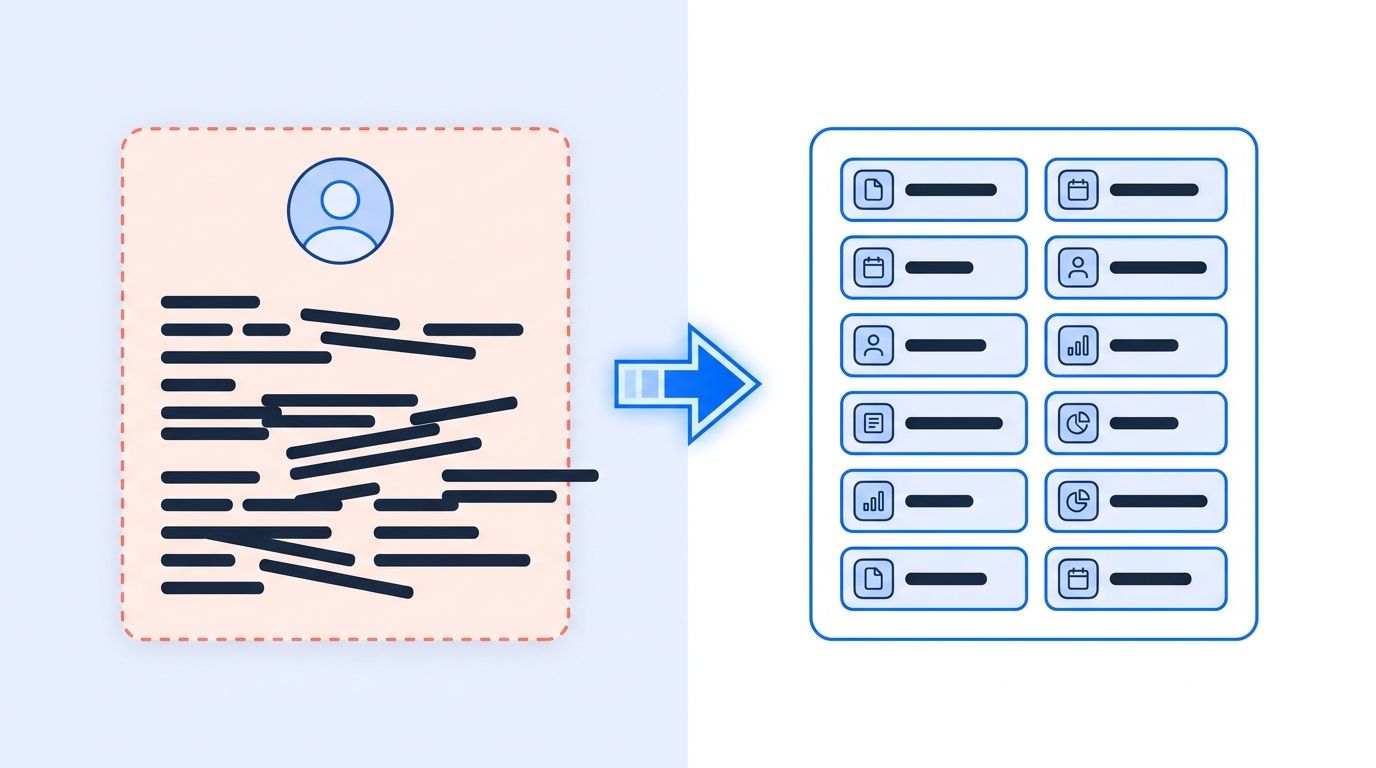
A LinkedIn enrichment API turns a profile URL into structured JSON — name, current role, work history, education, skills — fetched the moment you request it. That sounds simple until you're staring at five vendors with nearly identical marketing copy. What actually separates them?
It comes down to four things: how fresh the data is when it lands, how clean the schema is, how the API delivers data into your stack, and whether any of that fits how your team actually works. Get those four right and everything else — pricing, support, docs — is a tiebreaker.
TL;DR
- B2B contact data decays roughly 22.5% a year, or about 2.1% a month (Landbase, 2026) — freshness isn't a nice-to-have, it's the whole point of "real-time."
- REST is still the dominant delivery method (93% developer adoption) but only half of teams use webhooks for event-driven updates (Postman, 2025 State of the API Report).
- Recruiters spend 52% of their time on admin work and only 28% on actual sourcing (IQTalent, Jan 2026) — the right API should shrink that gap, not widen it.
- Schema consistency matters as much as coverage. A field that's sometimes there and sometimes
nullwill break your pipeline more often than a smaller dataset ever will.- Weigh vendors on freshness, schema quality, delivery method, and workflow fit — in that order — before you look at price.
What Is a LinkedIn Enrichment API, and Why Does It Matter Now?
A LinkedIn enrichment API is a service you call with a profile URL, email, or name, and it returns structured data about that person — job title, employer, tenure, skills, education — in JSON. In 2026, LinkedIn has grown to roughly 1.3 billion registered members and about 310 million monthly active users (Demandsage, 47 LinkedIn Statistics 2026), which makes it the single richest public source of professional identity data on the internet.
That scale is exactly why manual research doesn't hold up anymore. You can't have a recruiter or SDR opening 40 browser tabs a day when an API can return the same structured record in under a second. The question isn't whether to enrich — it's which LinkedIn People API you trust to keep that data current as people change jobs, update titles, and switch companies.
Datamagnet's People Profile endpoint documentation is a useful reference point for what a modern response should include: current role, full experience history, education, skills, and activity, fetched live rather than pulled from a stale snapshot.
Why Does Real-Time Data Beat a Bigger Static Database?
Real-time data beats a bigger static database because static records go stale fast — B2B contact data decays about 22.5% per year, or roughly 2.1% every month (Landbase, Data Decay Rate Statistics, 2026). A database frozen at last quarter's crawl is already wrong for nearly a quarter of the people in it.
It gets worse the longer you wait. Separate research found that 70.8% of business contacts have at least one meaningful change — a new title, phone number, or email — within twelve months (Landbase, citing IndustrySelect data, 2026). If your enrichment vendor refreshes on a quarterly batch cycle, you're not buying "big data." You're buying data that's already wrong for one in three contacts by the time you use it.
Most enrichment vendors advertise database size — 500 million profiles, a billion records — as their headline number. That's the wrong metric. A 50-million-record database refreshed at request time beats a billion-record snapshot refreshed once a quarter, because the recruiter or rep on the other end only ever needs one record: the current one.
REST, Webhooks, or Batch: Which Delivery Method Fits Your Workflow?
REST is still how most teams pull enrichment data — 93% of developers use REST APIs, according to Postman's 2025 survey of over 5,700 developers, architects, and technical leaders, but only about half use webhooks for event-driven updates (Postman, 2025 State of the API Report). That split matters more than it looks like on paper.
REST is what you want when a human or workflow triggers the request — a recruiter opens a candidate profile, a form submits, a CRM record gets created. Webhooks matter for the opposite case: when you need to know the instant something changes, like a target candidate switching jobs, without polling for it. Polling can only be as fresh as your polling interval, so a five-minute poll means data can be up to five minutes stale by design; an event-driven push notifies you at the moment the change happens.
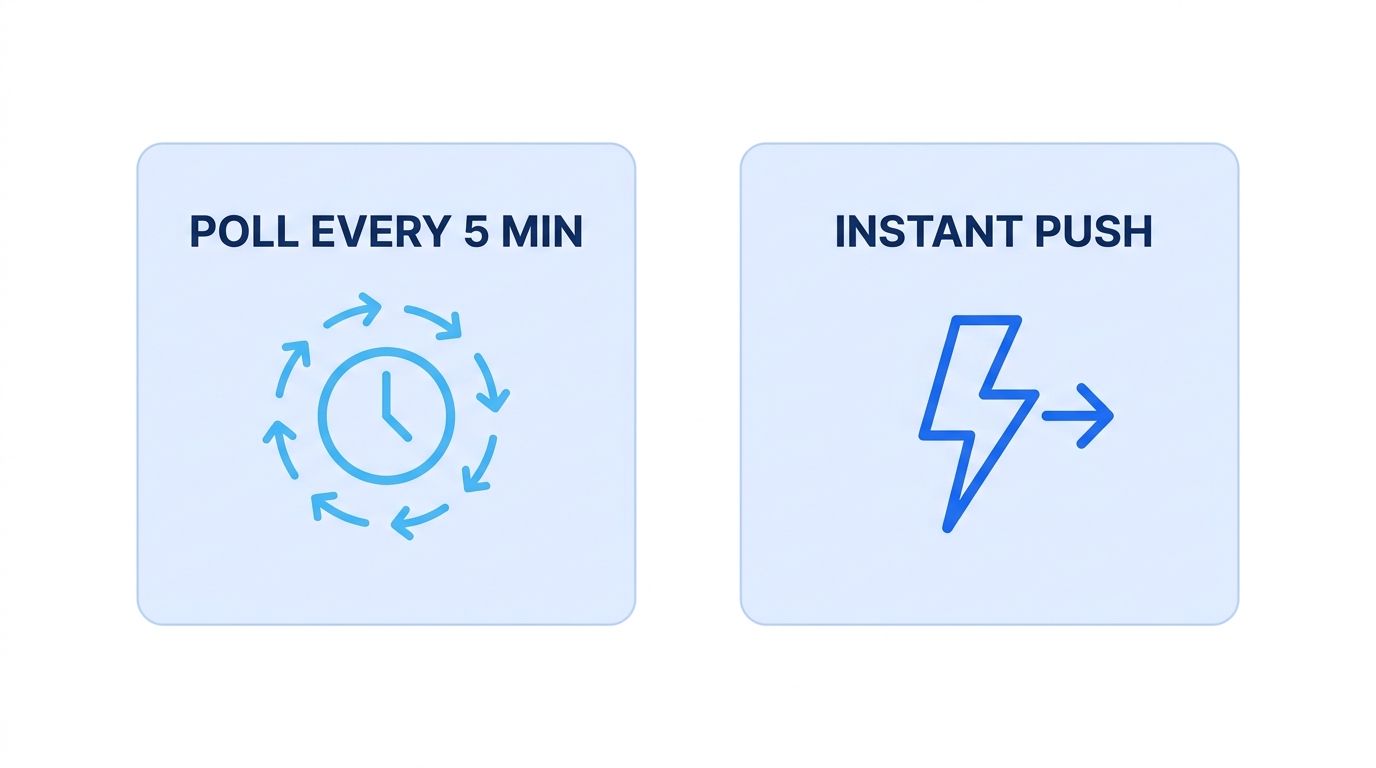
Most teams end up wanting both: REST for on-demand lookups and a signal or webhook layer for anything time-sensitive. Datamagnet's Webhooks documentation and Create Signal endpoint cover exactly that pattern — REST for the initial enrichment call, signed webhook payloads for job-change and engagement events after.
What Makes a People Data Schema "Good Enough" to Build On?
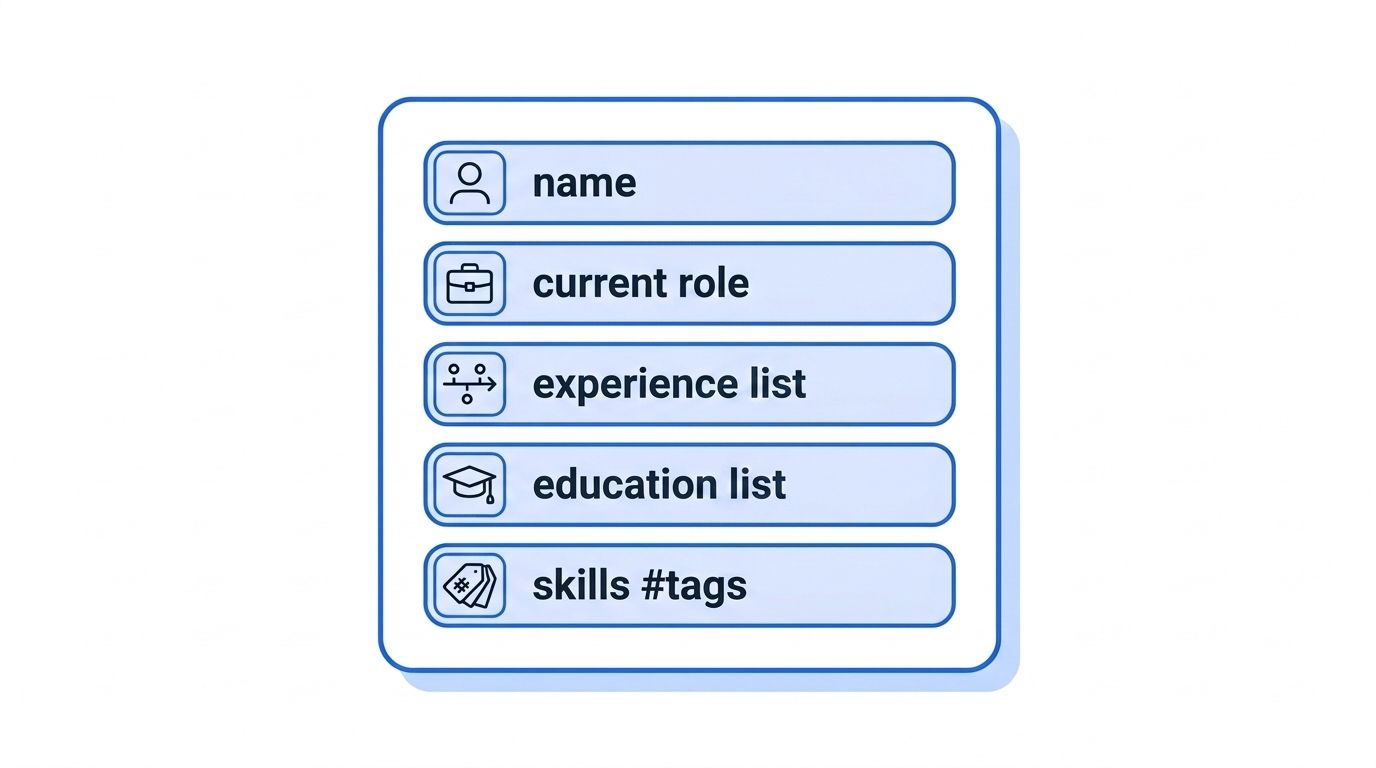
A good people data schema is consistent, not just comprehensive — every field returns the same shape every time, and missing data comes back as a clean null rather than an empty string, a stale value, or a silently dropped key. You'll feel schema quality the first time you write a parser against a vendor's response and it breaks on the second call because a field type changed.
Coverage matters too, but only after consistency. Ask whether the schema separates current role from historical experience, whether education and skills are structured arrays instead of free text, and whether the vendor documents every field rather than leaving you to reverse-engineer it from sample responses. Datamagnet's People Profile endpoint documents the full response shape up front, and the People Search DB endpoint uses the same schema for search results, so you're not maintaining two parsers for one data source.
Isn't a messy schema just a data-cleaning problem you can solve downstream? Not really — every hour your engineering team spends normalizing inconsistent fields is an hour not spent on the workflow the data was supposed to power in the first place.
How Should Recruiting Teams Weigh These Criteria Differently Than Developer Teams?
<!-- [UNIQUE INSIGHT] -->Recruiting teams should weight workflow fit and freshness above raw schema depth, because the cost they're fighting is time, not integration complexity. Recruiters currently spend 52% of their working hours on administrative tasks — scheduling, ATS entry, follow-up — and only 28% on sourcing and candidate engagement, based on a tracked study of over 200 recruiters across 20 companies (IQTalent, Where Recruiting Time Goes, Jan 2026).
An API that returns a clean, current profile inside your ATS or sourcing tool directly attacks that 52% — no tab-switching, no copy-paste. Developer-first SaaS teams, on the other hand, tend to weight schema stability and delivery flexibility higher, because they're building a product feature, not closing a single req. Datamagnet's n8n integration and Clay integration show two different workflow-fit shapes for the same underlying API — one no-code, one embedded in an automation graph.
What Does It Cost to Get This Wrong?
<!-- [UNIQUE INSIGHT] -->Getting the vendor choice wrong costs more than the subscription fee — Gartner estimates poor data quality costs the average organization $12.9 million a year, and separate research from Validity's 2025 State of CRM Data Management survey of over 1,250 companies found 44% lose more than 10% of annual revenue to bad CRM data. Those numbers are directional, not a precise line item, but the direction is consistent across every source that measures it.
There's also a stability risk that's easy to miss during a demo. Proxycurl, once a well-known LinkedIn enrichment provider that reportedly reached roughly $10 million in annual revenue, shut down in 2025 after a lawsuit from LinkedIn (nubela.co, Ultimate Guide to LinkedIn API). If your enrichment vendor disappears, every downstream workflow built on it breaks the same week. Datamagnet's Proxycurl migration guide walks through the endpoint mapping for teams who got caught by that shutdown.
A Practical Scorecard for Evaluating LinkedIn Enrichment APIs
Score each vendor on four criteria before you sign anything:
- Freshness — Does the vendor fetch data live at request time, or serve it from a periodic crawl? Ask for the average age of a returned record, not just the "last updated" date on their homepage.
- Schema quality — Request a real sample response, not a marketing spec sheet. Check for consistent field types, structured (not free-text) experience and education, and documented null handling.
- Delivery method — Confirm REST, webhook, and rate-limit behavior match how your team actually calls the API — one-off lookups, batch jobs, or event-driven signals.
- Workflow fit — Test the API inside your actual ATS, CRM, or automation tool, not in isolation. A perfect schema that's painful to wire up loses to a good-enough schema that plugs in cleanly.
Run that scorecard against two or three vendors with the same 20 test profiles and compare the raw responses side by side. Datamagnet offers 10 free credits so you can run exactly that test before committing — check Datamagnet pricing for plan details once you've picked a winner.
Frequently Asked Questions
What's the difference between a LinkedIn enrichment API and a static contact database?
A LinkedIn enrichment API fetches data live at the moment you request it, while a static database serves records collected during a past crawl. Since B2B contact data decays about 22.5% a year (Landbase, 2026), the live approach stays accurate longer between refreshes.
Is it legal to enrich data from LinkedIn profiles?
Enriching publicly available LinkedIn profile data is generally permitted in the US following hiQ Labs v. LinkedIn (9th Cir.), which found that scraping public data doesn't violate the Computer Fraud and Abuse Act. Vendors still differ on compliance practices, so check how each one sources and handles data before you sign a contract.
How do I test data freshness before committing to a vendor?
Pull the same 15-20 LinkedIn profiles from each vendor you're evaluating, including a few people you know recently changed jobs. Compare how quickly each API reflects that change — same-day freshness is the bar for "real-time," not "updated within 30 days."
Do I need webhooks, or is REST enough for enrichment?
REST alone works fine if a person or workflow triggers each lookup, which covers most recruiting and sales use cases. Add webhooks only when you need to know about a change — like a job switch — the moment it happens, without polling for it repeatedly.
What happens to my workflows if my enrichment vendor shuts down?
Every integration built on that vendor's schema breaks until you migrate, which is exactly what happened when Proxycurl shut down in 2025 after roughly $10 million in reported annual revenue (nubela.co). Favor vendors with transparent compliance practices and active changelogs — a sign they're investing in longevity, not just growth.
Sources
- Landbase, "Data Decay Rate Statistics: 20 Critical Facts Every GTM Leader Should Know in 2026," retrieved 2026-09-04, https://www.landbase.com/blog/data-decay-rate-statistics
- Demandsage, "47 LinkedIn Statistics 2026 (Users & Demographics Data)," retrieved 2026-09-04, https://www.demandsage.com/linkedin-statistics/
- Postman, "2025 State of the API Report," retrieved 2026-09-04, https://www.postman.com/state-of-api/2025/
- IQTalent, "Where Recruiting Time Goes — And How to Reclaim 30% Capacity," retrieved 2026-09-04, https://blog.iqtalent.com/recruiting-time-allocation-audit
- Apollo.io, "How Do I Calculate the Cost of Poor Data Quality on My Sales Team's Productivity?" (citing Gartner and Validity data), retrieved 2026-09-04, https://www.apollo.io/insights/how-do-i-calculate-the-cost-of-poor-data-quality-on-my-sales-teams-productivity
- nubela.co, "Ultimate Guide to LinkedIn API / People Profile API," retrieved 2026-09-04, https://nubela.co/blog/ultimate-guide-to-linkedin-api_people-profile-api_with-python-examples/
Choosing the Right Fit Over the Longest Feature List
The best LinkedIn enrichment API isn't the one with the biggest database — it's the one that matches how fresh your use case actually needs data to be, how much schema discipline your engineering team can lean on, and how the delivery method fits the workflow you already run. Score vendors on freshness, schema, delivery, and workflow fit, in that order, and price becomes an easy final filter instead of the whole decision.
If you're ready to compare responses side by side, start with Datamagnet's real-time B2B people enrichment API rundown, then run the same 20 test profiles through your own pipeline and see how the schema holds up.
