
Disclosure: Datamagnet publishes this article. Product capabilities described below are based on public documentation, retrieved September 18, 2026.
Firmographic vs. Technographic vs. People Data: Differences, Example Fields, and When to Use Each
B2B contact databases decay at roughly 2.1% a month — about 22.5% a year — as people change jobs, get promoted, or leave the workforce entirely (HubSpot, Database Decay Simulation, retrieved 2026-09-18). Firmographic and technographic records don't drift the same way, and mixing up the three data types is why so many "enriched" CRMs still feel stale.
This guide breaks down what firmographic, technographic, and people data actually are, which fields belong to each, where they typically come from, how fast they go bad, and which GTM motion each one is built for.
TL;DR
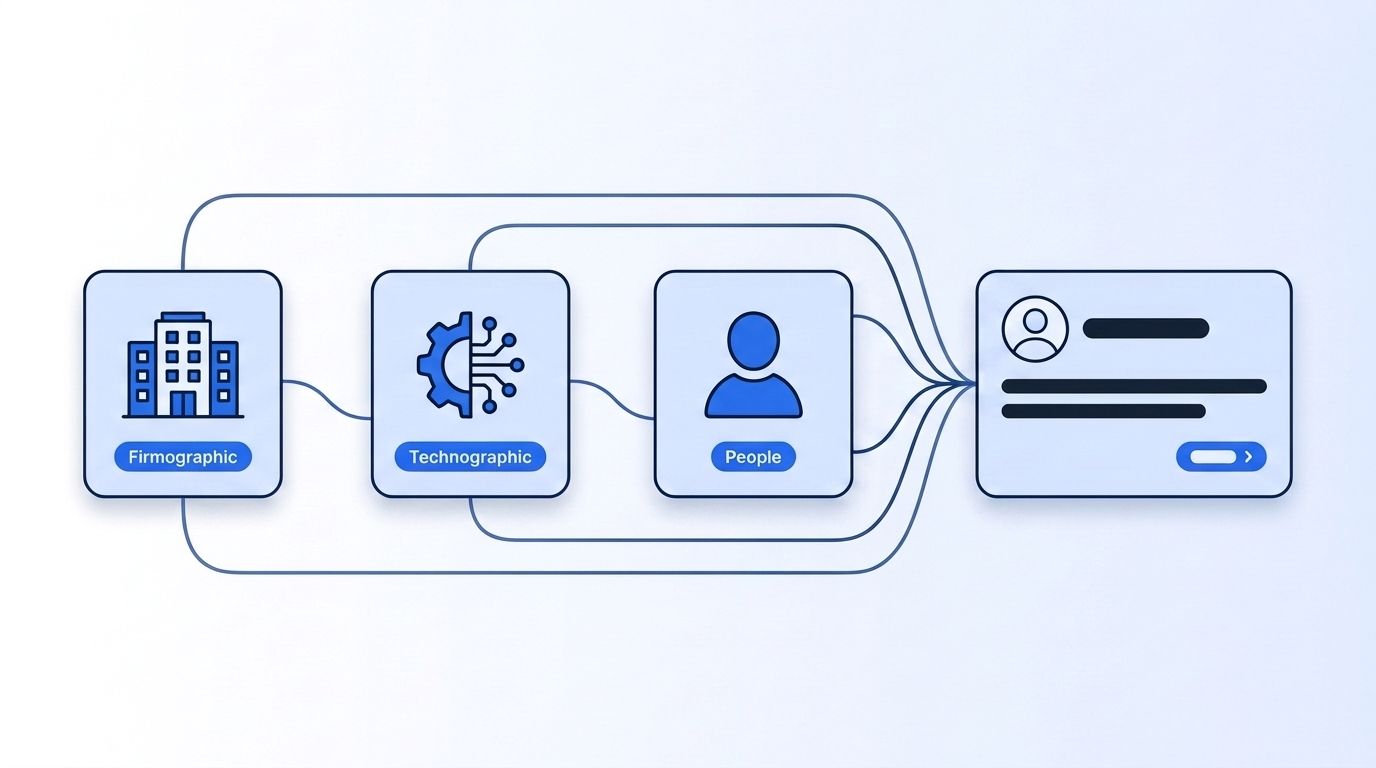
- Firmographic data describes the company (industry, headcount, funding); technographic data describes its tools (CRM, cloud stack); people data describes the individual (title, tenure, contact details). Mixing them up misdirects targeting.
- People data decays fastest — sales and marketing leaders change roles at 12-14% a year (Lusha, 2026) — while firmographic and technographic shifts track discrete events (funding rounds, tool migrations) rather than a fixed monthly curve.
- Use firmographic data for territory and ICP fit, technographic data for competitive displacement and integration targeting, and people data for personalized outreach and lead routing.
- No single vendor wins on all three — real-time APIs beat static databases on freshness, but dedicated technographic engines still detect a deeper tool footprint.
What's the Quick Difference Between Firmographic, Technographic, and People Data?
Firmographic data describes the company as a whole, technographic data describes what software it runs, and people data describes the individual you're trying to reach. Each pulls from different sources, decays on a different clock, and answers a different targeting question — which is why the table below leads with fields, sources, decay, and use case side by side.
| Firmographic Data | Technographic Data | People Data | |
|---|---|---|---|
| Example fields | Industry, headcount, headquarters, specialties, funding round amount/type/date | Tech stack category (CRM, cloud, analytics), tool-level filter values, hiring-for-tool signals | Name, headline, current title, seniority, experience, education, skills, contact info |
| Typical sources | LinkedIn company pages, Crunchbase, SEC/D&B filings, self-reported firmographic filters | Website/tag scraping, job postings mentioning tools, G2/Capterra reviews, dedicated crawlers (BuiltWith, HG Insights) | LinkedIn profiles, public bios, self-reported forms |
| Decay rate | No single verified annual %; changes track discrete events (funding, M&A, headcount swings) rather than a continuous curve | No single verified standalone churn rate; shifts cluster around SaaS renewal cycles, not a fixed monthly decay | Fastest of the three — role changes run 9.9%-13.7% a year by function (Lusha, 2026) |
| Primary use cases | ICP fit scoring, territory planning, TAM sizing, account segmentation | Competitive displacement campaigns, integration-based targeting, product-led growth triggers | Personalized outreach, lead routing, buying-committee mapping, job-change triggers |
Most vendor marketing treats "data decay" as one number applied to an entire database. It isn't. A contact's title decays in months; a company's funding stage decays in quarters; a company's industry classification barely decays at all. Blending all three into a single "our data is X% accurate" claim hides which fields you should actually double-check before a campaign goes out.
What Is Firmographic Data?
Firmographic data is company-level attributes — the things true about the business regardless of who works there. It's what lets you say "companies like this one" instead of "people like this one," and it's the backbone of most ICP scoring models.
Datamagnet's Company Profile endpoint returns structured firmographic fields straight from a LinkedIn company page: name, industry, headcount, headquarters, specialties, and recent updates. Pair it with the Funding Rounds endpoint, which pulls a company's Crunchbase funding history — round type, amount raised, and announcement date — for a fuller financial picture.
Citation capsule: Firmographic data answers "does this company fit our ICP?" using fields like industry, headcount, and funding stage. Unlike a person's job title, these attributes stay stable for months between events like a funding round or acquisition, which is why firmographic checks belong in territory planning rather than daily verification.
What Is Technographic Data?
Technographic data is the layer describing which tools and platforms a company runs — its CRM, cloud provider, analytics stack, or marketing automation platform. It tells you whether a prospect already uses a competitor's product or a tool that integrates cleanly with yours.
Datamagnet's ICP Company Search endpoint includes a technology filter you can query with human-readable values, but it's a targeting filter layered on firmographic and people data, not a dedicated crawler that fingerprints every script tag on a company's website. Dedicated technographic vendors like BuiltWith and HG Insights win here — they run purpose-built crawlers against millions of domains to detect installed technologies at a depth a general-purpose LinkedIn data API doesn't attempt.
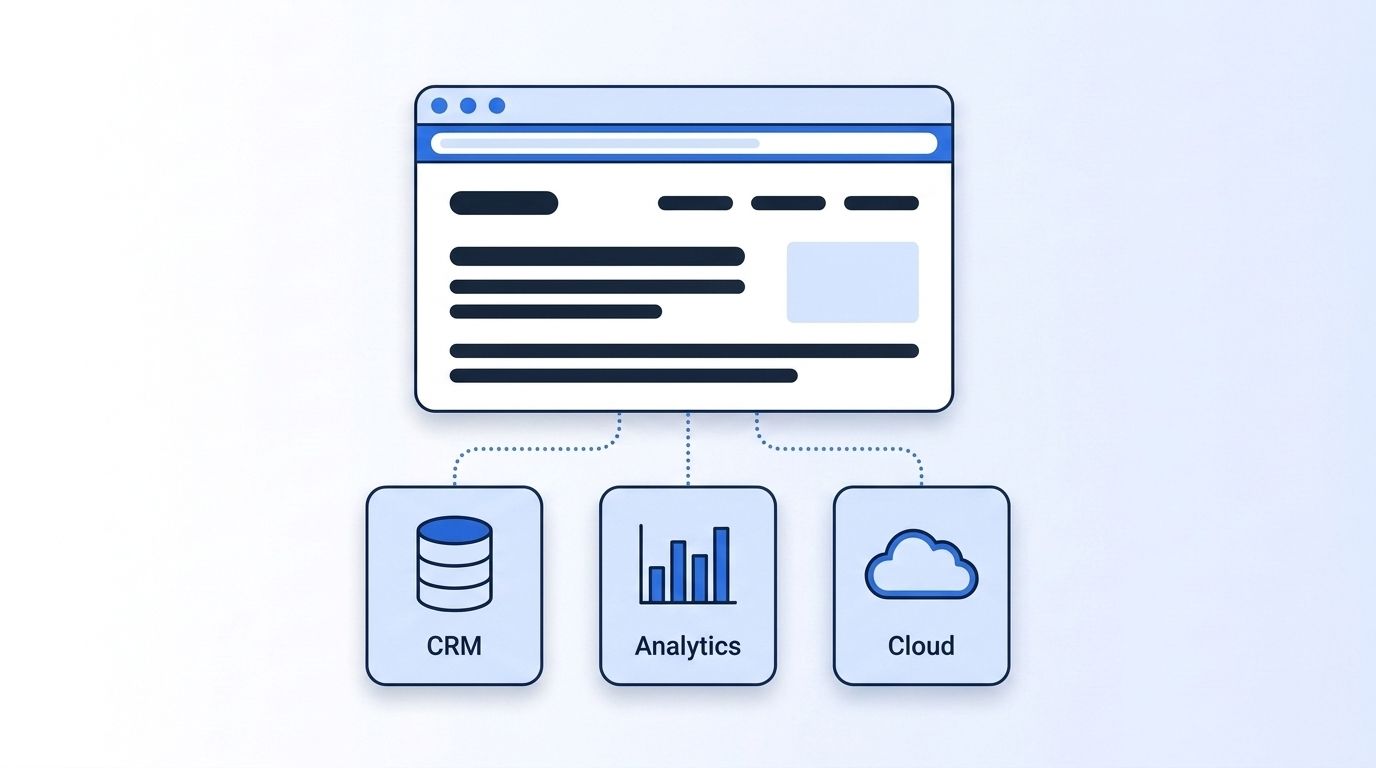
Citation capsule: Technographic data reveals a company's tool footprint — CRM, cloud, and marketing stack — and is best captured by crawlers built specifically for that job. A general people-and-company API can filter on technology as one search dimension; a dedicated technographic engine detects the full stack across the entire web at a scale that filter can't match.
What Is People Data?
People data is everything specific to the individual — name, title, seniority, work history, skills, and contact details. It's the layer sales reps actually act on, because a rep emails a person, not a company.
Datamagnet's People Profile endpoint returns name, headline, current role, experience, education, skills, and contact info from a live LinkedIn profile fetch. The ICP People Search endpoint filters on job title, seniority, function, company, and location so you can pull a target list instead of enriching one record at a time.
Citation capsule: People data is the fastest-moving of the three types because it tracks individual career decisions, not organizational ones. Sales and marketing professionals change roles at 9.9%-13.7% a year depending on function (Lusha, B2B Data Decay, 2026), which means a contact list left untouched for a year has already lost a meaningful share of accurate titles.
How Fast Does Each Data Type Actually Decay?
People data decays the fastest and most measurably of the three, while firmographic and technographic data change in discrete jumps rather than a steady monthly curve. That distinction should decide how often you re-check each field, not a single blanket "refresh everything quarterly" policy.
In 2026, Lusha measured job-change velocity across roughly 141,000-148,000 contacts and found marketing professionals change roles at 13.73% a year, sales at 12.25%, and engineering at 9.9% (Lusha, B2B Data Decay: Rates, Costs, and How Fast Contact Data Goes Wrong, Measured, 2026). Across the first half of 2026 alone, Lusha detected 1,470,414 contacts changing companies and 194,165 getting promoted — about 13,600 job changes a day. HubSpot's separate Database Decay Simulation puts aggregate B2B contact decay at roughly 22.5% a year, and ZoomInfo's own published range runs even wider — 22.5% to more than 70% a year depending on which field you're tracking (ZoomInfo, B2B Data Decay, 2026).
Firmographic and technographic data don't have an equivalent verified annual percentage, because they don't decay continuously — a company's headcount or tech stack only changes when something happens: a funding round, an acquisition, a platform migration, a contract renewal. That's a meaningfully different maintenance problem than a contact's job title, which can go stale on any given day.
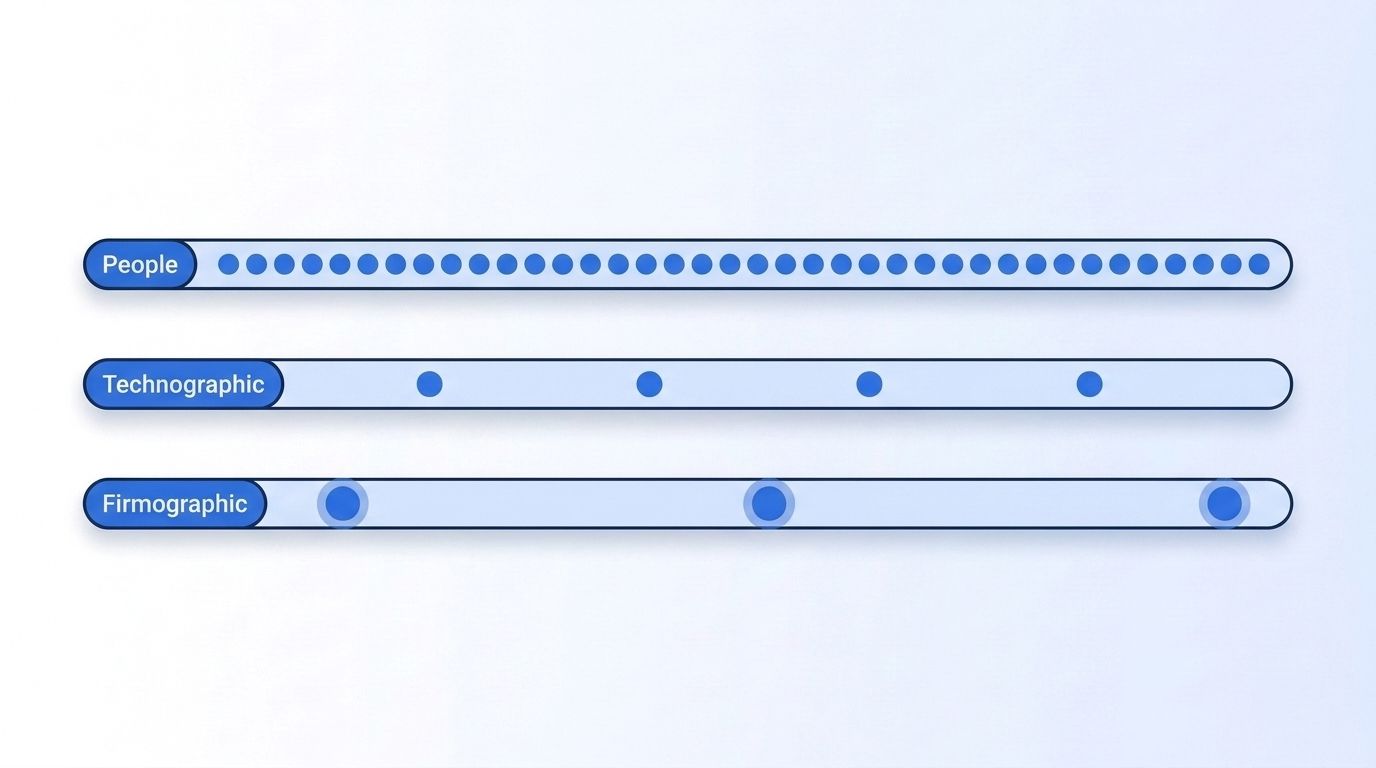
Citation capsule: People data decays continuously and measurably — 9.9% to 13.7% of contacts change roles every year by function (Lusha, 2026). Firmographic and technographic data decay in discrete events instead, which means the right refresh cadence for each data type is different, not a single number applied across your whole CRM.
For more on catching decay as it happens instead of waiting for a scheduled cleanse, see how job-change signals flag stale people records automatically.
Which Data Type Should You Use for Which GTM Motion?
Match the data type to the decision it's meant to support: firmographic for account-level fit, technographic for competitive and integration plays, people data for the actual outreach. Using the wrong layer for a task is a common reason "enriched" lists still underperform.
Territory and ICP planning runs on firmographic data — industry, headcount, and headquarters location decide which accounts belong in a segment. Competitive displacement and integration campaigns run on technographic data — knowing a prospect runs a specific CRM or cloud platform tells you exactly which pitch to lead with. Personalized outreach and lead routing run on people data — a rep needs a name, current title, and contact method, not a company-level attribute.
Even as 67% of B2B buyers now say they'd prefer at least part of their purchase journey without a sales rep involved (Gartner, 2026), the outreach that still happens has to be sharper — which is exactly why matching data type to motion matters more than buying a bigger database.
<!-- [PERSONAL EXPERIENCE] -->Watching GTM teams build their first lead-scoring model is a familiar pattern: they load every available field — firmographic, technographic, and people — into one flat scoring table and wonder why the score doesn't move much between accounts. The fix is almost always separating the layers: score account fit with firmographic data first, layer technographic fit second, then let people data decide who on that account gets contacted and how.
For a worked example of combining these layers into one workflow, see how account research infrastructure for AEs stitches firmographic and people data together before a rep ever opens a prospect's profile.
How Do Vendors Differ in Coverage Across the Three Data Types?
No single vendor leads on firmographic, technographic, and people data at once — coverage depends on whether the provider is built around real-time API lookups, a licensed static database, or a purpose-built crawler. Picking a vendor means matching its actual strength to the layer you need most.
| Vendor | Firmographic Coverage | Technographic Coverage | People Coverage | Data Model |
|---|---|---|---|---|
| Datamagnet | Real-time LinkedIn company data (headcount, industry, funding) fetched live per request | Filter-only via ICP Company Search; no dedicated tech-stack crawler | Real-time LinkedIn profile data plus job-change and engagement signals | Live request-time API, pay-as-you-go |
| HG Insights | Not a primary focus | Purpose-built install-base and tech-spend detection across thousands of technologies | Not a primary focus | Licensed static database |
| BuiltWith | Not a primary focus | Website-technology detection at massive crawled-domain scale | Not a primary focus | Crawled static database |
| ZoomInfo | Broad firmographic database with intent overlays | Technographic data available as an add-on module | Very large static contact database, seat-licensed | Periodic-refresh licensed database |
| Clearbit (now HubSpot Breeze) | Firmographic enrichment bundled into HubSpot | Basic technographic attributes | Contact enrichment bundled into HubSpot | Refresh-cycle database tied to HubSpot |
| Bombora / 6sense | Company-level intent layered on firmographic filters | Not a primary focus | Company-level intent, not individual contact records | Intent signal graph / data co-op |
Bombora's Data Co-op alone tracks more than 21,600 intent topics with 86% of its data exclusive to the co-op (Bombora, Our Data, retrieved 2026-09-18), and 6sense says its signal graph captures roughly one trillion signals a day (6sense, retrieved 2026-09-18) — both a reminder that "coverage" means something different depending on whether you're buying company intent, a technographic fingerprint, or a person's current title. Datamagnet's own strength sits in real-time firmographic and people freshness rather than a technographic crawler, which is exactly why the honest answer to "which vendor" usually involves more than one.
For a closer look at how a real-time API model compares to a seat-licensed static database, see Datamagnet vs. ZoomInfo.
Frequently Asked Questions
What's the main difference between firmographic and technographic data?
Firmographic data describes the company itself — industry, headcount, funding, and location. Technographic data describes what software the company runs — its CRM, cloud provider, or marketing stack. Firmographic data answers "is this the right kind of company?" while technographic data answers "which pitch fits their existing tools?"
Is people data the same as contact data?
Yes, in most B2B contexts "people data" and "contact data" mean the same thing: individual-level fields like name, title, seniority, and contact details, as opposed to company-level firmographic or technographic attributes. Some vendors use "contact data" specifically for email/phone and "people data" for the fuller profile, including work history and skills.
Which data type should I buy first if I have a limited budget?
Start with firmographic data if you're still defining your ICP, technographic data if you're running competitive displacement or integration-based campaigns, and people data if your bottleneck is finding the right contact to reach out to. Most GTM stacks eventually need all three, but the starting point depends on which decision is currently blocked.
Does firmographic data decay as fast as people data?
No. People data decays continuously as individuals change roles — 9.9% to 13.7% a year by function (Lusha, 2026). Firmographic data changes in discrete events like funding rounds or acquisitions, so there's no equivalent verified annual percentage — it needs event-triggered re-verification, not a fixed monthly refresh.
Can one vendor provide all three data types well?
Rarely at the same depth. Real-time APIs like Datamagnet tend to lead on firmographic and people freshness because they query a live source per request, while dedicated technographic vendors like BuiltWith or HG Insights lead on tool-detection depth because that's their sole focus. Most mature GTM stacks combine a real-time people/company API with a specialized technographic or intent source.
Match the Data Type to the Decision, Not the Other Way Around
Firmographic, technographic, and people data answer three different questions — company fit, tool footprint, and individual reachability — and they decay on three different clocks. People data needs the most frequent attention, since role changes run 9.9%-13.7% a year by function, while firmographic and technographic shifts track events rather than a calendar. For a broader look at how these layers fit into a full enrichment stack, see the benefits of programmatic CRM enrichment. Check your own contact list against live LinkedIn data and see how many titles have already changed.
Sources
- HubSpot, Database Decay Simulation, retrieved 2026-09-18, https://www.hubspot.com/database-decay
- Lusha, B2B Data Decay: Rates, Costs, and How Fast Contact Data Goes Wrong, Measured, retrieved 2026-09-18, https://www.lusha.com/blog/b2b-data-decay/
- Lusha, B2B Data Decay Rate: We Measured 12.6% a Year, retrieved 2026-09-18, https://www.lusha.com/blog/b2b-data-decay-rate-measured/
- ZoomInfo, B2B Data Decay: Rates, Costs, and How to Stop It, retrieved 2026-09-18, https://pipeline.zoominfo.com/marketing/b2b-data-decay
- Gartner, Gartner Sales Survey Finds 67% of B2B Buyers Prefer a Rep-Free Experience, retrieved 2026-09-18, https://www.gartner.com/en/newsroom/press-releases/2026-03-09-gartner-sales-survey-finds-67-percent-of-b2b-buyers-prefer-a-rep-free-experience
- Bombora, Our Data, retrieved 2026-09-18, https://bombora.com/our-data/
- 6sense, Homepage, retrieved 2026-09-18, https://6sense.com/
- Datamagnet, Company Profile endpoint, retrieved 2026-09-18, https://docs.datamagnet.co/api-reference/endpoints/company
- Datamagnet, Funding Rounds endpoint, retrieved 2026-09-18, https://docs.datamagnet.co/api-reference/endpoints/funding-rounds
- Datamagnet, ICP Company Search endpoint, retrieved 2026-09-18, https://docs.datamagnet.co/api-reference/endpoints/icp-company-search
- Datamagnet, People Profile endpoint, retrieved 2026-09-18, https://docs.datamagnet.co/api-reference/endpoints/people
- Datamagnet, ICP People Search endpoint, retrieved 2026-09-18, https://docs.datamagnet.co/api-reference/endpoints/icp-people-search
- Datamagnet, Create Signal endpoint, retrieved 2026-09-18, https://docs.datamagnet.co/api-reference/endpoints/signal-create
