
Disclosure: This article is published by Datamagnet. Vendor claims are self-reported unless otherwise noted.
How to Evaluate a Sales Intelligence Vendor's API Uptime SLA
In 2025, Uptrends measured average API uptime falling from 99.66% in Q1 2024 to 99.46% in Q1 2025 - a 60% jump in weekly downtime, from roughly 34 minutes a week to 55 (Uptrends, The State of API Reliability 2025, 2025). If your sales intelligence vendor's API goes dark for even an hour, your enrichment jobs stall, your routing rules stop firing, and your reps start working a stale list without knowing it.
Most buyers read the "99.9% uptime" line on a vendor's pricing page, nod, and move on. That number alone tells you almost nothing about what happens when the API actually breaks. This guide walks through six checks that turn a vague SLA promise into a number you can actually hold a vendor to - the same checks we'd want a buyer to run on us.
Key Takeaways
- Average API uptime dropped from 99.66% to 99.46% between Q1 2024 and Q1 2025, a 60% increase in weekly downtime (Uptrends, 2025).
- 90%+ of mid-size and large enterprises lose more than $300,000 an hour to downtime, and 41% report $1M-$5M+ per hour (ITIC, 2024).
- SLA service credits typically run 5-25% of the monthly fee - rarely enough to offset real pipeline damage (Explorium, 2026).
- 99.9% uptime still allows nearly 9 hours of downtime a year; 99.99% allows under an hour - the gap between "three nines" and "four nines" is the whole evaluation.
- Read the credit ladder, the exclusions clause, and 90 days of the actual status page history before you sign - not just the advertised percentage.
What Do You Need Before You Start Evaluating an SLA?
Before you dig into a vendor's SLA, gather three things: the vendor's public status page URL (or ask for one if it doesn't exist), a copy of the actual SLA contract language - not the marketing page, and a list of the workflows that break if the API goes down for an hour (enrichment jobs, routing rules, real-time lookups). You'll also want a rough sense of your own downtime tolerance: can your team absorb a 10-minute outage, or does even a brief gap cause reps to work stale data without noticing?
Time needed: About 45 minutes per vendor you're evaluating. Difficulty: Beginner - no technical monitoring setup required for this pass.
For a look at how one vendor documents this, see Datamagnet's own security and uptime practices.
Step 1: What Does the Advertised Uptime Number Actually Mean?
By the end of this step, you'll be able to translate any "99.X% uptime" claim into actual downtime minutes per year - the number that matters, not the marketing round-off. Vendors love quoting "three nines" or "four nines" because it sounds precise. It's only useful once you convert it into a unit you can compare against your own tolerance for an outage.
At 99.9% uptime, a vendor is allowed roughly 8 hours 46 minutes of downtime a year, or about 44 minutes a month (uptime.is, SLA & Uptime Calculator, retrieved 2026-07-23). Push that to 99.95%, and the allowance drops to about 4 hours 23 minutes a year. At 99.99%, you're down to just 52 minutes a year - under 5 minutes a month (Hyperping, Uptime SLA Calculators, retrieved 2026-07-23). Each additional "nine" cuts allowed downtime by roughly 10x, and most of that gap sits in how the vendor architects for redundancy, not in how confidently they market the number.
Citation capsule: A vendor advertising 99.9% uptime is contractually allowed nearly nine full hours of downtime a year - enough for a multi-hour outage during a critical send window. Moving to 99.99% cuts that allowance to under an hour, which is why the difference between "three nines" and "four nines" matters far more than the two digits suggest.
Step 2: Does the Vendor's Actual Uptime History Match the SLA Target?
By the end of this step, you'll know whether a vendor's real-world track record matches what they advertise. An SLA target is a promise; a status page is a receipt. The two don't always agree, and the gap is where buyers get burned.
Industry-wide, API reliability is trending the wrong way. Uptrends' 2025 report - based on 2 billion monitoring checks across 400+ companies in 20 industries - found the average "API Reliability Index" sits at just 63 out of 100, and 67% of monitoring errors traced back to API issues specifically, not front-end code (Uptrends, The State of API Reliability 2025, 2025). That context matters: a vendor's SLA target tells you what they're contractually obligated to hit, but the industry-wide trend tells you how often vendors are actually missing it.
Ask every vendor on your shortlist for a link to a public, third-party-hosted status page (not a page they control internally), plus 90 days of incident history. Isn't it telling when a vendor can't produce either? A vendor confident in its reliability makes that history easy to find - check Datamagnet's own changelog for an example of what ongoing reliability transparency looks like in practice.
Step 3: What Does an Outage Actually Cost Your Pipeline?
By the end of this step, you'll have a dollar figure for what an hour of vendor downtime costs your team - the number that should anchor every SLA negotiation. Most buyers never run this math, which is exactly why vendors can get away with thin service credits.
As of 2024, over 90% of mid-size and large enterprises reported losing more than $300,000 an hour to downtime, and 41% said hourly costs run $1M-$5M or more, based on a survey of 1,000+ firms (ITIC, 2024 Hourly Cost of Downtime Report, 2024). A separate 2026 Splunk and Cisco study, drawing on 2,000 executives across 20 countries, put the average cost of unplanned downtime at roughly $15,000 a minute - about $900,000 an hour - with Global 2000 companies losing $600 billion annually in aggregate, up 50% in two years (Splunk with Cisco, The Hidden Costs of Downtime 2026, 2026).
Run your own workflows through this math: if your team processes $50,000 in pipeline-influencing activity during a typical business hour, even a fraction of an hour of vendor downtime at a critical moment - end of quarter, a live campaign launch - can outweigh a full year of subscription fees. That's the number to bring to a vendor negotiation, not the advertised uptime percentage.
Step 4: Read the SLA Credit Ladder and Exclusions Clause Line by Line
By the end of this step, you'll know exactly what a vendor owes you when they miss their SLA - and how little that usually is relative to real damage. This is the clause buyers skip fastest and regret skipping most.
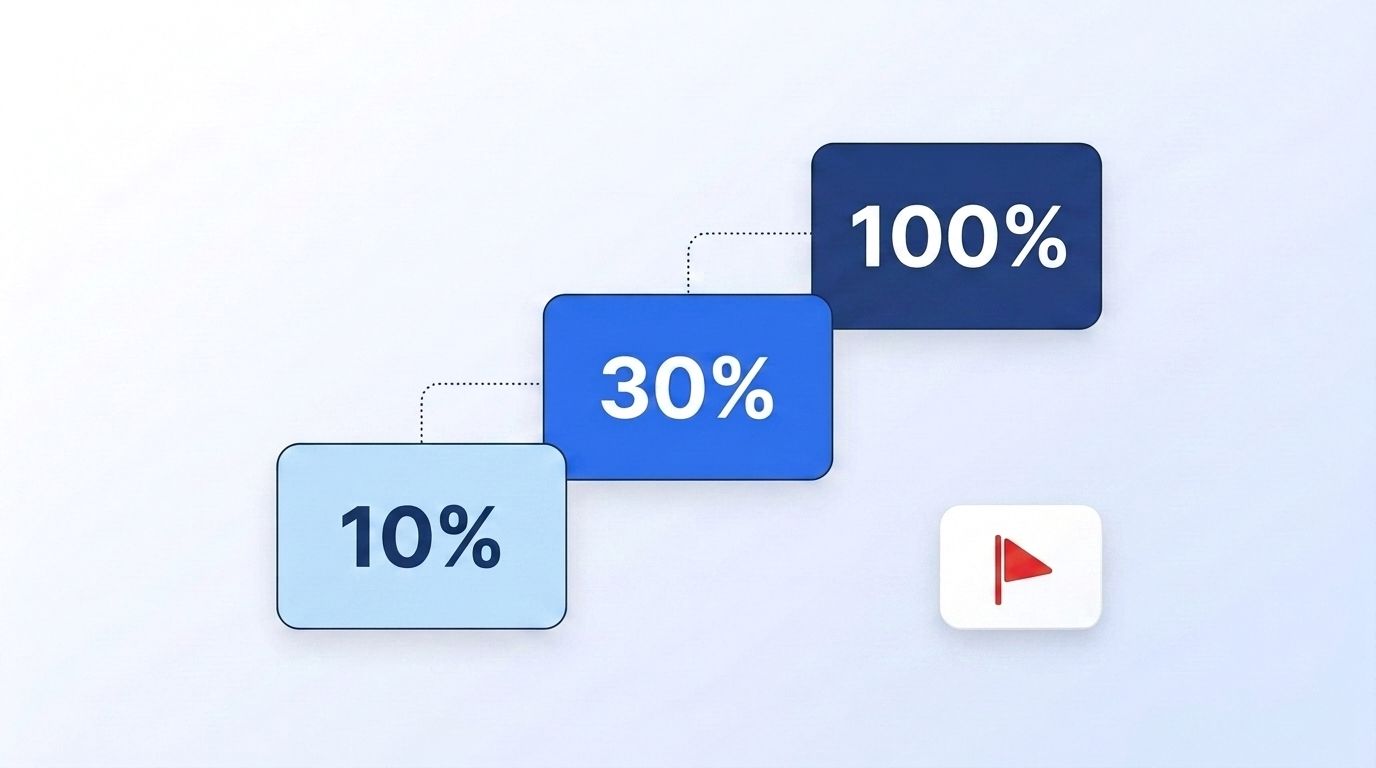
Cloud infrastructure providers set the pattern most SaaS vendors copy loosely. AWS's compute SLA pays a 10% service credit if monthly uptime falls below 99.99% but stays at or above 99.0%, 30% if it drops below 99.0% but stays at or above 95.0%, and 100% only below 95.0% (Amazon Web Services, Amazon Compute Service Level Agreement, retrieved 2026-07-23). Google Cloud's credit ladders typically cap at 50% of the monthly bill for the affected resource (Google Cloud, Compute Engine SLA, retrieved 2026-07-23). For B2B data APIs specifically, typical service credits run 5-25% of the monthly fee - a fraction of what a real outage costs your pipeline, and they rarely cover downstream damage like missed sends or stale routing decisions (Explorium, What SLA Terms Should You Look for in a B2B Data API Contract?, 2026).
Three questions to ask before signing:
- Is uptime measured 24/7, or only during "business hours"? A vendor measuring uptime 9-to-5 on weekdays can hide a lot of weekend downtime from the number they report.
- Do scheduled maintenance windows count against the SLA? Some contracts exclude them entirely, which lets a vendor take planned downtime for free.
- What counts as an "incident" for credit purposes? Degraded performance - slow responses, partial data - often doesn't trigger a credit the way full outages do, even though it breaks your workflow just as badly.
If you want a reference point for how granular error reporting should be, see Datamagnet's API error and status code reference.
Step 5: Does Monitoring and Rate-Limit Behavior Match What You Were Told?
By the end of this step, you'll know whether a vendor's operational discipline backs up its uptime claims, or whether the SLA number is aspirational. Reliability isn't just about staying up - it's about how gracefully a vendor's API degrades and recovers when something goes wrong.
Only 57% of API teams adopt performance testing, and 17% run no API monitoring tools at all, based on a survey of 5,700+ developers, architects, and executives (Postman, 2025 State of the API Report, 2025). On the incident-response side, 40% of SRE and reliability professionals handled 1-5 incidents in the prior 30 days, and 23% handled 6-10, based on a survey of 301 practitioners (Catchpoint, The SRE Report 2025, 2025). Ask a vendor directly what their internal monitoring stack looks like and how they page an engineer when an endpoint degrades - a vague answer is itself a data point.
Rate limits and credit visibility matter here too. A vendor whose API silently throttles you during a traffic spike creates the same broken-workflow effect as an outage, just without tripping the SLA. Check whether the vendor exposes a live credit balance endpoint so your team can monitor usage in real time instead of discovering a rate-limit wall mid-campaign.
<!-- [UNIQUE INSIGHT] -->Most buyers evaluate uptime and rate limits as separate line items. They're the same risk wearing two names - a rate-limited request that fails looks identical to a downed endpoint from your integration's point of view, but only one of those triggers an SLA credit. Ask a vendor how they classify throttling in their SLA before you assume rate limits are covered.
Step 6: How Do You Pressure-Test the SLA With a Trial and a Reference Call?
By the end of this step, you'll have real evidence instead of a vendor's word. Contract language only tells you what's supposed to happen - a trial run and a customer reference tell you what actually does.
Reliability gaps show up consistently in how B2B buyers talk about sales-tech vendors after the sale. A 2025 analysis of roughly 2,500 G2 reviews across five sales-tech categories found recurring pain points around outdated data, integration friction, and onboarding that ran slower than promised (G2, A G2 Review Data Analysis: What EMEA Sales Tech Buyers Want in 2026, 2025). Reading recent reviews for exactly these complaints, not just star ratings, tells you more about a vendor's day-to-day reliability than the SLA document does.
Before you sign, run a real workload through the vendor's sandbox or quickstart flow, watch response times under your actual query volume, and ask for two customer references specifically about reliability - not sales enablement. Then ask each reference the one question SLA documents never answer: has this vendor ever actually paid out a service credit, and how hard was it to collect?
For more on what production-load reliability looks like from a vendor's side, see how Datamagnet's real-time people data API handles live lookups at scale.
Put the Framework to Work Before You Sign
An advertised uptime percentage is a starting point, not a verdict. Convert it into actual downtime minutes, check it against the vendor's real incident history, price out what an outage costs your own pipeline, and read the credit ladder closely enough to know it won't make you whole. Datamagnet publishes its own uptime target and data practices for exactly this reason - buyers should be able to check a vendor's claims the same way this guide teaches you to check anyone else's. Compare Datamagnet's real-time API against your current vendor - most evaluations take less than the 45 minutes this framework requires.
Frequently Asked Questions
What uptime SLA should a sales intelligence API vendor offer?
Look for at least 99.9% uptime measured continuously, not just during business hours, which caps allowed downtime at about 8 hours 46 minutes a year (uptime.is, retrieved 2026-07-23). Vendors offering 99.95% or 99.99% give you meaningfully less exposure, but confirm the number applies to the specific endpoints you'll actually use, not just the platform overall.
How much should an SLA service credit actually be worth?
Typical B2B data API service credits run 5-25% of the affected monthly fee (Explorium, 2026), which rarely covers real pipeline damage given that over 90% of mid-size and large enterprises lose more than $300,000 an hour to downtime (ITIC, 2024). Treat the credit as a discount on a bad month, not compensation for the outage itself.
Does a status page guarantee a vendor is telling the truth about uptime?
No, but a third-party-hosted, publicly accessible status page with a visible incident history is a stronger signal than a vendor's self-reported percentage alone. Cross-check the status page's incident count against how the vendor's uptime percentage is calculated - some vendors exclude certain incident types from the published number.
What's the difference between an SLA and an SLO?
An SLA (service level agreement) is the contractual promise with financial consequences for missing it. An SLO (service level objective) is the internal target a vendor's engineering team works toward, which is often stricter than the SLA to leave an error budget - the gap between the SLO and 100% - before a missed SLO actually breaches the SLA (Google, Site Reliability Engineering, 2016).
Should rate limiting be covered under an API uptime SLA?
It should be addressed explicitly, even though many SLAs treat rate limiting as separate from downtime. A throttled request that fails looks identical to a downed endpoint from your application's perspective, so ask the vendor directly whether sustained rate-limit failures count toward SLA credit eligibility before you assume they do.
Sources
- Uptrends, The State of API Reliability 2025, retrieved 2026-07-23, https://www.uptrends.com/state-of-api-reliability-2025
- ITIC, 2024 Hourly Cost of Downtime Report, retrieved 2026-07-23, https://itic-corp.com/itic-2024-hourly-cost-of-downtime-report/
- Splunk with Cisco, The Hidden Costs of Downtime 2026, retrieved 2026-07-23, https://newsroom.cisco.com/c/r/newsroom/en/us/a/y2026/m05/the-600-billion-wake-up-call-new-splunk-research-reveals-downtime-is-a-systemic-business-crisis.html
- Amazon Web Services, Amazon Compute Service Level Agreement, retrieved 2026-07-23, https://aws.amazon.com/compute/sla/
- Google Cloud, Compute Engine SLA, retrieved 2026-07-23, https://cloud.google.com/compute/sla
- Explorium, What SLA Terms Should You Look for in a B2B Data API Contract?, retrieved 2026-07-23, https://www.explorium.ai/blog/business-data/what-sla-terms-should-you-look-for-in-a-b2b-data-api-contract/
- Postman, 2025 State of the API Report, retrieved 2026-07-23, https://www.postman.com/state-of-api/2025/
- Catchpoint, The SRE Report 2025, retrieved 2026-07-23, https://www.catchpoint.com/learn/sre-report-2025
- G2, A G2 Review Data Analysis: What EMEA Sales Tech Buyers Want in 2026, retrieved 2026-07-23, https://learn.g2.com/tech-signals-what-emea-sales-tech-buyers-want-in-2026
- Google, Site Reliability Engineering ("Embracing Risk" chapter), retrieved 2026-07-23, https://sre.google/sre-book/embracing-risk/
- uptime.is, SLA & Uptime Calculator, retrieved 2026-07-23, https://uptime.is/
- Hyperping, Uptime SLA Calculators, retrieved 2026-07-23, https://hyperping.com/99.99
- Datamagnet, Security & Data Practices, retrieved 2026-07-23, https://www.datamagnet.co/security/
