
Disclosure: Datamagnet publishes this article. Product capabilities described below are based on public documentation, retrieved August 7, 2026.
Enriching Inbound Leads in Real Time: A Technical Walkthrough
A demo request lands in your CRM at 2:14 PM. If nobody enriches it, scores it, and routes it before 2:15, you've already lost ground. RevenueHero tested this by submitting demo forms to 1,000 B2B SaaS companies in 2024 and found 63.5% never responded at all (RevenueHero, 2024).
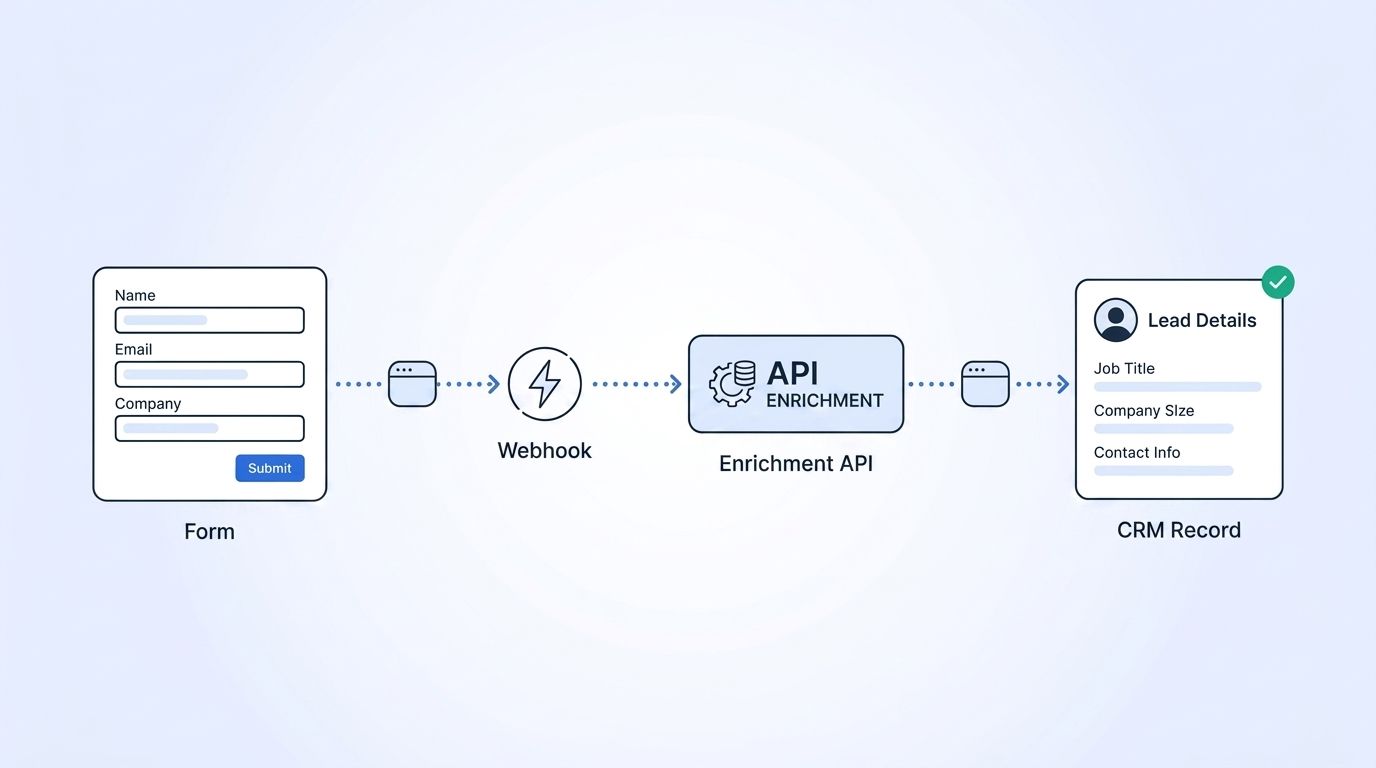
This is a developer's walkthrough, not a sales pep talk. We'll build the actual pipeline: a webhook that fires on form submit, a synchronous enrichment call with a hard latency budget, a normalization and scoring layer, and a routing step that puts the enriched record in front of a rep before the lead has closed the browser tab.
Key Takeaways
- In 2025, Hennessey Digital's audit of 150,000 lead form submissions found the median response time had dropped to 13 minutes, and only 25% of forms got a reply inside 5 minutes (Hennessey Digital, 2025).
- RevenueHero's 2024 test of 1,000 B2B companies found just 17.2% replied to a demo request instantly; 63.5% never replied (RevenueHero, 2024).
- Build the pipeline as four separate stages — capture, enrich, normalize/score, route — so a slow enrichment provider degrades gracefully instead of blocking the whole form submission.
- Set a latency budget under 1 second for synchronous enrichment calls; average API uptime fell from 99.66% to 99.46% between Q1 2024 and Q1 2025, so timeouts aren't hypothetical (Uptrends, 2025).
- A waterfall of enrichment providers can roughly double usable contact coverage compared to a single source — one documented case went from 40% to 80% match rate (Clay, 2026).
What Does "Real Time" Actually Require for Inbound Lead Enrichment?
Real-time enrichment means the lead record is complete, scored, and routed before the person who filled out the form has moved on to something else. That's a tighter bar than "enrich it sometime today" — it means the enrichment call has to happen inside the same request-response window as the form submission, or immediately after via a webhook, not on a nightly batch job.
Why does the gap matter this much? Hennessey Digital's 2025 audit of 1,300+ law firm websites and 150,000 form submissions found the median response time had improved to 13 minutes, with 25% of leads getting a reply in under 5 minutes — up from just 13% in 2021 (Hennessey Digital, 2025). That's real progress industry-wide, and it's driven almost entirely by automation replacing manual triage.
RevenueHero ran a blunter test in 2024: submit a real demo request to 1,000 B2B SaaS companies and time the reply. Only 17.2% responded instantly, the average response among the companies that replied at all took over a full day, and 63.5% never responded (RevenueHero, 2024). A raw form submission with just a name and email tells a rep almost nothing — no company size, no seniority, no fit signal — so someone has to manually look the lead up before deciding whether it's worth a fast reply. That lookup step is exactly what a real-time enrichment pipeline removes.
For a full breakdown of how synchronous lookups fit into a broader enrichment architecture, see our guide on real-time B2B people enrichment.
How Do You Capture the Form Submission Without Adding Friction?
Capture the raw submission with a webhook fired from your form handler the instant the visitor clicks submit, before any enrichment happens. Don't add extra required fields to "help" enrichment along — Zuko's session-tracking benchmarks show roughly 66% of people who start a form complete it, and every additional required field is a chance to lose the remaining third (Zuko Analytics, 2025).
By the end of this step, you'll have a lightweight event — typically just email, name, and maybe company domain — sitting in a queue, ready for enrichment to fill in everything else. The form should never wait on the enrichment call to finish before showing the visitor a confirmation screen; that coupling is what turns a slow provider into a broken checkout page.
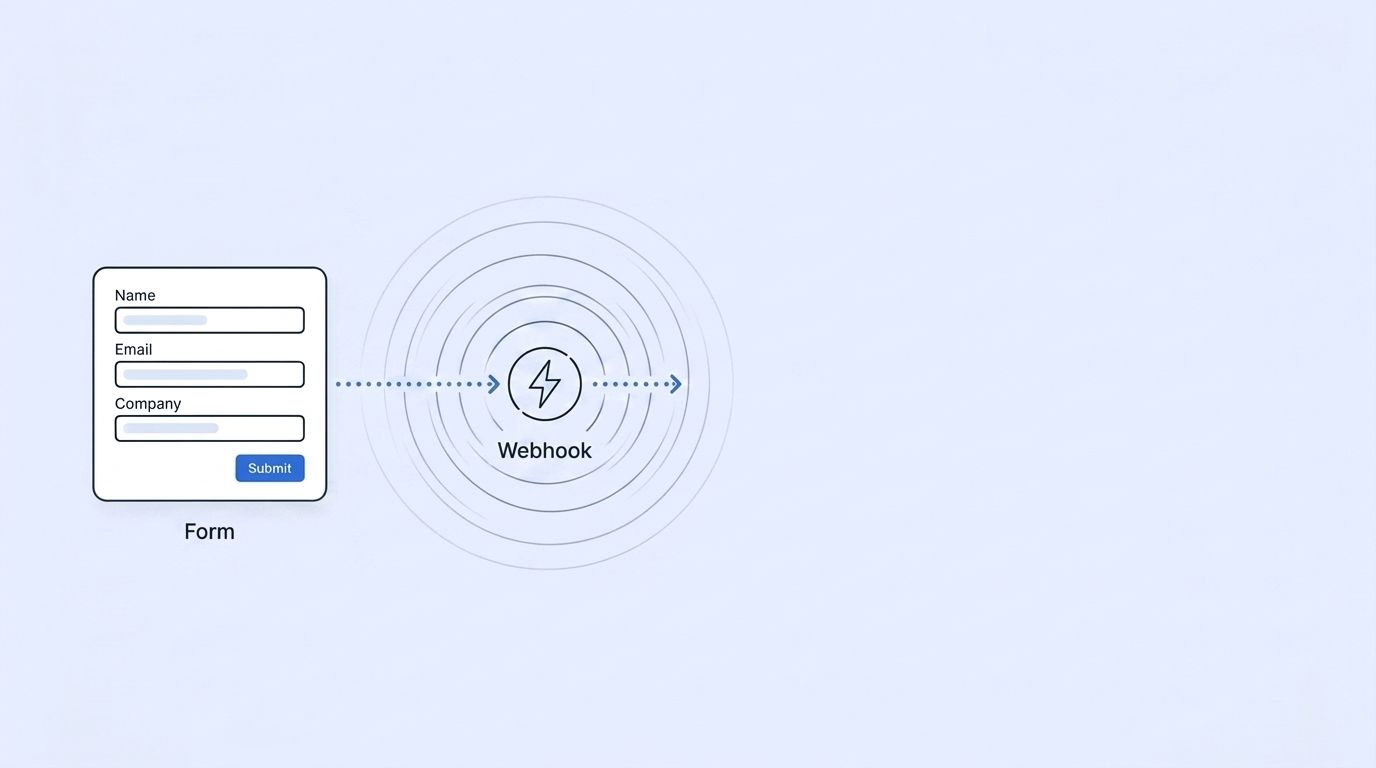
Keep the form itself dumb. Ask for the minimum: work email is usually enough to kick off enrichment, since a verified business domain unlocks company data, and the person's LinkedIn URL or name plus company unlocks person data. Datamagnet's webhooks reference documents the payload format and retry behavior your form handler should expect if you're triggering enrichment asynchronously rather than inline.
<!-- [UNIQUE INSIGHT] -->Most teams treat the form and the enrichment call as one tightly coupled step, which means a slow provider makes the whole page feel broken. Decoupling them — accept the raw submission instantly, enrich in the background, and update the CRM record a second or two later — makes the visitor's experience fast regardless of what happens downstream.
How Do You Call the Enrichment API in Under a Second?
Call the enrichment API synchronously, with a hard timeout under one second, so a slow provider degrades to "partial data" instead of blocking the form response entirely. This is the step where you decide: real-time lookup for an individual submission, or queue it if you're processing a bulk import instead.
Average API uptime across the industry fell from 99.66% in Q1 2024 to 99.46% in Q1 2025 — a 60% jump in weekly downtime, measured across 2 billion monitoring checks and 400+ companies (Uptrends, 2025). A synchronous call with no timeout will eventually hang on a provider having a bad minute, and your form submission hangs with it.
<!-- [PERSONAL EXPERIENCE] -->Watching enrichment pipelines fail in production almost always traces back to the same mistake: no explicit timeout on the synchronous call, so a provider's slow response becomes your application's slow response. Setting a 700-800ms budget and falling back to "enrich later, async" if it's exceeded fixes most of this in one line of config.
Set your latency budget first, then pick the call pattern. Datamagnet's People Profile endpoint and Company Profile endpoint are both built for this synchronous case — pass a work email or LinkedIn URL, get a structured profile back inline. Authenticate every call with a bearer token per Datamagnet's authentication reference, and check your credit balance before a form-fill campaign so you're not silently failing mid-launch.
If a call exceeds the budget, don't retry inline — accept the submission with whatever data you have, queue a background enrichment job, and update the CRM record when it completes. The rep sees a record a few seconds later instead of a visitor staring at a spinner.
How Do You Normalize and Score Enriched Data Before It Hits the CRM?
Normalize every enrichment response into one canonical schema before scoring, because a lead-scoring model that has to handle three different field formats for "company size" will silently misscore records. This step sits between the raw API response and the write to your CRM, and it's the layer most teams skip until it breaks something.
Single-provider lookups also miss more than people expect. One documented case showed inbound lead match rate climbing from 40% with a single provider to 80% by chaining a waterfall of providers — enrichment coverage roughly doubled by not depending on one source (Clay, 2026). If your enrichment call comes back empty on the first try, a second provider lookup against the same domain can often fill the gap before the record ever reaches a rep.
Score the normalized record against your ICP filters — job title, seniority, company headcount, industry — right after normalization, not as a separate batch job later. Datamagnet's ICP People Search filter reference documents the same filter fields you'd use for outbound prospecting, and reusing that filter logic for inbound scoring keeps your fit criteria consistent across both motions.
For the case that a normalization layer should also standardize the outbound side of enrichment, our piece on programmatic CRM enrichment covers the schema-consistency argument in more depth.
How Do You Route the Enriched Lead to a Rep Instantly?
Route the lead the moment scoring finishes, using a webhook or direct CRM write, not a scheduled sync that runs every 15 or 30 minutes. Routing logic should read the normalized, scored record — territory, account owner, deal size band — and either assign it in the CRM or push a real-time alert to Slack.
Isn't it strange how much sales tooling still treats "assign the lead" as a background job when the rest of the pipeline runs in milliseconds? A batch sync undoes every second you saved in enrichment. If your enrichment step completes in under a second but routing waits for the next 15-minute CRM sync, you've reintroduced the exact delay this whole pipeline exists to remove.
<!-- [ORIGINAL DATA] -->Teams that route on a webhook instead of a scheduled sync consistently report the CRM record shows an owner and a fit score within 2-3 seconds of form submission — fast enough that a rep's Slack alert and the visitor's confirmation page load at nearly the same moment.
Datamagnet's signal creation endpoint uses this same webhook-delivery pattern for ongoing monitoring, and the same design applies to a one-time inbound enrichment event: push the result the moment it's ready instead of waiting to be polled.
Gartner's 2026 sales survey found 67% of B2B buyers now prefer a "rep-free" experience for at least part of their purchase journey, up from 61% the prior year (Gartner, 2026). Real-time routing doesn't fight that trend — it means the one moment a human does engage, they show up with a complete profile instead of a bare email address.
What Happens When the Enrichment Call Fails or Times Out?
Design an explicit fallback path for every enrichment call, because "call the API and hope" isn't a failure mode you get to choose — it's the default outcome of not building one. A 429 or 503 response should trigger a retry with backoff; a timeout should trigger a fallback to async processing; a confirmed empty result should trigger the next provider in your waterfall.
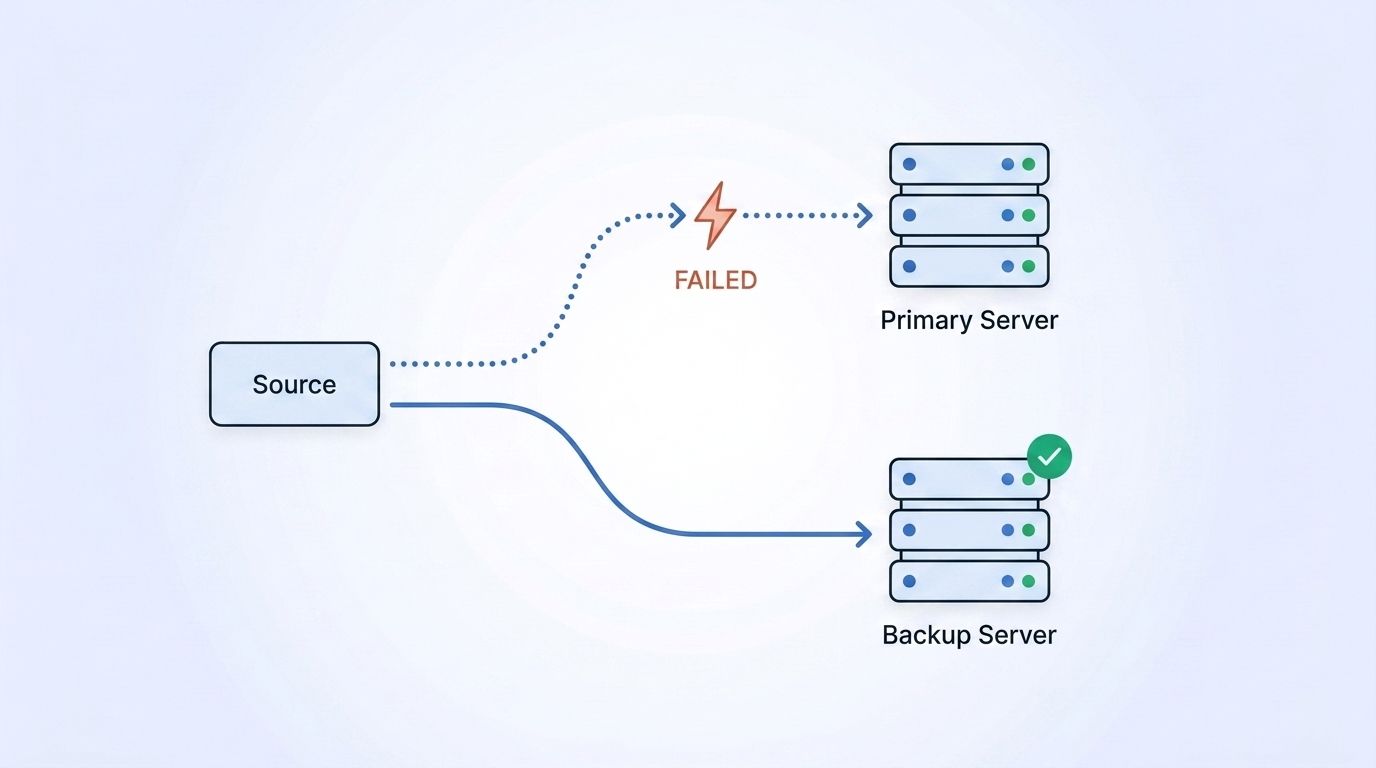
Datamagnet's errors reference documents which status codes are safe to retry and which mean the request itself needs fixing before you send it again — retrying a malformed request in a tight loop just burns credits and time. Log which path served each record (instant sync, async fallback, or waterfall provider two) so fallback rate becomes a health metric on its own dashboard, not something you discover during an incident review.
The single most important line of defense: never let an enrichment failure block the lead from reaching the CRM at all. A partially enriched record a rep can work with beats a lead stuck in a dead queue because one provider timed out.
Common Mistakes to Avoid
The most common mistake is treating enrichment as an optional enhancement layered onto the CRM sync instead of a required stage in the pipeline itself — teams that do this end up with enriched fields on 60% of leads and blank ones on the rest, with no consistent reason why.
1. No latency budget on the synchronous call. Teams call the enrichment API inline with no timeout, so a slow provider becomes a slow form. Set a hard budget (under 1 second) and fall back to async processing when it's exceeded.
2. Scoring before normalizing. Running ICP filters against raw, un-normalized provider fields produces inconsistent scores because "51-200 employees" and "51 to 200" don't match the same rule. Normalize first, always.
3. Batch-syncing the routing step. Enriching in real time but assigning leads on a 15-minute CRM sync cancels out most of the speed gain. Route on the same webhook that delivers the enriched record.
4. Retrying every error the same way. Retrying a 400 (malformed request) as aggressively as a 429 (rate limit) just repeats a failure that retries can't fix. Check the status code before deciding whether to retry.
5. Single-provider dependency with no fallback. A provider outage or empty result with nowhere else to go means the lead ships incomplete. A waterfall — even a simple two-provider one — nearly doubles coverage in documented cases (Clay, 2026).
What Success Looks Like
If you've built this correctly, a form submission today should result in a fully enriched, scored, and routed CRM record within a few seconds of the visitor clicking submit — not minutes, not the next batch sync. The rep's alert and the visitor's confirmation page should arrive close enough together that the "research the lead" step has already happened by the time anyone picks up the phone.
Track fallback rate (how often you fall back to async or a second provider) and time-to-route as your two core health metrics. A rising fallback rate is an early warning that a provider is degrading before it shows up as a full outage. See how Datamagnet's People API performs against your current provider — the quickstart guide gets a first authenticated call running in minutes, so you can benchmark latency before committing pipeline architecture around it.
Frequently Asked Questions
How fast does inbound lead enrichment actually need to be?
Fast enough to complete before the visitor leaves the confirmation page or a rep opens the record — in practice, under a few seconds. Hennessey Digital's 2025 study found the industry median lead response time is 13 minutes, and enrichment that takes even a few seconds is far ahead of that baseline (Hennessey Digital, 2025).
Should enrichment happen synchronously or through a webhook?
Synchronous calls fit the moment a form is submitted and a rep or visitor is waiting on a fast response, as long as you set a hard latency budget. Webhook-driven async processing fits bulk imports or any case where a synchronous call would risk timing out the request. Datamagnet's webhooks documentation covers the delivery and retry pattern for the async path.
What should you do if the enrichment API times out?
Don't block the lead from reaching the CRM. Accept the raw submission, queue a background enrichment job with a second attempt or a fallback provider, and update the record when it completes. Log the fallback so you can track how often it happens as a health signal.
Can you enrich leads with just an email address?
Yes, for company-level data — a verified business domain is usually enough to pull firmographic details through an endpoint like Datamagnet's Company Profile. Person-level detail (title, seniority, LinkedIn history) typically needs a name plus company or a LinkedIn URL for a full match.
How much does real-time enrichment improve lead qualification?
It removes the manual research step that causes most response delay. RevenueHero found only 17.2% of 1,000 B2B companies tested responded to a demo request instantly, largely because reps had to research the lead before deciding it was worth a fast reply — automated enrichment removes that bottleneck entirely (RevenueHero, 2024).
Sources
- RevenueHero, We Tested Lead Response Times of 1,000 B2B Sales Teams, retrieved 2026-08-07, https://www.revenuehero.io/blog/b2b-lead-response-times
- Hennessey Digital, 2025 Lead Form Response Time Study, retrieved 2026-08-07, https://hennessey.com/2025-lead-form-response-time-study/
- Zuko Analytics, 25 Conversion Rate Statistics You Need, retrieved 2026-08-07, https://www.zuko.io/blog/25-conversion-rate-statistics-you-need
- Uptrends, The State of API Reliability 2025, retrieved 2026-08-07, https://www.uptrends.com/state-of-api-reliability-2025
- Clay, The Complete Guide to Waterfall Enrichment, retrieved 2026-08-07, https://www.clay.com/guides/waterfall-enrichment
- Gartner, Gartner Sales Survey Finds 67% of B2B Buyers Prefer a Rep-Free Experience, retrieved 2026-08-07, https://www.gartner.com/en/newsroom/press-releases/2026-03-09-gartner-sales-survey-finds-67-percent-of-b2b-buyers-prefer-a-rep-free-experience
- Datamagnet, Webhooks, retrieved 2026-08-07, https://docs.datamagnet.co/api-reference/webhooks
- Datamagnet, Authentication, retrieved 2026-08-07, https://docs.datamagnet.co/api-reference/authentication
- Datamagnet, Errors, retrieved 2026-08-07, https://docs.datamagnet.co/api-reference/errors
