
Disclosure: Datamagnet publishes this article. Product capabilities, pricing, and ratings described below are based on public vendor documentation and review sites, retrieved July 29, 2026. Confirm current pricing and connector coverage with each vendor before committing budget.
9 Best Reverse ETL Tools for GTM Teams in 2026
Your warehouse knows things your CRM doesn't. It has the enriched firmographic data, the lead score, the product-usage signal, all sitting in Snowflake or BigQuery while your reps stare at a Salesforce record that hasn't updated since last quarter. Reverse ETL exists to close that gap, and in 2026 the market for it just went through its biggest shake-up yet.
In May 2025, Fivetran acquired Census, the reverse ETL category's longtime G2 leader, to build what it calls the first end-to-end data-movement platform spanning ingestion, transformation, and activation (Fivetran, press release, May 2025). That deal reshuffled the whole shortlist GTM teams used to reach for by default. Here's what actually belongs on it now.

Key Takeaways
- Fivetran acquired Census in May 2025, folding the category's longtime leader into a combined ELT-plus-activation platform with 900+ connectors (Fivetran, 2025).
- Hightouch raised a $150M Series D in April 2026 at a $2.75B valuation, reporting 100%+ growth in each of the past two years (BusinessWire, 2026).
- Gartner has long estimated that poor data quality costs the average organization $12.9 million a year (Gartner) — reverse ETL exists specifically to keep the CRM copy of your data as fresh as the warehouse copy.
- No single tool wins on every axis: Hightouch and Weld lead on destination breadth, Omnata wins on Snowflake-native security, and Airbyte and Meltano are the open-source options for technical teams.
- Reverse ETL moves data one direction (warehouse to app); it still needs a source of accurate, enriched people and company data feeding the warehouse in the first place.

What Is Reverse ETL, and Why Do GTM Teams Need It in 2026?
Reverse ETL syncs data out of your warehouse and into the operational tools your team already works in, reversing the direction of a traditional ETL pipeline that pulls data into the warehouse. Instead of a data analyst running a manual export and a rep re-uploading a CSV to Salesforce, a reverse ETL tool watches a warehouse table or model and pushes updates automatically, on a schedule or in near real time.
GTM teams need this because the modeling work — lead scoring, ICP fit, enrichment matching — increasingly happens in the warehouse, not the CRM. Programmatic CRM enrichment only pays off if the enriched record actually lands where a rep or a workflow can act on it. A dbt model that scores accounts is worthless to an SDR if nobody ever gets it into their queue.
Citation capsule: Reverse ETL syncs modeled, enriched warehouse data into operational tools like Salesforce, HubSpot, and Slack, replacing manual CSV exports with scheduled or event-triggered syncs. The category consolidated sharply in 2025 when Fivetran acquired category leader Census, folding it into a combined ingestion-plus-activation platform.
At a Glance: How Do the 9 Best Reverse ETL Tools Compare?
| Tool | Best for | Destinations | Pricing model | G2 rating |
|---|---|---|---|---|
| Hightouch | Broadest destination coverage | 300+ | Usage-based, free tier available | 4.6/5 (386 reviews) |
| Fivetran Activations (formerly Census) | Combined ELT + activation platform | 900+ (full platform) | Monthly Active Rows (MAR), consumption-based | 4.5/5 (339 reviews, pre-acquisition) |
| RudderStack | CDP teams who also need reverse ETL | 200+ | Usage-based (event volume) | 4.7/5 (~51 reviews) |
| Workato | Enterprise governance and compliance | 1,200+ (broad iPaaS) | Recipe/task-based, custom quotes | 4.7/5, G2 Leader in Reverse ETL |
| Weld | Predictable, flat-rate pricing | 300+ | Flat subscription from $99/month | 4.8/5 |
| Polytomic | No-code teams with many SaaS tools | Pre-built + custom builds | Usage-based tiers | G2 High Performer, Winter 2025 |
| Omnata | Snowflake-native security | 40+ | Flat per-connector daily fee | Snowflake Native App |
| Airbyte | Open-source, self-hosted | Broad ELT + activation catalog | Free self-hosted, usage-based cloud | Absorbed Grouparoo, 2022 |
| Meltano | DIY technical teams (Singer taps) | 600+ (community-maintained) | Free, open-source | N/A |
1. Why Does Hightouch Win on Broadest Destination Coverage?
Hightouch positions itself as a warehouse-native activation platform with more than 300 destinations, and its own marketing explicitly calls out deep, not surface-level, integrations with Salesforce and HubSpot specifically. That destination breadth is why it shows up on almost every GTM engineer's shortlist before anything else does.
Why GTM teams shortlist it: In April 2026, Hightouch raised a $150M Series D led by Goldman Sachs Alternatives and Bain Capital Ventures at a $2.75B valuation, on the back of 100%+ revenue growth in each of the past two years (BusinessWire, April 2026). That's not just a funding headline — it signals a category that's still scaling fast, not consolidating away from real demand. Hightouch rates 4.6/5 on G2 across 386 reviews and 9.1/10 on TrustRadius.
Best fit: Teams that need one tool to cover Salesforce, HubSpot, and a long tail of ad platforms and marketing tools without stitching together multiple vendors.
2. Fivetran Activations (Formerly Census): Best for a Combined ELT + Activation Platform
Census was the reverse ETL category's longtime G2 leader — 4.5/5 across 339 reviews, and a G2 "Leader in Reverse ETL" badge for nine consecutive quarters before the acquisition. That version of Census no longer exists as a standalone product. Fivetran acquired it in a cash-and-equity deal in May 2025 and rebranded it Fivetran Activations, pitching the combination as the first platform to cover ingestion, transformation, and activation in one place with 900+ total connectors (Fivetran, press release).
Why GTM teams shortlist it: If your team already runs Fivetran for ingestion, Activations removes a vendor handoff — the same platform that pulls data into your warehouse can now push it back out. That consolidation is exactly what Fivetran's leadership and Census's founder Boris Jabes (who joined Fivetran to lead data-activation strategy) described as the deal's rationale.
Best fit: Existing Fivetran customers who want ingestion and activation under one contract, not teams specifically shopping for a standalone reverse ETL point solution in 2026.
3. Why Do CDP Teams Also Choose RudderStack for Reverse ETL?
RudderStack grew out of an open-source customer data platform, and its reverse ETL capability sits alongside event streaming rather than as a separate bolt-on product. It ships 200+ pre-built integrations spanning analytics, marketing, and CRM destinations.
Why GTM teams shortlist it: Teams that already collect first-party event data through RudderStack get reverse ETL as a natural extension of infrastructure they already run, instead of adopting a second platform just to push warehouse data back out. It rates 4.7/5 on G2, with 88% of reviewers giving it a full five stars.
Best fit: Product-led or event-heavy GTM orgs that want a single vendor for both event collection and warehouse-to-CRM activation.

4. Workato: Best for Enterprise Governance and Compliance
Workato is a broader enterprise iPaaS platform, and reverse ETL is one capability inside a much larger automation library of 1,200+ pre-built connectors rather than its core specialty. That distinction matters: you're buying an automation platform with data-activation features, not a reverse-ETL specialist.
Why GTM teams shortlist it: Large, regulated GTM orgs need audit trails, access controls, and approval workflows before a security team will sign off on a new data flow, and Workato's recipe architecture wraps governance around every sync. It carries a 4.7/5 G2 rating and a "Leader" badge in G2's Reverse ETL category specifically.
Best fit: Enterprise GTM teams operating under compliance requirements a lighter, activation-only tool can't satisfy.
5. Why Does Weld Win on Predictable, Flat-Rate Pricing?
Weld bundles ETL ingestion, dbt-powered transformation, and reverse ETL into one product, and it differentiates on pricing: a flat subscription starting at $99/month instead of the usage-based, per-row pricing most competitors run on. It supports 300+ connectors, with Salesforce, HubSpot, and Google Sheets called out by name.
Why GTM teams shortlist it: Usage-based reverse ETL pricing can spike unpredictably as record volume grows, which makes budgeting hard for a RevOps team on a fixed annual plan. Weld's flat-rate model trades some flexibility for predictability. It rates 4.8/5 on G2, with Leader, Momentum Leader, and Best Estimated ROI badges from Spring 2025.
Best fit: Small to mid-market GTM teams that want ETL, transformation, and activation in one contract at a fixed monthly cost.
6. Polytomic: Best for No-Code Teams Running Many SaaS Tools
Polytomic combines ETL, reverse ETL, and change-data-capture in a no-code interface aimed at mid-market teams juggling a long list of SaaS tools alongside their warehouse. It also offers custom connector development for destinations that aren't in its pre-built library.
Why GTM teams shortlist it: Teams without a dedicated data engineer still need syncs built and maintained, and Polytomic's no-code builder keeps that work inside RevOps instead of routing every new sync request through engineering. It earned G2's Best Support, Best Meets Requirements, and High Performer badges for Winter 2025.
Best fit: Mid-market RevOps teams without in-house data engineering who still need custom, non-standard connectors built.
7. Why Does Omnata Win on Snowflake-Native Security?
Omnata takes a fundamentally different architecture: it runs as a Snowflake Native App, meaning both ELT and reverse ETL execute entirely inside your own Snowflake environment. Data never leaves your security boundary to pass through a third-party vendor's servers, which is a meaningfully different trust model than every SaaS-hosted tool on this list.
Why GTM teams shortlist it: Security and compliance reviews get simpler when a vendor never touches your data outside infrastructure you already control. Omnata also prices differently — a flat daily fee per connector, with no data-volume-based charges, across 40+ supported connectors including Salesforce, Zendesk, and Slack.
Best fit: Snowflake-committed teams in regulated industries where "data never leaves our environment" is a hard requirement, not a nice-to-have.

8. Airbyte: Best Open-Source Option for Self-Hosted Teams
Airbyte is an open-source data-movement platform spanning ELT ingestion through reverse ETL, and it's the direct answer to "whatever happened to Grouparoo?" Airbyte acquired Grouparoo, an early open-source reverse ETL tool, back in April 2022 and folded its data-synchronization capability into Airbyte's own platform (TechCrunch, April 2022). Grouparoo hasn't shipped as an independent product since.
Why GTM teams shortlist it: Airbyte's self-hosted, open-source core is free, which appeals to technical teams that want full control over where their sensitive contact data lives. Airbyte continues to ship reverse ETL and "data activation" destination connectors under its own brand, with refreshed catalog updates as recently as its April 2026 release notes.
Best fit: Engineering-led GTM teams comfortable maintaining self-hosted infrastructure in exchange for zero licensing cost.
9. Meltano: Best for DIY Technical Teams
Meltano is an open-source ELT framework built on the Singer-tap ecosystem, and reverse ETL support comes through community-maintained "targets" rather than a first-class managed product. It claims 600+ integrations across its ELT and activation plugins combined, though reverse-ETL-specific targets vary widely in maintenance quality since they're community-built, not vendor-supported.
Why GTM teams shortlist it: Free and fully DIY, Meltano typically gets paired with Airbyte and dbt in a technical team's own orchestration stack rather than used standalone by a GTM or RevOps team directly.
Best fit: Data engineering teams building a fully custom, open-source data stack who will own the reverse ETL layer themselves rather than handing it to RevOps.
<!-- [UNIQUE INSIGHT] -->Most "best reverse ETL tool" roundups treat this as a single category with one winner. It isn't. Hightouch and Weld compete on destination breadth and price. Workato competes on governance. Omnata competes on data residency. Airbyte and Meltano compete on cost by asking you to run the infrastructure yourself. Picking the "best" tool without first picking which of those four axes actually matters to your team is how RevOps ends up re-platforming eighteen months later.
How Do You Choose the Right Reverse ETL Tool for Your GTM Stack?
Start with the constraint that's actually binding, not the tool with the most G2 reviews. If your security team requires data to stay inside your existing cloud environment, Omnata's Snowflake-native model rules out every SaaS-hosted competitor before you compare a single feature. If your budget has to be predictable for board reporting, Weld's flat rate beats a usage-based tool that could double in cost after a growth quarter.
<!-- [PERSONAL EXPERIENCE] -->Watching RevOps teams shop for reverse ETL usually reveals the same pattern: they build a feature-comparison spreadsheet first, then discover halfway through implementation that their actual blocker was a security review or a pricing model, not a missing connector. Sort by constraint before you sort by feature list, and the shortlist gets short fast.
Isn't it a little backward that teams spend weeks comparing destination counts before checking whether their warehouse data was any good to begin with? A reverse ETL tool syncs whatever you point it at — including duplicate records, stale titles, and unenriched company data — faster than a person ever could.
Where Does Data Enrichment Fit Into a Reverse ETL Pipeline?
Reverse ETL only moves data one direction: warehouse to app. It doesn't create the enriched, accurate person and company records your team is syncing out in the first place — that has to come from somewhere upstream. Real-time B2B people enrichment feeding your warehouse tables is what makes a reverse ETL sync worth running at all.
That's the layer Datamagnet sits in. Its Signal API pushes job-change and engagement events through documented webhooks, which a workflow can land in a warehouse table before a reverse ETL tool ever picks it up — or route directly to a destination without a warehouse hop at all. Teams already using Datamagnet's HubSpot integration or Clay enrichment column get a version of activation without standing up a full reverse ETL platform first, which is a reasonable starting point before your data volume justifies one.
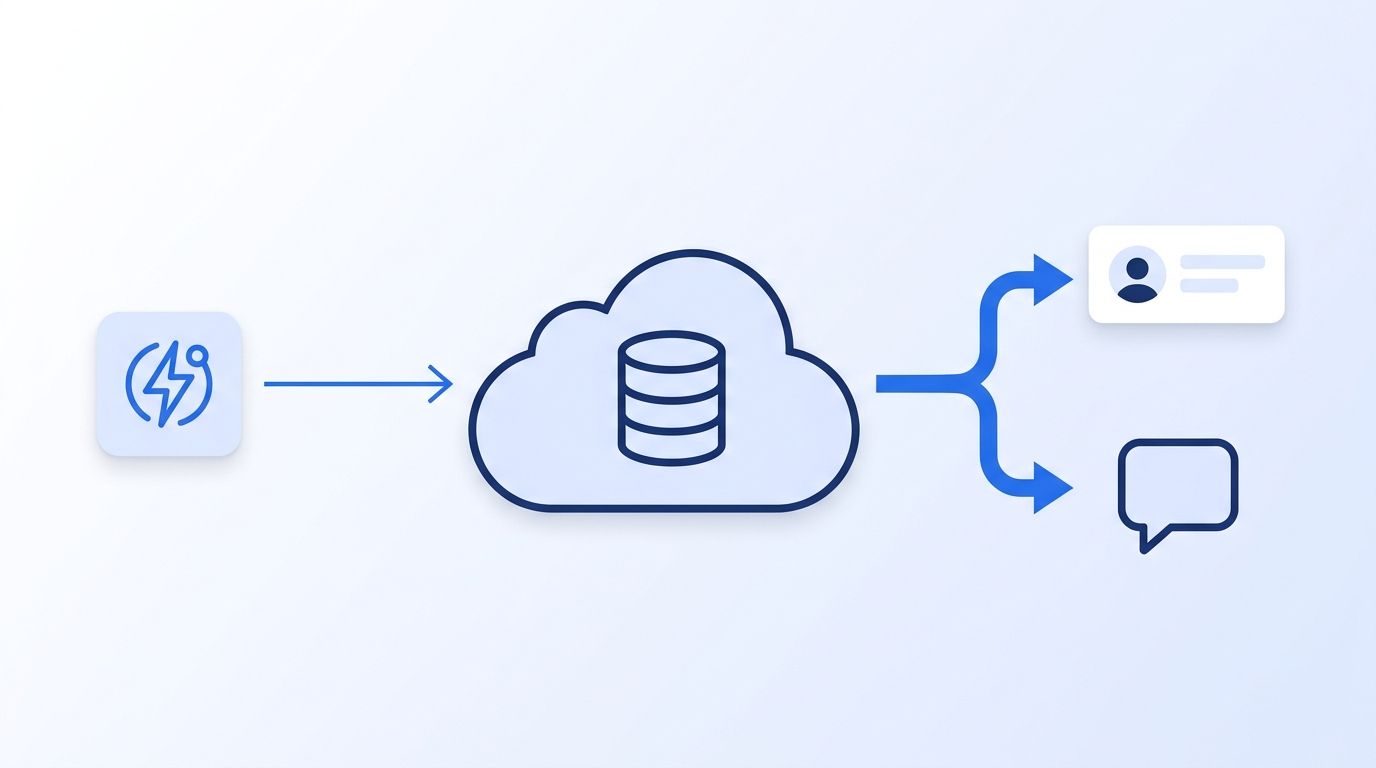
For teams orchestrating both layers in one workflow tool, Datamagnet's n8n integration calls the enrichment API from an HTTP Request node and receives signal webhooks with n8n's Webhook node, so the enrichment step and the activation step can live in the same automation instead of two disconnected systems.
How Did We Select These Tools?
This is an editorial shortlist, not a paid ranking. We selected tools with public documentation showing genuine reverse ETL or data-activation capability, and grouped them by the constraint they solve best: destination breadth, governance, pricing predictability, security architecture, or cost. We excluded Census as a standalone 2026 buying option since it no longer exists independently of Fivetran, and we listed Airbyte rather than Grouparoo since the latter has been defunct since 2022.
Connector counts, pricing figures, and G2 ratings shift often. Confirm current numbers directly with each vendor before building a production sync on top of any tool listed here.
Frequently Asked Questions
What is reverse ETL, and how is it different from regular ETL?
Regular ETL pulls data from source systems into a warehouse for analysis. Reverse ETL runs in the opposite direction, syncing modeled, enriched warehouse data back out into operational tools like Salesforce, HubSpot, or Slack so reps and workflows can act on it without a manual export.
Is Census still a reverse ETL tool teams can buy in 2026?
No. Fivetran acquired Census in May 2025 and rebranded it Fivetran Activations, folding it into a combined ingestion-and-activation platform (Fivetran, 2025). Census no longer exists as a standalone product to purchase.
How much do reverse ETL tools typically cost?
Pricing varies by model. Usage-based tools like Hightouch and RudderStack scale with row volume and sync frequency, while Weld offers flat-rate plans starting at $99/month. Enterprise iPaaS options like Workato quote custom pricing based on recipe volume and governance requirements.
Can reverse ETL replace a CRM enrichment API?
No. Reverse ETL moves data that already exists in your warehouse out to operational tools — it doesn't generate accurate people or company data. You still need an upstream enrichment source, like real-time LinkedIn people and company data, feeding the warehouse before a reverse ETL sync has anything worthwhile to move.
What happened to Grouparoo?
Grouparoo, an early open-source reverse ETL tool, was acquired by Airbyte in April 2022 (TechCrunch). Its data-synchronization capability was folded into Airbyte's own platform, and Grouparoo has not shipped as an independent product since.
Pick the Constraint First, Then the Tool
The reverse ETL market consolidated hard in 2025 and kept raising money into 2026 — Fivetran absorbed the category leader, and Hightouch closed a $150M round at a $2.75B valuation the same year. That's a market still growing, not settling. Pick your binding constraint first: destination breadth, governance, flat pricing, or data residency. Then shortlist from the tools that actually solve it.
None of these tools fix bad data at the source, though. If your warehouse tables are only as good as a stale CSV import, get a Datamagnet API key and check your enrichment coverage before you spend a quarter picking a reverse ETL vendor to sync it faster.
Sources
- Fivetran, press release, "Fivetran Signs Agreement to Acquire Census," retrieved 2026-07-29, https://www.fivetran.com/press/fivetran-signs-agreement-to-acquire-census-delivering-the-first-end-to-end-data-movement-platform-for-the-ai-era
- BusinessWire, "Hightouch Raises $150 Million to Reinvent How Marketing Works Using AI," retrieved 2026-07-29, https://www.businesswire.com/news/home/20260427054567/en/Hightouch-Raises-$150-Million-to-Reinvent-How-Marketing-Works-Using-AI
- Gartner, Data Quality topic page, retrieved 2026-07-29, https://www.gartner.com/en/data-analytics/topics/data-quality
- TechCrunch, "Airbyte Acquires Data Synchronization Service Grouparoo to Launch Reverse ETL Capabilities," retrieved 2026-07-29, https://techcrunch.com/2022/04/07/airbyte-acquires-data-synchronization-service-grouparoo-to-launch-reverse-etl-capabilities/
- Datamagnet, API documentation, retrieved 2026-07-29, https://docs.datamagnet.co/api-reference/introduction
