
Disclosure: This article is published by Datamagnet. Vendor claims are self-reported unless otherwise noted.
9 Best Data Observability Tools for B2B CRM Teams in 2026
Poor data quality costs the average organization $12.9 million a year, according to Gartner. For B2B teams, most of that damage starts in the CRM, where contact and account records decay the moment a prospect changes jobs. The right data observability tool catches that drift before it reaches your pipeline reports.
This guide compares the 9 best data observability platforms for B2B CRM teams in 2026 — what each one monitors, how it detects anomalies, what it costs, and whether it has any real Salesforce or CRM-specific capability. Only one of the nine actually does.
Key Takeaways
- Data downtime nearly doubled year-over-year, with monthly incidents climbing from 59 to 67 and resolution time rising 166% to roughly 15 hours (Monte Carlo, 2023 survey, still cited in 2026).
- The global data observability market is projected to grow from $2.94 billion in 2025 to $6.02 billion by 2030 (Research and Markets, 2026).
- Monte Carlo is the only tool in this list with a native, purpose-built Salesforce and Salesforce Data Cloud integration; the other eight are general-purpose warehouse and lakehouse observability platforms.
- 53% of data and AI leaders have already implemented data observability tooling, and another 31% plan to within 6-12 months (Gartner 2025 State of AI-Ready Data Survey).
What Is Data Observability, and Why Does Your CRM Need It?
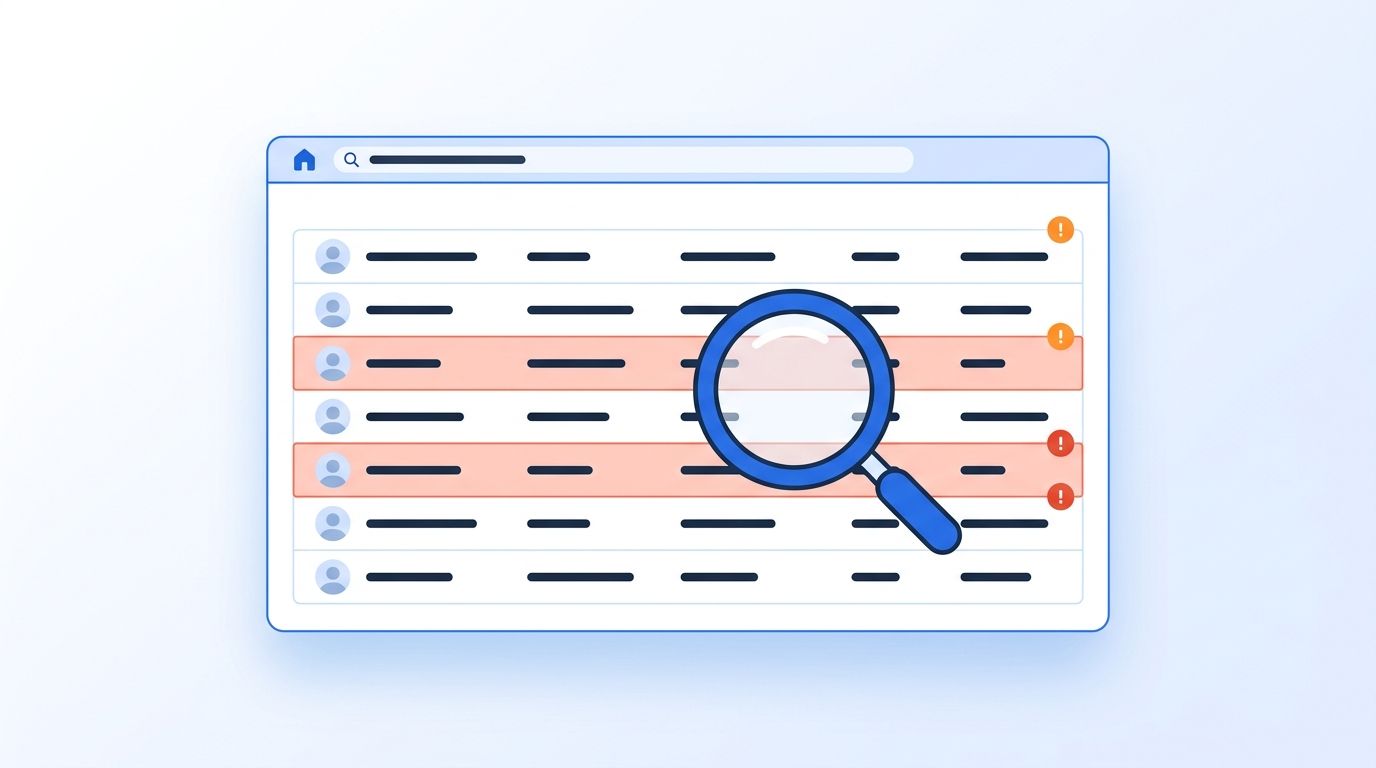
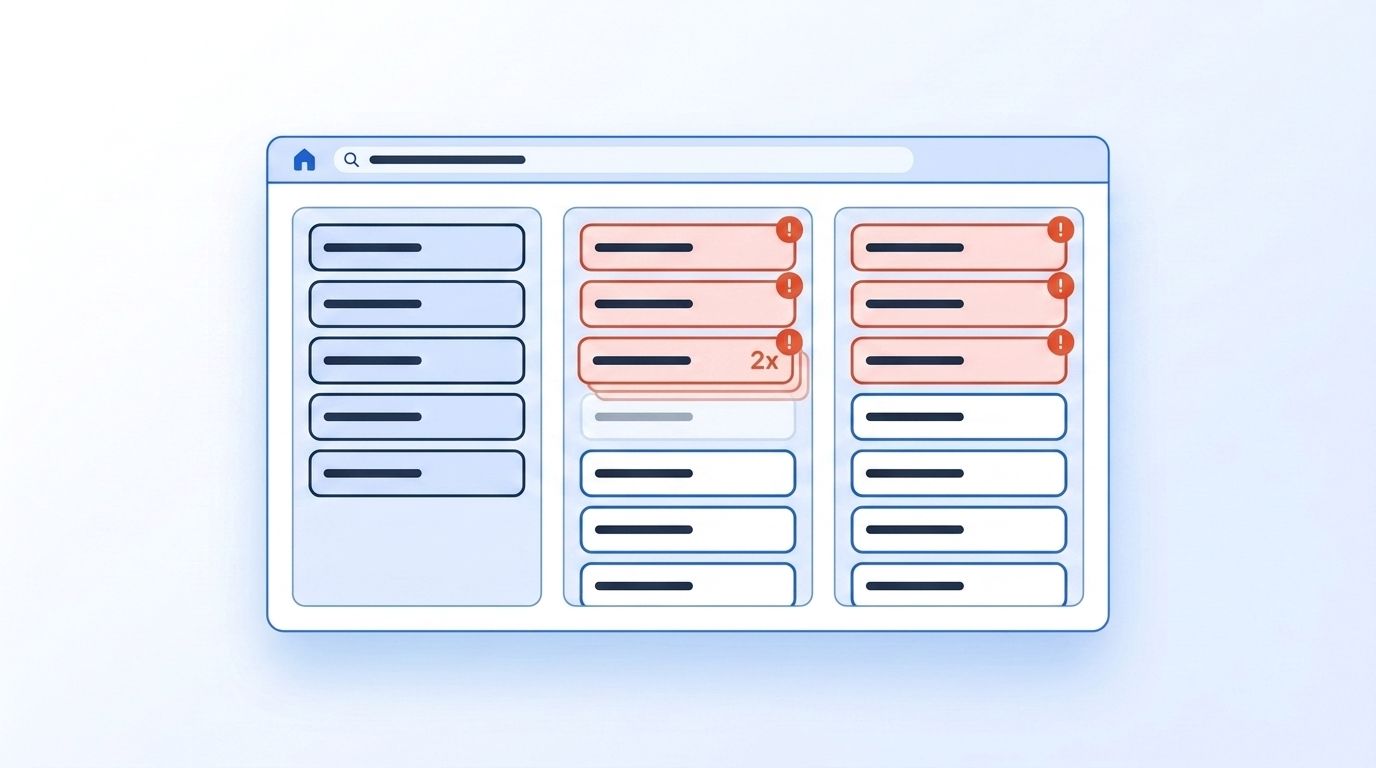
Data observability is the practice of continuously monitoring data pipelines for freshness, volume, schema, and distribution problems before they reach a report or a rep's dashboard. In a B2B context, that means catching a broken Salesforce-to-warehouse sync, a duplicate-record spike, or a silent field mapping change before a sales leader builds a forecast on bad numbers.
Most observability platforms were built for data engineering teams watching a warehouse, not for the specific failure modes of CRM data — job changes, merged accounts, and sync drift between a CRM and a data warehouse. That gap matters when you're picking a tool, because it shapes which of the nine below actually fits your use case versus which one you'll have to bend into shape.
Why Is CRM Data Quality a Growing Problem in 2026?
CRM data doesn't sit still. As of 2026, industry estimates put B2B contact data decay at roughly 2.1% a month, compounding to about 22.5% a year, with job titles changing for an estimated 65.8% of contacts annually (Landbase, 2025-2026). That's a rolling quarter of your CRM going stale every single month.
The AI layer sitting on top of that data makes the problem more expensive, not less. Gartner predicts 60% of AI projects will be abandoned through 2026 due to a lack of AI-ready data, and 63% of organizations say they lack — or aren't sure they have — the data management practices AI requires (Gartner, February 2025). Feed a forecasting model stale account data and it will hallucinate a pipeline that doesn't exist.
In 2025, 96% of U.S. data professionals said poor data quality could lead to a widespread crisis at their company, and 81% reported significant data quality issues already (Qlik/Wakefield Research, February 2025, n=500). That's not a hypothetical for CRM-dependent revenue teams — it's the current state of the data most B2B forecasts are built on.
<!-- [UNIQUE INSIGHT] -->Here's the part vendors don't put in their pitch decks: an observability tool tells you that a Salesforce field went stale or a sync job failed. It doesn't tell you why the underlying person changed roles, or refresh the record with a current title. Observability and enrichment solve two different halves of the same decay problem — one detects, the other corrects. If you're evaluating tools purely on alerting, you'll still need something like Datamagnet's real-time People API or a job-change signal feed to actually close the loop.
How Did We Evaluate These Tools?
We compared all nine platforms on five criteria: CRM/Salesforce-specific capability, anomaly detection approach (ML-based versus rules-based), pricing transparency, lineage and root-cause depth, and funding/company stability as a proxy for longevity in a space that's seeing active consolidation. Facts below were checked against vendor sites, funding databases, and press coverage as of September 2026; pricing changes fast in this category, so confirm current numbers directly with each vendor before you buy.
The 9 Best Data Observability Tools for B2B CRM Teams in 2026
1. Monte Carlo — Best for Native Salesforce and CRM Data Monitoring
Monte Carlo is the only data observability platform on this list with a purpose-built Salesforce integration, launched in August 2025 to monitor sync consistency between Salesforce, Salesforce Data Cloud, and the warehouse (Monte Carlo, 2025). Founded in 2019 and backed by $236 million in funding — including a round from Salesforce Ventures itself — it uses ML-based anomaly detection across freshness, volume, schema, and lineage.
- Native Salesforce and Salesforce Data Cloud monitoring, including schema-change alerts
- End-to-end lineage for root-cause analysis across warehouse and CRM
- AI-readiness monitoring built for Agentforce and similar CRM-native AI features
- Customers include Cisco, American Airlines, and Nasdaq
Best for: Revenue teams that need CRM-specific monitoring out of the box, not a generic warehouse tool bent toward Salesforce. Pricing: Enterprise, quote-only.
2. Datafold — Best for Validating CRM-to-Warehouse Sync Accuracy
Datafold's core mechanic is data diffing — comparing two datasets row-by-row and column-by-column to catch drift, which makes it well-suited to confirming a Salesforce-to-Snowflake sync didn't silently drop or alter records. Founded in 2020, it has raised roughly $22 million and counts Disney among its 50-plus customers.
- Row- and column-level data diffing for migration and sync validation
- CI/CD-integrated testing that blocks bad schema changes before deploy
- Column-level lineage and a newer "Data Knowledge Graph" for context
- Cloud pricing starts around $799 a month, billed annually (Vendr)
Best for: Data engineering teams who need to prove a CRM sync pipeline is accurate, not just monitored. Pricing: From ~$799/month; enterprise tier for on-prem/VPC deployment.
3. Anomalo — Best for No-Code, Unsupervised Anomaly Detection
Anomalo automatically profiles tables and flags anomalies without requiring teams to hand-write rules, which matters if your data team doesn't have bandwidth to maintain hundreds of manual checks. Founded in 2018 by two Instacart alumni, it has raised more than $80 million, with both Databricks Ventures and Snowflake Ventures as strategic backers.
- Unsupervised ML detection that works on unstructured and semi-structured data
- Minimal setup compared to rules-first competitors
- Enterprise customers include Block and Discover Financial
Best for: Lean data teams that want broad anomaly coverage without writing custom rules for every CRM table. Pricing: Enterprise, custom quote.
4. Bigeye — Best for Self-Serve Custom Metrics
Bigeye's "Autothresholds" engine blends forward-looking prediction with retrospective pattern analysis to set anomaly thresholds automatically, factoring in seasonality so a normal end-of-quarter spike doesn't trigger a false alert. Founded in 2019 by two former Uber data engineers, it has raised $73.5 million and serves around 96 enterprise customers, including Zoom and IBM.
- SQL-powered custom metrics for teams who want fine control
- Automated, seasonality-aware thresholding
- Entry-level plans reportedly starting around $29/month (TrustRadius)
Best for: Teams that want self-serve setup and transparent entry pricing before committing to an enterprise contract. Pricing: From ~$29/month; enterprise pricing not published.
5. Validio — Best for Real-Time Streaming CRM Event Data
Validio validates actual data content, not just table metadata, and supports real-time streaming sources like Kafka and Kinesis alongside batch warehouse data — useful if your CRM events flow through a streaming pipeline before they land in Salesforce or HubSpot. Founded in Stockholm in 2019, it raised a $30 million Series A in March 2026 on reported 800% year-over-year ARR growth (SiliconANGLE, 2026).
- Segmented anomaly detection within specific data slices, not just table-wide
- Native streaming support most peers on this list lack
- Customers include Nordea, Canva, and Truecaller
Best for: Teams with event-driven CRM data pipelines that need real-time, not batch, validation. Pricing: No free tier; usage-based custom pricing.
6. Soda — Best Open-Source, Checks-as-Code Option
Soda takes a rules-first approach with SodaCL, a YAML-based language for writing data quality checks that live in version control and run inside Airflow, Dagster, or dbt Cloud pipelines. Founded in Brussels in 2018, Soda Core is free and open-source, while Soda Cloud adds a paid collaboration layer. Customers include Disney, Nubank, and JP Morgan.
- 50-plus built-in check types, version-controlled as code
- Free open-source core with a paid cloud tier for teams
- Strong fit for engineering-led data contract enforcement
Best for: Engineering teams that prefer declarative, git-tracked checks over black-box ML monitoring. Pricing: Soda Core is free; Soda Cloud pricing is tiered and not fully public.
7. Acceldata — Best for Combined Data and Infrastructure Cost Observability
Acceldata goes beyond data quality into pipeline and compute observability, adding cost optimization on top of anomaly detection — a broader scope than most tools on this list. Founded in 2018 in Campbell, California, it has raised more than $106 million and serves 150-plus enterprise customers, including Oracle and PhonePe.
- Combines data quality, pipeline health, and compute cost monitoring in one platform
- "Agentic Data Management" layer for autonomous observe-reason-act monitoring, added in 2025
- Enterprise-focused customer base skewing toward Global 2000 accounts
Best for: Large enterprises that want data observability bundled with infrastructure cost visibility. Pricing: Not publicly listed; third-party estimates suggest a wide enterprise range.
8. Sifflet — Best for Field-Level Lineage and EU Data Residency
Sifflet combines ML-based anomaly detection with automated field-level lineage and a built-in data catalog, positioning itself as a control plane for both data and AI assets. Founded in Paris in 2021, it raised $18 million in its most recent round in June 2025 (PR Newswire, 2025) and counts Decathlon and the BBC among its customers.
- Field-level lineage tracing for faster root-cause analysis
- Data cataloging bundled with observability
- EU headquarters, a practical plus for GDPR-sensitive B2B buyers
Best for: EU-based teams that want lineage, cataloging, and observability without stitching together three separate vendors. Pricing: Not publicly disclosed.
9. Metaplane by Datadog — Best If You're Already Standardized on Datadog
Metaplane was an independent, fast-to-deploy observability tool for modern data stacks until Datadog acquired it in April 2025 (Datadog investor relations, 2025). It's no longer a standalone startup — it now operates as a product line inside Datadog's broader observability suite, which matters if you're evaluating it for long-term independence versus platform consolidation.
- Fast setup and column-level lineage, inherited from its pre-acquisition product
- Now backed by Datadog's infrastructure and APM ecosystem
- Best positioned for teams that already run Datadog for infrastructure monitoring
Best for: Organizations standardized on Datadog that want data observability inside the same billing relationship and console. Pricing: Folded into Datadog's commercial model; standalone pricing is no longer published.
Data Observability Tools vs. CRM Enrichment: How They Work Together
<!-- [UNIQUE INSIGHT] -->None of the nine tools above fix the root cause of CRM decay — they detect that a record went bad, not why. A contact's title changes when they take a new job, and no anomaly detector can know that until the stale data has already sat in your CRM for weeks. That's a separate problem, closer to programmatic CRM enrichment than to observability.
Pairing an observability tool with a real-time B2B people enrichment API closes that gap: the observability layer flags the anomaly, and the enrichment layer supplies the corrected record. For teams tracking specific champions or decision-makers, a real-time job-change signal can catch the underlying change before it ever shows up as an anomaly. If your CRM runs on HubSpot, a live HubSpot enrichment integration can push corrected fields back automatically instead of waiting for a data team to triage an alert.
How Do You Choose the Right Data Observability Tool for Your CRM Stack?
Start with whether the tool has any CRM-specific capability at all — as this comparison shows, eight of the nine are general-purpose warehouse tools with no Salesforce-native feature, so you're either buying Monte Carlo for that reason specifically or accepting you'll monitor CRM data the same way you'd monitor any other table. From there, weigh ML-based anomaly detection (Monte Carlo, Bigeye, Anomalo, Validio, Sifflet) against rules-based checks-as-code (Soda) based on how much manual tuning your team can sustain.
Budget matters too. Bigeye and Soda offer the clearest entry-level and free paths; Datafold and Validio are transparent about usage-based pricing; Acceldata, Sifflet, and Metaplane require a sales conversation before you'll see a number. Check the Datamagnet API documentation if you're also evaluating enrichment sources to pair with whichever observability tool you pick — the two layers work best deployed together, not as substitutes for each other.
Frequently Asked Questions
What's the difference between data observability and data quality tools?
Data observability tools monitor pipelines continuously for freshness, volume, schema, and anomaly signals, alerting teams before bad data reaches a report. Data quality tools often run point-in-time checks or cleanup jobs. In 2026, most vendors — including 7 of the 9 in this list — blend both approaches into one platform.
Which data observability tool integrates directly with Salesforce?
Monte Carlo is the only tool in this comparison with a native, purpose-built Salesforce and Salesforce Data Cloud integration, launched in August 2025. The other eight platforms are general-purpose warehouse and lakehouse observability tools that may connect to Salesforce as a generic data source, but none market a CRM-specific feature set.
How much does data observability software cost?
Pricing varies widely and most enterprise vendors quote custom rates. Bigeye reportedly starts around $29/month for entry plans, and Datafold's cloud tier starts near $799/month billed annually (Vendr). Soda Core is free and open-source. Acceldata, Anomalo, Sifflet, and Validio require a sales conversation for pricing.
How fast does B2B CRM data actually decay?
Industry estimates put B2B contact data decay at roughly 2.1% a month, compounding to about 22.5% a year, with job titles changing for an estimated 65.8% of contacts annually (Landbase, 2025-2026). That's why observability alone doesn't solve CRM data quality — it flags the drift but doesn't refresh the underlying record.
Can data observability tools stop AI projects from failing due to bad data?
They help, but they aren't sufficient on their own. Gartner predicts 60% of AI projects will be abandoned through 2026 due to a lack of AI-ready data (Gartner, February 2025). Observability catches anomalies in existing data; it doesn't enrich or correct the underlying records an AI model depends on.
Conclusion
Data observability tools solve half of the CRM data quality problem — the half where you find out something broke. Monte Carlo is the clear pick if you specifically need Salesforce-native monitoring; Datafold, Anomalo, Bigeye, Soda, Validio, Acceldata, Sifflet, and Metaplane are all strong general-purpose alternatives depending on your budget, stack, and appetite for ML-based versus rules-based detection.
The other half — actually correcting stale records before they cost you a deal — comes from enrichment, not monitoring. Explore Datamagnet's real-time People and Company APIs to see how live LinkedIn data can feed corrected records back into whichever observability stack you choose.
