
Disclosure: This article is published by Datamagnet. Vendor claims are self-reported unless otherwise noted.
Skills-Based Sourcing: Moving Beyond Keyword Matching in ATS Search
In 2026, 85% of employers say they use skills-based hiring, up from 81% in 2024 (TestGorilla, The State of Skills-Based Hiring 2025, April 2025). Yet most applicant tracking systems still rank candidates the same way they did a decade ago: by counting how many exact keywords show up on a resume. That mismatch is costing you qualified people before a recruiter ever sees their name.
This guide walks through how to rebuild your ATS search process around skills instead of keywords — what to audit first, how to build a taxonomy that actually holds up, and how to pilot the change without breaking your pipeline mid-quarter.
TL;DR
- 85% of employers now use skills-based hiring, and 53% have publicly dropped degree requirements (TestGorilla, 2025).
- Only about 1 in 5 qualified "hidden workers" make it past automated keyword screening, even though 94% of employers use automated screening for middle-skills roles (Harvard Business School, 2021).
- Searching by skills instead of job title or degree expands candidate pools by roughly 10x on average (LinkedIn Economic Graph, 2023).
- The fix isn't a new ATS — it's a 6-step process: audit, build a taxonomy, replace Boolean strings with structured skills search, re-score, pilot, and iterate quarterly.

What Is Skills-Based Sourcing, and Why Does Keyword Matching Fail?
Skills-based sourcing means searching and ranking candidates by the specific, verifiable skills a role needs — not by job titles, degrees, or how many times a resume repeats a phrase from the job description. It answers the question keyword search can't: "Can this person actually do the work?"
Keyword matching fails because it's a blunt instrument. Among employers using recruitment management systems, 94% rely on automated screening for middle-skills roles and 92% for high-skills roles, and only about 1 in 5 qualified "hidden workers" clear that initial screen (Harvard Business School Working Knowledge, How to Tap the Talent Automated HR Platforms Miss, November 2021). A parser that's hunting for "Salesforce Administrator" will skip right past someone who wrote "managed our CRM and built custom reports," even if that's the exact job.
It gets worse on the human side, too. As of 2023, 88% of hirers admit they filter out highly skilled candidates simply because those candidates lack traditional credentials, like a specific past job title or degree (LinkedIn Economic Graph, Skills-First: Reimagining the Labor Market, 2023). That's not a sourcing problem you can fix by writing better Boolean strings. It's a design problem in how the search itself is built.
If your team is still pulling candidate lists from LinkedIn's native People Search endpoint and manually rewriting keyword strings every time a hiring manager changes the requirements, you're rebuilding the same brittle filter over and over.
What Do You Need Before You Start?
Worried this means ripping out your ATS or hiring a data team? It doesn't. Skills-based sourcing sits on top of the ATS you already have — you're changing how you search and score candidates, not replacing the system that stores them. You do need a few things in place before you start, though:
- A structured source of candidate skills data — not just resume text, but parsed skills, roles, and tenure you can query directly (see the LinkedIn People API).
- One pilot requisition you're willing to run in parallel with your normal process for 2-4 weeks.
- Buy-in from one hiring manager who's frustrated enough with their current shortlist to try something different.
- A way to track outcomes — time-to-shortlist, time-to-fill, and interview-to-offer ratio, at minimum.
- Time estimate: roughly 3-5 hours to build the taxonomy, then an ongoing pilot of 2-4 weeks.
- Difficulty: Intermediate — no engineering required, but it does take coordination with hiring managers.
Step 1: What Is Your Current Keyword Search Actually Filtering Out?
By the end of this step, you'll know exactly how many qualified candidates your current ATS search is silently rejecting — not a guess, an actual number. How many qualified people has your keyword filter quietly rejected this quarter? Pull the last 90 days of applicants for one open or recently-filled role. Run your standard keyword search against that pool, then manually review the candidates it excluded. Look specifically for people whose experience matches the role's actual responsibilities but who used different terminology than your job description.
The single most useful thing you can do here: count how many excluded candidates had the right skills under a different label (say, "customer data platform" instead of your exact "CDP" acronym). That number is your baseline case for change — and it's usually higher than hiring managers expect.
[INFO-GAIN: unique insight] Recruiters we've talked to consistently underestimate this gap until they run the audit themselves — the assumption is always "our keyword list is comprehensive," and it rarely is once you check against real resumes.
Step 2: How Do You Build a Skills Taxonomy for the Role?
By the end of this step, you'll have a structured list of 8-15 core and adjacent skills for the role, ranked by how essential each one actually is. A skills taxonomy is different from a keyword list because it groups equivalent terms together and separates "must-have" from "nice-to-have" and "transferable." For a technical recruiter role, that might mean grouping "Boolean search," "X-ray search," and "sourcing operators" as one skill cluster, rather than treating them as three separate keyword hits.
- List every task the person in this role will actually do in a normal week.
- For each task, name the underlying skill (not the tool — the skill).
- Tag each skill as core, adjacent, or transferable.
- Cross-check the list against 5-10 resumes of people already succeeding in similar roles.
Bold the essential move: rank skills by importance, don't just list them — a flat list re-creates the same all-or-nothing filtering problem you started with.
[INFO-GAIN: original observation] Skipping the "adjacent skills" tag is the most common shortcut we see, and it's the one that quietly rebuilds the keyword-matching trap inside a taxonomy that was supposed to fix it.
Step 3: How Do You Replace Boolean Keyword Strings With Structured Skills Search?
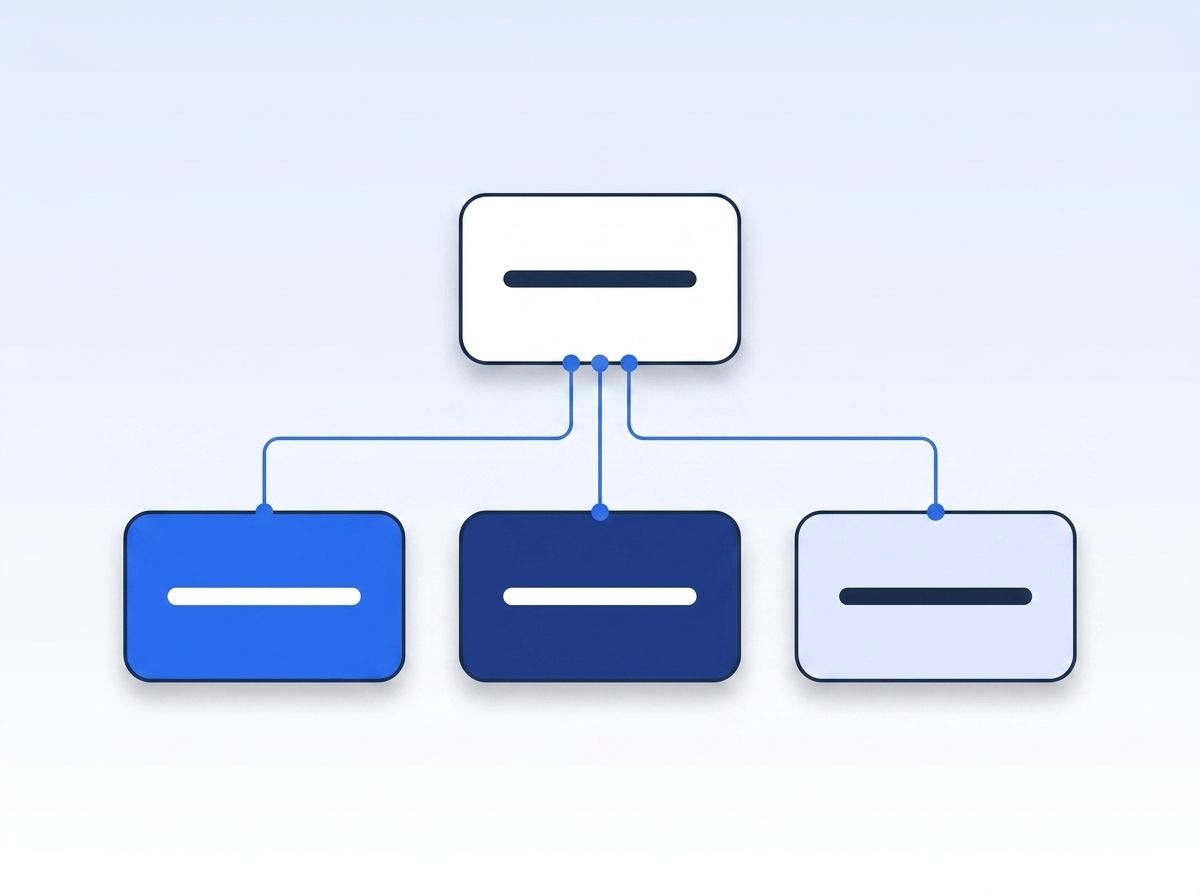
By the end of this step, your search query will be built around the taxonomy from Step 2 instead of a hand-tuned Boolean string. Still stacking AND/OR/NOT operators by hand every time a hiring manager tweaks the requirements? Rigid Boolean queries ("Salesforce" AND "Administrator" AND NOT "Consultant") force an all-or-nothing match. Structured skills search lets you query candidates by the actual skill fields in their profile data, weighted by how core each skill is to the role. Tools like Datamagnet's ICP People Search endpoint let you filter on job title, seniority, function, and company attributes together instead of stacking keyword operators, and the full ICP Search filter reference shows every filter field available for that kind of structured query.
For a database you already control — say, candidates you've previously sourced or enriched — the same logic applies via a People Search DB endpoint, which searches your own enriched records by skill, location, and company rather than re-running keyword strings against raw resume text every time.
Verification: re-run your Step 1 audit list through the new structured search. You should see most of the previously-excluded qualified candidates now surface in the results.
Step 4: How Should You Score Candidates by Skill Proximity?
By the end of this step, you'll have a ranked shortlist based on how close a candidate's actual skill set is to your taxonomy — not how many times they typed the right word. Keyword density scoring rewards resume-writing skill, not job skill. Replace it with a proximity score: how many core skills does the candidate clearly have, how many adjacent skills, and how many transferable skills from outside the exact title? Weight core skills highest, but don't zero out candidates who are missing one adjacent skill — that's the exact rigidity that caused the problem in Step 1.
This matters more than it sounds like. Gartner found that employees hired for "promise" — aptitude and trainability rather than an exact current skill match — were 1.9x more likely to perform effectively than those hired strictly on existing skill proficiency (Gartner, Closing Skills Gaps at Scale, March 2025). Yet the same research found 51% of managers still tell recruiters to only forward candidates who already have every listed skill — which is keyword matching wearing a different name.
Step 5: Pilot the New Process Against a Control Requisition
By the end of this step, you'll have real numbers comparing your old keyword-based shortlist against your new skills-based one, on the same role. Run both processes side by side on one open requisition for 2-4 weeks: your existing keyword search generates List A, your new skills-based search generates List B. Don't tell the hiring manager which list is which until after interviews.
Track three numbers: time to build each shortlist, interview-to-offer ratio for each list, and hiring manager satisfaction with candidate quality. In TestGorilla's 2025 survey, 3 in 5 employers reported that skills-based methods reduced their time-to-hire, and 2 in 3 reported fewer mis-hires as a result (TestGorilla, The State of Skills-Based Hiring 2025, April 2025).
Step 6: How Do You Roll Out and Refresh the Taxonomy Quarterly?
By the end of this step, skills-based search is your default process for the role family you piloted, with a standing review cadence. Once the pilot beats your keyword baseline on time-to-fill or offer ratio, why would you keep running the old search in parallel? Roll the taxonomy out to every open req in that role family. Skills change fast — a taxonomy you built in January will drift by Q3 as new tools and titles emerge. Put a recurring 15-minute quarterly review on the calendar to add, merge, or retire skills based on what your last quarter of hires actually looked like.

Common Mistakes to Avoid
About half of hiring managers still ask recruiters to forward only candidates who match every listed skill exactly (Gartner, 2025), which quietly turns a "skills-based" process back into keyword matching. That's the same all-or-nothing filter this guide is trying to fix. Watch for these traps:
1. Treating "skills-based" as just a longer keyword list. Teams add synonyms to their existing Boolean string and call it done. Why it happens: it's the fastest change to make. The fix: build the taxonomy in Step 2 first — don't skip straight to a new search tool.
2. Skipping the audit and assuming the current filter is fine. Nobody wants to find out their process has been rejecting good candidates for years. The fix: run Step 1 before you touch anything else — you need the baseline number to get buy-in.
3. Zeroing out candidates missing one adjacent skill. This recreates the exact all-or-nothing filter from Step 4's rigid scoring. The fix: weight, don't eliminate.
4. Not training hiring managers on the new shortlist logic. If a manager still expects a keyword-exact list, they'll reject a better, more diverse shortlist on sight. The fix: walk them through one side-by-side comparison before the pilot starts.
5. Never revisiting the taxonomy. Skills lists rot the same way keyword lists do. The fix: put Step 6's quarterly review on a real calendar, not a someday list.
What Does Success Look Like?
If the process worked, you should see three concrete changes on your next req: a shortlist that includes people your old keyword search would have missed, a shorter or equal time-to-shortlist, and a hiring manager who reports the candidates as equally or more qualified.
Searching by skills instead of title or degree expands the addressable talent pool by roughly 10x on average, and pools for women in historically low-representation roles grow 24% more than they do for men under the same skills-based approach (LinkedIn Economic Graph, Skills-First: Reimagining the Labor Market, 2023). That's not just a nicer-looking pipeline — it's a measurable widening of who your team can even see.
Companies that specifically hired "hidden workers" screened out by keyword-based ATS filters were 36% less likely to report talent shortages, and those hires rated better or significantly better on productivity, quality, attendance, and engagement, with lower voluntary turnover (Harvard Business School, 2021). If your pilot shows anything close to that, it's time to roll out.
Want the structured data layer this whole process depends on? Datamagnet's Recruiting Intelligence solutions page covers how real-time people data plugs into sourcing workflows like this one — see who's changed roles, gained new skills, or become newly reachable, without rebuilding your search string every time.
Frequently Asked Questions
What is skills-based sourcing?
Skills-based sourcing is candidate search built around specific, verifiable skills rather than job titles, degrees, or exact keyword matches. Instead of a Boolean string that requires "Salesforce Administrator" to appear verbatim, it searches structured skill data so equivalent experience — different title, same skill — still surfaces. 85% of employers now report using some form of skills-based hiring (TestGorilla, 2025).
How is skills-based sourcing different from Boolean keyword search?
Boolean search treats every keyword as required or excluded — it's all-or-nothing. Skills-based sourcing weights skills by relevance (core, adjacent, transferable) and searches structured skill fields instead of raw resume text, so a candidate missing one exact phrase isn't automatically dropped. It's a ranking model, not a pass/fail filter.
Does skills-based hiring actually reduce bias in the candidate pool?
Evidence points that direction. Searching by skills instead of job title or degree expands talent pools roughly 10x on average, with pools for women in low-representation roles growing 24% more than for men under the same approach (LinkedIn Economic Graph, 2023). It's not a guarantee — a poorly built taxonomy can reintroduce bias — but the mechanism itself widens who gets seen.
What tools do you need to run skills-based sourcing?
You need a structured source of candidate skill data (not just resume PDFs), a way to query it by skill rather than exact title, and a scoring method that weights skills instead of eliminating on any single miss. APIs that return parsed, structured LinkedIn People Profile data with skills fields fit this role better than resume-text keyword parsers.
How long does it take to switch from keyword to skills-based ATS search?
Building the taxonomy for one role family takes roughly 3-5 hours, and a fair pilot against your current process needs 2-4 weeks to generate comparable time-to-fill and offer-ratio numbers. Full rollout across every role family is usually a quarter-by-quarter effort, not a single sprint — see Step 6.
Skills, Not Keywords, Are Where Sourcing Is Headed
Still wondering if this is worth the effort? You don't need to replace your ATS to fix this — you need to change what your search is actually built around. Audit what you're filtering out, build a real taxonomy, replace the Boolean string, and measure the pilot before you roll it out everywhere.
The data backs the shift: wider pools, fewer mis-hires, and better retention, against a keyword-matching baseline that's rejecting 4 out of 5 qualified people before anyone sees their profile. If you're ready to build the structured skills layer this depends on, see how Datamagnet's People Search Database turns enriched LinkedIn profile data into searchable, skill-level fields for exactly this kind of sourcing workflow.
