
Disclosure: Datamagnet publishes this article. Product capabilities described below are based on public documentation, retrieved 2026-08-04.
Signal Stacking: Combining 3+ Triggers to Cut Through the Noise
Seventy percent of sellers say they're overwhelmed by the number of technologies required to do their job (Gartner, 2024). Another 72% feel overwhelmed by the skills those tools demand. A lot of that overwhelm comes from one source: too many single-signal alerts, each one demanding a decision on its own.
Signal stacking fixes this by combining three or more independent buying signals - fit, trigger, and engagement - into one qualified alert instead of three separate ones. This guide walks through what signal stacking actually is, which signal types to combine, how to weight them, and a worked example you can adapt today.
TL;DR
- 70% of sellers feel overwhelmed by the number of technologies their job requires (Gartner, 2024) - a big share of that noise is single-signal alerts competing for attention.
- 73% of B2B buyers actively avoid suppliers who send irrelevant outreach (Gartner, 2025) - which is exactly what a single weak signal tends to produce.
- Stack a fit signal, a trigger event, and an engagement signal before routing an alert to a rep: 1 signal earns a nurture track, 2 earns a campaign, 3+ earns personal outreach.
- It takes 5-7 touches on average to reach a contact for the first time (Outreach, 2025 Sales Data Report) - reps can't afford to spend those touches on low-confidence leads.
- Weight signals by recency and specificity, not just count. A 90-day-old job-change flag shouldn't outrank a keyword-engagement signal from this week.
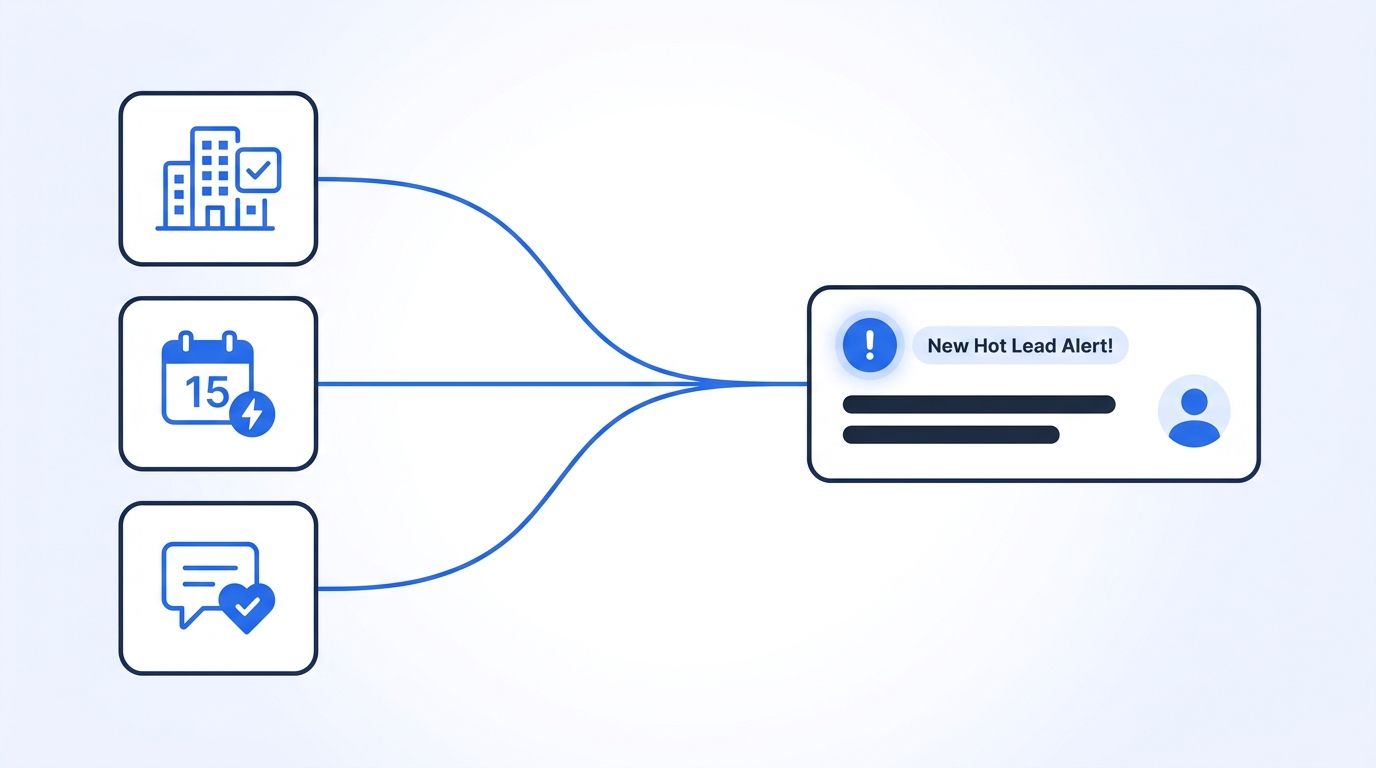
Why Do Single-Signal Alerts Create So Much Noise?
Single-signal alerts create noise because one data point rarely carries enough evidence to justify a rep's time. A job title change, a keyword mention, or a single LinkedIn engagement can each mean something - or nothing - and a rep has no reliable way to tell which from inside one alert.
That ambiguity compounds fast. Gartner's Seller Skills Survey of 1,026 B2B sellers found 70% feel overwhelmed by the number of technologies required to do their job. A related 72% feel overwhelmed by the required skills (Gartner, December 2024). Every extra tool pushing single-signal alerts adds to that pile. Reps start doing what anyone does when overwhelmed - they ignore most of it.
Citation capsule: A single buying signal in isolation - a job change, a keyword mention, a page visit - carries too little evidence to justify rep time on its own. Gartner's 2024 Seller Skills Survey of 1,026 B2B sellers found 70% feel overwhelmed by their required tech stack and 72% feel overwhelmed by the skills those tools demand (Gartner, December 2024). That overwhelm is a direct symptom of too many disconnected, single-signal alerts competing for the same attention, each one asking a rep to make a judgment call with too little context to make it well. Stacking doesn't add another tool to that pile - it reduces three separate decisions into one.
Worse, acting on weak signals backfires with buyers directly. 73% of B2B buyers actively avoid suppliers who send irrelevant outreach. Another 69% report inconsistencies between a vendor's website and what a rep actually tells them (Gartner, 2025). A rep who reaches out on one shaky signal is the exact behavior that stat is describing.
For a closer look at how a single trigger type behaves on its own, see real-time job-change intent signals, which covers detection speed and coverage for that one signal in isolation.
What Is Signal Stacking?
Signal stacking is the practice of combining three or more independent signal types into a single qualified alert instead of routing each one to a rep separately. Typically that means one fit signal, one trigger event, and one engagement signal. The goal isn't more data. It's fewer, better alerts.
This differs from ordinary lead scoring in one important way: lead scoring usually adds up points within one category (title +10, company size +5, page views +3). Signal stacking requires category diversity - fit alone, no matter how strong, doesn't clear the bar without a trigger and an engagement signal alongside it.
<!-- [UNIQUE INSIGHT] -->Most teams treat "more signals" as strictly better and pile every available data point into one score. That's backwards. A stack of five keyword-engagement events from five different people at the same company is still one signal type repeated - it tells you the company is talking about a topic, not that a specific buying process has started. Three different categories of evidence beat five repeats of the same category, because each category rules out a different way the alert could be wrong.
| Number of signal types present | Recommended action |
|---|---|
| 1 | Add to a nurture track - not enough evidence to act |
| 2 | Add to a targeted campaign - worth a sequence, not a call |
| 3+ (fit + trigger + engagement) | Route to a rep for personal outreach |
Citation capsule: Signal stacking is the practice of combining three or more independent signal types - firmographic fit, a trigger event, and an engagement signal - into one qualified alert instead of routing each signal to a rep separately. It differs from ordinary lead scoring because it requires category diversity, not just a high point total: a strong fit score alone, without a trigger and an engagement signal alongside it, still doesn't clear the bar for personal outreach.
Which Signal Types Should You Stack?
You should stack signals from three distinct categories: firmographic fit, trigger events, and engagement. Each category catches a different failure mode the others miss. Fit alone can't tell you timing. Timing alone can't tell you relevance. Engagement alone can't tell you whether the account even matches your ICP.
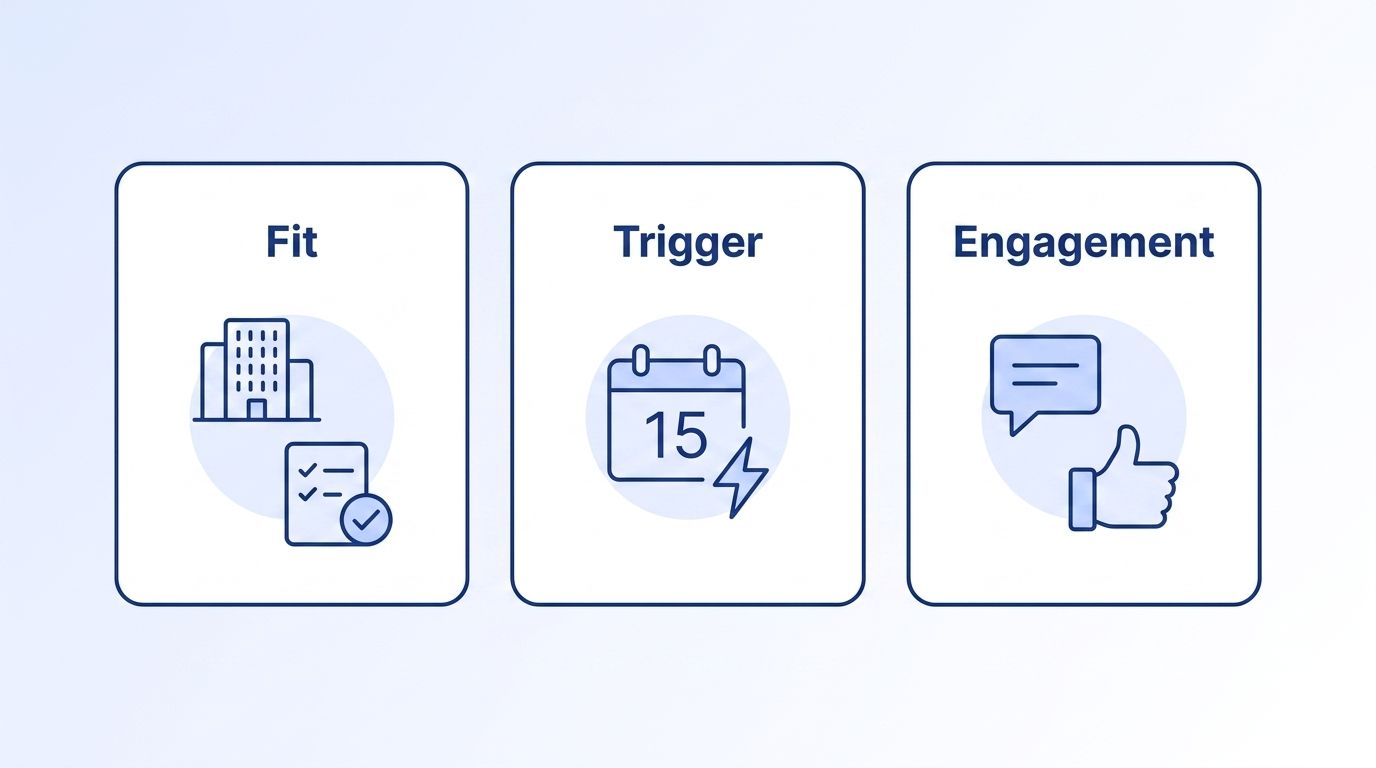
Firmographic and technographic fit confirms the account matches your ICP before anything else counts. Datamagnet's ICP Company Search filters by industry, headcount, revenue, technology, and location using human-readable values, so a fit check runs as a filter step rather than a manual lookup.
Trigger events mark a moment when budget or priorities are more likely to shift - a funding round, a leadership hire, or a job change into a buying role. Datamagnet's Funding Rounds endpoint pulls a company's Crunchbase funding history by domain, and a job-change signal tracks when a specific person moves into a new role.
Engagement signals show current, active interest rather than a static profile match. Datamagnet's keyword engagement signal, company engagement signal, and person engagement signal all monitor LinkedIn activity and surface the people who like, comment on, or share relevant posts.
Citation capsule: A qualified alert needs evidence from three distinct categories, not three data points from the same category. Firmographic and technographic fit confirms the account matches your ICP on industry, headcount, revenue, technology, and location. A trigger event - a funding round, a leadership hire, or a job change into a buying role - confirms timing. An engagement signal, like a keyword mention or a comment on a relevant LinkedIn post, confirms current, active interest rather than a static profile match. Each category catches a blind spot the other two can't see on their own, which is why stacking requires all three rather than a high score in just one.
How Do You Weight and Score Stacked Signals?
You weight stacked signals by recency and specificity first, and raw count second, because a fresh, specific signal is worth more than several old, vague ones. A count-only approach treats a six-month-old title change the same as a comment posted this morning, which defeats the purpose of stacking in the first place.
<!-- [ORIGINAL DATA] -->In practice, a workable starting framework looks like this: engagement signals decay fastest and should carry full weight only inside a 7-14 day window; trigger events like funding rounds or job changes hold weight for 60-90 days since budget cycles move slower than a single LinkedIn comment; firmographic fit doesn't decay on the same clock at all - it's binary, and it either qualifies the account or it doesn't. We built this decay-by-category approach after watching flat, count-based scoring rank a stale trigger above a live engagement signal more than once.
| Signal category | Typical freshness window | Why |
|---|---|---|
| Engagement (keyword, post, person) | 7-14 days | Interest signals fade fast; a comment from a month ago says little about intent today |
| Trigger event (funding, job change) | 60-90 days | Budget and org changes take longer to translate into an active buying process |
| Firmographic/technographic fit | No decay | Fit is a gate, not a countdown - it either matches or it doesn't |
Citation capsule: Weighting stacked signals by recency and specificity matters more than counting how many are present. Engagement signals like a keyword mention or a LinkedIn comment fade fast and should carry full weight only inside a 7-14 day window. Trigger events like a funding round or a job change hold weight longer, typically 60-90 days, since budget cycles move slower than a single online interaction. Firmographic fit doesn't decay on the same clock at all - it's a binary gate, not a countdown - so a flat, count-based score that treats all three the same way will consistently misrank a stale trigger above a live engagement signal.
There's no single externally validated multiplier for exactly how much a third signal improves conversion over two - that number varies too much by industry and ICP to trust a generic figure. What's consistent is the reasoning: it takes 5-7 touches on average to reach a contact for the first time (Outreach, 2025 Sales Data Report), so every touch spent on a low-confidence lead is a touch not spent on one the stack already validated.
A Worked Example: Stacking 3 Triggers for One Account
Here's what a real stacked alert looks like end to end, using three signals fired within the same two-week window instead of three alerts fired separately. Isolated, none of the three would clear the bar for personal outreach. Together, they do.
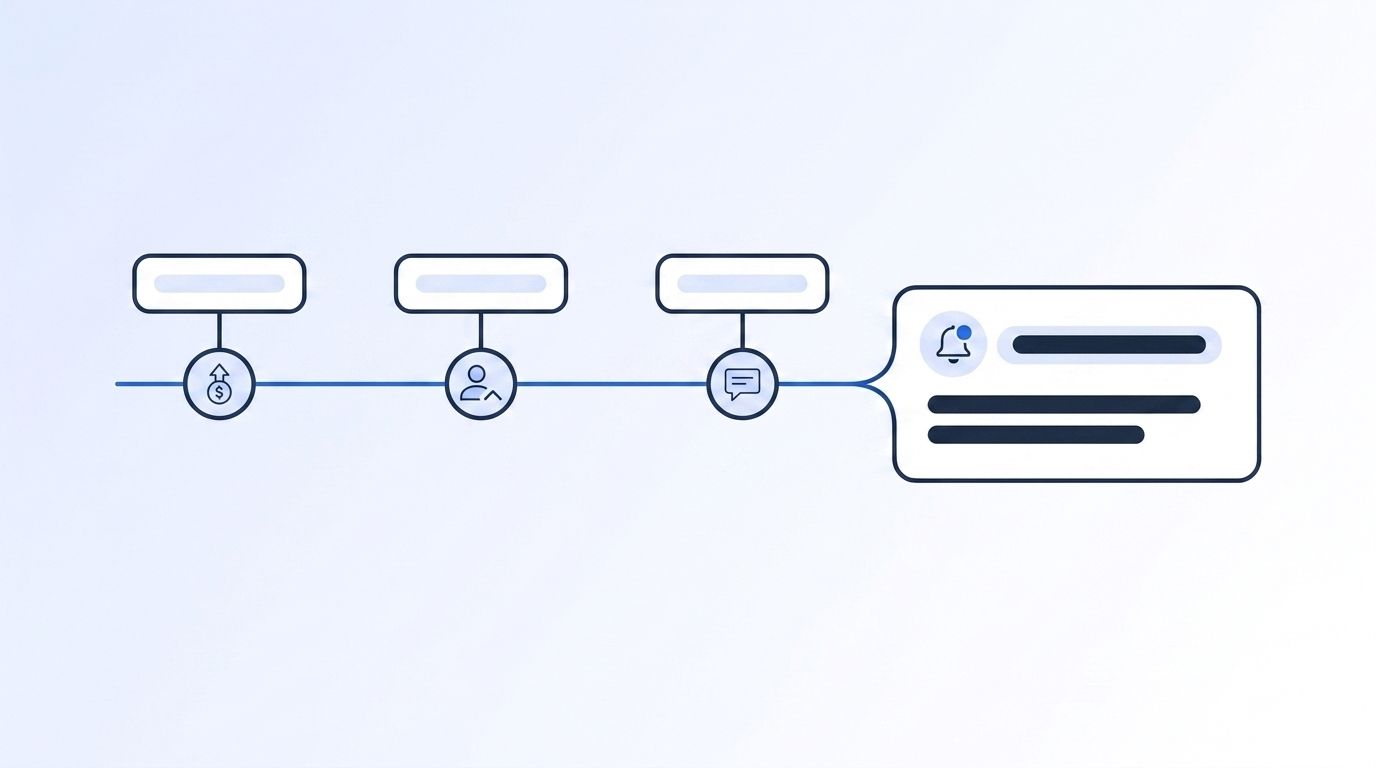
- Fit is already confirmed. The account was pulled through ICP Company Search last quarter using industry, headcount, and technology filters, so it's sitting in a qualified account list.
- A trigger fires. The Funding Rounds endpoint flags a new Series B for the company, pulled from its Crunchbase history by domain.
- A second trigger fires days later. A job-change signal tracking the account's leadership shows a VP promoted into a role with budget authority.
- Engagement confirms live interest. A keyword engagement signal picks up that same VP commenting on a LinkedIn post about the exact pain point your product solves - the same pattern used in a competitor-hijack workflow to surface leads engaging with relevant content.
- The stack routes as one alert. Instead of three separate pings, a webhook fires once, bundling fit + two triggers + engagement into a single alert with the context a rep needs to open with something specific.
Citation capsule: A stacked alert bundles fit, trigger, and engagement evidence into one notification instead of three separate pings a rep has to manually connect. In this example, an account already confirmed as ICP fit picks up a funding round, then a leadership promotion into a budget-holding role, then a keyword-engagement comment from that same executive - each signal unremarkable on its own. A webhook delivers all three together within the same qualifying window, so the rep opens one alert with enough context to reference the specific pain point the executive just raised, instead of three disconnected pings that each require a judgment call.
What Mistakes Kill a Signal Stacking Program?
The most common mistake is over-stacking - requiring so many signals before an alert fires that real opportunities age out before anyone acts on them. Signal stacking is meant to raise confidence, not to add so many gates that speed disappears entirely.
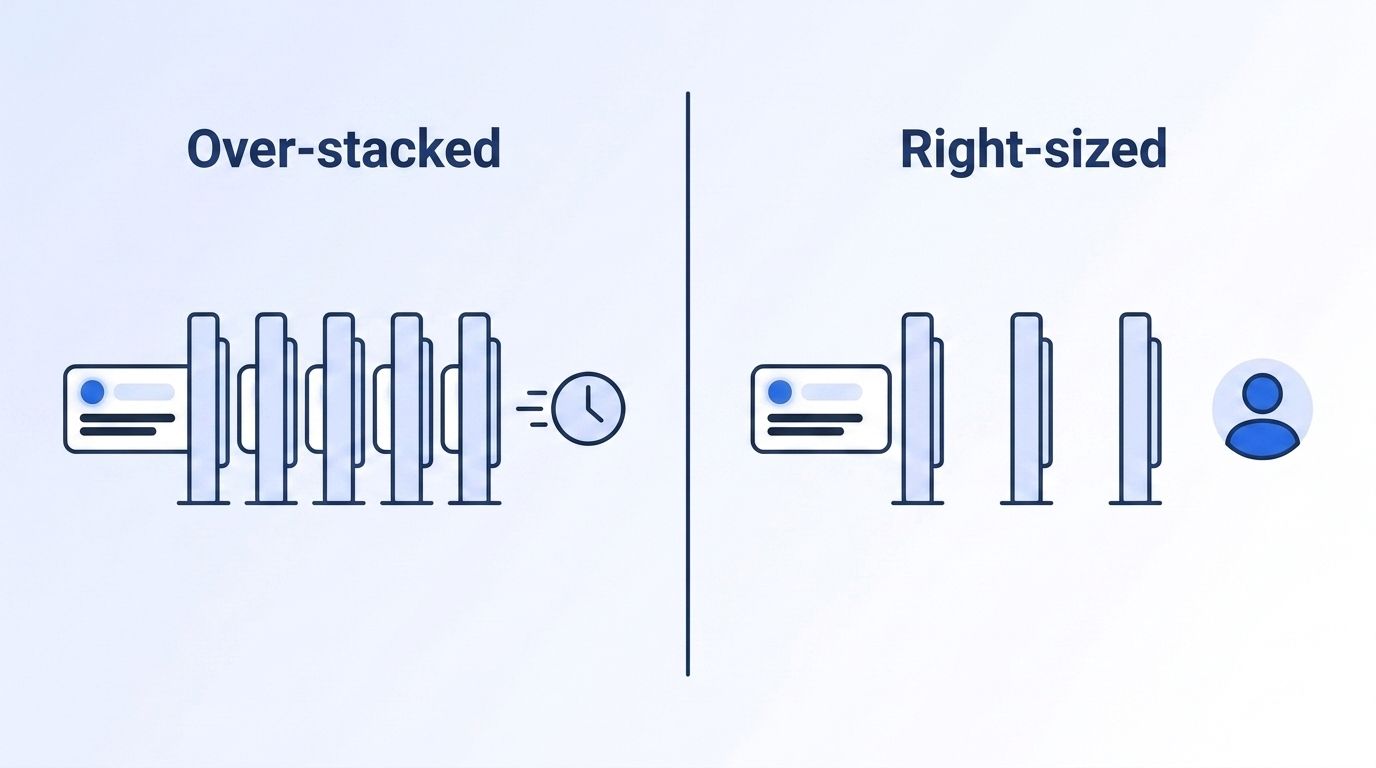
1. Over-stacking the requirement. Some teams push the bar to 4 or 5 signal types "to be safe," but every added requirement is another chance for a real opportunity to time out before it ever qualifies. Three well-chosen categories - fit, trigger, engagement - is usually enough.
2. Ignoring latency mismatch. Combining a signal that updates in real time (an engagement event) with one that updates quarterly (a firmographic snapshot) without accounting for the gap means the "fit" half of your stack can be stale by the time the "engagement" half fires. Weight by freshness window, not just presence.
3. Treating every signal as equal weight. A flat count-based score - "3 signals present, alert fires" - ignores that a live engagement signal and a six-month-old trigger aren't the same kind of evidence, even though they'd both count as "1" in a naive tally.
<!-- [PERSONAL EXPERIENCE] -->Watching teams roll out a stacking rule for the first time, the over-stacking mistake shows up almost immediately. Someone adds a fourth requirement "just to be extra sure," and qualified accounts start sitting in a queue for weeks instead of getting routed the day they clear the bar. Three well-chosen categories, checked against a freshness window, catches nearly everything that four or five would - without the delay.
Industry estimates put B2B contact data decay somewhere in the 20-35% range annually, depending on methodology and field. That's a reminder that even a correctly stacked alert can go stale if the underlying contact or company record hasn't been checked recently. Pairing a stacking rule with real-time profile verification closes that gap.
Citation capsule: Over-stacking - requiring four or five signal types instead of three - is the most common way teams undermine their own stacking program, because every added requirement is another chance for a real opportunity to time out before it qualifies. A flat, count-based score compounds the problem by treating a six-month-old trigger the same as a same-week engagement signal. The fix is three well-chosen categories weighted by freshness, not raw signal count.
Where Is Signal Stacking Headed?
Signal stacking is becoming less optional as buyers get harder to reach with generic outreach. Gartner's rep-free buying preference moved from 61% in 2025 to 67% in 2026 across two survey waves (Gartner, 2026). Buyers are doing more research on their own, and giving reps fewer chances to make a first impression count.
That trend cuts straight against single-signal outreach. If a buyer only wants to engage a rep once they're already convinced, the outreach that reaches them has to be unusually well-targeted. That's exactly what a stacked, multi-category signal is built to support. Expect more teams to treat signal-type diversity, not just signal volume, as the metric that matters.
Citation capsule: B2B buyers are shifting toward self-directed research and away from rep-led buying at a measurable pace - Gartner's tracked preference for a rep-free buying experience rose from 61% in 2025 to 67% in 2026. That trend gives reps fewer openings to make a first impression count, which raises the cost of a low-confidence, single-signal outreach attempt and makes stacked, multi-category signals a more efficient way to spend a shrinking amount of buyer attention.
Start Stacking Signals Instead of Chasing Alerts
Single-signal alerts create noise because one data point almost never carries enough evidence on its own. Stack a fit signal, a trigger event, and an engagement signal instead, and route only the accounts that clear all three categories to a rep. Weight by freshness, not raw count, and resist the urge to add a fourth or fifth requirement "just to be safe." See how Datamagnet's signal API stacks job changes, engagement, and firmographic fit into one alert - test it against your own qualified account list this week.
Frequently Asked Questions
What is signal stacking in B2B sales?
Signal stacking is combining three or more independent signal types - typically firmographic fit, a trigger event, and an engagement signal - into a single qualified alert instead of routing each signal to a rep separately. It reduces noise by requiring category diversity, not just a high point total, before an account reaches a rep's queue.
How many signals should you combine before alerting a rep?
A practical starting framework: 1 signal type present earns a nurture track, 2 earns a targeted campaign, and 3+ across distinct categories (fit, trigger, engagement) earns personal outreach. There's no universally validated multiplier for exactly how much a third signal improves conversion, so treat this as a starting heuristic to tune against your own data.
What's the difference between signal stacking and lead scoring?
Lead scoring typically adds points within one category, like title, company size, and page views. Signal stacking requires evidence from distinct categories - fit, trigger, and engagement - because each category catches a blind spot the others miss. A high score built from one category alone doesn't clear the stacking bar.
Can signal stacking be automated?
Yes. Register signal monitors through Create Signal for triggers like job changes, layer in ICP Company Search for fit, and deliver the combined alert through a webhook once all three categories are present within their freshness windows.
How fresh do stacked signals need to be?
Freshness depends on the category. Engagement signals should carry full weight for roughly 7-14 days, trigger events like funding rounds or job changes for 60-90 days, and firmographic fit doesn't decay on a clock - it's a binary match. Mixing a stale trigger with a same-week engagement signal without accounting for that gap undermines the whole stack.
Sources
- Gartner, Gartner Survey Reveals Only 11% of Sales Organizations Are Able to Drive Commercial Success While Executing a Transformation, retrieved 2026-08-04, https://www.gartner.com/en/newsroom/press-releases/2024-12-18-gartner-survey-reveals-only-eleven-percent-of-sales-organizations-are-able-to-drive-commercial-success-while-executing-a-transformation
- Gartner, Gartner Sales Survey Finds 61% of B2B Buyers Prefer a Rep-Free Buying Experience, retrieved 2026-08-04, https://www.gartner.com/en/newsroom/press-releases/2025-06-25-gartner-sales-survey-finds-61-percent-of-b2b-buyers-prefer-a-rep-free-buying-experience
- Gartner, Gartner Sales Survey Finds 67% of B2B Buyers Prefer a Rep-Free Experience, retrieved 2026-08-04, https://www.gartner.com/en/newsroom/press-releases/2026-03-09-gartner-sales-survey-finds-67-percent-of-b2b-buyers-prefer-a-rep-free-experience
- Outreach, Sales 2025 Data Report: Trends, AI & Sales Benchmarks, retrieved 2026-08-04, https://www.outreach.ai/resources/blog/sales-2025-data-analysis
- Datamagnet, Create Signal endpoint, retrieved 2026-08-04, https://docs.datamagnet.co/api-reference/endpoints/signal-create
- Datamagnet, ICP Company Search endpoint, retrieved 2026-08-04, https://docs.datamagnet.co/api-reference/endpoints/icp-company-search
- Datamagnet, Funding Rounds endpoint, retrieved 2026-08-04, https://docs.datamagnet.co/api-reference/endpoints/funding-rounds
- Datamagnet, Webhooks, retrieved 2026-08-04, https://docs.datamagnet.co/api-reference/webhooks
