
Disclosure: Datamagnet publishes this article. Product capabilities described below are based on public documentation, retrieved 2026-09-13.
REST vs. Webhook Enrichment: Picking the Right Delivery Model for Your Volume
Every enrichment integration comes down to one choice: do you ask for data, or wait for it to arrive? In 2026, 93% of developers still build on REST APIs, but 50% now run webhooks in production too — a mainstream pattern, not a niche one (Postman, 2025 State of the API Report, retrieved 2026-09-13).
Poll too often with REST, and you burn credits chasing records that haven't changed. Poll too rarely, and your CRM sits stale between checks. Webhooks fix the freshness problem, but you have to build, secure, and monitor the receiving end yourself. This guide compares both delivery models on cost, freshness, reliability, and engineering effort, then gives you a volume-based framework for choosing — based on how Datamagnet's own API supports both models side by side.
TL;DR
- REST fits low-to-medium volume, on-demand lookups: pull a record when a rep opens it, and pay only for the calls you actually make.
- Webhooks fit high-volume, continuous monitoring: 50% of developers already run them in production, up from a niche pattern a few years ago (Postman, 2025).
- Polling costs compound at scale — Treblle's analysis of over a billion API calls found only about 15% of APIs enforce rate limiting, so an unmanaged polling loop can quietly overwhelm your budget.
- B2B contact data decays roughly 2.1% a month, so any polling interval slower than that decay rate leaves stale records sitting in your CRM (HubSpot, retrieved 2026-09-13).
- Most GTM stacks end up running both models: REST for on-demand pulls, webhooks for continuous signal monitoring.
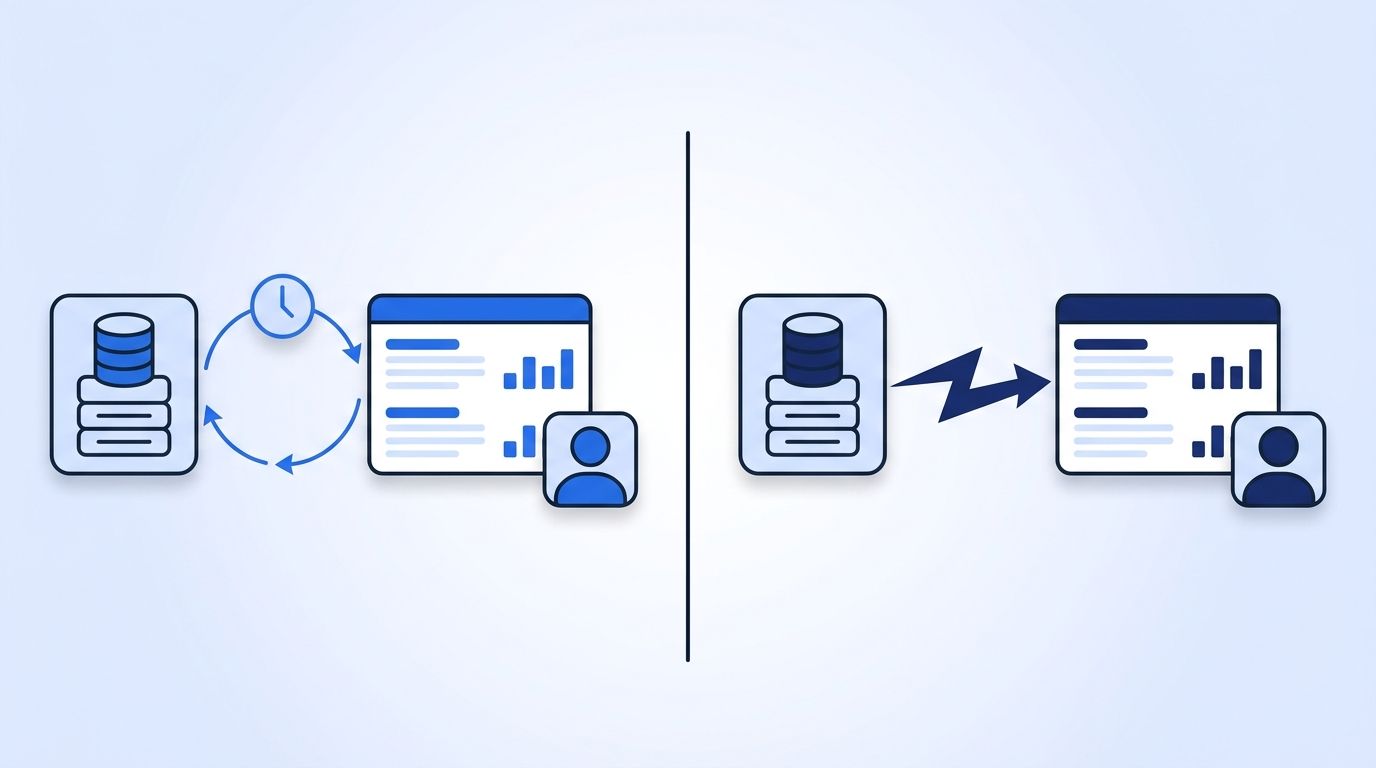
REST vs. Webhook Enrichment at a Glance
Here's the trade-off in one table: REST gives you control over timing, and webhooks give you speed. In 2026, 93% of developers still build on REST APIs while 50% now run webhooks in production too, so most teams need to understand both models rather than picking one and ignoring the other (Postman, 2025 State of the API Report, retrieved 2026-09-13). The table below breaks down cost, data freshness, engineering effort, and reliability burden for each model, plus how Datamagnet supports both side by side.
| Category | REST (Pull) | Webhook (Push) |
|---|---|---|
| Best For | Ad hoc, on-demand lookups | Continuous, high-volume monitoring |
| Data Freshness | As fresh as your last poll | Delivered the moment an event fires |
| Cost at Low Volume | Cheapest — pay per call, no idle infrastructure | Overkill — receiver infrastructure runs even when nothing changes |
| Cost at High Volume | Expensive — repeated polling wastes calls on unchanged records | Cheapest — you're notified only when something actually changes |
| Engineering Effort | Lower — call an endpoint, parse the response | Higher — build a receiver, verify signatures, handle retries |
| Reliability Burden | On you to retry failed calls and respect rate limits | On the sender to retry; you handle duplicate or out-of-order delivery |
| Rate Limit Exposure | Direct — your polling loop can hit the provider's limit | Indirect — the provider throttles delivery, not your requests |
| Datamagnet Example | People Profile, Company Profile endpoints | job_change and engagement Signals delivered via webhook |
| Our Verdict | Wins for low/medium volume | Wins for high volume, real-time use cases |
What's the Real Difference Between Pulling and Pushing Enrichment Data?
REST enrichment pulls data on demand; webhook enrichment pushes it the moment something changes — and that single difference decides almost everything else in this comparison. With REST, your system sends a request — "give me this person's current company" — and waits for a response. You control the timing, but you also decide how often to ask, and every ask costs a call whether or not anything changed underneath.
With a webhook, you register interest once — "notify me when this signal fires" — and Datamagnet pushes a payload to your endpoint the instant it happens. You don't poll at all. You just handle whatever arrives.
<!-- [UNIQUE INSIGHT] -->Most teams frame this as a technology choice, but it's really a timing choice. REST asks "has anything changed?" on a schedule you set. Webhooks answer "something changed" the moment it's true. Neither question is wrong — they just fit different volumes and different tolerance for staleness.
So why not just use webhooks everywhere and skip REST entirely? Because webhooks need a public endpoint, signature verification, retry logic, and somewhere to route every payload. REST needs none of that. For a rep pulling up a single account before a call, that overhead isn't worth building.
Datamagnet supports both. Pull a live profile through the People Profile endpoint when you need it right now, or register a signal monitor with webhook delivery when you need to know the instant something changes.
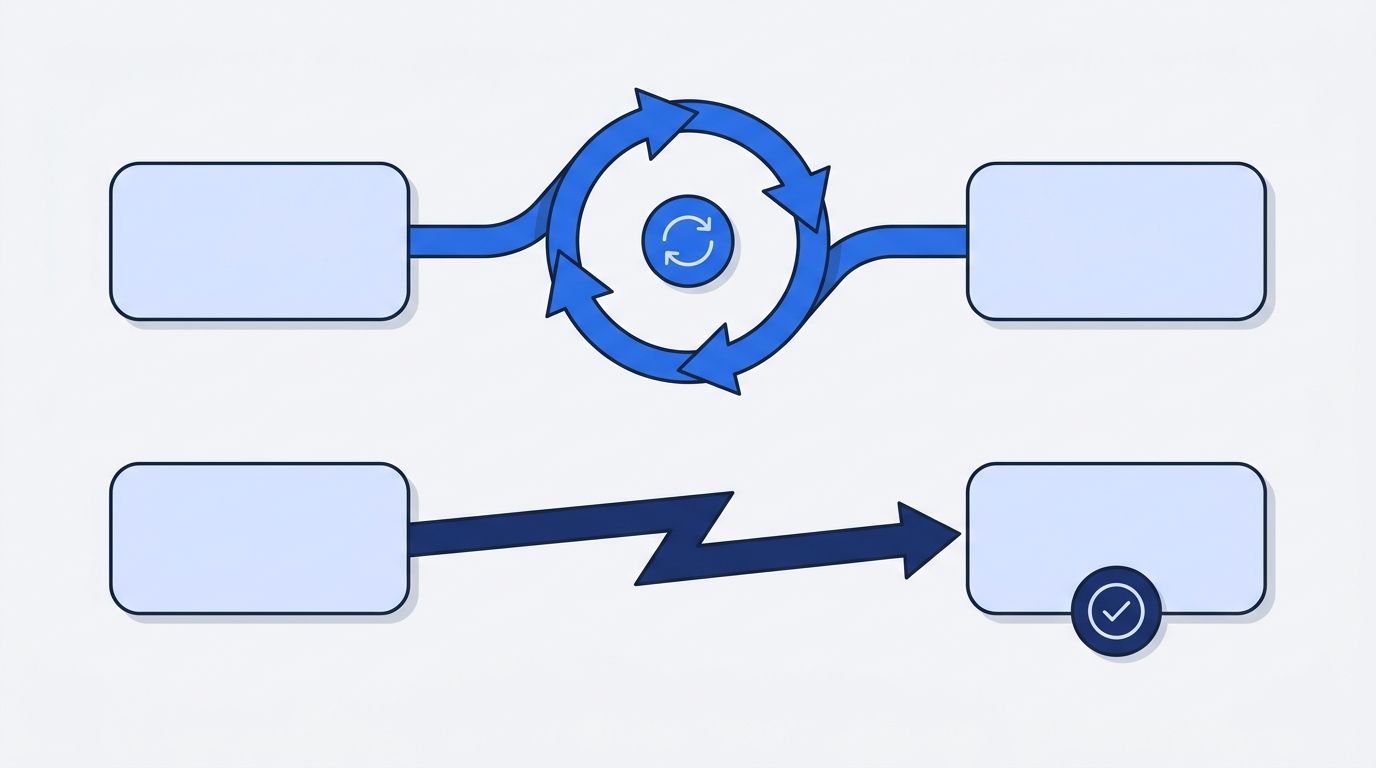
Which Model Keeps Your Data Fresher at Scale?
Webhooks win on freshness at any real volume, because REST freshness is capped by how often you're willing — and able — to poll. B2B contact data decays fast enough that polling cadence matters on its own. Contact data decays at roughly 2.1% a month, about 22.5% a year, as people change roles and companies (HubSpot, Database Decay Simulation, retrieved 2026-09-13). A record that's accurate today can be wrong within a quarter, and a REST integration polling weekly always carries a week's worth of possible staleness baked in.
In 2026, IDC found that 90% of enterprises have increased their focus on real-time data specifically to support agentic AI initiatives, and organizations mature in real-time data report roughly 23% average annual gains in speed-to-market (IDC, commissioned by Solace, 2026 State of Real-Time Data, retrieved 2026-09-13). Freshness isn't a nice-to-have anymore. It's an input teams now measure against real business outcomes.
Webhooks close this gap by design. A job-change signal fires the moment a tracked person's employer field updates, so your CRM finds out within minutes instead of at the next scheduled poll. Isn't that the entire point of monitoring intent in the first place — catching the moment, not the aftermath?
Citation capsule: Data doesn't wait for your polling schedule. At roughly 2.1% monthly decay, a REST integration polling once a week already carries days of built-in staleness, while a webhook delivers the update the instant the underlying record changes — closing the gap between "it happened" and "your system knows."
For a deeper look at applying this to job-change monitoring, see real-time intent signal APIs for job changes.
How Do Rate Limits and Polling Costs Change the Math?
Polling gets expensive at scale because most REST calls under a naive polling schedule return "nothing changed" — and you pay for the check either way. Treblle's analysis of over a billion API calls across 500,000-plus endpoints found that only about 15% of APIs enforce rate limiting, meaning the other 85% will let a badly-tuned polling loop hammer them until something breaks (Treblle, The Anatomy of an API 2024 Edition, retrieved 2026-09-13). That's not a reason to skip rate limits on your own side. It's a reason to build them in before your polling job runs unattended overnight.
The math gets worse as your list grows. Polling 10,000 accounts once an hour is 240,000 calls a day, and most of those calls confirm nothing happened. In 2025, developers reported real time lost to this kind of upkeep: 69% spend more than 10 hours a week on API-related work, and 26% spend more than 20 hours (Postman, 2025 State of the API Report, retrieved 2026-09-13). A chunk of that time goes to tuning polling intervals that are either too aggressive or too slow.
Webhooks flip the cost model. You're notified only when something actually changes, so a quiet account costs you nothing. Check your credit balance against a signal-based workflow instead of a polling one, and the difference in call volume shows up fast.
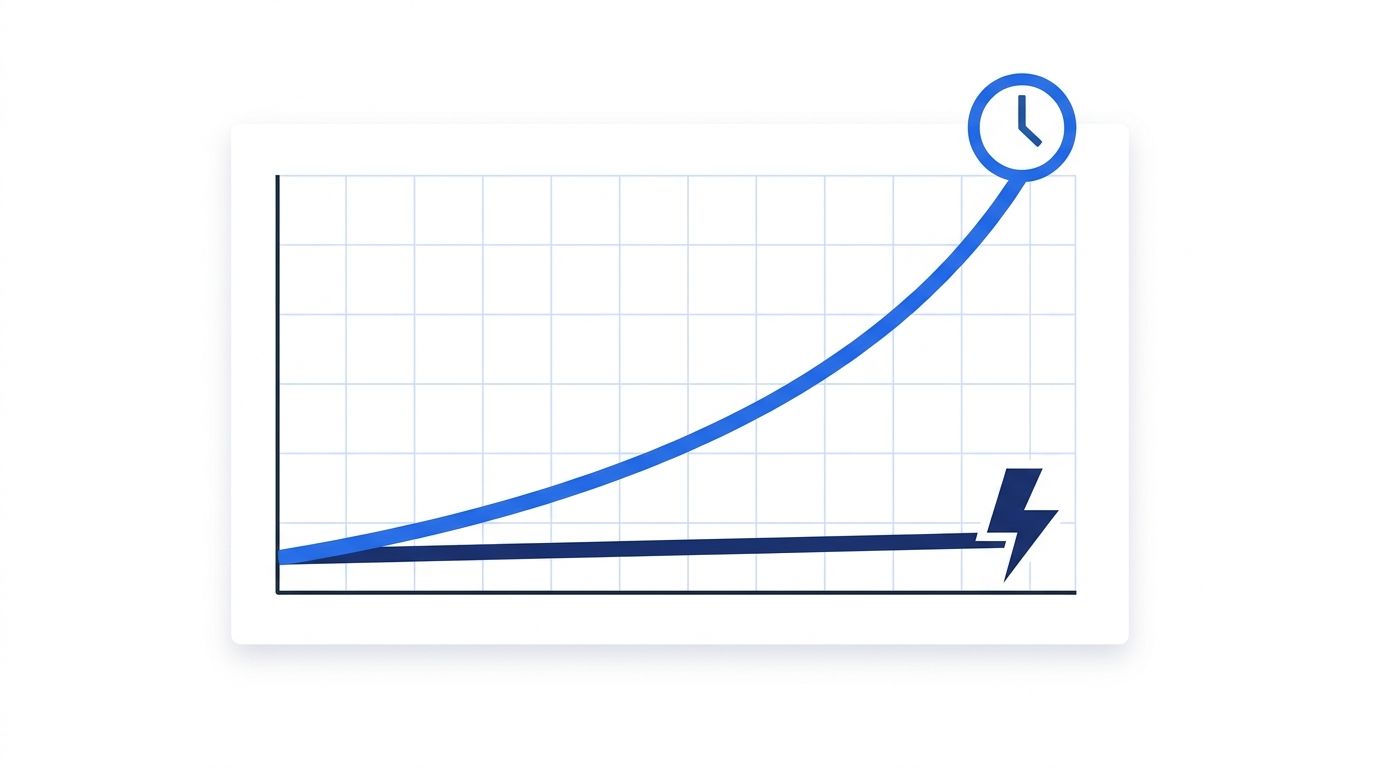
Which Delivery Model Is More Reliable — and What Can Go Wrong?
Neither model is more reliable by default. REST puts the retry burden on you, webhooks put it on the sender, and both need real monitoring. API reliability isn't static either. Average API uptime fell from 99.66% in Q1 2024 to 99.46% in Q1 2025 — a 60% year-over-year jump in downtime, based on 2 billion synthetic monitoring checks across 400-plus companies (Uptrends, The State of API Reliability 2025, retrieved 2026-09-13). If you're polling, a downed endpoint just means a missed check. If you're depending on a webhook, a downed receiver means a missed event, and events don't automatically replay unless the sender retries.
Security compounds the reliability risk. In 2025, 99% of organizations reported experiencing an API security issue in the past year, and 59% described their API security maturity as still "planning" or "basic" (Salt Security, State of API Security Report 2025, retrieved 2026-09-13). Nearly half of production APIs process requests with no authentication at all (Treblle, The Anatomy of an API 2025 Edition, retrieved 2026-09-13). For webhooks specifically, that means verifying signatures on every payload instead of trusting whatever hits your endpoint. Datamagnet signs webhook payloads and documents signature verification for exactly this reason.
Citation capsule: Reliability isn't something either delivery model gives you for free. Average API uptime dropped from 99.66% to 99.46% in a single year, and nearly half of production APIs still skip authentication entirely — meaning both REST polling jobs and webhook receivers need their own retry logic, monitoring, and signature checks, not just a working integration on day one.
How Much Engineering Work Does Each Model Actually Take?
REST is faster to ship. Webhooks cost more upfront, but that cost pays itself back once volume climbs past a few hundred records a day. Building any single integration in-house takes real time: 71% of companies report that a single product integration takes at least three weeks to build (Merge, The 2026 State of Product Integrations, retrieved 2026-09-13). A REST integration is usually the smaller half of that estimate — call an endpoint, parse the JSON, done. A webhook integration adds a receiving server, a public URL, signature verification, duplicate-delivery handling, and a retry strategy for when your own endpoint goes down.
<!-- [PERSONAL EXPERIENCE] -->Teams that skip the duplicate-delivery handling almost always find out the hard way — a retried webhook fires twice, a signal gets logged twice, and someone spends an afternoon tracing why a contact shows two "job change" alerts three seconds apart. Building idempotency in from day one avoids that entire class of bug.
Architecturally, this tracks with where teams are already headed. Among software architects surveyed in 2025, 60% use microservices patterns and 55% use event-driven architecture patterns, nearly matching each other in adoption (IcePanel, State of Software Architecture Report 2025, retrieved 2026-09-13). Teams already running event-driven systems elsewhere find webhook enrichment a natural fit. Teams without that infrastructure pay the full setup cost upfront.
Is that setup cost actually worth it for your volume? If you're enriching a few hundred records a week, the three-plus weeks of webhook receiver work rarely pays for itself. If you're monitoring thousands of accounts continuously, it almost always does.
So Which Delivery Model Fits Your Volume?
Match the model to your call volume and how urgently you need to know about a change, not to whichever one sounds more modern. If a rep only needs a record when they open an account, REST's on-demand pull is enough. If you're tracking thousands of accounts for job changes or engagement signals where staleness matters, given B2B contact data decays at roughly 2.1% a month (HubSpot, Database Decay Simulation, retrieved 2026-09-13), webhooks close that gap. The ranges below match each model to a volume, and most GTM teams end up running both rather than picking one.
- Under a few hundred lookups a day: Choose REST. Pull a People Profile or Company Profile when a rep needs it. A webhook receiver at this volume adds infrastructure you'll rarely exercise.
- A few hundred to a few thousand records, checked periodically: Consider a hybrid. Use REST for on-demand lookups and layer in a signal for the specific accounts or people you need to monitor continuously, like champions or named target accounts.
- Thousands of records monitored continuously: Choose webhooks. A webhook-delivered signal scales without multiplying your call volume, since you're notified only when something changes — see how the champion tracking cookbook applies this to an entire book of power users.
- No existing receiver infrastructure and a tight deadline: Start with REST, then add webhooks once volume or urgency justifies the build. Tools like n8n can receive Datamagnet webhooks without you writing a custom receiver, which lowers the setup cost considerably.
Across the integrations we see in practice, teams under roughly 500 daily lookups almost always start with REST alone, while teams past a few thousand continuously-monitored accounts run webhooks for monitoring and keep REST only for the occasional manual pull. The middle ground — hybrid setups — is where most growing GTM teams eventually land, not an edge case.
If neither extreme fits and you're somewhere in the middle, that's exactly where most GTM engineering teams end up. Running both models for different parts of the same workflow is the normal answer, not a compromise.
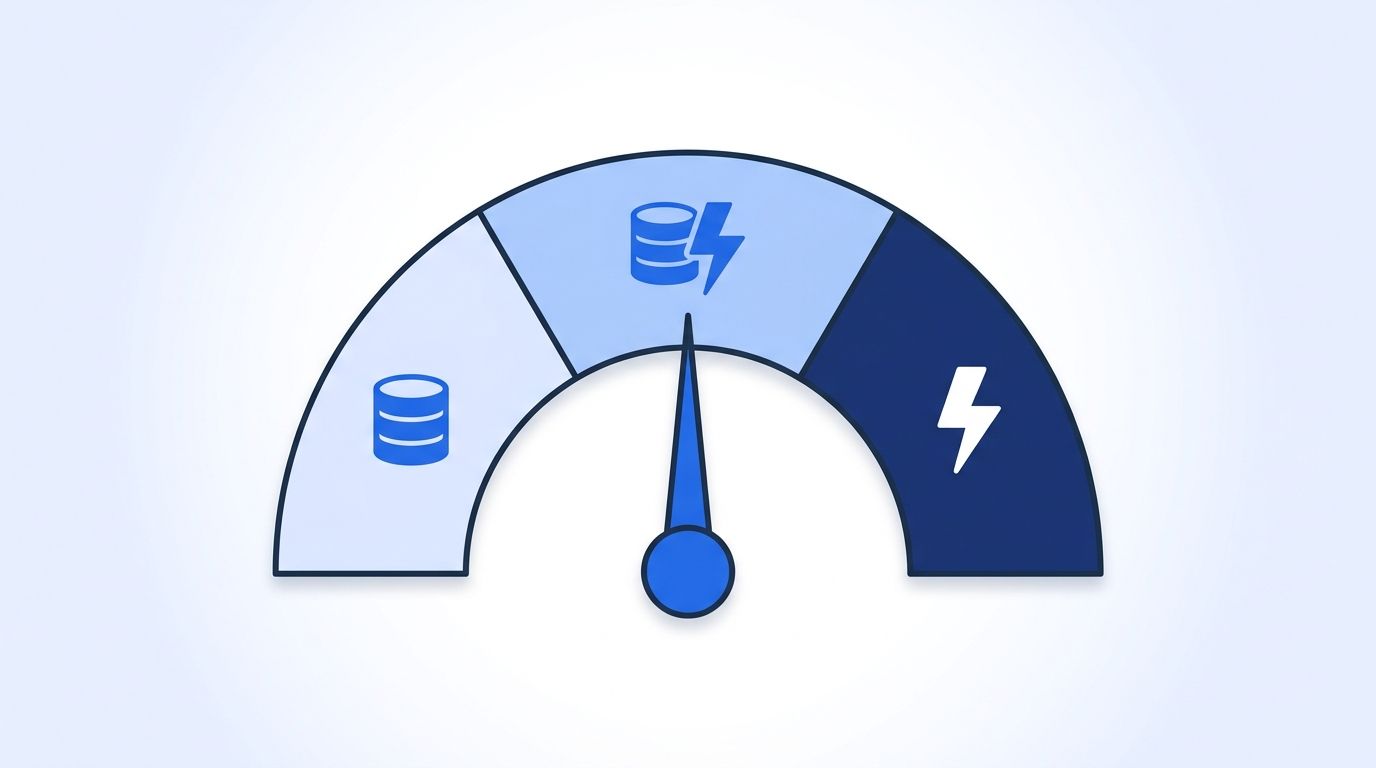
See how Datamagnet's Signal API delivers both real-time webhooks and on-demand REST lookups — pick the model that fits your volume, or run both from one account.
Frequently Asked Questions
Is REST or webhook enrichment better for B2B data?
Neither is universally better. REST fits low-volume, on-demand lookups where you control the timing, while webhooks fit high-volume, continuous monitoring where you need to know the moment something changes. Datamagnet supports both, so teams often pull Company Profile data on demand and monitor accounts with webhook-delivered signals in parallel.
Can I use REST and webhooks together in the same enrichment workflow?
Yes, and most production GTM stacks do exactly that. A common pattern registers a signal to watch for a job change or engagement event, then pulls the full People Profile via REST only after the webhook fires, which avoids polling for data you don't need yet.
How much does polling cost compared to webhooks at high volume?
Polling costs scale with your list size regardless of whether anything changed, while webhook costs scale with actual events. Only about 15% of APIs enforce rate limiting (Treblle, retrieved 2026-09-13), so an unmanaged polling loop against a large list can multiply calls fast without a matching increase in useful data.
What happens if my webhook receiver goes down?
You risk missing events during the outage unless the sender retries failed deliveries. Datamagnet retries webhook deliveries and documents retry and signature-verification behavior, so you can build monitoring and replay logic around expected failure modes instead of just the happy path.
Do I need special infrastructure to receive webhooks?
You need a public HTTPS endpoint that can verify signatures and respond quickly, but you don't have to build it from scratch. Integrations like n8n and HubSpot can receive Datamagnet webhooks directly, which is often faster than writing a custom receiver for a first integration.
Sources
- Postman, 2025 State of the API Report, retrieved 2026-09-13, https://www.postman.com/state-of-api/2025/
- Uptrends, The State of API Reliability 2025, retrieved 2026-09-13, https://www.uptrends.com/state-of-api-reliability-2025
- IcePanel, State of Software Architecture Report 2025, retrieved 2026-09-13, https://icepanel.io/blog/state-of-software-architecture-survey-2025
- IDC (commissioned by Solace), 2026 State of Real-Time Data: Agentic Enterprises Are Running on Real-Time Data, retrieved 2026-09-13, https://solace.com/press-center/2026-state-of-real-time-data/
- HubSpot, Database Decay Simulation, retrieved 2026-09-13, https://www.hubspot.com/database-decay
- Merge, The 2026 State of Product Integrations, retrieved 2026-09-13, https://www.merge.dev/sopi-2026
- Salt Security (Salt Labs), State of API Security Report 2025, retrieved 2026-09-13, https://salt.security/press-releases/salt-labs-state-of-api-security-report-reveals-99-of-respondents-experienced-api-security-issues-in-past-12-months
- Treblle, The Anatomy of an API: 2025 Edition, retrieved 2026-09-13, https://treblle.com/ebooks/the-anatomy-of-an-api-2025
- Treblle, The Anatomy of an API: 2024 Edition, retrieved 2026-09-13, https://treblle.com/news/anatomy-of-an-api-report-2024
- Datamagnet, Webhooks, retrieved 2026-09-13, https://docs.datamagnet.co/api-reference/webhooks
