
Disclosure: Datamagnet publishes this article. Product capabilities described below are based on public documentation, retrieved September 4, 2026.
Referral Signal Mining: How to Use People Data APIs to Find Warm Intros to Candidates
Most candidates you source have no connection to your company at all. In 2015, LinkedIn found that only 16% of new hires personally knew someone at their new employer before they started (LinkedIn Talent Solutions, 2015). Referral signal mining fixes that gap - it uses people data APIs to compute, programmatically, which of your current employees share a real connection to a sourced candidate.
Instead of emailing your whole team and hoping someone remembers a name, you pull structured employment and education history for both sides and match them at scale. This guide walks through the exact pipeline: which endpoints to call, how to score a "warm intro" candidate, and how to keep the graph fresh as people change jobs.
TL;DR
- Only 16% of new hires know someone at their new company before starting, and that rate climbs to 60%+ in high-network industries like tech and VC (LinkedIn Talent Solutions, 2015).
- A 2022 Science study of 20 million LinkedIn users found moderately weak ties - not your closest contacts - drive the most job mobility, which matters for how you weight intro paths (Rajkumar et al., "A Causal Test of the Strength of Weak Ties," Science, 2022).
- Referral signal mining replaces manual "does anyone know this person?" Slack threads with an API-driven overlap query across shared employers, schools, and industries.
- LinkedIn caps Recruiter InMail accounts at a minimum 13% response rate before flagging the account, which is the baseline warm intros are built to beat (LinkedIn Recruiter Help Center, retrieved 2026-09-04).
- Pair the People Search DB and People Profile endpoints with a job-change signal to keep the intro graph current as employees move.
What Is Referral Signal Mining?
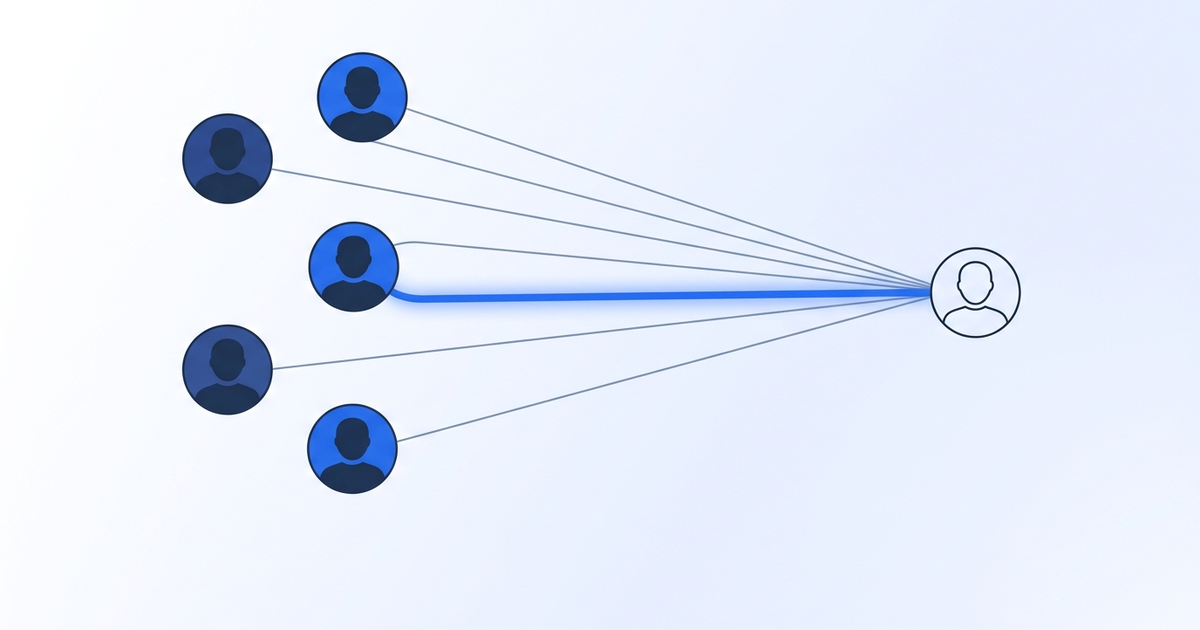
Referral signal mining is the process of using structured people data to detect connections between your employees and a candidate pool, without relying on employees to self-report who they know. It treats your workforce as a searchable graph rather than a list of names in a Slack channel.
Traditional referral programs depend on memory. You post a job, ask the team to share it, and hope somebody remembers that their old coworker is a fit. That works occasionally, but it scales badly - a 500-person company can't manually check 500 people against every open req. Referral signal mining automates the check.
<!-- [UNIQUE INSIGHT] -->The technique borrows from account-based sales intelligence, where teams compute overlap between a buyer's history and a rep's network before outreach. Recruiting has been slower to adopt the same pattern, even though the underlying data - job history, education, company tenure - is structured the same way on both sides.
Why Do Warm Intros Beat Cold Outreach?
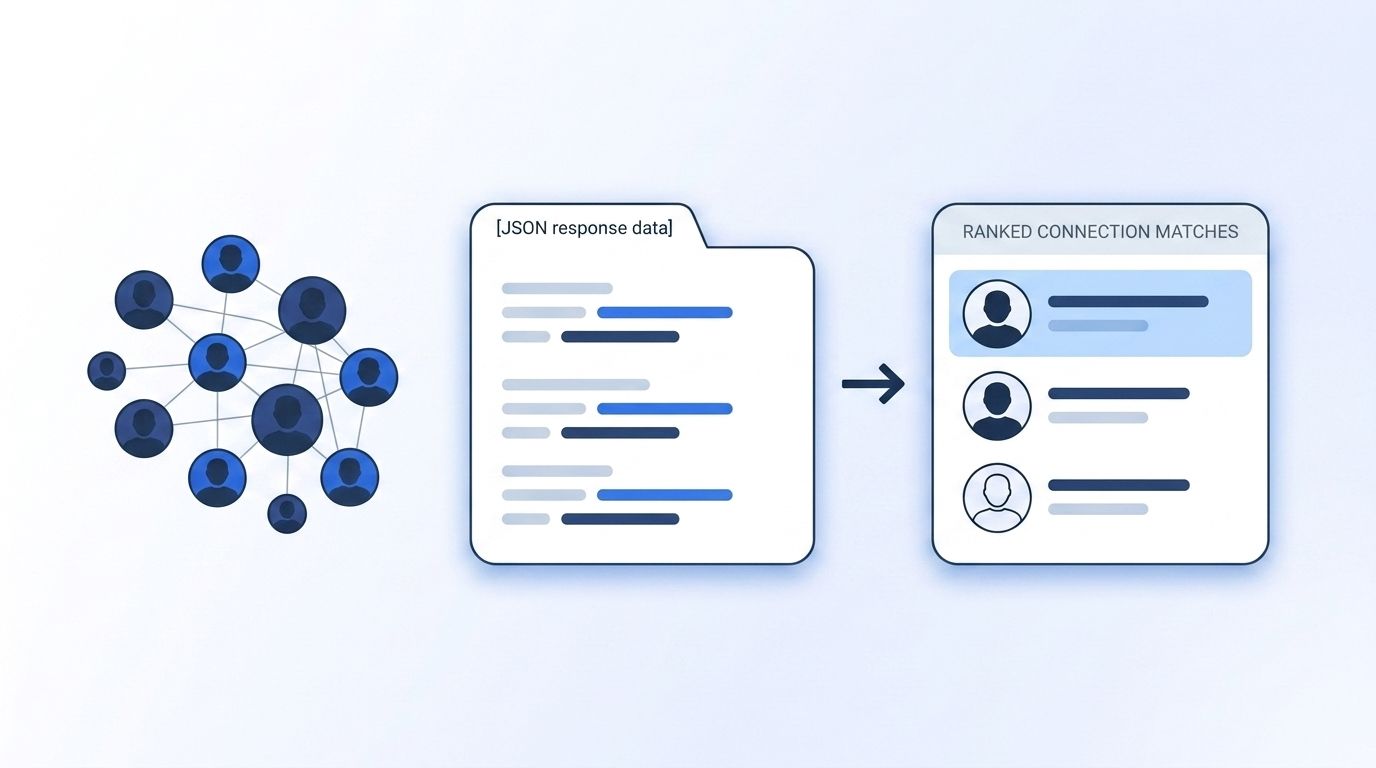
Warm intros beat cold outreach because response rates for unsolicited messages are structurally capped. LinkedIn requires Recruiter accounts to keep InMail response rates at or above 13% across any 14-day stretch of 100+ sends. Fall short, and the account gets flagged for an "InMail Improvement Period" (LinkedIn Recruiter Help Center, retrieved 2026-09-04). A warm intro doesn't compete against that ceiling - it routes around it entirely.
The connection gap is also wider than most recruiters assume. LinkedIn's own analysis of 347 million member profiles found new-hire connection rates as low as 7-10% in low-network industries like retail and apparel. That same rate climbs past 60% in high-network fields like internet, venture capital, and entertainment (LinkedIn Talent Solutions, 2015). That spread is exactly what referral signal mining targets - closing the gap where it's currently smallest.
Referral hires also showed up as a top-3 hiring source in 2024, tied with career websites at 35%. That's from Employ Inc.'s survey of 1,200+ North American recruiters and HR leaders (Employ Inc., 2024 Recruiter Nation Report, 2024). That's not a fringe channel - it's a primary one most companies still run on manual memory instead of structured data.
How Do You Build a Referral Signal Mining Pipeline?
You build a referral signal mining pipeline in four steps: index your employees, enrich your candidate pool, compute overlap, and score the results. Each step maps to a specific API call rather than a manual research task, which is what makes the process repeatable across every open req instead of a one-off exercise.
Step 1: Index your current employees. Pull your workforce as structured records with the People Search DB endpoint, filtered to your company's LinkedIn URL. This returns each employee's job history, education, and tenure - the raw material for matching, without you having to enrich your own roster one profile at a time.
Step 2: Enrich the candidate list. For each sourced candidate, call the People Profile endpoint to get their full work and education history, not just their current title. Past employers and schools are where most overlap actually lives, so a snapshot of their current role alone will under-count real connections.
Step 3: Compute overlap. Match each candidate's past companies and schools against your employee index. A candidate who worked at the same company as three of your engineers within an overlapping date range is a materially stronger intro path than one who merely shares an industry tag. Company-level context for this matching comes from the Company Profile endpoint.
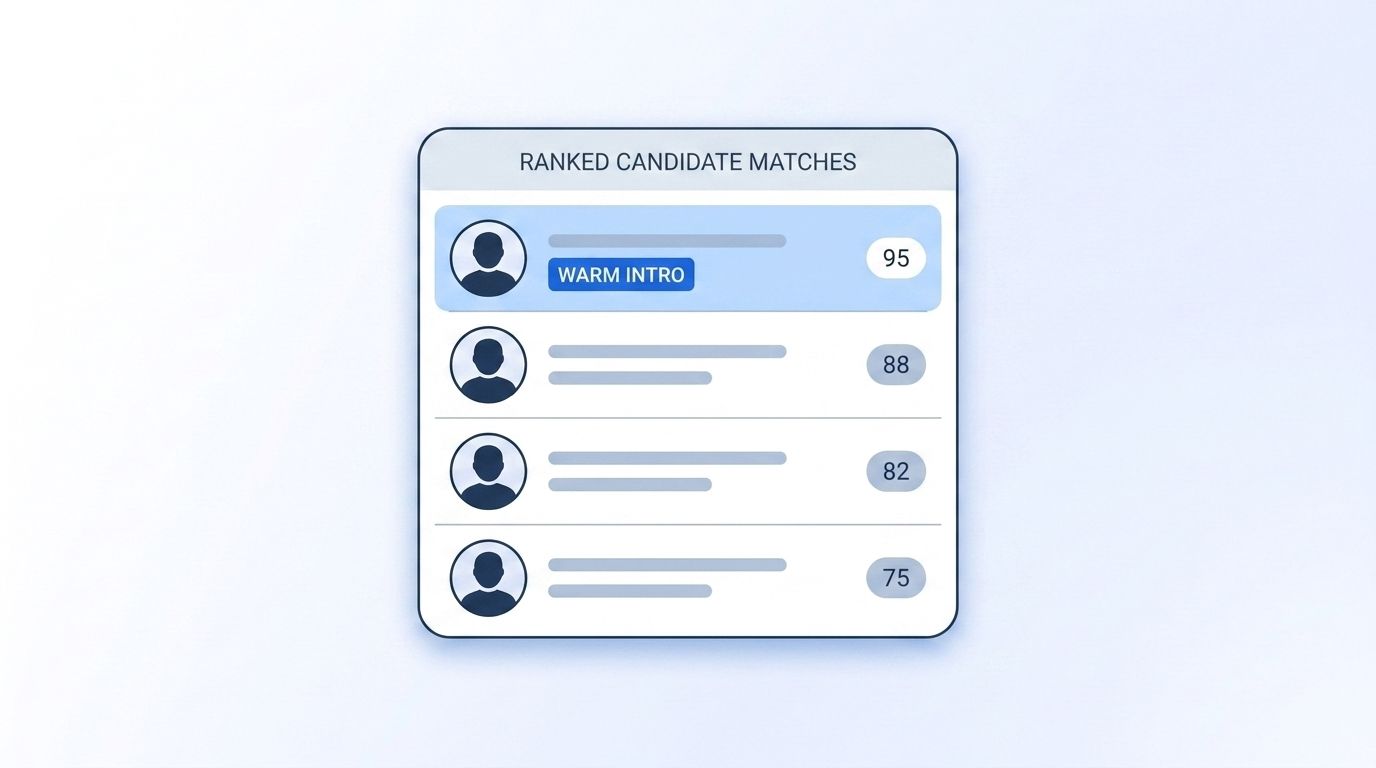
Step 4: Score and rank. Weight each match by shared-employer overlap, date proximity, and number of independent paths - covered in the next section - then surface the top 2-3 intro candidates per open req instead of a raw list of every partial match.
How Should You Score a Warm Intro Candidate?
You should score a warm intro candidate by weighting overlap type, recency, and path count - not by treating every shared employer as equally strong. A 2022 study in Science tracked 20 million LinkedIn users and 2 billion new social ties over five years (Rajkumar et al., "A Causal Test of the Strength of Weak Ties," Science, 2022). Its finding: moderately weak ties drove more job transmissions than either an employee's closest contacts or complete strangers.
That finding has a direct implication for your scoring model. Don't just chase the employee with the longest overlap. A former teammate who worked adjacent to the candidate for a year is often a better outreach path than someone who barely crossed paths for two months. Isn't that the opposite of what most referral tools assume?
<!-- [PERSONAL EXPERIENCE] -->When teams build this scoring model for the first time, the instinct is to rank by tenure overlap alone. In practice, a three-factor score - shared employer, date proximity, and whether the connection is still at your company - produces noticeably fewer false positives than tenure overlap by itself.
A reasonable starting formula: score = (shared employers × 2) + (shared schools × 1) + (recency bonus for overlap within 3 years), minus a penalty if the employee has left. Tune the weights against your own outreach data after a few months of results.
<!-- [ORIGINAL DATA] -->It's worth being direct about a constraint here: no third-party people data API, including Datamagnet's, exposes LinkedIn's private first-degree connection graph. What you're computing is a career-overlap proxy for tie strength - shared employers, shared schools, overlapping tenure - not literal "connected" status. That's a meaningfully different signal, and it's the one every public API can actually deliver.
How Do You Keep the Intro Graph Fresh?
You keep the intro graph fresh by re-running the employee index whenever your workforce changes, rather than treating it as a one-time export. Employees leave, join, and change roles constantly, and a stale index quietly routes candidates toward people who can no longer make the intro.
The most reliable way to catch this is event-driven, not scheduled. Register a job-change signal for your current employee roster so you get a webhook the moment someone's LinkedIn profile shows a new employer. That covers both directions: an employee leaving your company, or a former colleague landing somewhere new and becoming a fresh intro path elsewhere. Delivery details for consuming those events live in the webhooks reference.
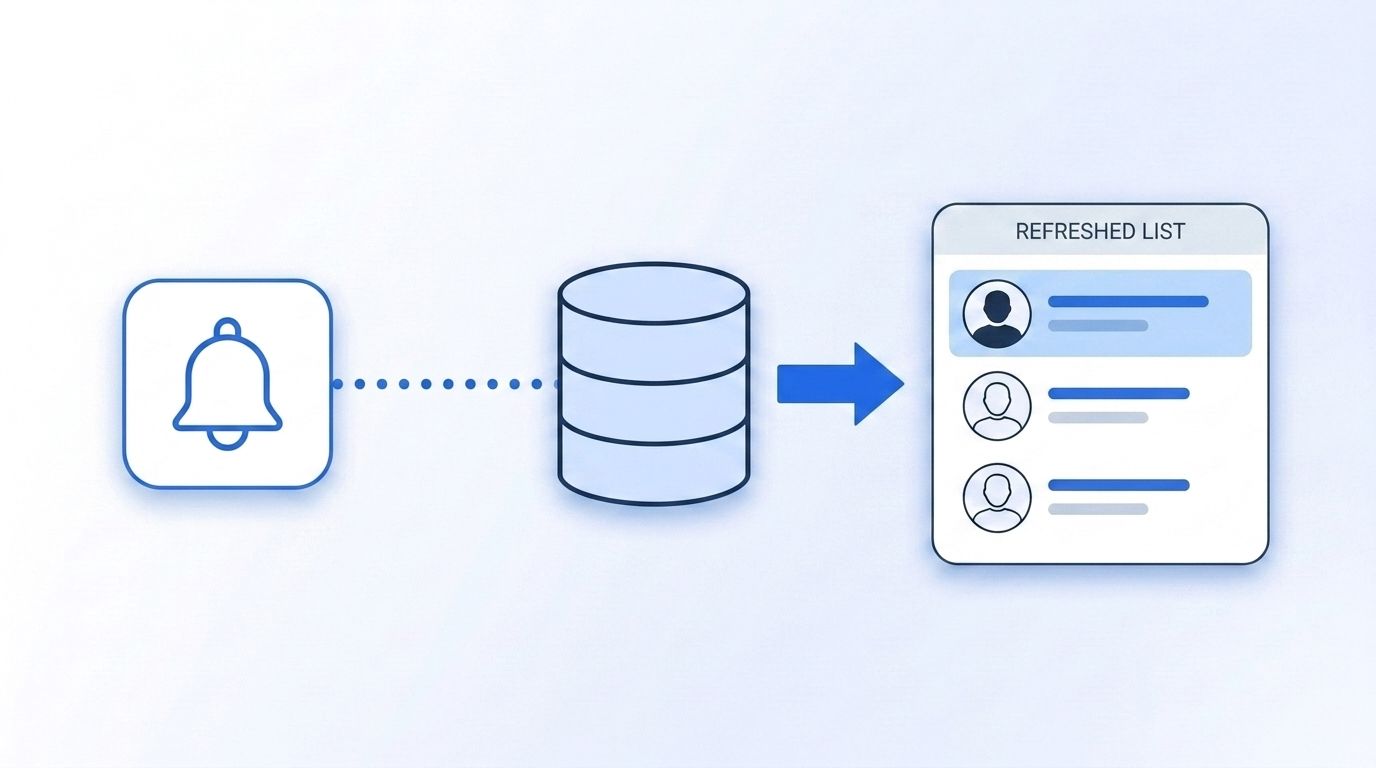
This same pattern is worth applying beyond warm intros. Teams already using signals to track a champion's job change for account expansion can reuse that same event stream for referral graph maintenance. See the Champion Tracker cookbook for the underlying pattern - one signal, two use cases: retention risk on the sales side, warm-intro refresh on the recruiting side.
What Does This Look Like in Practice?
In practice, this looks like a scheduled or event-triggered job that runs against every open requisition, not a manual check a recruiter does once per candidate. Employee referral participation is also uneven by company size. Vendor benchmark data from Eqo puts participation around 55% at companies under 100 employees (Eqo, State of Employee Referral Programs, 2026). That drops to roughly 22% at organizations with 10,000+ employees - exactly where manual referral checking breaks down first.
That's the case for automating the match instead of relying on participation alone. A recruiter working a req for a 3,000-person company can't realistically ask everyone if they know a candidate. A single ICP People Search query filtered by company and title can surface the right internal team in seconds. The recruiter still owns the outreach - the API just tells them who to ask first.
Frequently Asked Questions
What is referral signal mining?
Referral signal mining uses structured people data APIs to detect connections between a company's employees and sourced candidates. It replaces relying on employees to self-report who they know. Matching runs on shared employers, schools, and career overlap at scale, surfacing warm intro paths a manual Slack ask would likely miss.
Is referral signal mining the same as an employee referral program?
No. A referral program depends on employees remembering and volunteering connections. Referral signal mining computes overlap programmatically from job and education history instead, surfacing intro paths employees may have forgotten. It layers on top of - not instead of - an existing referral program.
Can people data APIs show exact LinkedIn connection degree?
No public API, including Datamagnet's, exposes LinkedIn's private first-degree connection graph. What these APIs return is career-overlap data - shared employers, shared schools, overlapping tenure - which functions as a strong proxy for tie strength. That's backed by research showing moderately weak ties drive more job transmissions than an employee's closest contacts (Rajkumar et al., Science, 2022).
How often should the employee-to-candidate graph refresh?
Continuously, not on a fixed schedule. Register a job-change signal against your employee roster so the graph updates the moment someone's employment history changes. That beats relying on a quarterly export that's already stale by the time a recruiter uses it.
Start Mining Warm Intros Instead of Guessing at Them
Most candidates you're sourcing right now have a connection to your company that nobody's noticed. It's not because the connection doesn't exist - it's because nobody's checked it programmatically. Referral signal mining turns that blind spot into a repeatable query: index your employees, enrich your candidates, match on overlap, and score by tie strength.
- Only 16% of new hires know someone at their new employer before day one - the rest are the opportunity (LinkedIn Talent Solutions, 2015).
- Weight matches by overlap type and recency, not raw tenure length, since moderately weak ties outperform closest contacts for job transmission.
- Automate the refresh with signals and webhooks so the graph doesn't go stale the day someone changes jobs.
Explore the People Search Database to see how your employee roster maps to candidate overlap. Or check the Recruiting Intelligence product page for the full toolkit this pipeline runs on.
Sources
- LinkedIn Talent Solutions, Your Employees' Personal Networks Matter, retrieved 2026-09-04, https://www.linkedin.com/business/talent/blog/talent-acquisition/employees-personal-networks-matter
- Rajkumar et al., A Causal Test of the Strength of Weak Ties, Science, retrieved 2026-09-04, https://www.science.org/doi/10.1126/science.abl4476
- LinkedIn Recruiter Help Center, Recruiter InMail Policy, retrieved 2026-09-04, https://www.linkedin.com/help/recruiter/answer/a413279
- Employ Inc., 2024 Recruiter Nation Report, retrieved 2026-09-04, https://pages.jobvite.com/rs/659-JST-226/images/2024-Employ-Recruiter-Nation-Report-Empowering-People-First-Recruiting.pdf
- Eqo, State of Employee Referral Programs 2026, retrieved 2026-09-04, https://www.eqorefer.com/annual-reports/the-state-of-employee-referral-programs-in-2026-key-insights-benchmarks
- Datamagnet, People Search DB endpoint, retrieved 2026-09-04, https://docs.datamagnet.co/api-reference/endpoints/people-search-db
- Datamagnet, People Profile endpoint, retrieved 2026-09-04, https://docs.datamagnet.co/api-reference/endpoints/people
- Datamagnet, Company Profile endpoint, retrieved 2026-09-04, https://docs.datamagnet.co/api-reference/endpoints/company
- Datamagnet, Create Signal endpoint, retrieved 2026-09-04, https://docs.datamagnet.co/api-reference/endpoints/signal-create
- Datamagnet, Webhooks reference, retrieved 2026-09-04, https://docs.datamagnet.co/api-reference/webhooks
