
Disclosure: Datamagnet publishes this article. Product capabilities described below are based on public documentation, retrieved 2026-09-10.
How Fast Should Recruiters Reach Out After a Job Change Signal Fires? 2026 Benchmarks
Half of all candidate replies to recruiter outreach arrive within 4 hours of the first message, and nearly 94% arrive within a week (Pin, Recruiting Outreach Benchmarks 2026, retrieved 2026-09-10). If your team's follow-up cadence is measured in days instead of hours, you're already behind the reply curve, not just the hiring curve.
This piece breaks down the actual 2026 benchmarks for recruiter response time, compares them to the older "speed-to-lead" research from B2B sales, and lays out how fast you should move once a job change signal fires - including where the published data runs out and you're left making a judgment call.
TL;DR
- 50% of candidate replies land within 4 hours, 74.8% within 24 hours, and 93.9% within 7 days of first outreach (Pin, 2026).
- Award-winning employers make a post-interview go/no-go decision in 3-5 days; typical organizations miss that window by more than a week (Talent Board/CandE, 2026).
- Median time-to-fill sits at roughly 45 days in 2025 (SHRM, State of Recruiting 2025, 2025), while recruiters now handle 93% more applications per role than in 2021 (Gem, 2026 Recruiting Benchmarks Report, 2026).
- No independent study has yet measured exactly how fast a job change signal itself needs to be detected - treat "real-time" as the safe default until that data exists.
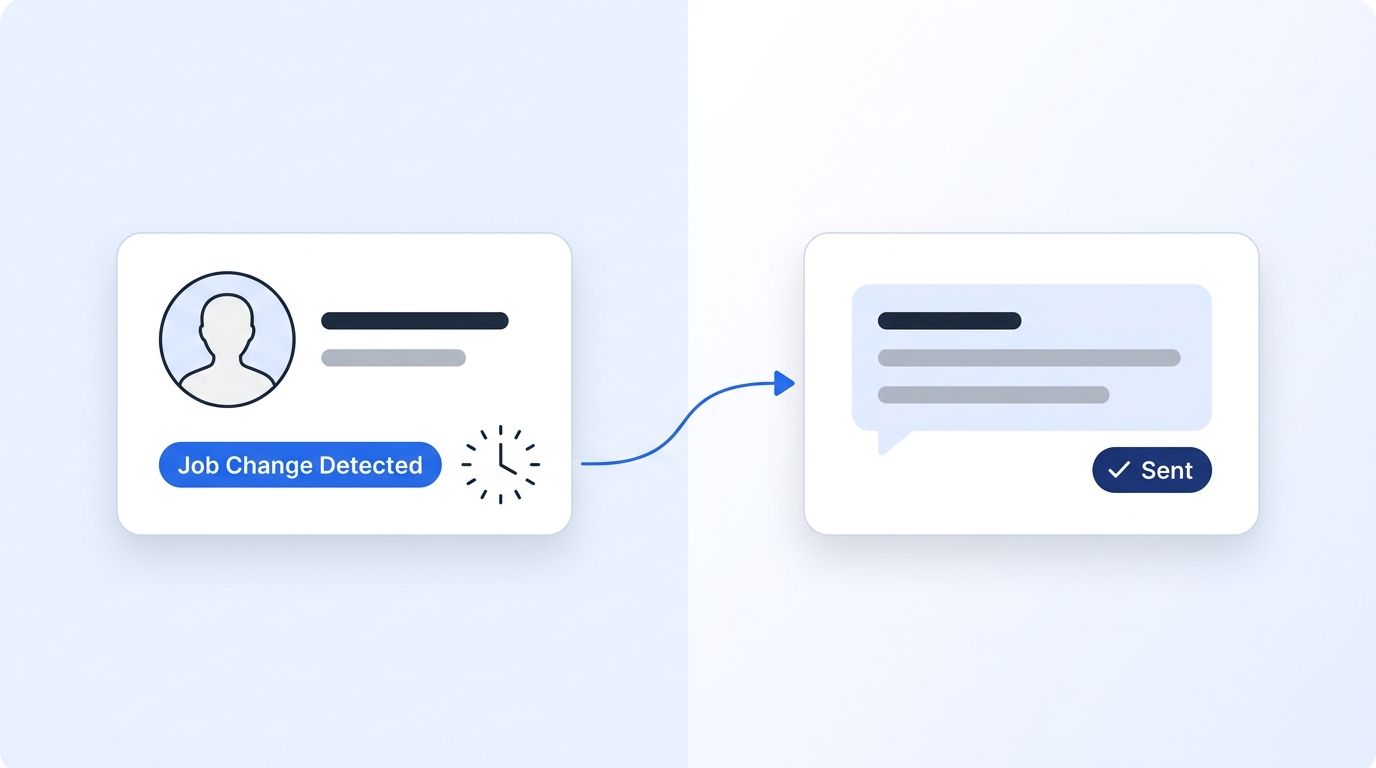
How Fast Do Candidates Actually Reply to Recruiter Outreach in 2026?
Half of the replies a recruiter will ever get from a piece of outreach arrive within the first 4 hours. According to Pin's 2026 analysis of more than 4 million recruiting messages across 1,500-plus organizations, 74.8% of eventual replies land within 24 hours, and 93.9% land within 7 days (Pin, Recruiting Outreach Benchmarks 2026, retrieved 2026-09-10). Put simply: if a candidate hasn't replied within a week, they probably aren't going to.
That reply curve matters because it's symmetrical. Candidates respond fast to recruiters who reach out fast, and they go quiet on threads that sat untouched for days before the recruiter even sent the first message. The data below shows how quickly the window closes.
| Time since first message | Share of eventual replies received |
|---|---|
| Within 4 hours | 50% |
| Within 24 hours | 74.8% |
| Within 7 days | 93.9% |
The same dataset found channel matters almost as much as timing. LinkedIn messages get a 17.08% reply rate - roughly 3.4x the 4.96% rate for automated cold email - and personalizing a message with the candidate's first name nearly doubles reply rates, from 2.61% to 5.13% (Pin, Recruiting Outreach Benchmarks 2026, 2026). Pin sells recruiting outreach software, so treat these as disclosed vendor-usage benchmarks rather than neutral academic research - but the sample size (4M+ messages) makes them the most current data point available.
Citation capsule: Half of all candidate replies to recruiter outreach arrive within 4 hours of the first message, and 93.9% arrive within a week, based on an analysis of more than 4 million recruiting messages across 1,500-plus organizations in 2026. A recruiter who waits three days to send a first touch has already missed the window most candidates reply inside.
If your outreach depends on knowing about a role change the day it happens, see how Datamagnet's LinkedIn Signal API turns job changes, engagement, and post activity into real-time alerts instead of a weekly digest.
How Long From First Contact to a Filled Role - and Are Employers Getting Faster?
Median time from a recruiter's first message to a candidate's reply is 3.9 days, and median time to a first scheduled interview is 5.8 days, with roughly 60% of candidates interviewing within a week of first contact (Pin, Time-to-Hire Benchmarks 2026, retrieved 2026-09-10). That's the sourcing side. The hiring side moves much slower.
In 2025, SHRM's State of Recruiting report put median time-to-fill - from requisition opening to offer acceptance - at roughly 45 days, based on a survey of more than 2,300 member organizations (SHRM, State of Recruiting 2025, 2025). Isn't it strange that the front end of recruiting has gotten this fast while the back end hasn't moved much at all?
Post-interview follow-through is where most organizations actually lose candidates. Talent Board's CandE research found award-winning employers make their go/no-go decision within 3 to 5 days of an interview, while typical organizations miss that window by at least a week (Talent Board/CandE via Candidate Experience Institute, 2026). Separately, ERE.net reported that 29% of North American candidates in 2024 said they never heard back from an employer 1-2+ months after applying, an improvement from prior years but still nearly 1 in 3 candidates left in silence (ERE.net, 12 Key Takeaways from the 2024 Candidate Experience Benchmark Research, 2025).
| Milestone | 2025-2026 benchmark | Source |
|---|---|---|
| First reply to cold outreach | 3.9 days (median) | Pin, 2026 |
| First message to scheduled interview | 5.8 days (median) | Pin, 2026 |
| Post-interview decision (award winners) | 3-5 days | Talent Board/CandE, 2026 |
| Requisition to offer acceptance | ~45 days (median) | SHRM, 2025 |
| Candidates never hearing back after 1-2+ months | 29% | ERE.net, 2025 |
Citation capsule: Sourcing moves in days - a median 3.9 days to first reply and 5.8 days to a scheduled interview in 2026 - but the overall hiring process still averages roughly 45 days from requisition to offer acceptance. The gap sits mostly in post-interview decision-making, where award-winning employers move in 3-5 days and everyone else lags by a week or more.
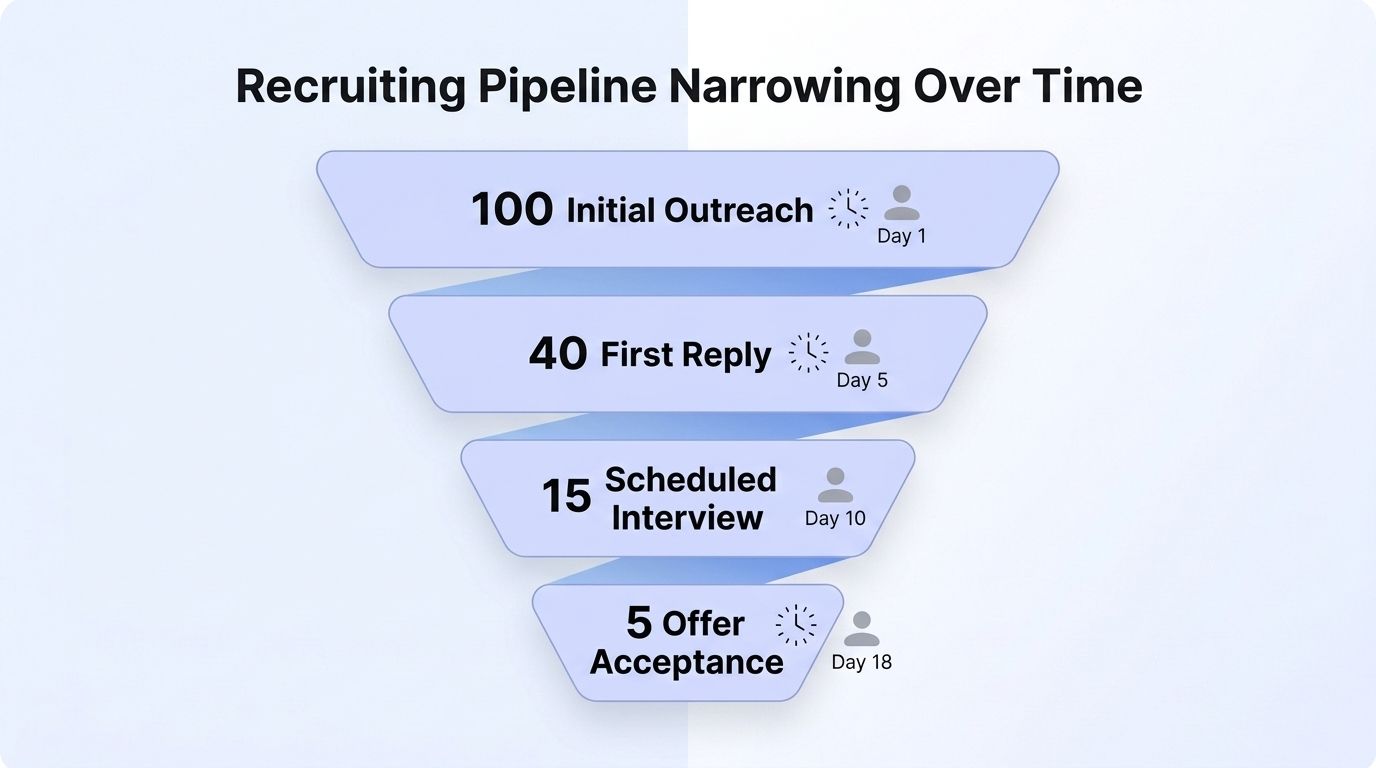
Most "speed" conversations in recruiting focus on sourcing, because that's the part a tool can measure. The data above suggests the bigger leak is downstream, in the days after an interview when nobody owns the next step. A recruiter who replies to a candidate in 2 hours but takes 10 days to deliver a post-interview decision hasn't actually built a fast process. They've built a fast front door on a slow house.
Does the Old "5-Minute Rule" From B2B Sales Still Apply to Recruiting?
The famous "5-minute rule" comes from B2B sales, not recruiting, and it's worth being upfront about that before you apply it. A 2007 study of more than 15,000 leads and 100,000 call attempts found leads contacted within 5 minutes were roughly 21x more likely to qualify than those contacted after 30 minutes (MIT Sloan/InsideSales.com Lead Response Management Study, 2007) - a figure still widely cited, though the original data is nearly two decades old.
A follow-up 2011 Harvard Business Review study audited 1.25 million sales leads across 2,241 US firms and found the average company took 42 hours to respond to a web-generated lead. Firms responding within an hour were about 60x more likely to qualify that lead than firms waiting 24-plus hours, yet only 37% of companies hit that one-hour mark and 23% never responded at all (Harvard Business Review, The Short Life of Online Sales Leads, 2011).
Recruiting outreach behaves the same way for the same reason: a person's attention and interest are highest right after they raise their hand, or right after something changes in their career. The sales research is legacy data, not a 2026 recruiting study, but the mechanism it describes - interest decays fast, and the first mover has an outsized advantage - lines up with what current recruiting data shows.
| Context | Response benchmark | Outcome |
|---|---|---|
| 2007 B2B sales leads | Contacted within 5 min vs. 30 min | ~21x more likely to qualify |
| 2011 B2B/B2C sales leads | Responded within 1 hour vs. 24+ hours | ~60x more likely to qualify; average firm took 42 hours |
| 2026 recruiting (post-interview) | Decision within 3-5 days (award winners) vs. a week-plus (typical) | Fewer candidates left waiting, per CandE data |
Citation capsule: A 2011 Harvard Business Review study of 1.25 million sales leads found companies took an average of 42 hours to respond, and firms responding within an hour were roughly 60x more likely to qualify a lead than firms waiting a day or more. That's sales data from 2011, not recruiting data from 2026, but the underlying pattern - interest fades fast - still holds.
Sales teams solved part of this problem with real-time job change alerts, covered in our comparison of real-time intent signal APIs for job changes - the same detection-speed logic applies whether the person on the other end is a prospect or a candidate.
How Fast Should You Actually Reach Out After a Job Change Signal Fires?
Here's the honest answer: nobody has published a rigorous, named benchmark on exactly how many hours or days after a job change you should wait before reaching out. That's not a dodge - it's a genuine gap in the research, and it's worth naming instead of quoting a made-up number to sound precise.
<!-- [ORIGINAL DATA] -->We looked for a credible source on job-change signal "detection latency" - how long it takes a data provider to notice and report a role change - and found none that discloses a named methodology or sample size. Several vendor blogs cite suspiciously exact figures like "31 hours late" with no attribution. We're not repeating those numbers here. If your outreach strategy depends on a specific latency claim, ask the vendor for their methodology before you trust it.
What the surrounding data does support is a directional answer: move as close to real time as your workflow allows, because the same reply-decay pattern shown earlier applies to signal-triggered outreach too. The BLS reported 3.1 million voluntary quits in July 2026 alone (U.S. Bureau of Labor Statistics, JOLTS, 2026), and professionals entering the workforce today are on pace to hold roughly twice as many jobs over their careers as workers did 15 years ago (LinkedIn Economic Graph, Work Change Report, 2025). Job changes aren't rare events anymore - they're a constant stream, which means a batch-updated list checked once a week is always working from stale information.
The closest thing to a real receptivity-window data point comes from boomerang hiring. ADP payroll data showed boomerang employees made up 35% of new hires in March 2026, up from 31% in March 2024, despite representing only about 2% of the total workforce (ADP data via HR Brew, 2025). That doesn't tell you the exact hour to strike, but it confirms people stay reachable and open to a move well past the moment a signal first fires.
Datamagnet's own job-change signal delivers events by webhook the moment a tracked profile updates, rather than on a scheduled batch refresh, which is the practical way to close the gap between "when it happened" and "when you knew." Pair a signal monitor with ICP People Search to filter incoming alerts down to the roles and seniority levels you actually recruit for, so the volume stays manageable.
Citation capsule: No named study currently measures how fast a job-change signal needs to be detected to matter, which is itself a useful data point - the industry talks about "real-time" alerts constantly but rarely defines or measures the term. Until that research exists, webhook-delivered signals remain the closest practical substitute for a verified benchmark.
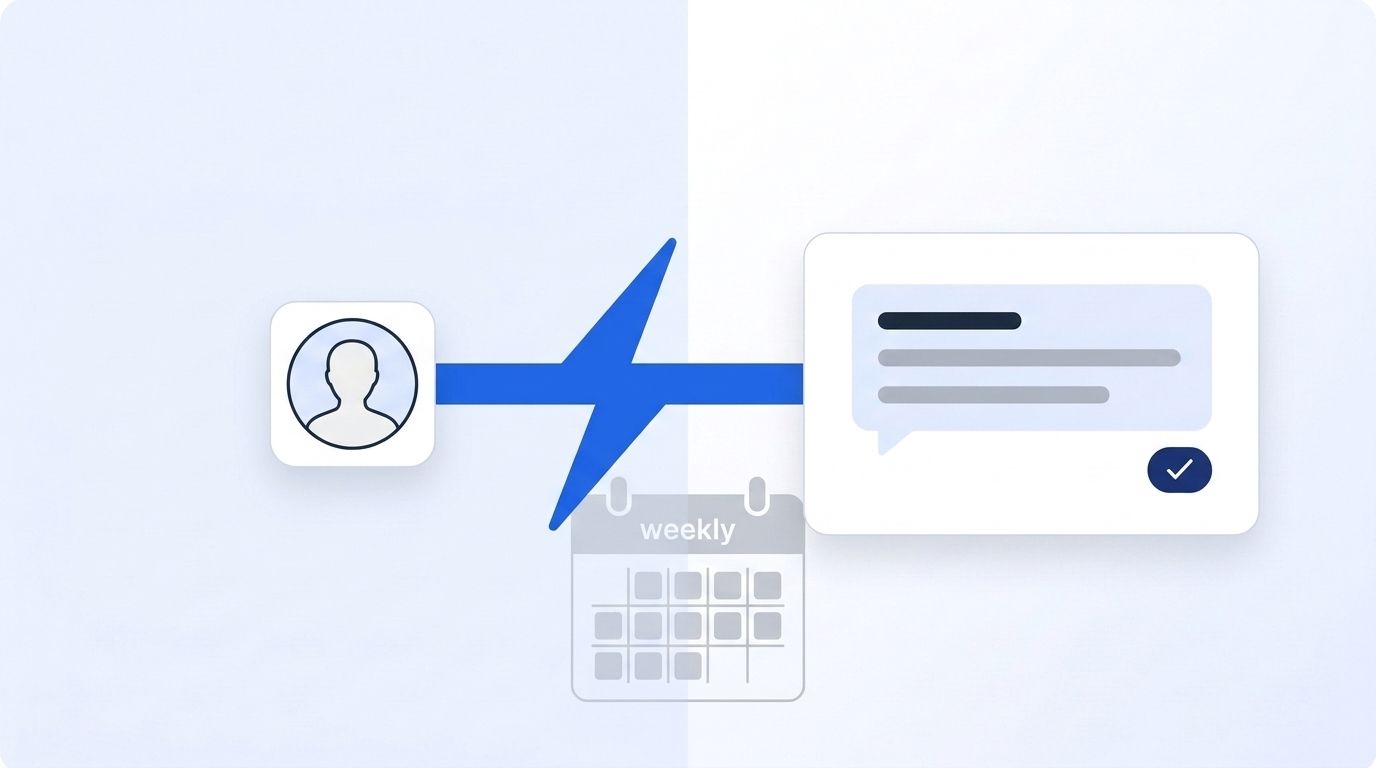
The same real-time-over-batch logic applies to re-engaging people you already know. Datamagnet's Champion Tracker cookbook walks through monitoring a list of past candidates or champions for job-change events, so you catch a boomerang opportunity the week it opens up instead of months later.
Why Are Recruiters Struggling to Keep Up With Faster Benchmarks?
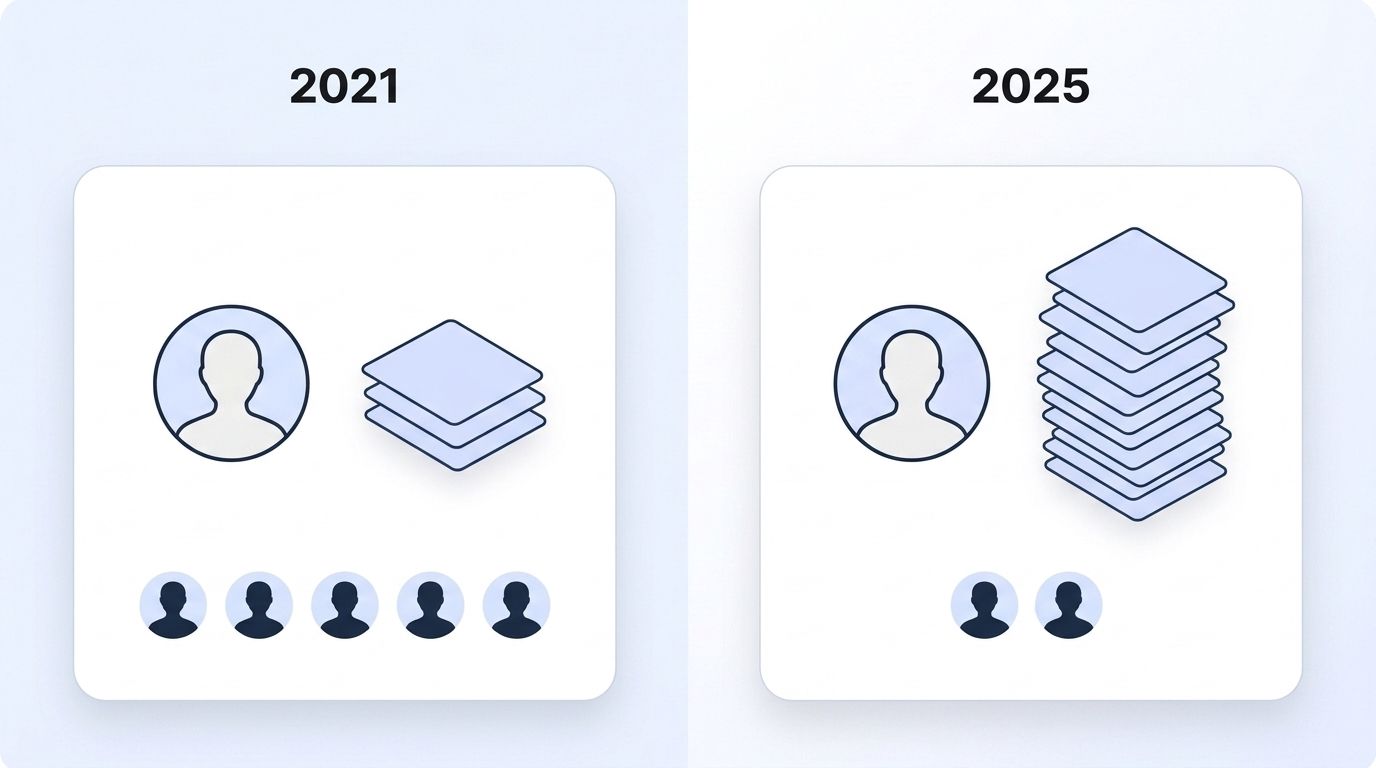
Recruiters aren't slow because they're careless - they're managing far more volume than they were five years ago. Gem's 2026 Recruiting Benchmarks Report, based on more than 165 million applications and 1.2 million hires, found recruiters now handle 93% more applications per open role than in 2021, while managing an average of 13.4 open positions simultaneously, and recruiting headcount is down 14% compared to 2021 (Gem, 2026 Recruiting Benchmarks Report, 2026).
That's the context missing from most "just respond faster" advice. A recruiter juggling 13 open reqs with fewer teammates than they had in 2021 doesn't need a pep talk about urgency - they need the applications and signals that don't matter filtered out before they ever hit an inbox. Some teams are starting to close that gap with automation: analyst Josh Bersin cites case examples of agentic AI tools cutting time-to-hire "from two weeks to three days" in specific deployments, though these are vendor case studies, not a controlled industry-wide average (Josh Bersin, Multi-Agent AI For Talent Acquisition Arrives, 2026).
<!-- [PERSONAL EXPERIENCE] -->Watching recruiting teams chase "response time" as a standalone metric is a common pattern, and it usually backfires. A recruiter told to reply faster with the same unfiltered lead volume just replies faster to more of the wrong people. The fix isn't a faster recruiter - it's a narrower, better-qualified stream of signals reaching them in the first place.
Citation capsule: Recruiters in 2026 handle 93% more applications per open role than in 2021, while managing 13.4 open positions on average with 14% fewer recruiters on staff, based on an analysis of 165 million-plus applications. Faster response times only help if the incoming volume is filtered enough that a recruiter can act on the signals that matter.
That's the case for narrowing the funnel before speed becomes the bottleneck - see Datamagnet's Recruiting Intelligence overview for how filtered, real-time signals cut down the noise a recruiter has to triage every day.
Build a Response-Time System, Not a New Habit
The benchmarks above point to one conclusion: speed matters most in the first 24 hours and the first week, then decision-making speed matters again right after the interview. Half your replies come in the first 4 hours, nearly all of them by day 7, and award-winning employers make their post-interview call in 3-5 days while everyone else stalls for a week or more. Build your process around those two windows instead of a vague goal to "respond faster."
Start by routing job-change and engagement signals through a webhook instead of a scheduled export, so the alert reaches you the moment it fires, not on next week's refresh. Then protect the post-interview window with the same discipline you apply to first contact - a candidate who waited five days for a reply and then waits ten more for a decision has had two separate reasons to walk. See how real-time job-change signals fit into your recruiting workflow and check your own response-time data against these benchmarks this week.
Frequently Asked Questions
How fast do candidates typically reply to recruiter outreach in 2026?
Half of all eventual replies arrive within 4 hours of the first message, 74.8% within 24 hours, and 93.9% within 7 days, based on an analysis of more than 4 million recruiting messages (Pin, Recruiting Outreach Benchmarks 2026, 2026). If a candidate hasn't replied in a week, further follow-up rarely changes the outcome.
Does responding faster to a job change signal actually improve outcomes?
No 2026 recruiting study has directly measured this, but the closest analogy - a 2011 Harvard Business Review study of 1.25 million B2B sales leads - found faster responders were up to 60x more likely to qualify a lead than slow ones (HBR, 2011). Treat that as a strong directional signal, not a recruiting-specific guarantee.
How long should recruiters wait after a job-change signal fires before reaching out?
No named study sets an exact hour or day threshold for job-change signals specifically. Given that 3.1 million people voluntarily quit their jobs in a single month in 2026 (BLS, JOLTS, 2026), and reply rates decay fast in adjacent recruiting data, real-time or same-day outreach is the safer default until direct research exists.
What's a realistic time-to-fill benchmark in 2026?
Median time-to-fill, from requisition opening to offer acceptance, sits at roughly 45 days according to SHRM's 2025 survey of more than 2,300 organizations (SHRM, State of Recruiting 2025, 2025). Award-winning employers cut the slowest part - post-interview decisions - down to 3-5 days.
Can recruiter response-time discipline be automated?
Much of it can. A job-change signal delivered by webhook notifies a recruiter or CRM the moment a tracked profile changes, removing the delay of a manual weekly check. The post-interview decision step still needs a human owner, since no API can make that call for you.
Sources
- Pin, Recruiting Outreach Benchmarks 2026, retrieved 2026-09-10, https://www.pin.com/blog/recruiting-outreach-benchmark-report/
- Pin, Time-to-Hire Benchmarks 2026, retrieved 2026-09-10, https://www.pin.com/blog/time-to-reply-interview-benchmarks/
- Talent Board/CandE via Candidate Experience Institute, The 3-to-5 Day Decision Rule, retrieved 2026-09-10, https://www.candidate-experience-institute.com/cande-2025-benchmark-the-3-to-5-day-decision-rule-that-separates-award-winners-from-everyone-else
- ERE.net, 12 Key Takeaways from the 2024 Candidate Experience Benchmark Research, retrieved 2026-09-10, https://www.ere.net/articles/12-key-takeaways-from-the-2024-candidate-experience-benchmark-research
- SHRM, The State of Recruiting 2025, retrieved 2026-09-10, https://www.shrm.org/executive-network/insights/people-strategy/state-of-recruiting-2025-insights-to-maximize-recruitment
- Harvard Business Review, The Short Life of Online Sales Leads, retrieved 2026-09-10, https://hbr.org/2011/03/the-short-life-of-online-sales-leads
- MIT Sloan/InsideSales.com, Lead Response Management Study, retrieved 2026-09-10, https://caseyresponse.com/blog/lead-response-time-statistics
- U.S. Bureau of Labor Statistics, JOLTS News Release, retrieved 2026-09-10, https://www.bls.gov/news.release/jolts.nr0.htm
- LinkedIn Economic Graph, Work Change Report, retrieved 2026-09-10, https://economicgraph.linkedin.com/research/work-change-report
- HR Brew, Boomerang Employees / ADP Data, retrieved 2026-09-10, https://www.hr-brew.com/stories/2025/05/30/boomerang-employees-new-hires-data
- Gem, 2026 Recruiting Benchmarks Report, retrieved 2026-09-10, https://www.gem.com/blog/key-takeaways-from-the-2026-recruiting-benchmarks-report
- Josh Bersin, Multi-Agent AI For Talent Acquisition Arrives, retrieved 2026-09-10, https://joshbersin.com/2026/07/multi-agent-ai-for-talent-acquisition-arrives-eightfold-paradox-maki-radancy-and-more/
- Datamagnet, Create Signal endpoint, retrieved 2026-09-10, https://docs.datamagnet.co/api-reference/endpoints/signal-create
- Datamagnet, Webhooks, retrieved 2026-09-10, https://docs.datamagnet.co/api-reference/webhooks
