
Disclosure: Datamagnet publishes this article. Product capabilities described below are based on public documentation, retrieved 2026-09-07.
Multi-Threading Signals: How to Track Buying Committees, Not Just Champions
Your champion just went quiet, and you don't know why. Maybe they're on vacation. Maybe they got reassigned. Maybe someone in procurement killed the deal three days ago and nobody told you. If your only signal is one person's inbox, you're not running a deal - you're gambling on a relationship.
Multi-threaded deals close at dramatically higher rates than single-threaded ones, and the data behind that gap is no longer a hunch. This guide walks through how to map a full buying committee, track engagement signals across every stakeholder in it, and catch the moment a deal-relevant person joins, leaves, or goes cold - before it costs you the quarter.
TL;DR
- In 2026, Gong Labs found multi-threaded deals see a 130% higher win rate on opportunities over $50,000, drawn from 1.8 million analyzed deals (Gong Labs, 2026).
- B2B buying committees run 5 to 16 stakeholders across up to four functions, and 74% of them show "unhealthy conflict" during the decision (Gartner, 2025).
- Median U.S. employee tenure hit 3.9 years in 2024, the lowest since 2002 - meaning your champion is statistically likely to change roles mid-cycle (U.S. Bureau of Labor Statistics, 2024).
- Track engagement per stakeholder, not per account, and route job-change and new-contact alerts to the whole deal team instead of one rep's calendar.
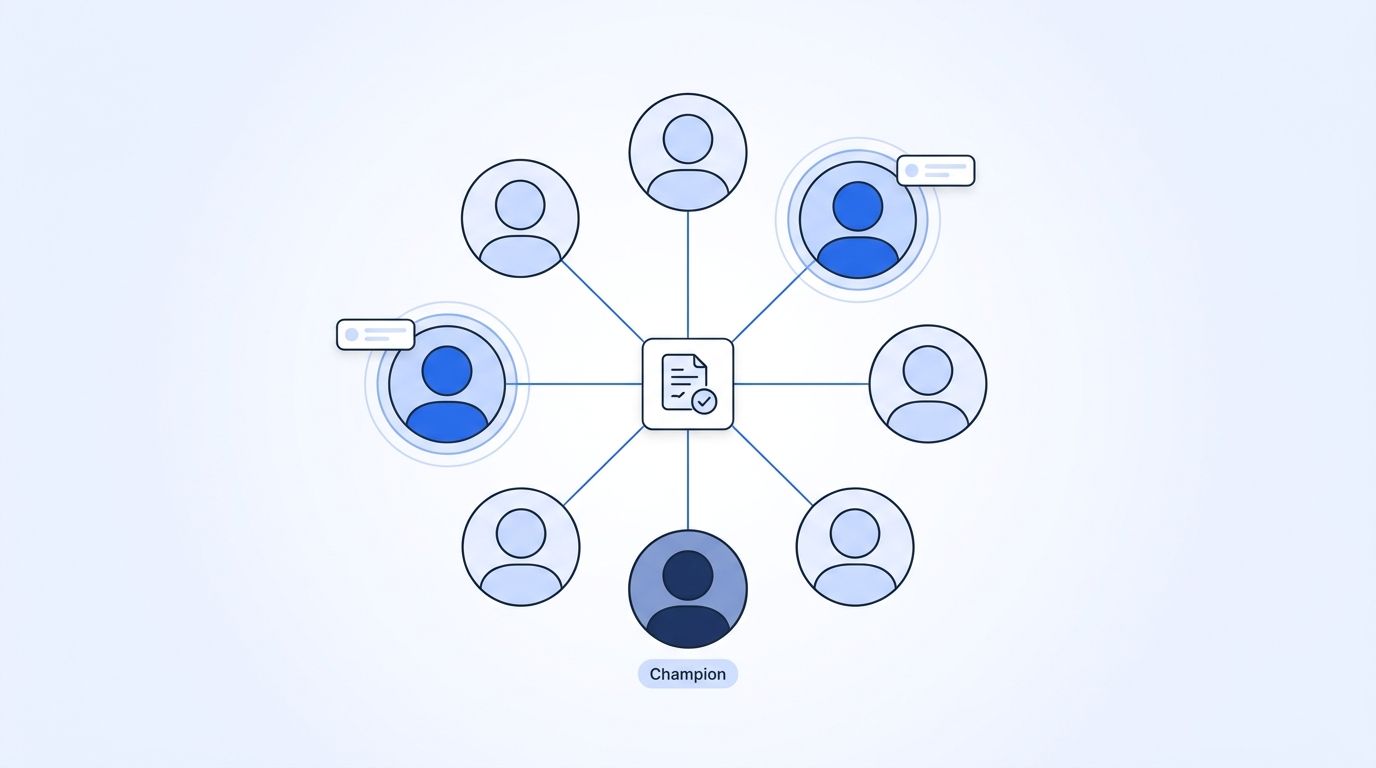
What Do You Need Before You Begin?
You don't need a new tech stack to start multi-threading. You need a way to see every stakeholder's activity, not just your champion's replies. That means tracking who holds budget authority, who signs off technically, and who can quietly kill the deal in procurement or legal review before anyone tells you. The checklist below covers what to set up before you map your first committee.
What you'll need:
- A target account or active deal you want to map
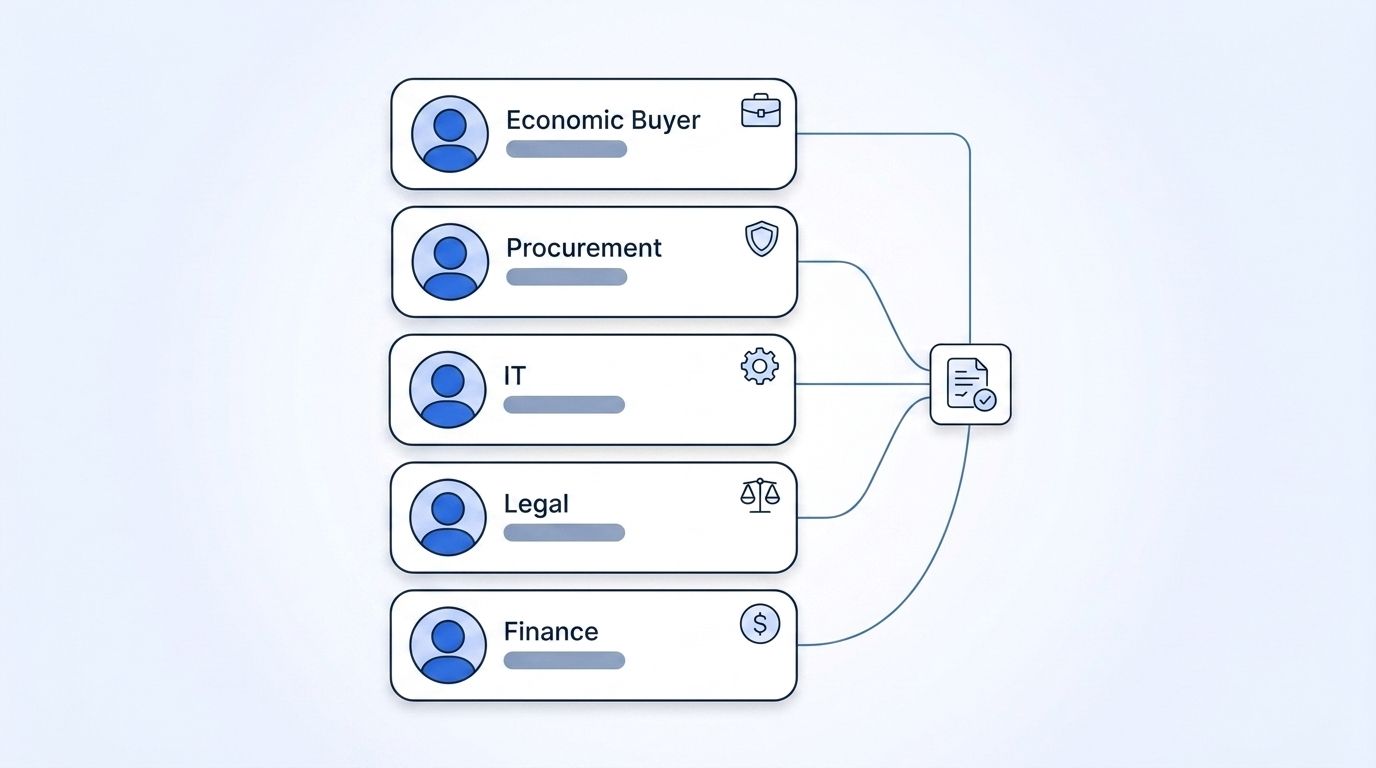
- A CRM field (or tag) for buying-committee role: economic buyer, champion, influencer, procurement, IT, legal, finance, blocker
- An engagement or intent-signal tool that tracks activity per contact, not just per company
- LinkedIn access to manually verify titles and connections when a signal looks ambiguous
- Time: 45-60 minutes to map one committee and configure ongoing signals
- Difficulty: Intermediate
Step 1: Who Belongs on the Buying Committee?
By the end of this step, you'll have a documented list of everyone who can say yes, no, or "let me check with someone else" on your deal - not just the person replying to your emails. In 2025, Gartner found B2B buying groups typically span 5 to 16 people across up to four business functions, and groups that reach real consensus are 2.5 times more likely to report a high-quality purchase decision (Gartner, 2025). Forrester's 2024 survey of over 16,000 global buyers counted an even wider circle: 13 internal stakeholders plus 9 external influencers, roughly 22 people touching a single deal (Forrester, "The State Of Business Buying, 2024"). LinkedIn's B2B Institute, working with Bain & Company, puts the average closer to 8.2 - still nowhere near the "just my champion" model most CRMs are built around.
Start with your champion, then ask three questions: who signs the check, who has to approve it technically, and who could kill it in procurement or legal review. Use ICP People Search to pull every person at the account matching senior titles in finance, IT, legal, and procurement, filtered by company, so you're not guessing who else exists.
<!-- [UNIQUE INSIGHT] -->Most sales teams treat "the buying committee" as a list filled in once during discovery and never revisited. That's the wrong model. A committee is a dataset that changes every time someone gets promoted, transfers teams, or a new VP joins mid-quarter - which is exactly why it needs to be monitored, not just documented.
For a deeper look at building the account-level research layer this step depends on, see our 4-layer account research infrastructure guide.
Step 2: What Counts as a Multi-Threading Signal?
By the end of this step, you'll know exactly which engagement events count as multi-threading signals and why they predict wins better than a single warm contact does. Gong Labs analyzed 1.8 million opportunities and found deals that close successfully average roughly twice the number of buyer contacts as deals that get lost, and winning selling teams run 67% larger than losing ones (Gong Labs, "The Best Sales Insights of 2025," January 2026). On deals over $50,000, multi-threaded opportunities saw a 130% higher win rate than single-threaded ones. Strategic enterprise deals in the same dataset averaged 17 contacts - proof that "keep it simple, talk to one person" is the opposite of what actually wins.
A multi-threading signal is any evidence that more than one stakeholder is actively engaging with your deal at the same time. That includes a second contact opening your proposal, a new person joining a call, a procurement contact connecting on LinkedIn, or several people from the same account liking or commenting on your company's posts in the same week. None of these need to come through your champion to matter.
Citation capsule: Multi-threaded B2B deals aren't just marginally safer than single-threaded ones - they close at more than double the rate on larger opportunities. Gong's analysis of 1.8 million deals found a 130% higher win rate on opportunities above $50,000 when multiple stakeholders were actively engaged, compared to deals run through one contact.
Step 3: How Do You Set Up Engagement Signals for Every Stakeholder?
By the end of this step, you'll have automated tracking running on each committee member, not a manual habit of checking LinkedIn once a week. Manually refreshing seven or eight LinkedIn profiles for every open deal doesn't scale past a handful of accounts. Isn't it strange how many sales teams will build an elaborate qualification framework, then track buying-committee engagement with a sticky note? Automating that layer is what turns multi-threading from a nice idea into something a rep actually keeps up with.
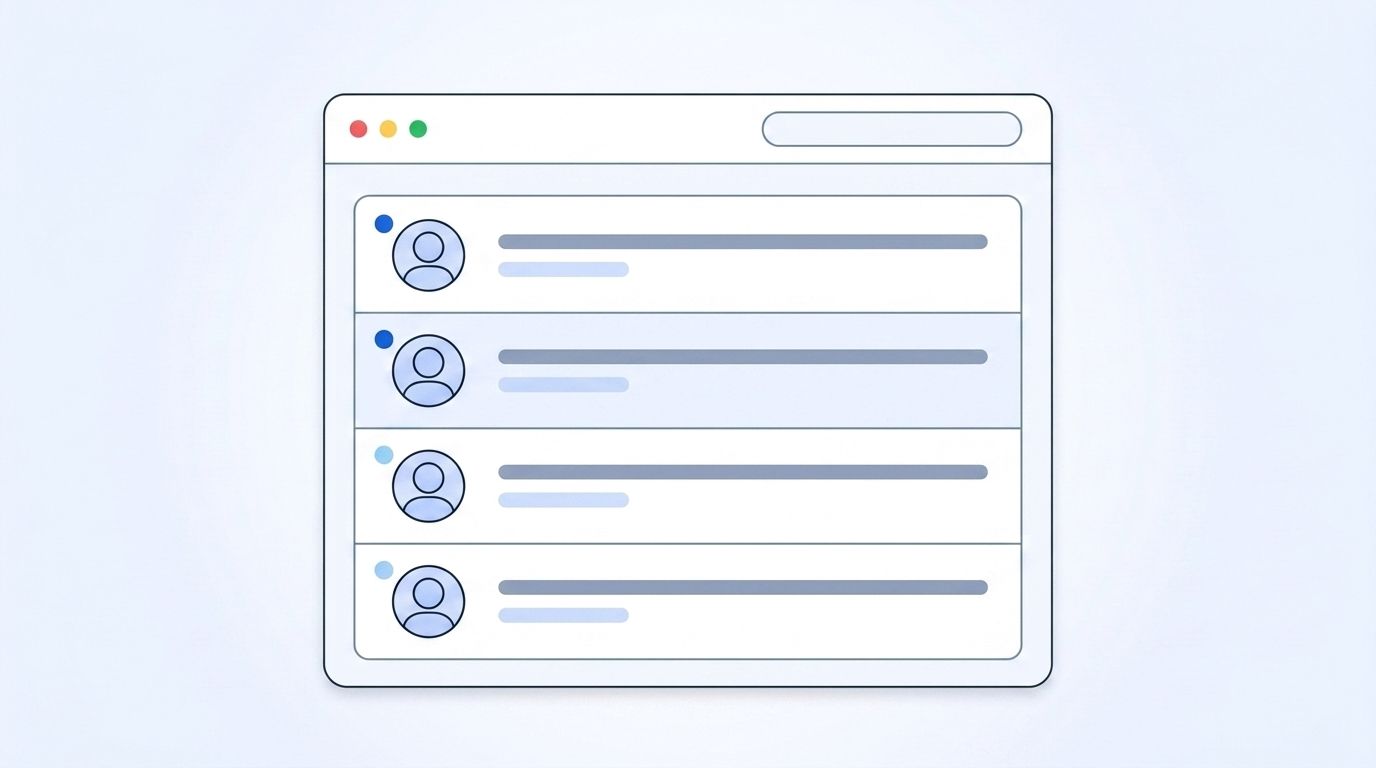
Register a person engagement signal on each named stakeholder so you get notified when they post, comment, or react on LinkedIn - direct evidence they're still engaged and active. Pair it with a company engagement signal on the account itself, which surfaces people you haven't identified yet the moment they engage with your content or your competitors'. Create both through the signal creation endpoint, and deliver results through a single feed instead of five separate LinkedIn tabs.
Step 4: How Do You Catch a Job Change Before It Costs You the Deal?
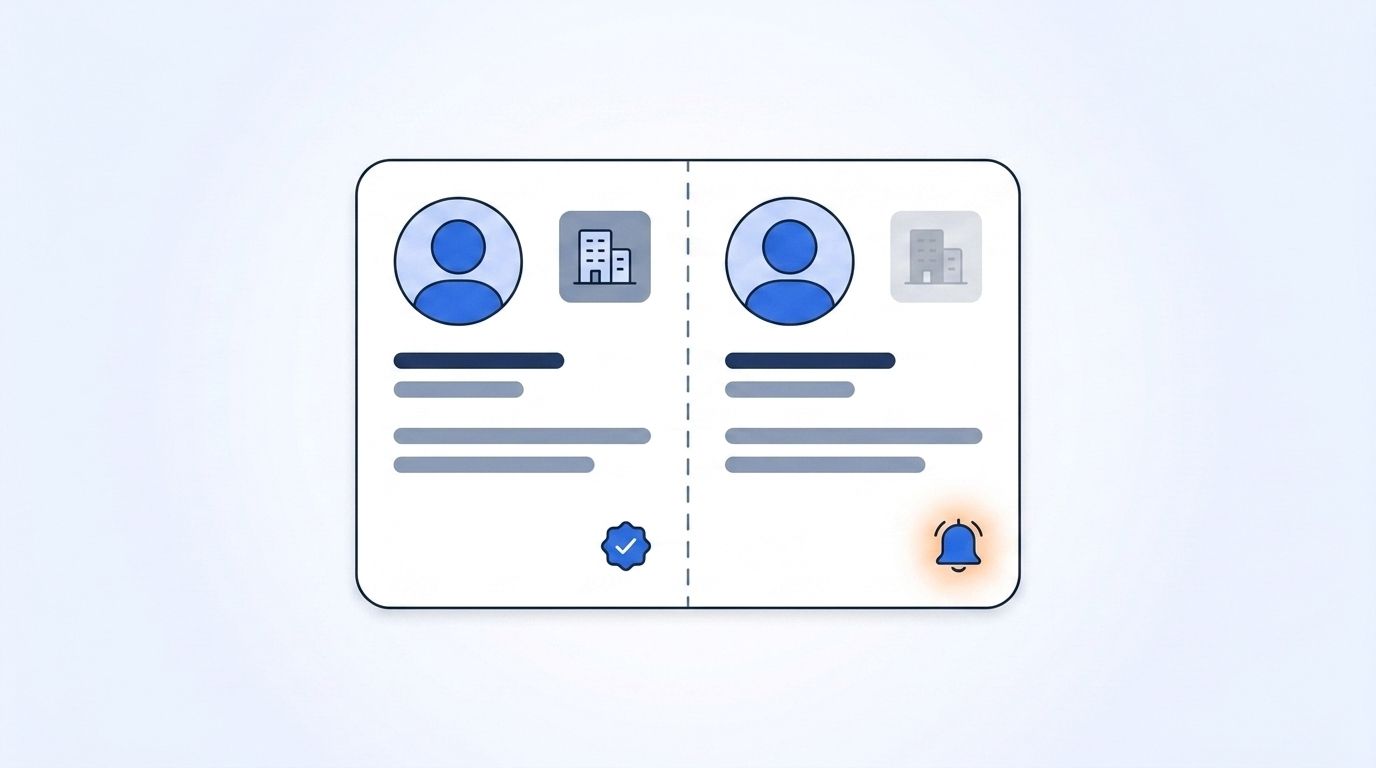
By the end of this step, you'll catch a stakeholder leaving or changing roles within days, not months after the deal has already gone cold. Median U.S. employee tenure fell to 3.9 years in 2024, the lowest level recorded since 2002, down from 4.1 years just two years earlier (U.S. Bureau of Labor Statistics, "Employee Tenure in 2024," September 2024). That trend cuts straight through your pipeline. The longer a deal cycle runs, the higher the odds that someone on the committee - champion or otherwise - takes a new job before the contract gets signed.
<!-- [PERSONAL EXPERIENCE] -->Watching a deal go quiet for three weeks only to discover the champion had quietly moved to a competitor is a familiar pattern for anyone who's run enterprise pipeline. The deal wasn't dead. Nobody was watching for the signal that would have shown it stalled.
A job-change signal on every tracked contact flags the moment someone's employer or title field updates, delivered through a webhook straight into your CRM or Slack. That's the same mechanism behind tracking job-change intent signals at scale, applied here to your own open deals instead of prospecting lists. Datamagnet's Champion Tracker cookbook walks through the exact setup for monitoring a saved list of power users or deal contacts this way.
Step 5: How Do You Score and Prioritize Stakeholders by Role?
By the end of this step, you'll have a simple scoring model that tells a rep who to prioritize when five people are engaging at once. Not every stakeholder deserves the same follow-up speed. An economic buyer liking a post matters more than an end user doing the same thing, and procurement showing up early is a signal in itself. Forrester's most recent buyer research found procurement now holds decision-making power in roughly half of B2B buying cycles, engaging from the very start rather than at the contract stage (Forrester, "2026 Buyer Insights"). If procurement isn't on your radar until legal review, you're already behind.
Score each identified stakeholder on two axes: authority (can they approve, block, or just influence) and current engagement (active in the last 7 days, active in the last 30, or dark). Route your highest-authority, most-recently-active contacts to the top of a rep's task list, and let lower-priority signals batch into a weekly digest instead of a real-time ping. Datamagnet's VIP Engagement Radar cookbook applies the same authority-plus-activity logic to executive-level contacts specifically.
Step 6: How Do You Route Alerts to the Whole Deal Team?
By the end of this step, multi-threading signals reach everyone who needs them - the AE, the SE, the manager - instead of sitting in one person's notification tray. A signal nobody sees isn't a signal, it's noise sitting in a queue. Deliver webhook payloads to a shared Slack channel or CRM task queue tied to the deal record, not an individual rep's inbox, so coverage survives a rep being out sick or switching territories. Set a lightweight rule: any new contact detected on a tracked account gets auto-added to your ICP filters so their role and seniority get enriched automatically instead of manually.
Citation capsule: A 74% "unhealthy conflict" rate inside B2B buying groups means most deals already have internal disagreement your rep can't see from one contact's perspective (Gartner, 2025). Routing signals to the full deal team - not just the AE - is what surfaces that friction early enough to manage it before it kills the deal.
What Mistakes Should You Avoid?
The most common mistake is treating a single strong relationship as proof the deal is safe. A champion who loves your product still has to convince a room full of people who've never spoken to you, and Gartner found that room reaches genuine consensus far less often than reps assume.
1. Staying single-threaded after finding a champion. It feels efficient to lean on one relationship, but it means the whole deal inherits that person's risk of going quiet, changing roles, or getting overruled.
2. Ignoring procurement and legal until late. With procurement now involved in roughly half of B2B deals from the start, waiting until contract review to engage them means you're negotiating on their terms, not yours.
3. Treating the committee list as fixed. People join, leave, and get promoted mid-cycle. A list built during discovery and never revisited is already stale by the demo stage.
4. Sending every signal to one person. Alert fatigue is real - if a single AE gets pinged for every LinkedIn like across eight contacts, they'll start ignoring the feed entirely. Prioritize by role and activity, not just by volume.
What Does Success Look Like?
If you've set this up correctly, every open deal above a certain size has a documented committee, active signals on each named contact, and a shared alert feed the whole deal team can see - not just the AE's notifications.
You should notice fewer "went dark, no idea why" deals in your pipeline review, because a job-change or disengagement signal now surfaces the reason within days instead of after a missed quarter. As a next step, layer company engagement signals onto your top target accounts even before a deal opens, so you're multi-threading from the first outbound touch.
Frequently Asked Questions
What is a buying committee in B2B sales?
A buying committee is the full group of stakeholders at a target account who influence or approve a purchase - not just the person talking to your rep. In 2025, Gartner found these groups typically span 5 to 16 people across up to four business functions (Gartner, 2025). Champions, economic buyers, procurement, IT, legal, and finance can all sit on one committee.
What counts as a multi-threading signal?
A multi-threading signal is any sign that more than one stakeholder from an account is actively engaged - a second contact opening your proposal, a new LinkedIn connection, a procurement contact joining a call, or several people from one company engaging with your content in the same week. Won deals average roughly twice the buyer contacts of lost ones (Gong Labs, 2026).
How many people are typically on a B2B buying committee?
Estimates vary by source and deal size. Gartner puts the range at 5 to 16 stakeholders (Gartner, 2025), Forrester counted 22 total internal and external influencers in its 2024 survey, and LinkedIn's B2B Institute with Bain & Company puts the average closer to 8.2. Larger enterprise deals sit at the high end of every range.
What happens if I only track one champion in a deal?
You inherit that person's risk. Median U.S. employee tenure fell to 3.9 years in 2024, the lowest since 2002 (U.S. Bureau of Labor Statistics, 2024), so the odds a solo champion changes roles mid-cycle keep climbing. If they leave or get overruled, a single-threaded deal has no contact who already understands your pitch.
How do I know when a new stakeholder joins the buying committee?
Watch for engagement clustering - multiple people from one account viewing content, connecting on LinkedIn, or joining a call within a short window - and pair it with real-time monitoring on the account itself, not just contacts you've already identified. A company engagement signal flags this automatically instead of relying on a rep to notice.
Start Tracking the Whole Committee, Not Just One Contact
A single champion was never the whole deal - they were one node in a group of 5 to 16 people who all get a say. Map the committee, put engagement and job-change signals on every named stakeholder, and route the alerts to the full deal team instead of one inbox. See how Datamagnet's Signal API tracks engagement across every stakeholder in an account - set up your first signal on an open deal this week.
Sources
- Gartner, "Gartner Sales Survey Finds 74% of B2B Buyer Teams Demonstrate 'Unhealthy Conflict' During The Decision Process," retrieved 2026-09-07, https://www.gartner.com/en/newsroom/press-releases/2025-05-07-gartner-sales-survey-finds-74-percent-of-b2b-buyer-teams-demonstrate-unhealthy-conflict-during-the-decision-process
- Forrester, "The State Of Business Buying, 2024," retrieved 2026-09-07, https://www.forrester.com/press-newsroom/forrester-the-state-of-business-buying-2024
- Forrester, "2026 Buyer Insights: GenAI Is Upending B2B Buying As Leaders Face Mounting Pressure To Justify Every Dollar Spent," retrieved 2026-09-07, https://www.forrester.com/press-newsroom/forrester-2026-the-state-of-business-buying/
- Gong Labs, "The Best Sales Insights of 2025," retrieved 2026-09-07, https://www.gong.io/blog/the-best-sales-insights-of-2025
- LinkedIn B2B Institute and Bain & Company, "Unlocking B2B Opportunities: Why FOMU Is Greater Than FOMO," retrieved 2026-09-07, https://business.linkedin.com/marketing-solutions/b2b-institute/b2b-research
- U.S. Bureau of Labor Statistics, "Employee Tenure in 2024," retrieved 2026-09-07, https://www.bls.gov/news.release/pdf/tenure.pdf
- Gartner, "The New B2B Buying Journey," retrieved 2026-09-07, https://www.gartner.com/en/sales/insights/b2b-buying-journey
