
Disclosure: This article is published by Datamagnet. Vendor claims are self-reported unless otherwise noted.
LinkedIn Enrichment Tools: From Sourced Profiles to Recruiter-Ready Shortlists
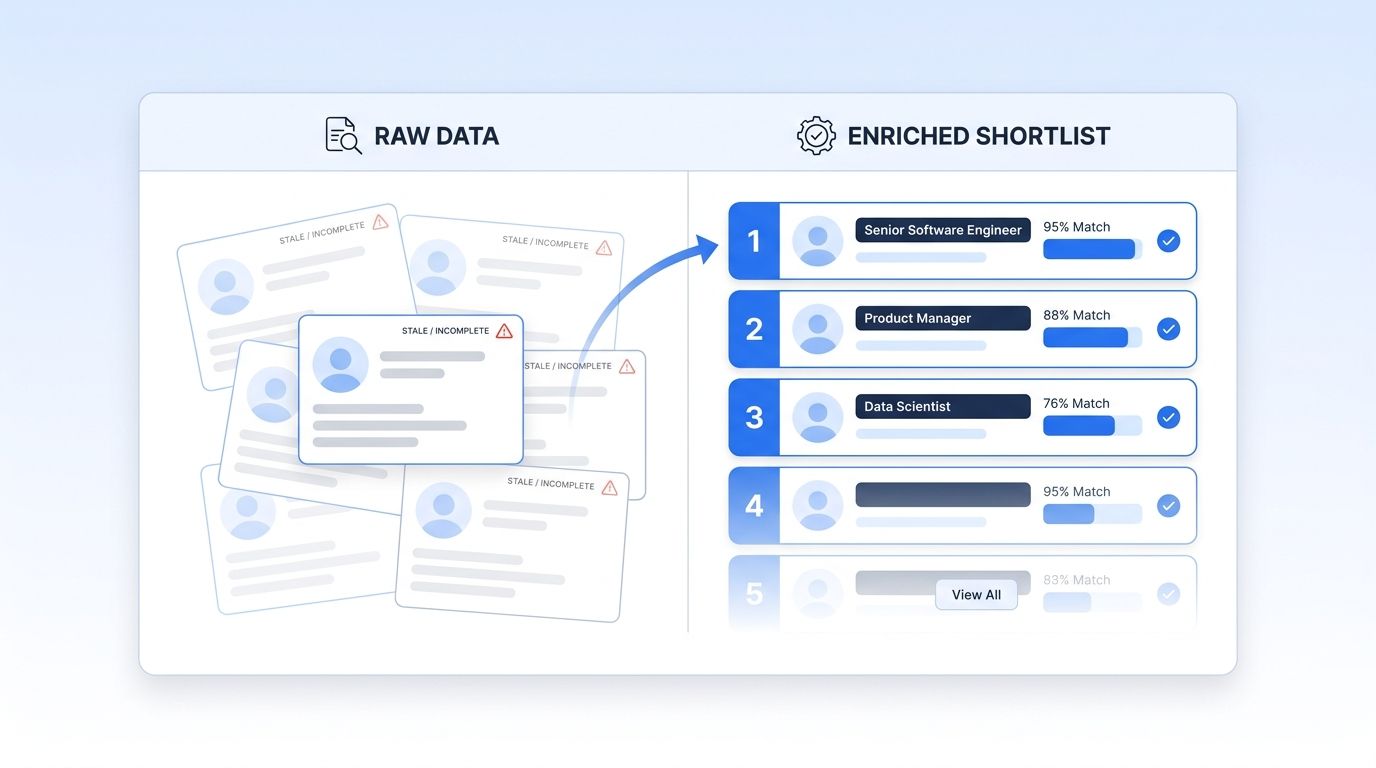
A sourced LinkedIn profile isn't a candidate yet. It's a name, a headline, and a stale job title that might already be wrong. LinkedIn enrichment tools close that gap — they turn a list of profile URLs into structured, verified, ranked records a recruiter can actually act on, in minutes instead of a week of manual cross-checking.
Key Takeaways
- Static B2B contact data decays roughly 2.1% per month, about 22.5% a year (HubSpot Database Decay Simulation, citing MarketingSherpa research).
- Median time-to-fill for nonexecutive roles dropped to 39 days in 2026, down from 44 days in 2025 (SHRM, 2026 Recruiting Benchmarking).
- Short LinkedIn InMails under 400 characters get a 22% higher response rate, and individually sent messages outperform bulk sends by 15% (LinkedIn Talent Solutions).
- 88% of HR leaders say their organizations haven't realized significant business value from AI tools yet (Gartner, October 2025) — the gap is usually data, not the AI layer.
- A real-time LinkedIn enrichment API refreshes role, company, and contact fields at request time instead of serving a cached snapshot, which is what actually shortens the sourcing-to-shortlist cycle.
What Are LinkedIn Enrichment Tools?
LinkedIn enrichment tools take a raw identifier — usually a profile URL or a name-plus-company pair — and return structured data: verified current title, employer, tenure, skills, education, and often contact details or engagement signals. That's the whole job description in one sentence, and it matters because sourcing tools stop at discovery while enrichment tools start at verification.
Most sourcing platforms are built to find profiles, not to confirm they're still accurate. A Boolean search or a browser extension pulls a name and a headline, but headlines go stale the moment someone changes roles. Enrichment closes that loop by re-fetching structured data at the moment you need it, not at the moment the profile was last indexed by a search crawler.
For recruiting software teams, this distinction is the difference between a candidate list and a candidate database you can trust. recruiting intelligence platform positioning exists specifically because sourcing and enrichment solve different problems, and conflating them is where most shortlist quality issues start.
Why Does Manual Sourcing Break Down at Scale?
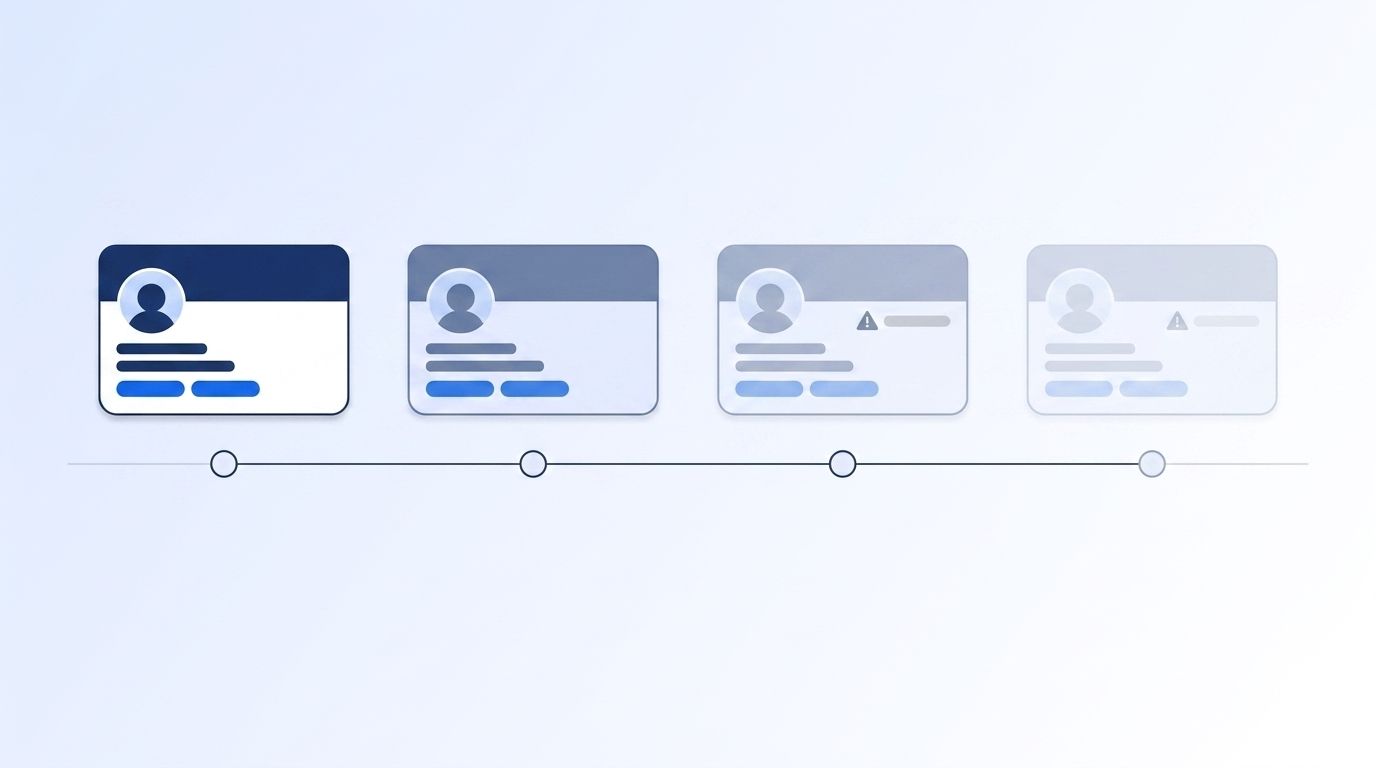
Static contact and profile data decays at roughly 2.1% a month — about 22.5% annualized — according to MarketingSherpa research modeled in HubSpot's Database Decay Simulation. That means a sourcing list built six months ago already has meaningfully outdated fields on more than one in ten profiles, before a recruiter even opens the first one.
<!-- [ORIGINAL DATA] -->Run that decay rate forward against a typical sourcing cadence: a talent acquisition team that re-sources the same talent pool every quarter is working from a list where roughly 6-7% of role and company fields are already wrong by the time outreach starts, and that error compounds every cycle they reuse the same static export instead of re-fetching live data.
This is why manual sourcing doesn't scale cleanly. Recruiters aren't just finding candidates — they're re-verifying candidates they already found, over and over, because the underlying data source doesn't refresh itself. That re-verification tax is invisible in most sourcing metrics, but it's a real cost sitting between "profile found" and "shortlist ready."
What Turns a List of Profiles Into a Recruiter-Ready Shortlist?
A shortlist is recruiter-ready when four things are true: duplicates are merged, roles and companies are current, contact paths are verified, and candidates are ranked against the role's actual requirements. LinkedIn enrichment tools automate the first three so recruiters spend their time on the fourth — judgment — instead of data cleanup.
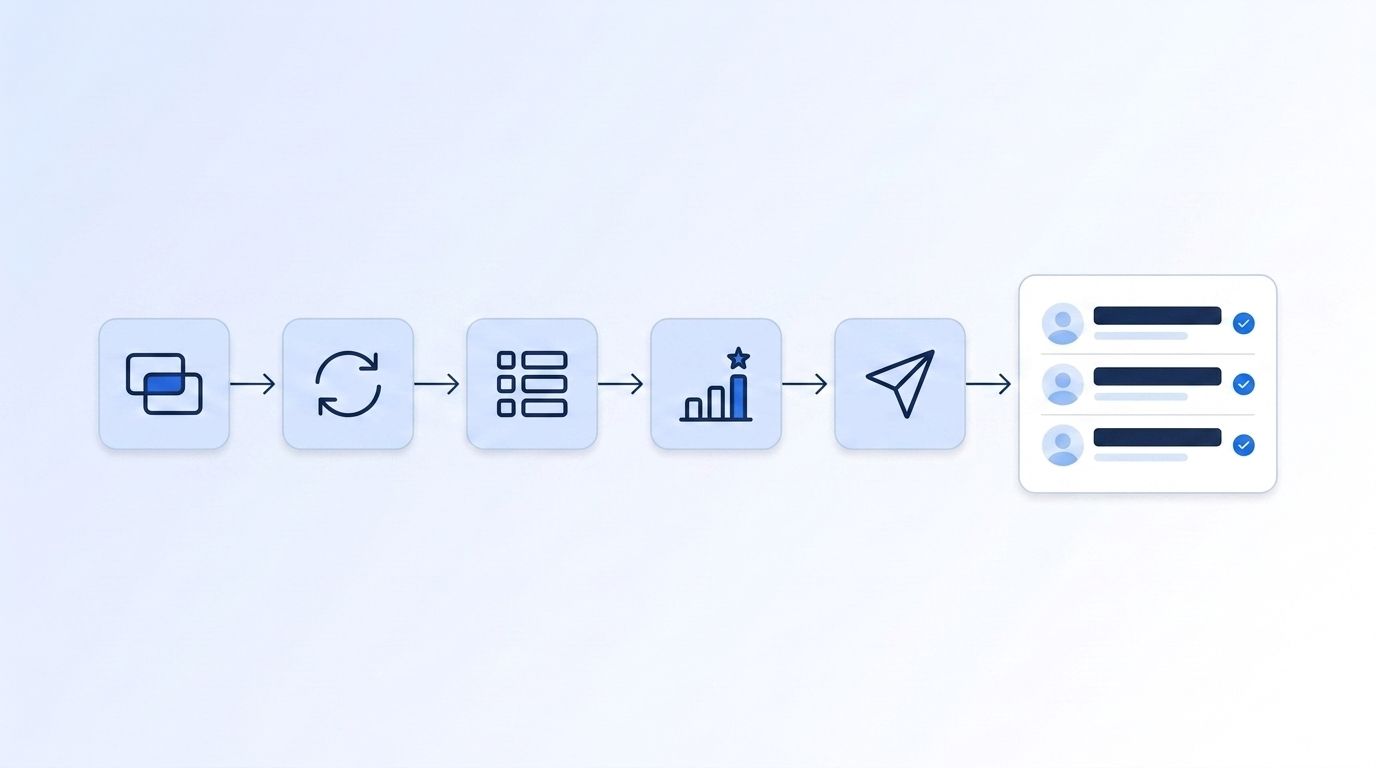
The typical enrichment pipeline looks like this:
- Dedupe — collapse profiles pulled from multiple sourcing channels (LinkedIn search, Sales Navigator exports, ATS resurfaces) into one record per person.
- Refresh — re-fetch current title, employer, tenure, and location from the live profile instead of trusting the cached version from the original search.
- Structure — normalize job titles, skills, and education into consistent fields an ATS or spreadsheet filter can actually use.
- Score — rank against role criteria (seniority, function, tenure in role, relevant skills) so the recruiter opens a ranked list, not a flat one.
- Route — push the structured, scored records into the ATS or outreach sequence, ideally via webhook or direct API call rather than a manual CSV import.
Most recruiting tech stacks treat steps 1 through 4 as manual work a sourcer does between finding a profile and messaging it. That's backwards. The tools proliferating in recruiter roundups for 2026 mostly compete on discovery — more channels, more Boolean strings, more places to find a name. Almost none of them address what happens to that name in the 15 minutes after it's found, which is exactly where enrichment tools earn their keep.
For a deeper look at how a live profile lookup actually works under the hood, see the LinkedIn People API documentation.
How Does Real-Time Enrichment Beat Static Candidate Databases?
A real-time LinkedIn enrichment API fetches data at request time, which means the role and company fields in a shortlist reflect today, not the day the record was last crawled. Static candidate databases — the kind sold as a subscription to millions of pre-scraped profiles — are only as fresh as their last refresh cycle, and that cycle is rarely faster than weeks.
This distinction shows up directly in hiring speed. Median time-to-fill for nonexecutive roles fell to 39 days in 2026, down from 44 days in 2025, according to SHRM's 2026 Recruiting Executives Benchmarking report. Faster fills correlate with faster, more accurate shortlists earlier in the funnel — a recruiter chasing a candidate whose "current employer" field is three jobs out of date is adding days back into that number.
The API-versus-database distinction also determines what a tool can tell you about a candidate the moment they change jobs. Signal-based monitoring — tracking a profile for a job-change event rather than re-scraping it on a schedule — is how teams building champion and job-change tracking catch a move within hours instead of finding out at the next quarterly refresh. Compare that model directly against a legacy scraped-database vendor in the Datamagnet vs. People Data Labs comparison.
How Do You Build a Recruiter-Ready Shortlist Workflow?
Building this workflow doesn't require replacing your ATS or your sourcing tools — it requires an enrichment layer that sits between them. Here's what that looks like in practice, step by step.
Start with authentication and a test call. Set up API access using the Datamagnet API quickstart guide and confirm you can pull a single structured people record before wiring up a batch job. Authentication itself is covered in the API authentication reference.
Feed in sourced URLs, get structured records back. Whether profiles came from a Boolean search, Sales Navigator, or your ATS's existing talent pool, the LinkedIn People Profile endpoint returns current role, employer, tenure, education, and skills for each one — not a cached snapshot pulled at some earlier crawl date.
Search your own enriched history before re-sourcing. If your team has already enriched a candidate once, the People Search DB endpoint lets you query that history by title, company, and location instead of paying to re-source someone you already have on file.
Filter by ICP criteria, not just keywords. For roles with tight requirements — specific seniority, function, or company size the candidate needs to have come from — ICP People Search applies structured filters instead of relying on keyword matching in a headline that might be outdated.
Route enriched, scored records to outreach. Once a shortlist is ranked, the messaging itself benefits from the same enriched data: LinkedIn's own analysis of InMail performance found that messages under 400 characters get a 22% higher response rate, individually sent messages outperform bulk sends by 15%, and candidates flagged "Open to Work" respond 37% more often (LinkedIn Talent Solutions). Enrichment is what tells you which candidates carry that flag before you write the message.
What Recruiting Teams Get Wrong About LinkedIn Enrichment
The most common mistake is buying an AI sourcing tool to fix a data problem. Gartner found that 88% of HR leaders say their organizations haven't realized significant business value from AI tools, based on a survey of 114 HR leaders published in October 2025 (Gartner). An AI layer that ranks or writes outreach for you is only as good as the structured data underneath it — garbage role and company fields produce confidently wrong shortlists just as fast as they produce confidently right ones.
<!-- [UNIQUE INSIGHT] -->It's worth asking a blunter question here: is your AI adoption actually stalled, or is it just fed stale inputs? A ranking model or outreach generator built on six-month-old titles isn't underperforming because the model is weak — it's underperforming because roughly a quarter of what it's reading has already changed. Fix the enrichment layer first, and a lot of "AI didn't deliver" stories turn out to be data problems wearing an AI costume.
The second mistake is treating enrichment and prospecting tools as interchangeable. A B2B prospecting comparison of Apollo.io vs. Clay frames the choice as all-in-one platform versus waterfall enrichment — but neither is built around LinkedIn-native people data or recruiting-specific fields like job-change signals and ICP-based candidate search. Recruiting software has different requirements than sales prospecting, even when the underlying data source is the same platform.
Frequently Asked Questions
What's the difference between a sourcing tool and a LinkedIn enrichment tool?
A sourcing tool finds candidate profiles through search, Boolean strings, or browser extensions. A LinkedIn enrichment tool takes a profile you already found and returns verified, structured, current data — role, employer, tenure, skills, contact paths — so it's accurate at the moment you act on it, not at the moment it was originally indexed.
How much does stale LinkedIn data actually cost a recruiting team?
Static B2B contact data decays roughly 2.1% a month, about 22.5% annually (HubSpot Database Decay Simulation). For a recruiting team, that translates directly into wasted outreach — messages sent to a candidate's old employer, or a shortlist ranked on job titles that changed months ago.
Can LinkedIn enrichment tools integrate with our existing ATS?
Most API-based enrichment tools return structured JSON that maps directly to ATS candidate fields, and can be pushed via webhook or direct integration rather than manual CSV upload. Check the specific API endpoint documentation for field mapping and authentication details before building the connection.
Do LinkedIn enrichment tools work for passive candidate sourcing, not just active applicants?
Yes — enrichment is arguably more valuable for passive candidates, since their profile data hasn't been refreshed by an active job application. Signal-based tools that monitor for job changes, like the Job Change Signal API, can also alert a recruiting team the moment a passive candidate's status shifts.
How is a real-time LinkedIn API different from a purchased candidate database?
A real-time API fetches data at request time, so every field reflects the candidate's current status. A purchased database is a snapshot refreshed on the vendor's schedule — often weeks or months between updates — which is where the 22.5% annual decay rate becomes a practical accuracy problem rather than a statistic.
The Bottom Line
Sourcing finds candidates. Enrichment is what makes a sourced list trustworthy enough to hand to a hiring manager. With static data decaying at roughly 22.5% a year and time-to-fill benchmarks tightening to 39 days in 2026, the recruiting teams moving fastest aren't the ones with the most sourcing channels — they're the ones with a live data layer that keeps every shortlist current between the moment a profile is found and the moment outreach goes out.
If your team is sourcing through LinkedIn today and re-verifying half of what comes back, that verification work is exactly what a real-time LinkedIn enrichment API is built to remove. Start with the Recruiting Intelligence overview to see how the People Profile, People Search DB, and Signal endpoints fit together into one shortlist workflow, or jump straight into the API quickstart and enrich your first batch of sourced profiles today.
