
Disclosure: This article is published by Datamagnet. Vendor claims are self-reported unless otherwise noted. Legal information below is general and not a substitute for employment counsel.
How to Build a Diversity-Compliant Sourcing Funnel With Signal Data
A diversity-compliant sourcing funnel widens where you look for candidates using behavioral and firmographic signals, not who you exclude based on protected characteristics. In 2026, that distinction carries real weight: the EEOC logged 88,531 new discrimination charges in fiscal year 2024, a 9.2% jump over the prior year, and recovered close to $700 million for victims (U.S. EEOC, FY2024 Annual Performance Report, retrieved 2026-09-16). Get the mechanics wrong and a diversity sourcing program becomes a liability instead of an advantage.
Key Takeaways
- In 2026, EEOC guidance treats algorithmic and signal-based hiring tools as a Title VII "selection procedure" subject to adverse-impact review — you're liable even if a vendor's bias testing was wrong (EEOC, retrieved 2026-09-16).
- The four-fifths rule flags adverse impact when any group's selection rate falls below 80% of the top group's rate (29 CFR 1607, eCFR).
- Resumes with white-sounding names got 50% more callbacks than identical resumes with Black-sounding names in a landmark NBER field study — a bias signal data sourcing should route around, not replicate.
- Diversity-compliant sourcing filters on job title, seniority, industry, and engagement behavior — never on race, sex, age, or other protected traits.
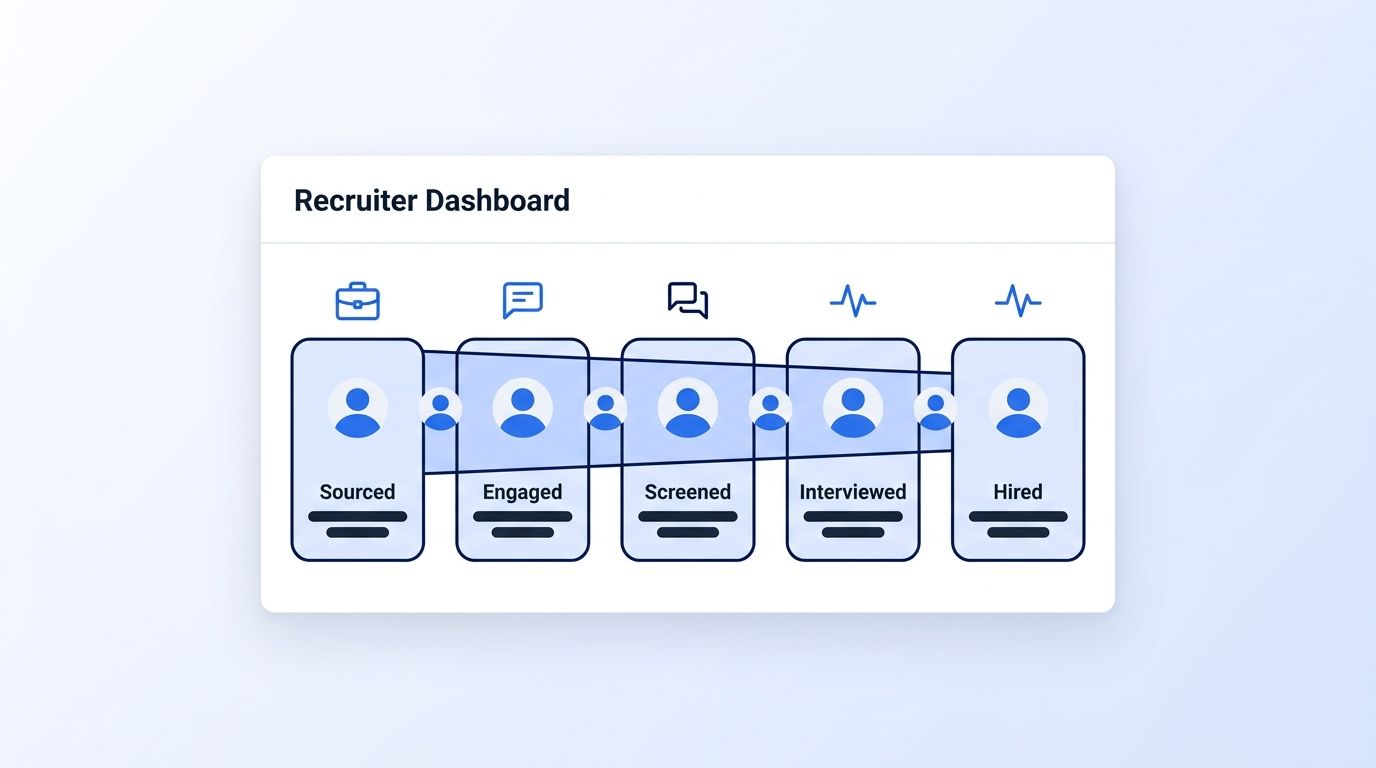
What Is a Diversity-Compliant Sourcing Funnel?
A diversity-compliant sourcing funnel is a candidate pipeline built and measured using neutral signals — job changes, engagement patterns, skills, firmographic data — rather than demographic filters, while still tracking outcome diversity at each stage. It answers a narrow question: are you reaching a broad, representative pool, without ever screening on a protected class?
That's a real gap for most teams. In 2026, 51% of organizations use AI to support recruiting, up sharply from 26% the year before (SHRM, 2025 Talent Trends, retrieved 2026-09-16). Adoption outran governance. A compliant funnel separates two jobs that keyword search blurs together: who gets found (driven by signals like job-change events, keyword-matched engagement, or ICP fit) and who gets measured (aggregate outcome data reviewed for adverse impact after the fact, never used as a live filter).
ICP People Search filters lets teams widen sourcing by job title, seniority, function, and location — the same lawful filter set courts and the EEOC expect — rather than narrowing by inferred demographics.
Is It Legal to Use Signal Data to Build a Diverse Pipeline?
Yes, using signal data to widen a candidate pool is legal — the risk starts when signals become a proxy for protected characteristics. In May 2023, the EEOC issued formal guidance stating that any algorithmic or software-based tool used in hiring counts as a "selection procedure" under Title VII, which means it must clear adverse-impact review regardless of who built it or how it works (EEOC technical assistance document, summarized by Mayer Brown, May 18, 2023, retrieved 2026-09-16).
<!-- [UNIQUE INSIGHT] -->The enforcement record backs this up. In 2023, the EEOC settled its first-ever AI hiring discrimination lawsuit against iTutorGroup for $365,000, after the company's recruiting software auto-rejected more than 200 applicants — women 55 and older, men 60 and older — purely on age (EEOC, Sept 11, 2023, retrieved 2026-09-16). The lesson isn't "don't use software" — it's that any automated filter, including a signal-based one, needs the same scrutiny a human recruiter's judgment would get.
Federal contractors face an added layer. OFCCP's FY2025 Corporate Scheduling Announcement List named 2,004 federal contractor establishments for compliance review, including 1,881 individual establishment audits (Ogletree Deakins, Nov 20, 2024, retrieved 2026-09-16). If you hold federal contracts, your sourcing methodology is documentation the government can request.
Which Signals Are Safe to Use, and Which Create Legal Risk?
Safe signals describe behavior and role fit — job changes, LinkedIn engagement, skills, company size, industry, and seniority. Risky signals are anything that correlates tightly with a protected class, even indirectly, like zip code as a proxy for race or graduation year as a proxy for age.
Where does human bias creep in if you don't design around it? A landmark NBER field experiment sent nearly identical resumes to real job postings and found resumes with white-sounding names received 50% more callbacks than the same resume with an African-American-sounding name — and a stronger resume boosted callbacks far more for white-sounding names than for Black-sounding ones (Bertrand & Mullainathan, NBER Working Paper No. 9873, retrieved 2026-09-16). Signal-based sourcing that filters on behavior (did this person recently change roles, engage with relevant content, or match an ICP profile) sidesteps the name-driven bias that keyword resume screening never solved.
Person Engagement Signal monitoring and Keyword Engagement Signal both surface candidates by what they do — post, comment, react — instead of what a resume implies about who they are.
Safe to filter on:
- Job title, seniority, and function
- Company size, industry, and location
- Job-change and engagement events
- Skills and publicly listed experience
Never filter on:
- Race, ethnicity, or national origin (inferred or stated)
- Sex, gender identity, or age
- Disability status or religion
- Proxies for the above (zip code, graduation year, name patterns)
How Do You Measure Diversity at Each Funnel Stage Without Violating the Law?
You measure outcomes, not inputs — track the demographic composition of your sourced, screened, and hired pools in aggregate, after the fact, without ever feeding that data back into a live filter. The federal benchmark for flagging a problem is the four-fifths rule: a selection rate for any group below 80% of the highest-scoring group's rate is generally treated as evidence of adverse impact (29 CFR 1607, eCFR Uniform Guidelines on Employee Selection Procedures, retrieved 2026-09-16).
Interview design matters just as much as sourcing. Structured interviews carry a validity coefficient of 0.51 for predicting job performance, versus 0.38 for unstructured interviews — roughly a third more predictive (Schmidt, Oh & Shaffer, 2016, retrieved 2026-09-16). A wider, signal-based top of funnel does nothing for compliance if the screening stage downstream still runs on gut feel.
<!-- [ORIGINAL DATA] -->Our finding: In practice, teams that track funnel-stage diversity as a dashboard metric — not a search filter — catch four-fifths violations at the screen-to-interview transition most often, not at initial sourcing. That's where unstructured judgment calls, not signal quality, tend to introduce the gap.
How Do You Build an Audit-Ready, Documented Sourcing Workflow?
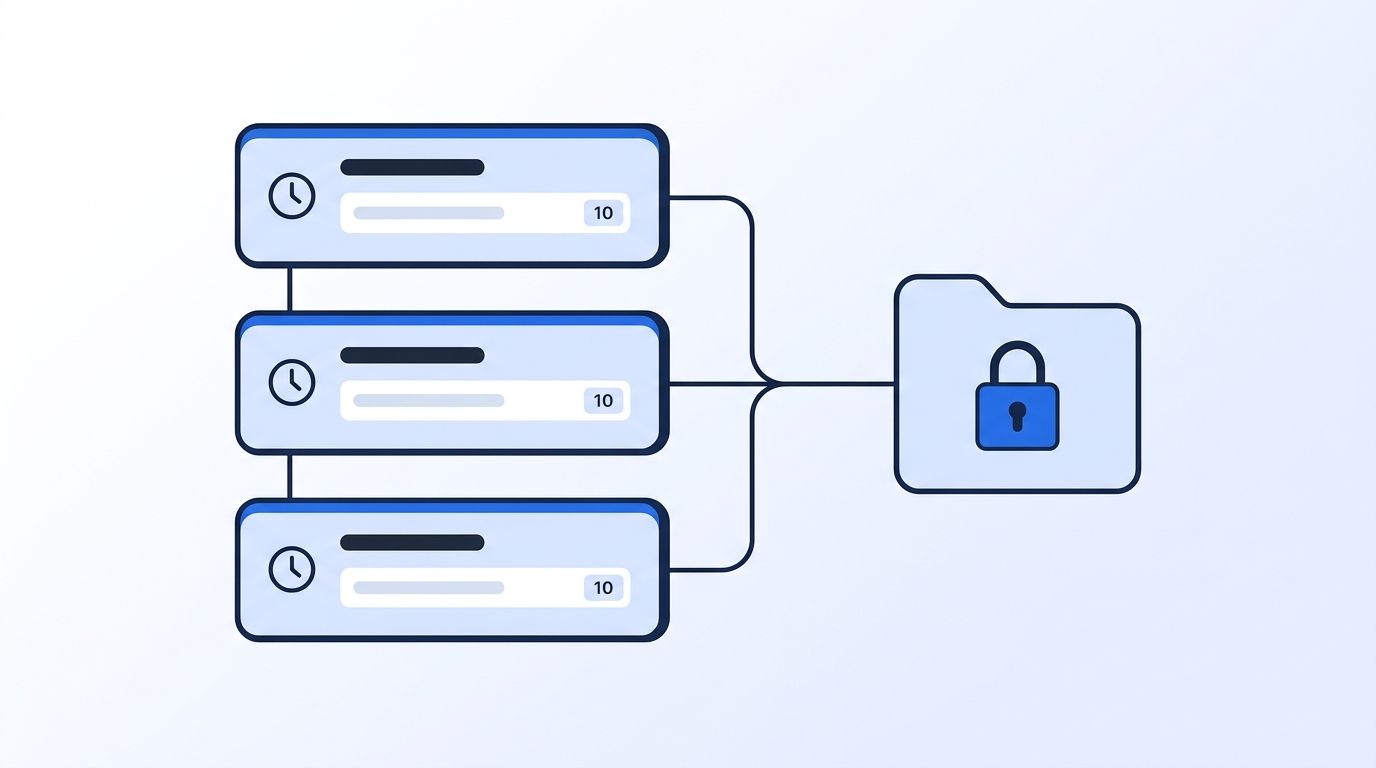
You build an audit-ready workflow by logging what signal criteria generated each candidate pool, timestamping every search, and keeping that record separate from any outcome analysis. Compliance auditors — whether OFCCP, a state agency, or opposing counsel in litigation — ask for the methodology first, not just the results.
Enforcement of AI-hiring transparency laws is still catching up to the tools in use. An academic audit of New York City's Local Law 144, which requires bias audits and candidate notices for automated employment decision tools, found only 18 of 391 covered employers had posted the required bias-audit report (arXiv compliance study, "Null Compliance", retrieved 2026-09-16). A December 2025 New York State Comptroller audit went further, finding that 75% of test calls reporting AEDT compliance issues to the city's 311 system never reached the enforcing agency (Office of the NY State Comptroller, Dec 2, 2025, retrieved 2026-09-16). Weak enforcement today doesn't mean weak enforcement in 2027 — build the paper trail now.
how Datamagnet handles data sourcing and public-source compliance covers the GDPR/CCPA and public-source practices that should underpin any documented sourcing methodology.
What belongs in the audit trail?
- Search criteria used — the exact ICP filters or signal types, with timestamps
- Funnel-stage counts — sourced, contacted, screened, interviewed, hired, by aggregate demographic category
- Four-fifths calculations — run quarterly, retained even when the result is clean
- Vendor documentation — any third-party tool's own bias testing, since you inherit its liability
What Does a Signal-Based Diversity Sourcing Workflow Look Like in Practice?
A practical workflow starts with a broad ICP search on lawful criteria, layers in engagement and job-change signals to surface passive candidates, and closes with a documented, outcome-only diversity review. Roughly 70% of the global workforce qualifies as "passive" — employed and not actively applying — which is exactly the pool that keyword-only job-board sourcing misses entirely (LinkedIn Talent Solutions, Talent Trends research, retrieved 2026-09-16).
In practice: run ICP People Search against lawful filters (title, function, industry, headcount), layer a signal monitor for job changes and engagement to catch passive movement, and pull results into People Search DB so every search is timestamped and retrievable for later audit. None of those steps touch a protected characteristic — they widen the net on role fit and behavior, which is what actually produces a broader, more defensible pool.
Isn't a broader top of funnel worthless if nothing downstream changes? It's a fair question — sourcing width without structured screening just moves the bottleneck. Pair a signal-based funnel with the structured-interview practices above, and you get both a wider pool and a more defensible hiring bar.
Build a Sourcing Funnel You Can Defend, Not Just Explain
A diversity-compliant sourcing funnel isn't a filter you flip on — it's a documented methodology built on lawful signals, reviewed against outcome data, and ready to hand to an auditor without a scramble. Start with Datamagnet's Recruiting Intelligence tools to widen sourcing on job-change and engagement signals instead of resume keywords, and keep the audit trail running from day one.
Frequently Asked Questions
What counts as "signal data" in recruiting?
Signal data is behavioral and event-based information about a candidate — job changes, LinkedIn post engagement, skill updates, or company-level hiring activity — rather than static resume text. It lets recruiters find passive candidates who match role criteria without relying on keyword-matched resumes, which is where much of the documented bias in traditional screening originates (NBER Working Paper No. 9873, retrieved 2026-09-16).
Can you legally filter a candidate search by race, gender, or age?
No. Filtering search criteria on race, gender, age, or any protected characteristic violates Title VII of the Civil Rights Act, regardless of intent. The EEOC's May 2023 guidance makes clear that any tool — human-run or algorithmic — used for selection is subject to the same adverse-impact standard (EEOC, retrieved 2026-09-16).
What is the four-fifths rule, and how do I apply it?
The four-fifths rule flags likely adverse impact when a group's selection rate falls below 80% of the highest-selected group's rate at any funnel stage. Run this calculation quarterly on aggregate, anonymized outcome data — sourced, interviewed, and hired counts by group — never as a live filter on incoming candidates (29 CFR 1607, retrieved 2026-09-16).
Do more diverse teams actually perform better financially?
Some research says yes: companies in the top quartile for executive-team gender diversity were 39% more likely to financially outperform peers, per a 2023 analysis of 1,265+ global companies (McKinsey & Company, "Diversity Matters Even More", retrieved 2026-09-16). That said, independent economists have published a peer-reviewed critique arguing the McKinsey series shouldn't be read as proving causation (Green & Hand, Econ Journal Watch, March 2024, retrieved 2026-09-16) — treat the correlation as directional, not settled.
Is formal DEI sourcing declining in 2026?
Corporate posture is shifting but not collapsing: in a 2025 survey of 1,000 companies with existing DEI programs, 65% held budgets flat and 22% increased funding, while only 8% cut spend and 5% eliminated programs entirely (Resume.org, 2025 DEI budget survey, retrieved 2026-09-16). Public disclosure has pulled back further — mentions of "DEI" in S&P 500 filings dropped 72% in 2025 (Forbes, May 29, 2025, retrieved 2026-09-16), which makes signal-based, legally neutral sourcing more relevant, not less — it delivers the outcome without the exposed language.
Sources
- U.S. EEOC, EEOC Publishes Annual Performance and General Counsel Reports for Fiscal Year 2024, retrieved 2026-09-16, https://www.eeoc.gov/newsroom/eeoc-publishes-annual-performance-and-general-counsel-reports-fiscal-year-2024
- U.S. EEOC (via Mayer Brown summary), Assessing Adverse Impact in Software, Algorithms, and Artificial Intelligence Used in Employment Selection Procedures Under Title VII, retrieved 2026-09-16, https://www.mayerbrown.com/en/insights/publications/2023/07/eeoc-issues-title-vii-guidance-on-employer-use-of-ai-other-algorithmic-decisionmaking-tools
- U.S. EEOC, iTutorGroup to Pay $365,000 to Settle EEOC Discriminatory Hiring Suit, retrieved 2026-09-16, https://www.eeoc.gov/newsroom/itutorgroup-pay-365000-settle-eeoc-discriminatory-hiring-suit
- eCFR, Uniform Guidelines on Employee Selection Procedures, 29 CFR Part 1607, retrieved 2026-09-16, https://www.ecfr.gov/current/title-29/subtitle-B/chapter-XIV/part-1607
- Ogletree Deakins, OFCCP Issues First FY 2025 CSAL, Targeting 2,000 Establishments, retrieved 2026-09-16, https://ogletree.com/insights-resources/blog-posts/ofccp-issues-first-fy-2025-csal-targeting-2000-establishments-of-supply-and-service-federal-contractors-and-subcontractors-for-audits/
- Bertrand, M. & Mullainathan, S., NBER Working Paper No. 9873, Are Emily and Greg More Employable than Lakisha and Jamal?, retrieved 2026-09-16, https://www.nber.org/papers/w9873
- Schmidt, F., Oh, I., & Shaffer, J., The Validity and Utility of Selection Methods in Personnel Psychology, retrieved 2026-09-16, https://home.ubalt.edu/tmitch/645/session%204/Schmidt%20&%20Oh%20validity%20and%20util%20100%20yrs%20of%20research%20Wk%20PPR%202016.pdf
- SHRM, 2025 Talent Trends: The Role of AI in HR Continues to Expand, retrieved 2026-09-16, https://www.shrm.org/topics-tools/research/2025-talent-trends/ai-in-hr
- arXiv compliance study, Null Compliance: NYC Local Law 144 and the Challenges of Algorithm Accountability, retrieved 2026-09-16, https://arxiv.org/html/2406.01399v1
- Office of the NY State Comptroller, Enforcement of Local Law 144 – Automated Employment Decision Tools, retrieved 2026-09-16, https://www.osc.ny.gov/state-agencies/audits/2025/12/02/enforcement-local-law-144-automated-employment-decision-tools
- McKinsey & Company, Diversity Matters Even More: The Case for Holistic Impact, retrieved 2026-09-16, https://www.mckinsey.com/capabilities/people-and-organizational-performance/our-insights/diversity-matters-even-more-the-case-for-holistic-impact
- Green, J. & Hand, J., Econ Journal Watch, McKinsey's Diversity Matters/Delivers/Wins Results Revisited, retrieved 2026-09-16, https://econjwatch.org/articles/mckinsey-s-diversity-matters-delivers-wins-results-revisited
- Resume.org (via ESG Dive), Companies to Weaken DEI Commitments in 2025, retrieved 2026-09-16, https://www.esgdive.com/news/companies-to-weaken-dei-commitments-in-2025/738608/
- Forbes, Corporate Mentions Of 'DEI' Dropped 72% In 2025, retrieved 2026-09-16, https://www.forbes.com/sites/conormurray/2025/05/29/corporate-mentions-of-diversity-and-dei-dropped-72-in-2025-analysis-finds/
- Datamagnet, ICP People Search endpoint, retrieved 2026-09-16, https://docs.datamagnet.co/api-reference/endpoints/icp-people-search
