
Disclosure: This article is published by Datamagnet. Vendor claims are self-reported unless otherwise noted. Datamagnet is a profile enrichment API and does not find emails or phone numbers.
Contact Enrichment API vs Profile Enrichment API: What Each One Returns
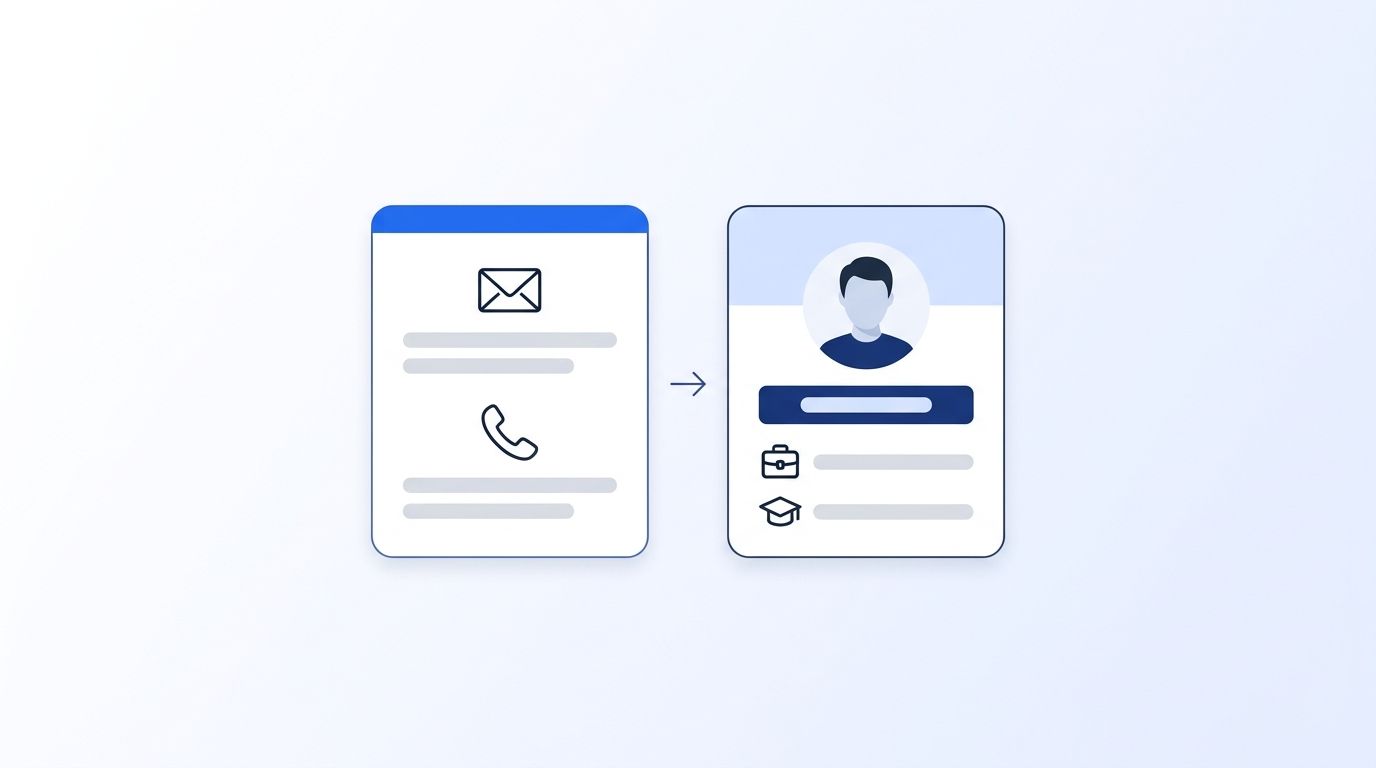
A contact enrichment API returns ways to reach a person: emails and phone numbers. A profile enrichment API returns who the person is: job title, employer, work history, education, and skills. Most "enrichment" tools mix the two, so you need to know which fields you're actually paying for. Datamagnet's people enrichment API sits on the profile side.
Key Takeaways
- A contact enrichment API returns reach data (email, phone). A profile enrichment API returns identity and career data.
- In January 2026, median job tenure was 4.1 years (US Bureau of Labor Statistics), so titles and employers keep changing.
- Pick contact enrichment to reach people. Pick profile enrichment to qualify, route, and personalize.
What's the Difference Between the Two?
The split is simple. Contact enrichment answers "how do I reach this person?" Profile enrichment answers "who is this person and where do they work?" Vendors blur the line, so check the field list, not the product name. A tool's label tells you little. The fields in its response tell you what you're actually paying for.
Two public docs show the blur. Apollo's People Enrichment returns a person object, and personal emails and phone numbers are opt-in flags (Apollo, People Enrichment API docs, retrieved 2026-11-18). People Data Labs lists contact fields like work_email and mobile_phone next to profile fields like experience, education, and skills (People Data Labs, Fields reference, retrieved 2026-11-18).
So "contact" and "profile" are really two groups of fields. Some APIs sell both. Some sell one.
Quick Comparison Table
Here's the side-by-side. Each row has its own source, and the figures come from the vendors' own public docs. Read it as a map of fields, not a ranking: contact enrichment is built around reach, profile enrichment around identity and career data, and most buying decisions come down to which of those you need first.
| Row | Contact enrichment API | Profile enrichment API | Source |
|---|---|---|---|
| Core output | Emails, phone numbers, match confidence | Headline, current role, employer, location | Apollo docs; Datamagnet People docs |
| Career history | Often a secondary field | experience[] and education[] arrays | People Data Labs fields; Datamagnet People docs |
| Cost per record | 1 credit for demographics or email, plus 8 for a mobile phone | 1 credit per profile | Apollo docs; Datamagnet pricing |
| Privacy handling | Personal emails withheld for people in GDPR-compliant regions | Public professional fields only | Apollo docs; Datamagnet People docs |
| Best for | Outbound sequences that need an address | Lead scoring, routing, personalization | Our analysis, based on the fields above |
Cost per record isn't the real cost. A 9-credit contact lookup that bounces costs more than a 1-credit profile call that tells you the person left the company.
Which Returns Better Reach Data?
Contact enrichment wins here, by definition. Apollo documents personal emails and mobile phones as opt-in reveals, and phone numbers arrive by webhook or polling (Apollo docs, retrieved 2026-11-18). That's the product. If your workflow ends with sending an email or placing a call, this is the row that decides which kind of API you need.
A profile API doesn't compete on this row. Datamagnet's People endpoint always returns a phone_number key, and it's always null. An email key appears only when the person published one (Datamagnet People docs, retrieved 2026-11-18). We don't find emails or phones.
Verdict: Contact enrichment wins for reach. If you need an address to send to, a profile API won't give you one.
Which Returns Better Context About the Person?
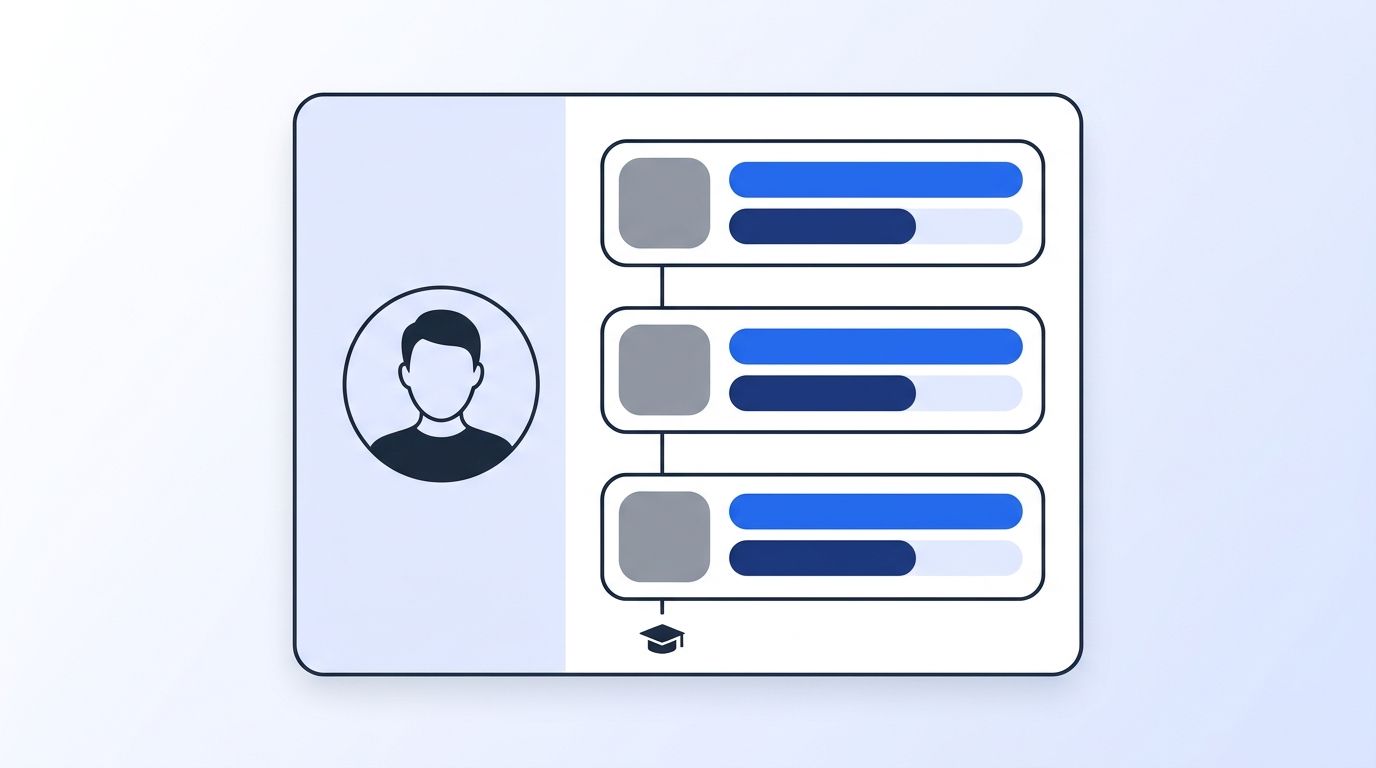
Profile enrichment wins on context. In its docs, the Datamagnet People endpoint returns experience[] with company, title, dates and skills, plus education[] with school, degree and dates. It also returns headline, location, and current company details (Datamagnet People docs, retrieved 2026-11-18).
Why does that matter? Because you can write a first line that isn't generic. You can see that someone moved from an analyst role to a director role at a company in a given industry.
Contact vendors do return some of this. In People Data Labs' schema, experience and job_history sit next to the contact fields (People Data Labs fields). But contact-first products tend to treat it as a bonus.
Verdict: Profile enrichment wins for context. Contact APIs return some history, but it's rarely the focus.
Which Handles Stale Data Better?
Profile enrichment has the edge, because it's built around the fields that change. In January 2026, median tenure for wage and salary workers was 4.1 years (US Bureau of Labor Statistics, Employee Tenure release, retrieved 2026-11-18). That's a proxy, not a decay rate. But it means half of workers have been in a role for less time than that.
The cost of stale data is real. In 2025, Validity found that 37% of CRM users say poor data quality directly costs their company revenue, and 76% say less than half of their CRM data is accurate and complete (Validity, State of CRM Data Management in 2025, retrieved 2026-11-18). The survey covered 602 CRM users and admins.
Freshness depends on how the data is gathered. Datamagnet's People endpoint lets you set use_cache to if-recent, which accepts data no older than 29 days, or never (Datamagnet People docs). To catch moves as they happen, pair it with job-change signals.
Verdict: Profile enrichment wins if you re-check often. A contact database that goes stale quietly is the riskiest option.
Which Is Easier on Privacy and Compliance?
Profile enrichment is simpler to reason about, because it sticks to professional fields. But neither is a free pass. Under GDPR Article 14, when data isn't collected from the person, the controller must disclose the source, generally within one month (GDPR Article 14 text, retrieved 2026-11-18). Exemptions exist.
California's Attorney General says personal information includes email addresses, and that it excludes "publicly available information" as defined in the law (California AG, CCPA, retrieved 2026-11-18). That exclusion has defined limits. Don't assume it covers everything you collect. This isn't legal advice, so ask your counsel.
Vendors handle it differently. Apollo doesn't reveal personal emails for people in GDPR-compliant regions (Apollo docs).
How the data is gathered matters too. LinkedIn's User Agreement prohibits bots and crawlers that scrape or copy profile data, and LinkedIn says members who use such tools risk account restrictions or closure (LinkedIn User Agreement, effective 2025-11-03; LinkedIn Help). Datamagnet's LinkedIn scraper API page explains our approach: public profile data only, delivered through an API.
Verdict: Profile enrichment has the lighter footprint. Neither removes your own compliance duties.
How Much Does Each One Cost?
For a profile lookup, Datamagnet charges 1 credit per profile (Datamagnet pricing, retrieved 2026-11-18). New accounts get 10 free credits. Plans run $39, $99, and $199, and pay-as-you-go is $10 for 200 credits ($0.05 per credit). At that rate, a profile costs about 5 cents.
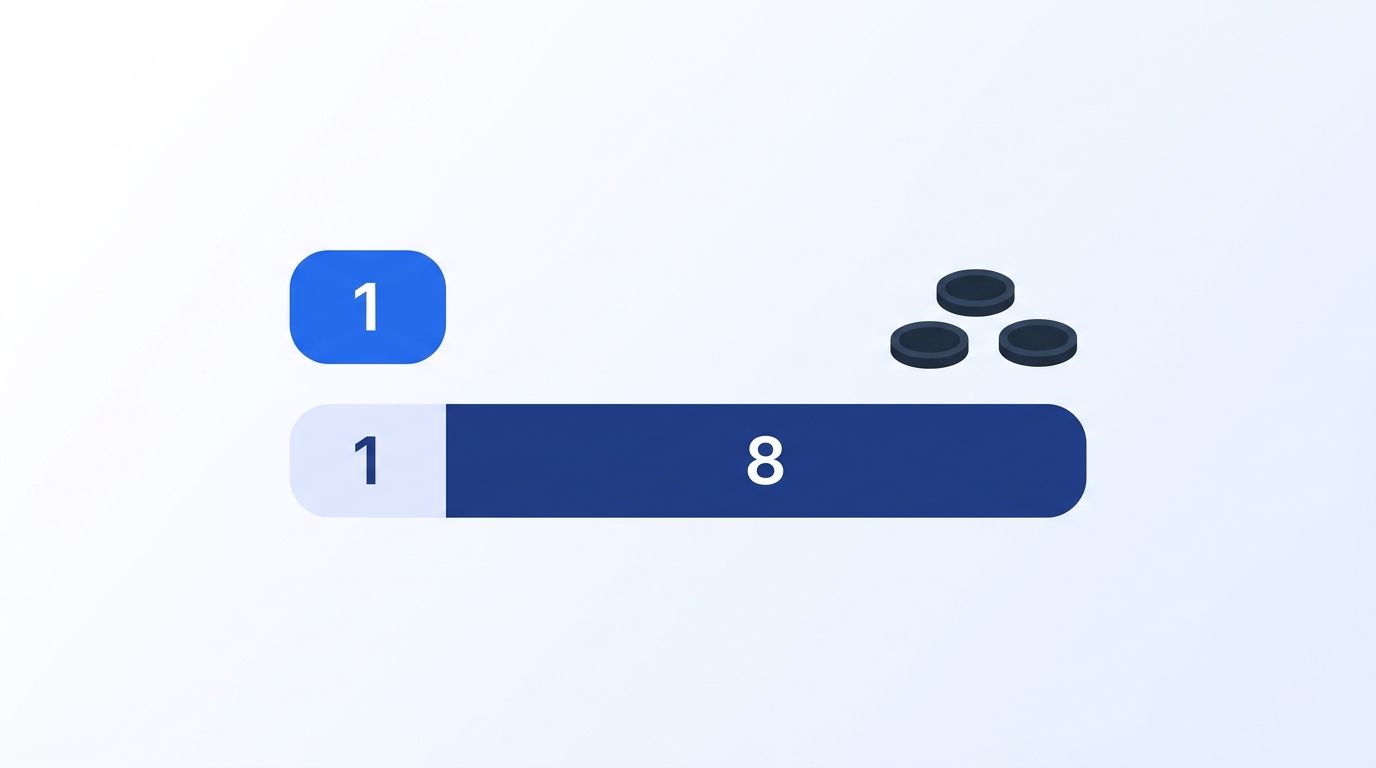
Apollo's docs show a contact lookup costing 1 to 9 credits per person. That's 1 credit for demographics or email, plus 8 more if a mobile number comes back (Apollo docs). Apollo doesn't charge for a none match. Credit prices differ by vendor, so compare dollars, not credits.
Add-ons matter on our side too. Each optional enrichment flag on the People endpoint adds 2 credits, and only if it succeeds (Datamagnet People docs).
Verdict: Profile enrichment is cheaper per record. Contact enrichment costs more because you're paying for reach.
Which Should You Choose?
Start with the job to be done. If you need to send a message, you need contact data. If you need to decide who to message, you need profile data. Most teams need both at different stages, so the real question is which one you run first and which one you only pay for after a lead qualifies.
Outbound teams with a verified list: Use contact enrichment to fill in addresses. Watch deliverability, since Google asks bulk senders to keep their spam rate below 0.30% (Google Workspace Admin Help, Email sender guidelines, retrieved 2026-11-18).
RevOps and CRM owners: Use profile enrichment to keep titles, employers, and locations current. See our HubSpot integration for a worked setup.
Recruiters and sales researchers: Use profile enrichment for work history and skills. Need to find people first? Try ICP people search.
Teams that need both: Run profile enrichment first to qualify, then pay for contact data only on the accounts that pass. That keeps the expensive lookups small.
Comparing vendors? Read our Apollo comparison and People Data Labs comparison.
Verdict
Across the five categories below, the pattern is consistent: contact enrichment wins on reach, and profile enrichment wins on context, freshness, privacy footprint and cost per record. The table summarizes each category with its source, so you can check every claim against the vendor's own documentation.
| Category | Winner | Source |
|---|---|---|
| Reach data | Contact enrichment | Apollo docs |
| Career context | Profile enrichment | Datamagnet People docs |
| Staleness | Profile enrichment (with re-checks) | BLS |
| Privacy footprint | Profile enrichment | Apollo docs |
| Cost per record | Profile enrichment | Datamagnet pricing |
| Overall | Depends on the job | Our analysis |
Choose contact enrichment when you need an address. Choose profile enrichment when you need to know who someone is and where they work now. Ready to try the second kind? See what a profile returns with 10 free credits, or read about the LinkedIn People API.
Frequently Asked Questions
What is a contact enrichment API?
A contact enrichment API takes an identifier, such as a name, domain, or profile URL, and returns ways to reach the person: work or personal email and phone numbers. Apollo, for example, treats personal emails and mobile phones as opt-in reveals that cost extra credits (Apollo docs, 2026). It answers "how do I reach them?", not "who are they?"
What does a profile enrichment API return?
A profile enrichment API returns identity and career fields: headline, current role, employer, location, work history, education, and skills. Datamagnet's People endpoint, for instance, returns experience[] and education[] arrays from a LinkedIn profile URL for 1 credit per profile (Datamagnet docs, 2026). It doesn't look up email addresses or phone numbers.
Does Datamagnet return emails or phone numbers?
No. Datamagnet doesn't find emails or phone numbers. The People endpoint always returns phone_number as null, and an email value appears only if the person published one on their profile (Datamagnet docs, 2026). If you need verified contact data, pair profile enrichment with a dedicated contact provider.
Can I use both together?
Yes, and it's often cheaper. Run profile enrichment first to confirm the person still holds the role and fits your ICP. Then buy contact data only for the accounts that qualify. With plans from $39 and pay-as-you-go at $10 for 200 credits (Datamagnet pricing, 2026), the qualifying step stays inexpensive.
Sources
Retrieval date for all sources: 2026-11-18.
- US Bureau of Labor Statistics, Employee Tenure news release (USDL-26-1532), https://www.bls.gov/news.release/tenure.nr0.htm
- Google Workspace Admin Help, Email sender guidelines, https://support.google.com/a/answer/81126
- Validity, The State of CRM Data Management in 2025 (press release), https://www.prnewswire.com/news-releases/validity-releases-state-of-crm-data-management-in-2025-report-revealing-disconnect-between-data-quality-and-ai-implementation-302499899.html
- LinkedIn, User Agreement (effective 2025-11-03), https://www.linkedin.com/legal/user-agreement
- LinkedIn Help, scraping and automation tools, https://www.linkedin.com/help/linkedin/answer/a1341387
- GDPR Article 14 (text mirror), https://gdpr-info.eu/art-14-gdpr/
- California Attorney General, CCPA, https://oag.ca.gov/privacy/ccpa
- Apollo, People Enrichment API docs, https://docs.apollo.io/reference/people-enrichment
- People Data Labs, Fields reference, https://docs.peopledatalabs.com/docs/fields
- Datamagnet, People Profile API docs, https://docs.datamagnet.co/api-reference/endpoints/people
- Datamagnet, Pricing, https://www.datamagnet.co/pricing/
