
Disclosure: This article is published by Datamagnet. Vendor claims are self-reported unless otherwise noted, and every number below links to the page it came from.
Company Enrichment APIs Compared: 10 Options by Match Rate, Fields, and Price (2026)
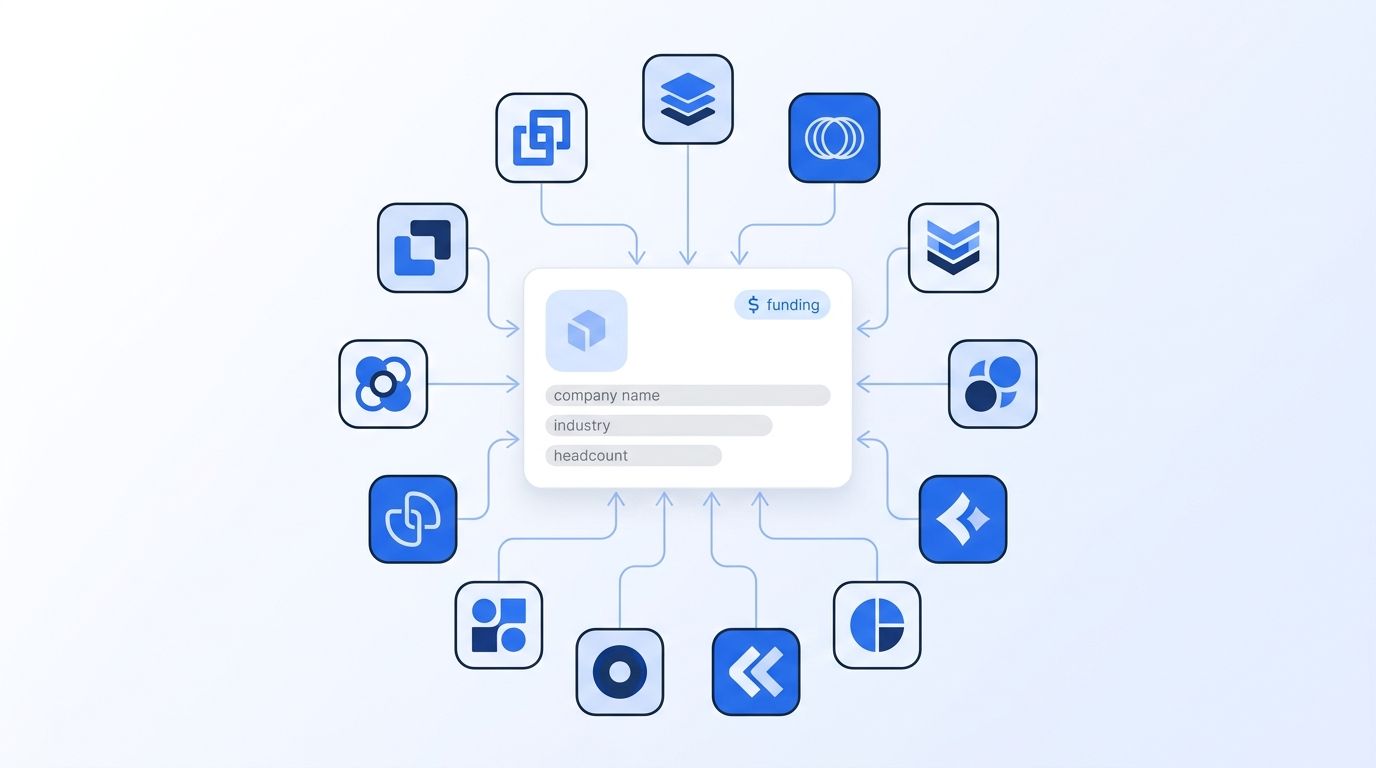
Picking a company enrichment API usually comes down to three questions: what can you look the company up by, how fresh is the answer, and what does it cost once you're past the free tier. We pulled public docs and pricing pages for 10 vendors — People Data Labs, Coresignal, Apollo.io, HubSpot Breeze Intelligence, CompanyEnrich, Crustdata, Datamagnet, ZoomInfo, Diffbot, and The Companies API — so you don't have to open 10 tabs yourself.
TL;DR
- The data enrichment solutions market is projected to hit $3.24 billion in 2026, up from $2.88 billion in 2025 (The Business Research Company, 2026).
- Freshness models vary widely: Coresignal and PDL refresh on monthly cycles, while Crustdata and Datamagnet offer live, request-time lookups.
- Entry pricing ranges from free (PDL, Diffbot) to $899/mo (Diffbot Plus) — most published match-rate claims don't exist; treat unsourced "95% accuracy" numbers with suspicion.
What Should You Actually Compare Before Picking a Company Enrichment API?
The four variables that matter most are input identifiers (what you can search by), field depth, freshness model, and published pricing — not vague "accuracy" claims that most vendors don't substantiate. Read Datamagnet's API reference for an example of how one vendor documents these four things up front.
Most comparison posts lead with accuracy percentages that nobody sources. We didn't find a single vendor in this list publishing a verified match-rate percentage on an official page — not even the household names. What they do publish, consistently, is their record count, their identifier requirements, and their credit pricing. Those three are what you can actually verify before you sign a contract, and they're what this post sticks to. If a vendor claims 95% match accuracy in a sales deck, ask for the methodology — and check whether your API key setup even lets you rotate credentials without downtime first.
How Do 10 Company Enrichment APIs Compare at a Glance?
Across the 10 vendors, domain is the most common input identifier, but freshness model is where they diverge most: four run live, request-time lookups while the rest refresh on daily-to-monthly cycles. Starting prices range from $0 to $899/month before enterprise tiers.
| Vendor | Primary input | Freshness model | Approx. fields | Rate limit (published) | Starting price |
|---|---|---|---|---|---|
| People Data Labs | Domain, name, ticker, or profile URL | Monthly dataset refresh | Full company schema (count not stated) | 10/min free, 1,000/min paid | Free (100 records/mo) |
| Coresignal | Not fully documented publicly | DB "real-time," bulk datasets daily-monthly | 500+ marketed, 200+ documented | 5/sec–100+/sec by plan | $49/mo (2,500 credits) |
| Apollo.io | Domain or LinkedIn URL | Not stated | Broad firmographic set, no total count | ~600/hr example, account-dependent | Free (900 credits/user/yr) |
| HubSpot Breeze Intelligence | Domain | "Continually refreshed" (no cadence stated) | 40+ marketed | Not published | Bundled with Hub subscription |
| CompanyEnrich | Domain | updated_at field; marketed as real-time | 40+ documented | 60–600/min by plan | $49/mo (5,000 credits) |
| Crustdata | Domain, name, company ID, or profile URL | Live (≤10 min) or cached monthly, your choice | 250+ marketed | 15–30/min by endpoint | Credit-metered, no public plan price |
| Datamagnet | LinkedIn company URL | Live by default; configurable cache (none / ≤29 days / default) | 40+ documented | 10–30/min by plan | $39/mo (1,000 credits) |
| ZoomInfo (legacy API) | Not fully published | Not published | Not fully published | Not published | Custom quote only |
| Diffbot | Name, URL, phone, email, employer, title, school, location, or IP | Continuous web crawl, 30-day re-crawl trigger | 50+ marketed | 5/min free, up to 25+/sec | Free (10,000 credits/mo) |
| The Companies API | Domain | On-demand refresh only (refresh=true) | 80+ documented, 300+ marketed (discrepancy) | 50–1,000/sec by plan | $95/mo (50,000 credits) |
People Data Labs: What Does Its Company API Offer?
PDL's Company API matches on name, ticker, domain, or social profile URL and draws from a dataset of 71.4 million companies, refreshed monthly (People Data Labs, 2026). It's a strong fit if you need large-scale, low-cost batch enrichment rather than live lookups.
Pricing starts free for up to 100 records a month, with paid plans from $100/month for 1,000 records. Credit pricing steps down from $0.10 to $0.065 per credit as volume climbs, and PDL only bills on a successful HTTP 200 match (People Data Labs pricing & credits, 2026). Rate limits sit at 10 requests/minute on the free tier and scale to 1,000/minute on paid plans. For a side-by-side with a LinkedIn-sourced alternative, see the full PDL vs. Datamagnet comparison.
Coresignal: Is It the Deepest Dataset on This List?
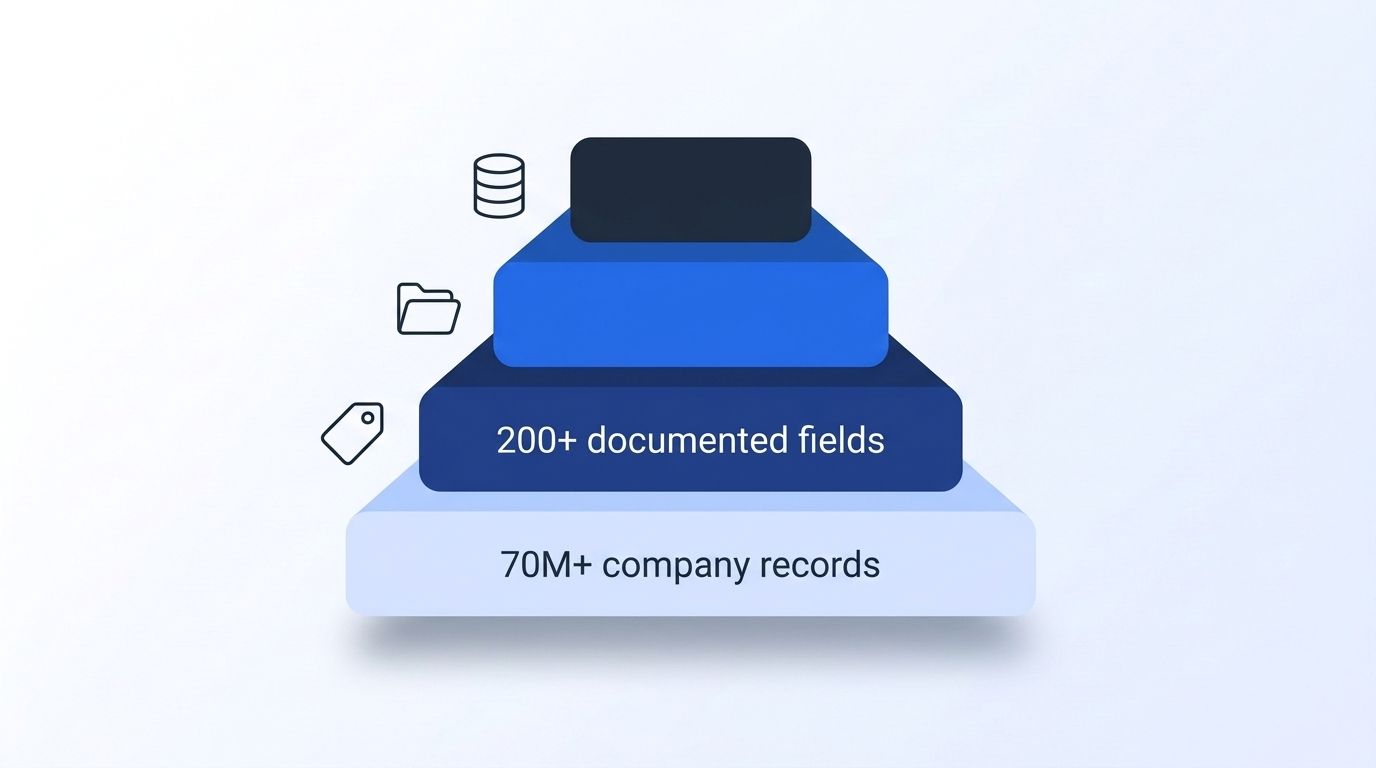
Coresignal markets 500+ multi-source fields and documents 200+ of them across 18 data categories, pulled from a dataset of 70 million-plus company records (Coresignal pricing, 2026). It's the field-depth leader among the vendors we checked, and it's built for teams who want bulk datasets, not single lookups.
Freshness is split by product: bulk datasets refresh daily, weekly, or monthly depending on your subscription, while the API-connected database is described as "refreshed in real time" so each response reflects current state (Coresignal FAQ, 2026). Plans run from a 7-day free trial (2,000 credits) up to $5,000/month for 10 million credits, with 10-20 credits consumed per company record. Rate limits scale from 5 requests/second to 100+ on top tiers. Read the deeper Datamagnet vs. Coresignal breakdown if field count matters more to you than real-time freshness.
Apollo.io: Does Its Enrichment API Work Standalone?
Apollo's Organization Enrichment endpoint requires a domain or LinkedIn URL (name alone isn't accepted) and returns firmographics, funding, technology stack, and org-hierarchy data including parent and subsidiary relationships (Apollo.io API docs, 2026). It's built into a full sales engagement platform, so enrichment is one feature among many, not a standalone product.
Pricing is seat-based rather than pure pay-as-you-go: a free plan includes 900 credits per user per year, Basic runs $49/user/month for 30,000 annual credits, and Organization plans start at $119/user/month with a 3-seat minimum (Apollo.io pricing, 2026). Published rate limits are account-specific — docs cite roughly 600 requests/hour as an example, not a guarantee. If you just need the enrichment layer without the seat-based sales tooling, compare it against a pure Datamagnet vs. Apollo comparison.
HubSpot Breeze Intelligence: What Happened to Clearbit?
Clearbit's enrichment is now HubSpot Breeze Intelligence, drawing on over 200 million company and buyer profiles that HubSpot describes as "continually refreshed," with 40-plus firmographic, demographic, and technographic attributes marketed per company (HubSpot product spotlight, 2026). Basic enrichment ships bundled inside Marketing, Sales, Service, Data, or Content Hub subscriptions rather than being sold as a standalone metered API.
That bundling is the real differentiator: if you're already paying for a Hub tier, firmographic enrichment is effectively included. Only the separate Buyer Intent add-on meters usage, at 10 HubSpot credits per company per month, with credits priced at $0.01 each (HubSpot credits, 2026). There's no public standalone API price for teams outside the HubSpot ecosystem. See the Datamagnet vs. Clearbit comparison for a standalone, API-first alternative.
CompanyEnrich: What's the Case for a Smaller Vendor?
CompanyEnrich's /companies/enrich endpoint takes a domain and returns 40-plus fields covering basic info, classification, employee and financial data, tech stack, location, and social profiles (CompanyEnrich API docs, 2026). It's a lean, developer-first option without the sales-platform overhead of Apollo or the enterprise minimums of ZoomInfo.
A 500-credit free trial requires no card, and paid plans start at $49/month for 5,000 credits, scaling to $549/month for 500,000 credits as the per-credit cost drops from roughly $0.0098 to $0.0011 (CompanyEnrich pricing, 2026). Rate limits run from 60 requests/minute on Starter to 600/minute on Scale. Each enrichment call costs exactly 1 credit, which makes cost per lookup easy to forecast.
Crustdata: What Makes Its Freshness Model Different?
Crustdata is one of only two vendors on this list offering a real freshness choice at request time: live enrichment pulls current data from the web with up to 10-minute latency, or you can request cached database enrichment refreshed monthly for instant, cheaper responses (Crustdata company enrichment docs, 2026). It resolves companies from a domain, name, company ID, or professional-network URL.
The dataset spans 60 million-plus companies and over 1 billion people from 15-plus sources, with 250-plus fields covering firmographics, funding, headcount time series, and hiring signals. Pricing is credit-metered rather than flat-rate: a base enrichment costs 2 credits, rising to 4 if you add technographics, but Crustdata doesn't publish a flat monthly subscription price — you'll need to talk to sales for plan costs (Crustdata pricing docs, 2026). Rate limits sit between 15 and 30 requests/minute depending on the endpoint.
Datamagnet: Where Does a LinkedIn-Sourced API Fit In?
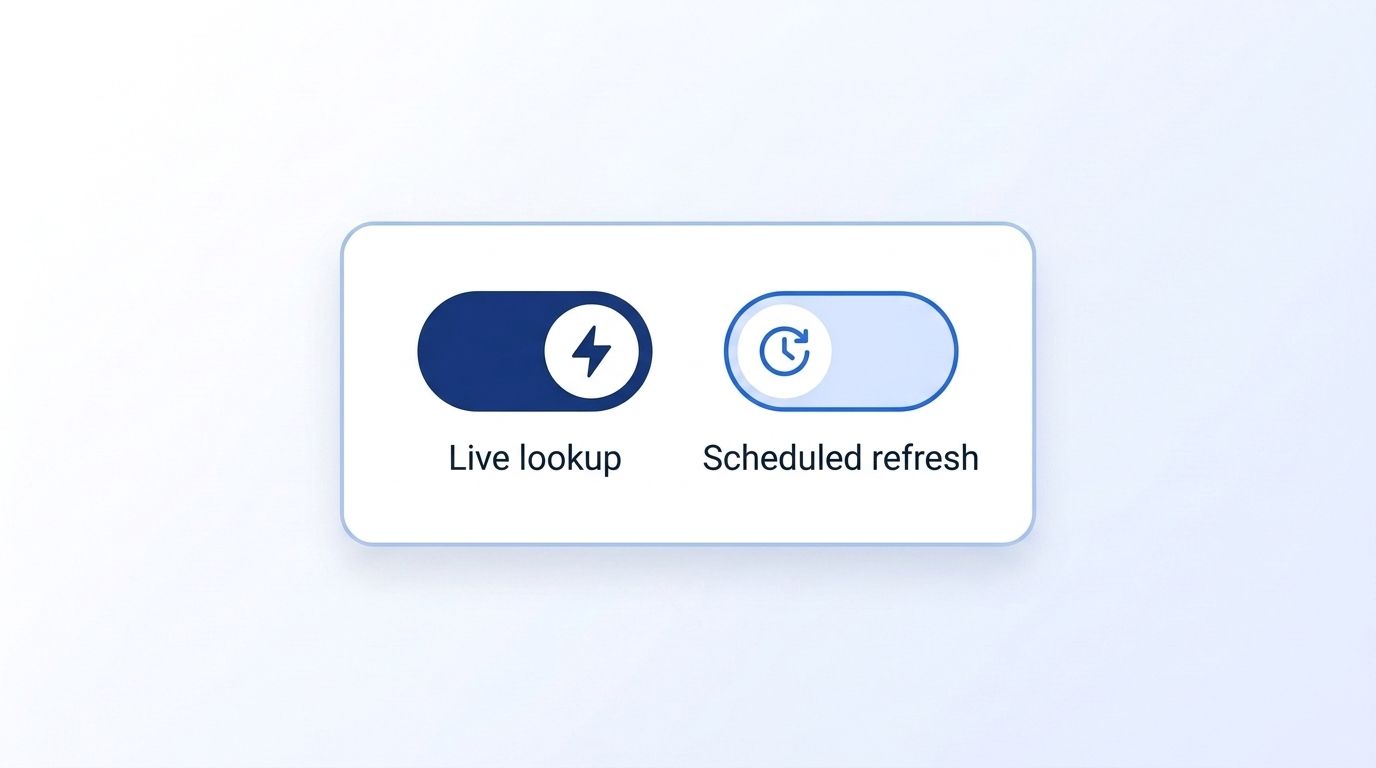
Datamagnet's Company Profile endpoint takes a LinkedIn company URL rather than a domain and returns 40-plus fields — headcount, industry, HQ, funding and investors, follower stats, and recent company updates — through a configurable use_cache parameter (Datamagnet Company Profile docs, 2026).
That parameter lets you force a live fetch, accept anything cached, or require data no older than 29 days — freshness control more granular than most of the other nine vendors offer.
Pricing starts at $39/month for 1,000 credits, scaling to $199/month for 25,000 credits, with pay-as-you-go available from $10 and 10 free credits at signup. A base lookup costs 1 credit; optional company-insights and funding-rounds data add 5-10 credits only on a successful match. Rate limits run 10-30 requests/minute by plan. The honest trade-off: Datamagnet's field catalog is smaller than Coresignal's and it doesn't offer PDL-scale bulk historical datasets — it's built for teams that want live LinkedIn-sourced firmographics plus engagement signals (job changes, post activity) layered on top, not a raw data warehouse.
ZoomInfo: Why Is Its Pricing So Hard to Find?
ZoomInfo's legacy enterprise data API has no public pricing, no self-serve signup, and no published rate card — it's sales-quote only, backed by a database the company describes as 100 million-plus companies and 500 million-plus professional profiles (ZoomInfo data page, 2026). If you've seen a "95% match accuracy" figure for ZoomInfo, we couldn't verify it on an official page — treat it as unconfirmed.
Notably, ZoomInfo's newer GTM.AI platform (generally available since June 2026) does publish self-serve pricing: a free tier with 1,000 data credits and 1,000 AI credits per year, pay-as-you-go from a $20 minimum top-up, and data credits priced around $0.38 each at the $1,000 spend tier (GTM.AI pricing, 2026). That's a meaningful shift for a vendor historically known for opaque, enterprise-only contracts. For more on the gap between ZoomInfo's brand and its self-serve options, see the Datamagnet vs. ZoomInfo comparison.
Diffbot: Does Continuous Web Crawling Beat Scheduled Refresh?
Diffbot skips the domain-or-nothing pattern entirely — its Enhance endpoint accepts name, URL, phone, email, employer, title, school, location, or IP address, the broadest identifier list of any vendor here (Diffbot Enhance docs, 2026). Instead of a fixed refresh schedule, Diffbot continuously crawls the web into a Knowledge Graph of 2 billion-plus entities, and a refresh parameter forces a re-crawl of anything not already crawled in the last 30 days.
Pricing starts free at 10,000 credits/month with no card required, scaling to $899/month for 1 million credits on the Plus plan. A standard Enhance lookup costs 25 credits per record, or 100 credits if you force a refresh (Diffbot pricing, 2026). Rate limits range from 5 requests/minute on the free tier to 25-plus/second on paid plans — among the most generous limits on this list.
The Companies API: Why Do Its Field Counts Disagree?
The Companies API enriches from a domain alone and claims access to all 50 million companies in its database (The Companies API pricing, 2026). [UNIQUE INSIGHT]
Its marketing homepage advertises "300+ data points per company," but the endpoint-specific documentation for enrich-company-from-domain states "80+ data points" for the standard response — a discrepancy worth knowing about before you budget for field coverage (The Companies API endpoint docs, 2026).
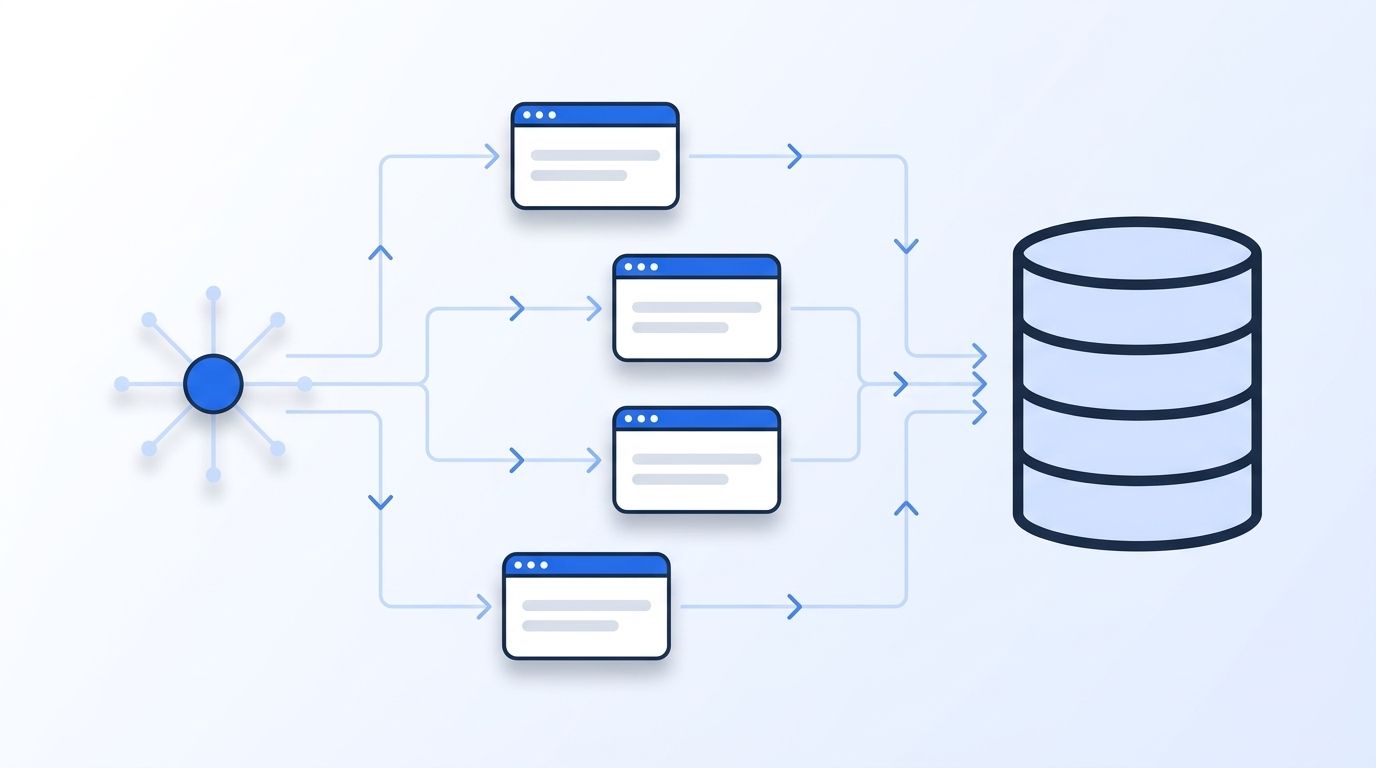
Freshness is on-demand only: there's no stated automatic refresh cadence, but a refresh=true flag triggers a live re-crawl (website, social, and AI enrichment) for an extra 10 credits per call. Pricing has no free tier — Startup runs $95/month for 50,000 credits, scaling to $595/month for 500,000 credits on Enterprise, with rate limits from 50 to 1,000 requests/second by plan.
Which Company Enrichment API Actually Fits Your Use Case?
No single vendor wins on every axis — pick based on what you're optimizing for. Deepest field catalog goes to Coresignal, broadest identifier flexibility goes to Diffbot, and cheapest meaningful free tier is a toss-up between PDL and Diffbot.
| If you need... | Best fit among these 10 |
|---|---|
| Deepest documented field catalog | Coresignal (200+ documented, 500+ marketed) |
| Cheapest usable free tier | People Data Labs or Diffbot |
| Native CRM bundling with zero extra integration | HubSpot Breeze Intelligence |
| Broadest identifier flexibility (email, phone, IP, etc.) | Diffbot |
| Real-time LinkedIn firmographics plus engagement signals | Datamagnet |
| Enterprise brand with dedicated CSM and custom SLAs | ZoomInfo |
| A choice between live and cached lookups per request | Crustdata or Datamagnet |
| Enrichment built into an existing sales engagement tool | Apollo.io |
If live, LinkedIn-sourced firmographics with configurable freshness is what you're after, see a live company lookup in Datamagnet's Company API — it's free to test with 10 credits before you commit to a plan.
Frequently Asked Questions
What's the difference between a company enrichment API and a static database export?
An API returns data at request time — either live from the web (Crustdata, Datamagnet) or from a periodically refreshed database (PDL, Coresignal, monthly cycles). A static export is a one-time snapshot you download and manage yourself, which decays the moment companies change headcount, funding status, or leadership.
How much does a company enrichment API typically cost to start?
Entry pricing among the 10 vendors we checked ranges from free (People Data Labs, Diffbot) to $95-$299/month for the first meaningful paid tier (The Companies API, Diffbot Startup). Credit-based pricing means your real cost depends on call volume, not just the advertised plan price.
What input do most company enrichment APIs need to find a company?
Domain is the most common required identifier across these vendors, used by PDL, CompanyEnrich, HubSpot Breeze, and The Companies API. Datamagnet is the exception, requiring a LinkedIn company URL, while Diffbot accepts the widest range — name, URL, phone, email, and more.
Do these vendors publish verified accuracy or match-rate numbers?
No — of the 10 vendors we researched, none published a sourced, official match-rate or accuracy percentage on their own site. Vendors publish record counts (PDL's 71.4 million companies, Coresignal's 70 million) instead, which measure dataset size, not match accuracy against your specific records.
Can I use more than one company enrichment API at once?
Yes, and many GTM teams do — routing a lookup through a cheaper API first and falling back to a deeper one (like Coresignal) only for unmatched records is a common cost-control pattern. The trade-off is reconciling field names and freshness assumptions across vendors, which adds engineering overhead.
Conclusion
There's no universal "best" company enrichment API — the right pick depends on whether you need bulk historical depth (Coresignal, PDL), live freshness (Crustdata, Datamagnet), broad identifier flexibility (Diffbot), or native CRM bundling (HubSpot Breeze). Match the freshness model and input identifier to your actual workflow before you compare price per credit.
Start by listing the identifiers you'll actually have on hand — domain, LinkedIn URL, or email — since that alone eliminates half this list. From there, check Datamagnet's Company Profile endpoint if LinkedIn-sourced, request-time freshness matches your use case.
