
Disclosure: This article is published by Datamagnet. Product and pricing details for Cognism are self-reported or third-party estimates unless otherwise noted, retrieved September 2026.
Does Cognism Have an API? What It Offers, What It Costs, and Alternatives
Yes, Cognism has a developer API — Search, Enrich, and Redeem endpoints covering both contacts and accounts (Cognism Developer Docs, retrieved 2026-09-05). But you can't just sign up and grab a key. In 2026, Vendr's transaction data puts the median Cognism annual contract at $36,000 across 109 real purchases, and API access is provisioned only after that contract is signed (Vendr, Cognism Software Pricing & Plans, 2026).
That gap between "has an API" and "can I use it today" is the whole story for developers evaluating Cognism. This post breaks down what the API actually exposes, how access is gated by plan, what you can realistically build on it, and how its enterprise-contract model stacks up against usage-based APIs — plus the European coverage numbers that are the real reason most people search for it in the first place.
Key Takeaways
- Cognism runs a real, documented API — Search, Enrich, and Redeem — but it's entitlement-gated, not self-serve. You can't generate a key without a sales conversation.
- In 2026, Vendr's procurement data shows a median Cognism annual contract of $36,000, ranging $17,832 to $93,209 across 109 purchases (Vendr, 2026).
- Cognism claims over 200 million European contact records and Do-Not-Call screening in 15+ countries, including Norway and Finland as of its July 2026 update (Cognism, 2026).
- Teams that want to enrich programmatically without a sales cycle typically pair Cognism's exported data with a usage-based API for the day-to-day lookups.
Does Cognism Have an API?
Yes. Cognism runs a documented API with three core functions — Search, Enrich, and Redeem — for both contact and account records (Cognism Developer Docs, developers.cognism.com, retrieved 2026-09-05). That's a versioned, credit-metered API, not a marketing label for a CSV export button.
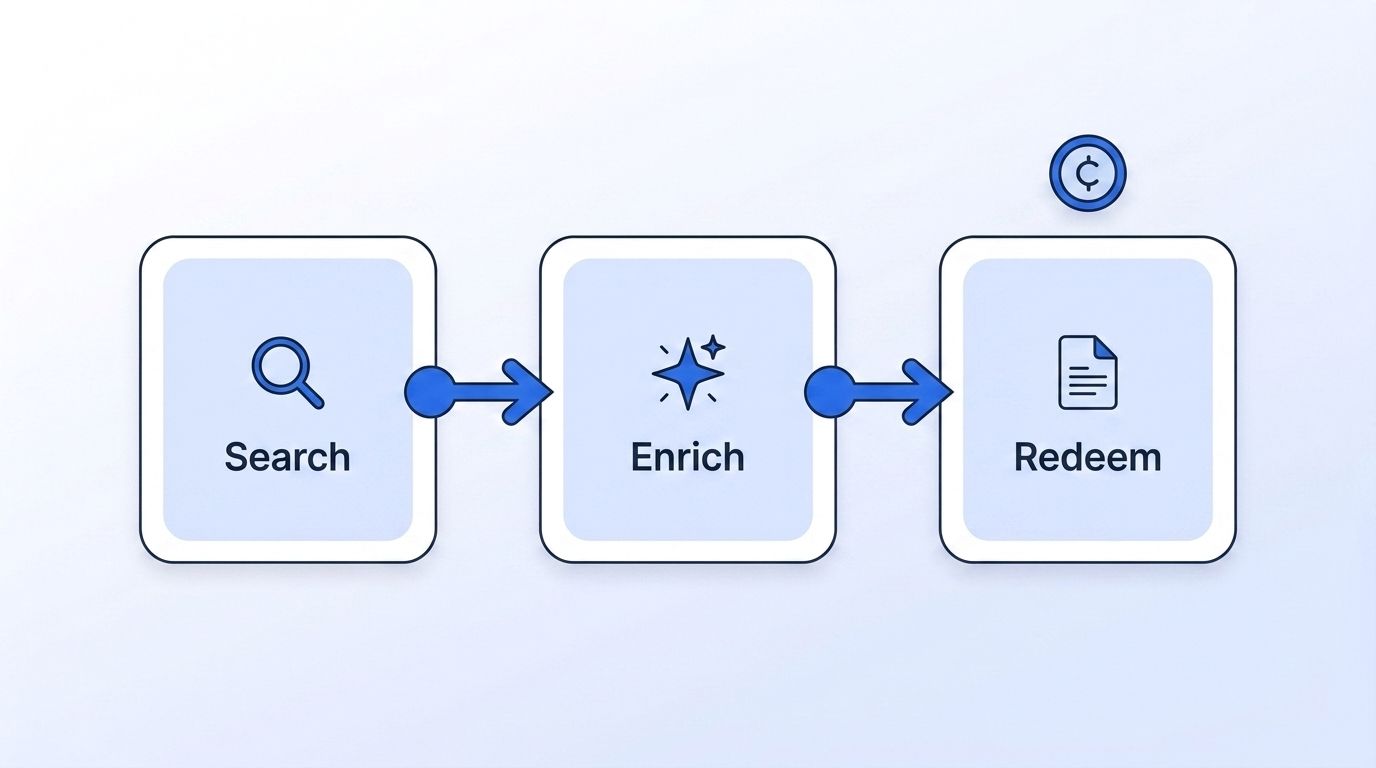
Here's how the three functions split up, per Cognism's own help center: the Search API finds contacts or accounts matching your filters without spending credits. The Enrich API previews which fields are populated on a record before you commit anything. Only the Redeem API — which pulls the full record — actually consumes credits (Cognism Help Center, "Using Search and Redeem APIs," retrieved 2026-09-05).
API tokens aren't something you generate from a public dashboard the moment you sign up. They're created inside Profile Settings in the Cognism web app, and only for accounts with the right permissions enabled — permissions Cognism configures, not you (Cognism Help Center, "Setting up Cognism API and Entitlements," retrieved 2026-09-05). For comparison, Datamagnet's API authentication works the way most developers expect: generate a bearer token yourself, attach it to a request, done.
Citation capsule: Cognism's API is built around three functions — Search, Enrich, and Redeem — with only the Redeem call consuming credits. That structure lets you filter and preview data cheaply before paying to pull a full record, but the token itself is provisioned by Cognism as an account entitlement, not something you self-generate (Cognism Help Center, 2026).
What Does the Cognism API Actually Expose — and What Doesn't It?
The Cognism API's record limits tell you a lot about who it's built for: Search calls return 20 to 100 records per request, capped around 1,000 records a minute, and Redeem calls handle 1 to 20 record IDs per call at the same rate ceiling (Cognism Help Center, "Using Enrich and Redeem APIs," retrieved 2026-09-05). That's built for batch enrichment jobs, not a high-frequency lookup service.
On integrations, Cognism confirms native connections to Salesforce, HubSpot, Pipedrive, Bullhorn, Microsoft Dynamics, Salesloft, Outreach, and a Zapier app called Cognism Prospector (Cognism Help Center, "Cognism Integrations Overview," retrieved 2026-09-05). Cognism added a HubSpot "2-Way Sync" in its July 2026 product update, tightening the loop between CRM records and Cognism's data (Cognism Newsroom, "See it, fix it, keep it fixed: H1 '26 at Cognism," published 2026-07-07).
<!-- [UNIQUE INSIGHT] -->One gap is worth flagging directly: as of September 2026, no publicly documented integration connects Cognism to Clay, the composable enrichment tool many GTM engineering teams build workflows around. If your stack is Clay-centric, that's a real limitation, not a minor one — you'd be scripting around Cognism's REST endpoints yourself rather than dropping in an existing connector, the way you would with Datamagnet's Clay integration.
Cognism also embeds Bombora Company Surge intent data directly into its platform, letting you filter searches by intent topic alongside firmographic and technographic filters (Bombora, "Company Surge Intent data embedded in Cognism," retrieved 2026-09-05). That partnership has been live since 2021 — it's an established feature, not a new one, but it's still one of the more useful reasons to search inside Cognism's UI rather than pull raw records via API.
Citation capsule: Cognism's Search API caps at 100 records per call and roughly 1,000 records a minute, structured for scheduled batch pulls rather than real-time single-record lookups. Combined with native syncs to Salesforce and HubSpot, that points to a tool built to feed a CRM on a schedule, not to power a live, request-time application (Cognism Help Center, 2026).
How Is API Access Gated by Plan, and What Does It Cost?
Cognism doesn't publish pricing, and it doesn't have a public checkout — you get a quote after a sales conversation, full stop. In 2026, Vendr's aggregated transaction data (109 actual purchases) puts the median Cognism annual contract at $36,000, with a range from $17,832 to $93,209 and average negotiated savings of 26% off the initial quote (Vendr, "Cognism Software Pricing & Plans," last updated 2026-02).
The pricing model itself combines a per-user annual subscription with credit-based consumption for Redeem calls, and Cognism prices Diamond Data (phone-verified mobile numbers) and intent/technographic filters as add-ons on top of that base (Vendr, 2026). A mid-market team of 6 to 20 users typically lands between $10,000 and $50,000 or more a year, according to the same Vendr breakdown — before add-ons push it higher.
There's no free plan, either. The only no-contact options are a free 25-lead data sample or a recorded demo — you can't complete a purchase, or provision an API token, without talking to a rep first. For a credit-metered alternative that skips the sales call entirely, Datamagnet's credit balance endpoint shows what a self-serve version of the same "pay per record" idea looks like: you check your balance with an API call, not a quarterly business review.
Citation capsule: Cognism's pricing is quote-only and contract-based, with a 2026 median annual value of $36,000 and a range of $17,832 to $93,209 across 109 real purchases tracked by Vendr. Diamond Data and intent filters are priced as add-ons on top of that base, and there's no self-serve tier at any price point (Vendr, 2026).
What Can You Realistically Build on the Cognism API?
Given the record caps and entitlement-based tokens, most real Cognism API usage looks like scheduled batch jobs — pulling a list of accounts overnight, enriching them, and pushing the result into a CRM or data warehouse. It's not built for a live application that calls the API on every page load.
Cognism also markets a Data-as-a-Service option for bulk delivery into Snowflake, S3, Google Cloud, or SFTP, according to its integrations page — a warehouse-style pattern that suits analytics teams more than product engineers (Cognism, retrieved 2026-09-05, unaudited by direct fetch). Combine that with the native Salesforce and HubSpot syncs, and the realistic build pattern is: configure a sync once, then let sales and ops teams consume the enriched data inside tools they already use.
<!-- [PERSONAL EXPERIENCE] -->When a GTM engineer evaluates a new data source, the first question is usually "can I hit this from a script this afternoon?" Cognism's model doesn't answer yes. An entitlement-gated token tied to a signed annual contract fits a workflow where an ops team sets up a CRM sync once, not one where a developer wires up a new enrichment call between two meetings.
If your team wants that same-afternoon experience, Datamagnet's Company Profile endpoint and People Profile endpoint are both callable the moment you have a key — no sales call, no entitlement to configure.
Citation capsule: Cognism's API is structured for scheduled batch enrichment into a CRM or data warehouse, not for live, request-time application logic. That's a reasonable design choice for a sales-ops tool, but it means developers looking to build an on-demand enrichment feature will hit friction that a usage-based, key-on-signup API doesn't have.
Cognism's Enterprise Contract vs. a Usage-Based API: Which Model Fits Your Team?
Cognism sells like enterprise software: a demo, a quote, a signed annual contract before anyone gets a login. Usage-based APIs sell like infrastructure: sign up, get a key, pay per credit as you go. Both can move the same kind of data — the difference is entirely in how you get access and what you commit to before you know if it works.
That split shows up across the wider category, too. ColdIQ's 2026 buyer's guide contrasts self-serve, credit-metered data APIs — some starting free or under $0.10 a credit — against quote-only platforms that publish no pricing at all, the bucket Cognism sits in (ColdIQ, "Best B2B Data APIs in 2026 for Sales and Marketing," retrieved 2026-09-05). Neither model is universally "better." They're built for different buying processes.
| Dimension | Cognism (Enterprise Contract) | Usage-Based API |
|---|---|---|
| Signup | Demo call required, no public pricing | Self-serve signup, key issued instantly |
| Pricing | Per-user + credit add-ons, custom quote | Per-credit or per-request, published rates |
| Typical annual cost | $17,832–$93,209 (Vendr, 2026 median $36,000) | Scales with usage; no fixed minimum |
| Minimum commitment | Annual contract | None — pay for what you use |
| Time to first API call | Weeks (sales cycle + provisioning) | Minutes |
| Best fit | Sales-ops teams standardizing on one platform | Developers enriching programmatically at variable volume |
Isn't it a little backwards that the model requiring the biggest upfront commitment is also the one where you can't test the API yourself before signing? That's the trade-off in plain terms: Cognism's contract buys you a full platform — UI, CRM syncs, intent data, phone verification — bundled together. A usage-based API like Datamagnet's pricing buys you exactly the calls you make, nothing more, with no procurement cycle standing between a developer and a working integration.
Illustrative industry estimates put a bottom-up, self-serve data stack for a 10-person team under $20,000 a year, against $220,000 to $380,000 for a comparable top-down enterprise stack — a directional gap, not a precise benchmark, but a useful sanity check on scale (Salesmotion, "How Much Does Sales Intelligence Cost in 2026?," retrieved 2026-09-05).
Citation capsule: Cognism's enterprise-contract model bundles a full sales-ops platform behind a signed annual deal, while usage-based APIs unbundle access into pay-per-credit calls a developer can start using in minutes. For teams that want to enrich programmatically without a sales cycle, the usage-based model removes the procurement step entirely — at the cost of not getting Cognism's built-in UI and CRM workflow tools.
How Strong Is Cognism's European Data Coverage?
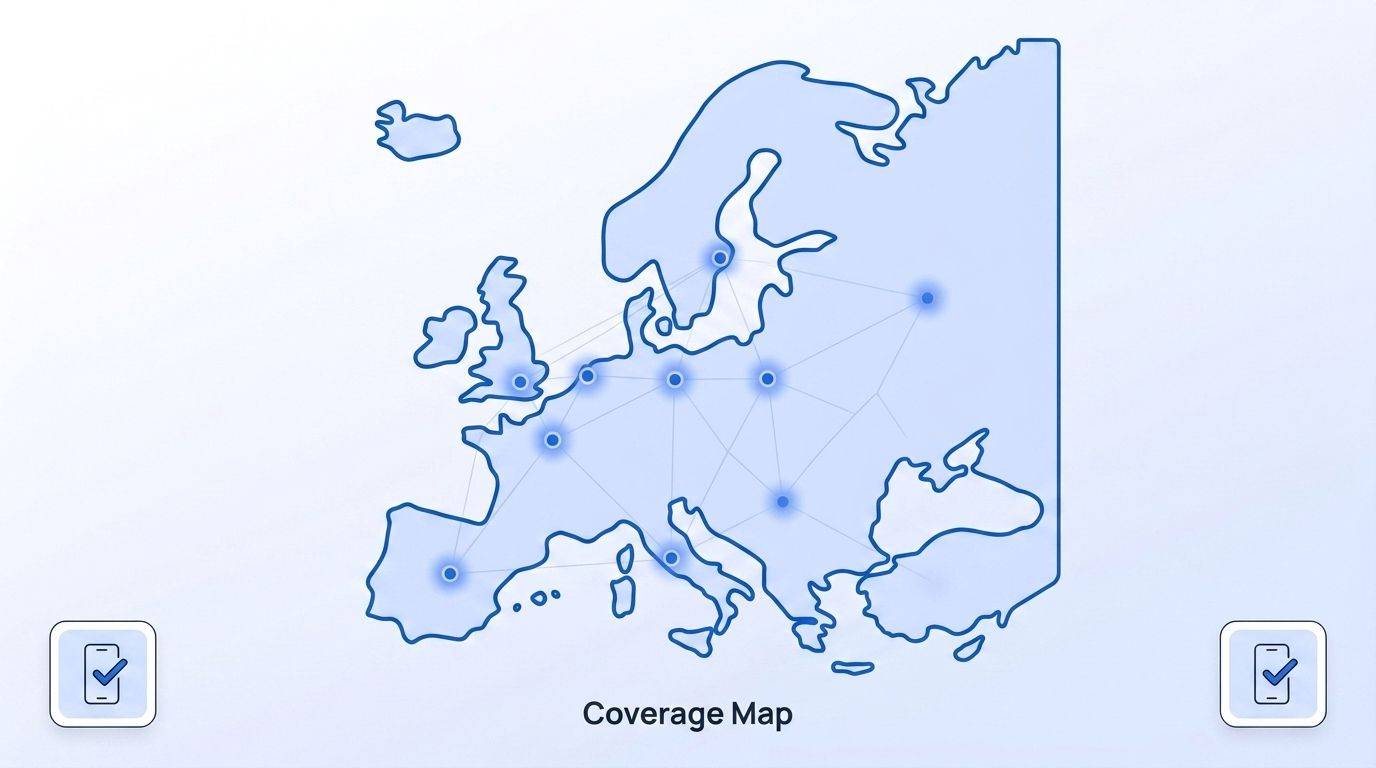
This is Cognism's real differentiator, and the numbers back it up — at least by Cognism's own reporting. In 2026, Cognism claims more than 200 million European contact records and "2x more European contacts than other providers," plus over 90% coverage of director-level-and-above contacts across the EU (Cognism Blog, "EMEA B2B Data: Why Cognism Beats ZoomInfo and Apollo," published 2026-04-21, updated 2026-05-20).
Compliance coverage extends that edge. Cognism screens phone and contact data against Do-Not-Call registries in more than 15 countries, adding Norway and Finland in its July 2026 update — more DNC-country coverage than the 8 countries Cognism attributes to ZoomInfo, or the US-and-UK-only coverage it attributes to Apollo (Cognism Newsroom, "See it, fix it, keep it fixed: H1 '26 at Cognism," published 2026-07-07). Those competitor figures come from Cognism's own comparison, not an independent audit, so verify them against your specific target list rather than taking them at face value.
Cognism's phone-verification program, Diamond Data, is where the European accuracy story gets concrete. Cognism's own published study — the organization behind it isn't named on the page — tested 1,000 contacts and compared standard numbers against Diamond-verified ones (Cognism, "Diamond Data," retrieved 2026-09-05):
Named customer results back this up directionally: Lead Forensics reported a 30% increase in conversion rates, and Mollie reported 30% better data quality versus its previous provider, both cited as customer testimonials on Cognism's own site (Cognism, "Diamond Data," retrieved 2026-09-05). If GDPR-aligned data handling matters to your evaluation regardless of vendor, Datamagnet's security and data practices page is worth comparing line by line against any vendor's compliance claims, Cognism included.
Citation capsule: In its own 2026 published study, Cognism reported that Diamond-verified phone numbers cut inconclusive calls from 48% to 14% and wrong numbers from 27% to 10%, while correct-person pickups rose from 18% to 45%. The study's conducting organization isn't disclosed, so treat the exact figures as a vendor-published result rather than independently audited research.
Which Approach Should You Actually Use?
If your team is standardizing sales-ops around one platform and wants European phone-verified data plus built-in CRM syncs, Cognism's contract buys real capability — you're just committing to it before you can test the API yourself. If you're a developer or GTM engineer who wants to enrich records programmatically without a procurement cycle, a usage-based API that issues a key on signup gets you to a working integration the same day, and Datamagnet's introduction docs or comparison against ZoomInfo are reasonable starting points for evaluating that path.
The two approaches aren't mutually exclusive, either. Plenty of teams keep Cognism (or a similar contract-based platform) for its UI and European phone data, while routing day-to-day programmatic enrichment through a usage-based API that doesn't require a sales call for every new use case.
Frequently Asked Questions
Does Cognism have a public API for developers?
Yes. Cognism runs a documented Search, Enrich, and Redeem API for contacts and accounts (Cognism Developer Docs, retrieved 2026-09-05). It isn't self-serve, though — API tokens are provisioned as an account entitlement after a sales conversation, not generated from a public signup form the way usage-based APIs work.
How much does Cognism cost if you want API access?
In 2026, Vendr's transaction data puts the median Cognism annual contract at $36,000, with a range of $17,832 to $93,209 across 109 real purchases (Vendr, 2026). Pricing combines a per-user subscription with credit-based consumption for record "redeems," and Diamond Data phone verification costs extra.
Can you sign up for the Cognism API without talking to sales?
No. Cognism has no public pricing page or self-serve checkout — the only no-contact options are a free 25-lead sample or a recorded demo (Cognism, retrieved 2026-09-05). API access is an entitlement Cognism enables on your account after you sign an annual contract, not a key you generate yourself.
Does Cognism integrate with Clay or Zapier?
Cognism confirms native integrations with Salesforce, HubSpot, Pipedrive, Bullhorn, Microsoft Dynamics, Salesloft, Outreach, and a Zapier app called Cognism Prospector (Cognism Help Center, retrieved 2026-09-05). As of September 2026, no public integration connecting Cognism directly to Clay has been documented.
Is Cognism's European data coverage actually better than ZoomInfo or Apollo?
Cognism claims over 200 million European contact records and Do-Not-Call screening in 15+ countries, versus 8 countries for ZoomInfo and US/UK-only for Apollo, according to Cognism's own comparison (Cognism Blog, published 2026-04-21). Those figures come from Cognism, not an independent audit, so verify them against your specific target list.
Sources
- Vendr, Cognism Software Pricing & Plans, retrieved 2026-09-05, https://www.vendr.com/marketplace/cognism
- Cognism Help Center, Using Search and Redeem APIs, retrieved 2026-09-05, https://help.cognism.com/hc/en-gb/articles/7700677601426-Using-Search-and-Redeem-APIs
- Cognism Help Center, Using Enrich and Redeem APIs, retrieved 2026-09-05, https://help.cognism.com/hc/en-gb/articles/7703988771730-Using-Enrich-and-Redeem-APIs
- Cognism Help Center, Setting up Cognism API and Entitlements, retrieved 2026-09-05, https://help.cognism.com/hc/en-gb/articles/7700354847762-Setting-up-Cognism-API-and-Entitlements
- Cognism Help Center, Cognism Integrations Overview, retrieved 2026-09-05, https://help.cognism.com/hc/en-gb/articles/18552362347922-Cognism-Integrations-Overview
- Cognism Blog, EMEA B2B Data: Why Cognism Beats ZoomInfo and Apollo, published 2026-04-21 (updated 2026-05-20), https://www.cognism.com/blog/emea-b2b-data
- Cognism Newsroom, See it, fix it, keep it fixed: H1 '26 at Cognism, published 2026-07-07, https://www.cognism.com/newsroom/product-marketing-update-h1-26
- Cognism, Diamond Data, retrieved 2026-09-05, https://www.cognism.com/diamond-data
- Bombora, Company Surge Intent data embedded in Cognism, retrieved 2026-09-05, https://bombora.com/integration/cognism/
- ColdIQ, Best B2B Data APIs in 2026 for Sales and Marketing, retrieved 2026-09-05, https://coldiq.com/blog/best-b2b-data-apis
- Salesmotion, How Much Does Sales Intelligence Cost in 2026?, retrieved 2026-09-05, https://salesmotion.io/blog/sales-intelligence-cost
