
Disclosure: This article is published by Datamagnet. Vendor claims below are self-reported by each company unless otherwise noted, and were retrieved 2026-09-05.
Clearbit Alternatives After HubSpot Breeze: 8 Developer-First Options
HubSpot completed its acquisition of Clearbit in December 2023 (HubSpot, 2023), and the standalone product has been folding into HubSpot's "Breeze Intelligence" line ever since. If you built anything on Clearbit's old Enrichment API, you've likely noticed the free tools disappearing one by one - the free Logo API alone was deprecated March 18, 2025, and shut down for good on December 8, 2025 (HubSpot Developer Changelog, 2025).
This guide ranks eight developer-first alternatives on API quality, real-time versus cached data, pricing model, and CRM coverage - and is explicit about who each one is wrong for. It closes with a short migration section on field mapping and rate limits, since that's what actually breaks when you switch.
TL;DR
- HubSpot closed its Clearbit acquisition in December 2023, and by December 2025 even Clearbit's free tools (including the Logo API) were fully sunset - self-serve access now runs through a HubSpot subscription (HubSpot, 2023; HubSpot Developer Changelog, 2025).
- Only two of the eight options here - Datamagnet and Coresignal - advertise live, request-time lookups. The rest lean on periodically refreshed databases for at least part of their catalog.
- ZoomInfo and Cognism sit at the bottom of this list for developers specifically: both sell exclusively through negotiated annual contracts with no public pricing and no self-serve signup.
- In 2025, 82% of organizations reported adopting API-first development to some degree (Postman, 2025 State of the API Report, 2025) - direct API access, not a bundled CRM feature, is what most engineering teams now expect from a data vendor.
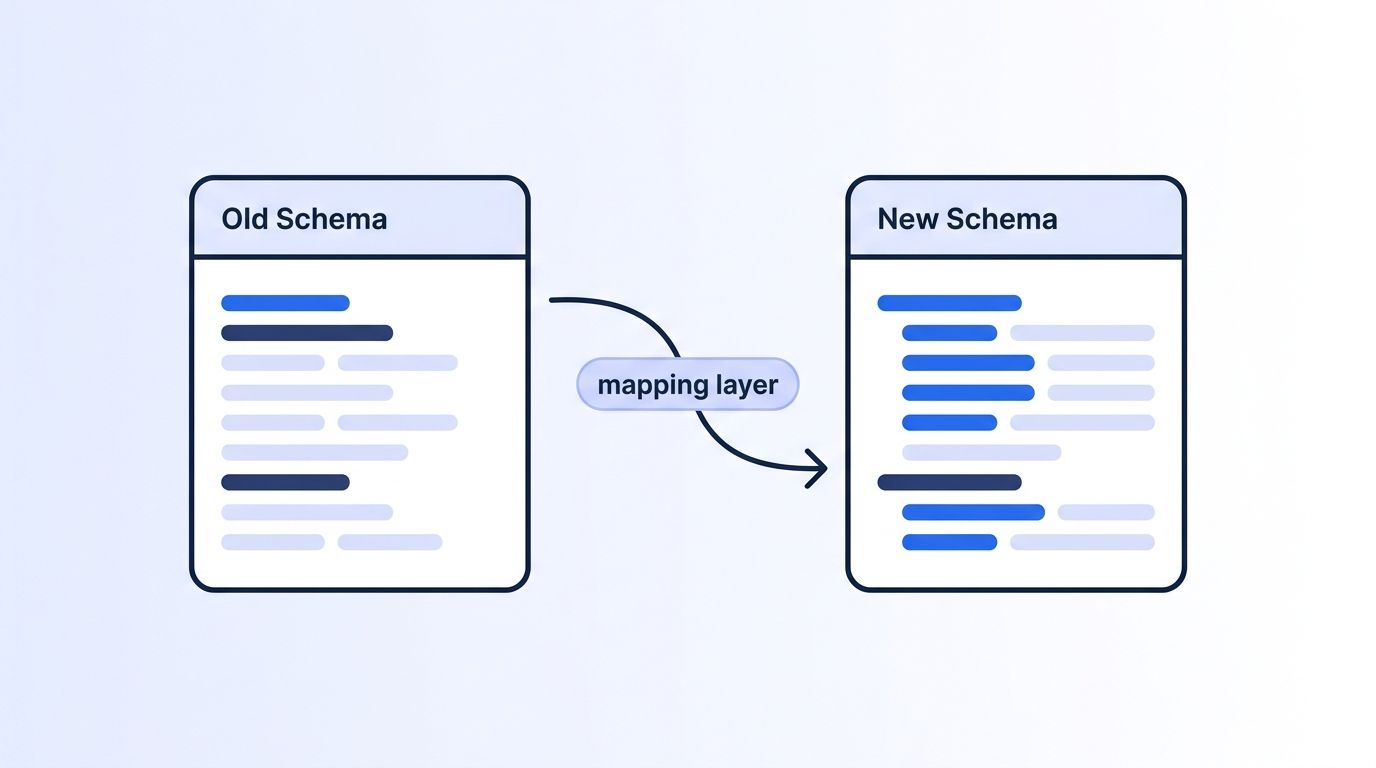
- Field names and rate-limit rules don't carry over 1:1 from Clearbit's schema. Budget time for a mapping layer, not a find-and-replace.
Why Did Clearbit's API Access Change After HubSpot Breeze?
Clearbit's API access changed because HubSpot absorbed it into a bundled product instead of keeping it as an independent, self-serve tool. TechCrunch reported the deal brought roughly 400,000 users and 1,500-plus business customers into HubSpot's platform (TechCrunch, 2023), and that user base is now routed through HubSpot's own subscription tiers rather than a standalone Clearbit account.
By 2024, Clearbit's tools had been rebranded and folded into HubSpot's "Breeze Intelligence" line. Free utilities went first - HubSpot's own changelog documents the Logo API's staged shutdown, first deprecated in March 2025 and fully retired that December (HubSpot Developer Changelog, 2025). If you're still calling logo.clearbit.com in production, it isn't just slow - it's gone.
Here's the pattern worth noticing: Clearbit isn't the first API-first data tool to disappear behind a platform acquisition, and it won't be the last. When a standalone API gets bought by a platform company, the API usually survives - but only as a feature gated behind that platform's own subscription, not as a product you can call directly. That's a structural risk any developer should weigh before building critical infrastructure on a single vendor's endpoint.
Citation capsule: HubSpot's acquisition of Clearbit didn't just change ownership - it changed the access model entirely. What used to be a standalone API with its own signup flow is now a feature inside HubSpot's Breeze Intelligence tier, and the free tools that used to sit outside any paywall have been shut down in stages through 2025.
Isn't it worth asking what happens the next time your data vendor gets acquired? The data enrichment solutions market alone is projected to grow from roughly $2.88 billion in 2025 to $3.24 billion in 2026, a compound annual growth rate near 12.4% (The Business Research Company, 2026) - fast-growing markets attract more acquisitions, not fewer.
How Did We Rank These 8 Clearbit Alternatives?
We ranked each tool on four criteria that matter to engineers, not just buyers: API quality (REST design, documentation, SDKs), whether data is fetched live or served from a cached database, the pricing model (credits versus seats versus contracts), and CRM coverage. Our own Clearbit Alternative comparison page covers one head-to-head matchup in depth, but a single page can't answer "what are all my options" - that's what this list is for.
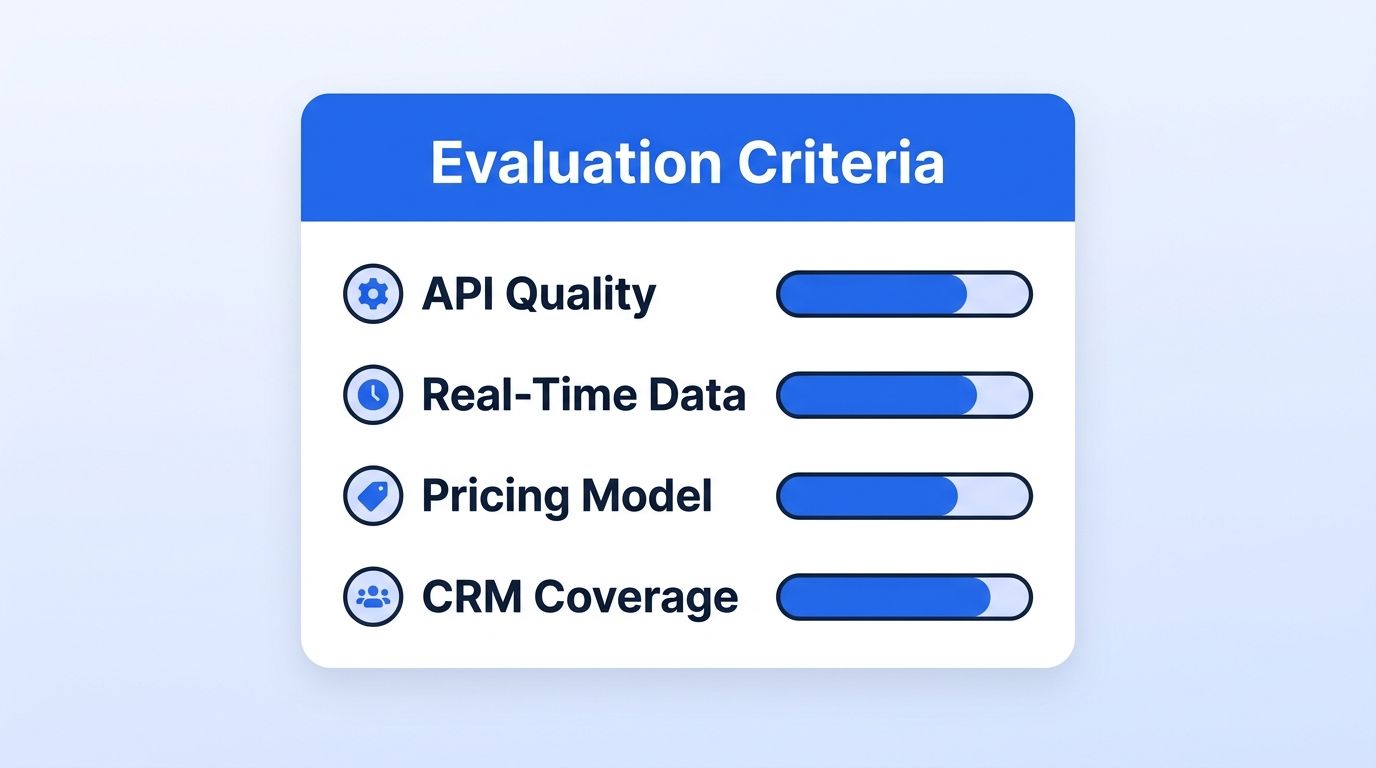
Here's how the eight stack up at a glance:
| Tool | API Model | Data Freshness | Pricing Model | Best For |
|---|---|---|---|---|
| Datamagnet | REST, live fetch | Real-time | Pay-as-you-go credits, free tier | Self-serve API replacement |
| Coresignal | REST + bulk datasets | Real-time + periodic snapshots | Credit tiers | Teams needing both API and bulk data |
| Clay | Waterfall orchestration | Depends on provider | Data Credits + Actions | Multi-source enrichment workflows |
| Apollo.io | REST, tiered access | Mostly cached | Weighted credits, per-seat plans | Sales engagement + light enrichment |
| People Data Labs | REST, bulk-oriented | Cached/batch-refreshed | Multiple credit buckets | Large batch enrichment jobs |
| Lusha | REST, contact-focused | Cached | Per-seat credits | Individual reps needing phone data |
| ZoomInfo | REST, contract-gated | Mixed (database + signals) | Annual contract only | Enterprises already committed |
| Cognism | REST, add-on product | Mostly cached, phone-verified tier | Annual contract only | Compliance-heavy, EU-focused orgs |
1. Why Is Datamagnet Best for Teams That Want Direct API Access Back?
Datamagnet fetches LinkedIn person and company data live at request time rather than serving it from a stored database, with a free tier of 10 credits and no card required to start (Datamagnet, 2026). Paid plans run on pay-as-you-go credits rather than annual contracts, which matters if you got used to Clearbit's old self-serve model and don't want to sit through a sales call to get an API key again.
The People Profile endpoint and Company Profile endpoint are documented separately with a shared authentication flow that covers base URLs and quotas up front - the kind of documentation you'd expect from a tool built for engineers, not just marketers filling out a form.
Not for: teams that specifically want a pre-built native app inside a CRM marketplace UI rather than calling an API or webhook directly - Datamagnet works with any CRM, or none, but it doesn't ship a Salesforce AppExchange listing.
2. Coresignal: Best for Teams That Need Both Live Lookups and Bulk Data
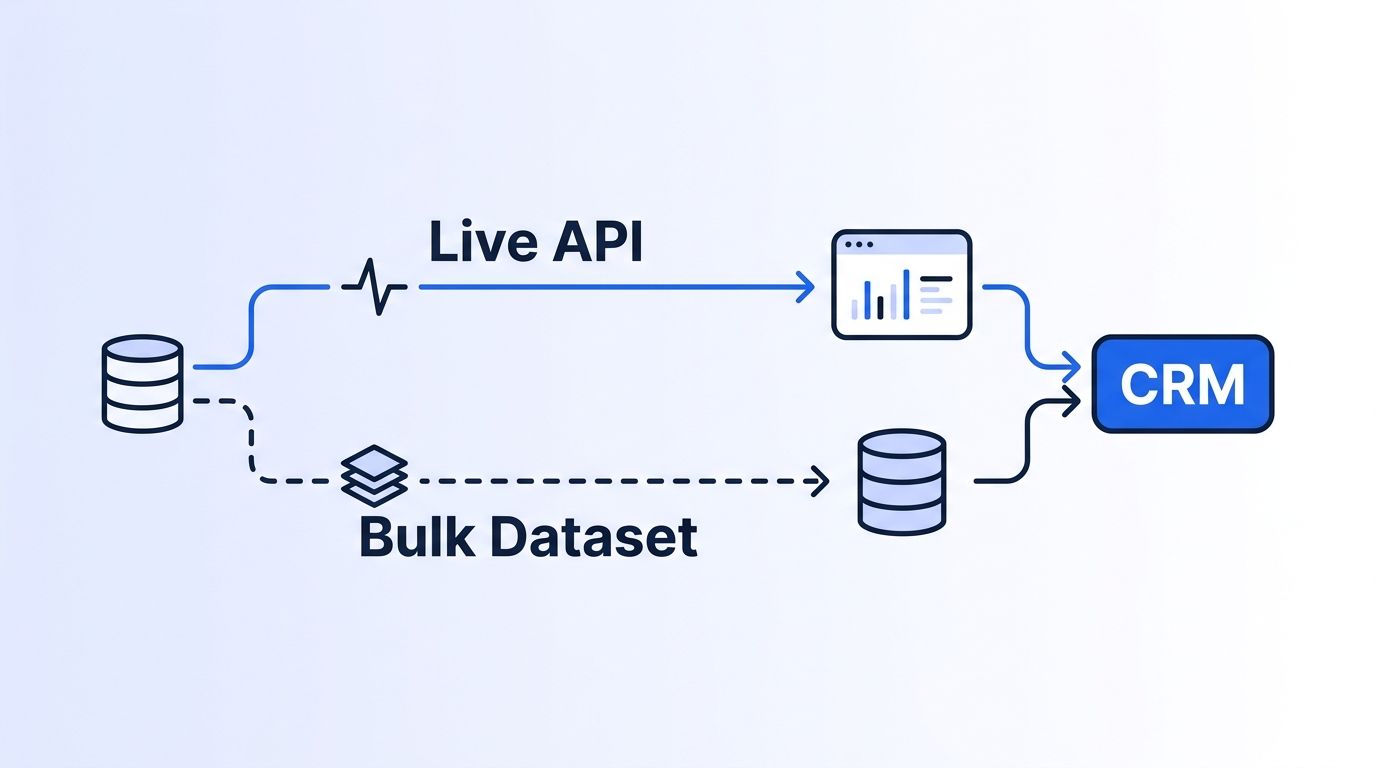
Coresignal is one of the few alternatives on this list that markets both models instead of picking one - APIs for real-time access and separate bulk datasets for offline analytics, according to its own documentation. That flexibility is useful if part of your workflow needs an instant lookup and another part needs to process a million records overnight.
Coresignal's published pricing starts with a Starter tier in the tens of dollars per month, scaling into higher tiers as per-record costs drop with volume - check Coresignal's current pricing and subscription page directly before budgeting, since credit costs vary by endpoint and tier. See our Coresignal comparison for a closer look at the real-time-versus-snapshot tradeoff.
Not for: teams that want one flat, simple pricing model. Choosing between the API and the dataset product adds a decision step Clearbit's single combined API never required.
3. Why Is Clay Best for Teams Already Running Multi-Source Waterfalls?
Clay doesn't hold its own dataset - it orchestrates a "waterfall" across multiple third-party providers, querying them in sequence until one returns a match. In March 2026, Clay restructured its pricing into two separate currencies, "Data Credits" and "Actions," across Free, Launch, Growth, and Enterprise tiers (per multiple industry pricing trackers; confirm exact figures on clay.com/pricing before budgeting, since we couldn't verify the numbers against Clay's own page directly).
The tradeoff to understand up front: failed waterfall attempts still consume Data Credits even when no provider returns a match, which means a stale or low-quality list can burn through budget faster than expected. Clay is CRM-agnostic by design, pushing enriched records into whichever CRM you connect rather than owning the relationship itself.
Not for: developers who want one direct API integration instead of a third-party orchestration layer sitting on top of other vendors' APIs. Worth noting: Datamagnet is itself one of the providers reachable through Clay-style waterfalls, so the two aren't strictly either/or.
4. Apollo.io: Best for Teams That Want a Sales Engagement Suite Bundled In
Apollo gates its highest tier of API access behind a Custom or Organization plan, and its own developer documentation confirms a fixed-window rate-limiting strategy tied to plan level (Apollo Developer Docs, Rate Limits, 2026). Credits are weighted rather than flat - a phone-number reveal typically costs more credits than an email match, according to Apollo's public materials.
Apollo bundles Salesforce and HubSpot integrations starting at its Basic tier, which makes sense given the product's core identity: it's a sales engagement platform first, with an enrichment API layered on top, not a pure data API built primarily for developers.
Not for: teams that only want a clean enrichment endpoint without paying for (or navigating around) a full sequencing and dialer product they'll never touch.
5. Why Is People Data Labs Best for Bulk, Non-Time-Sensitive Enrichment Jobs?
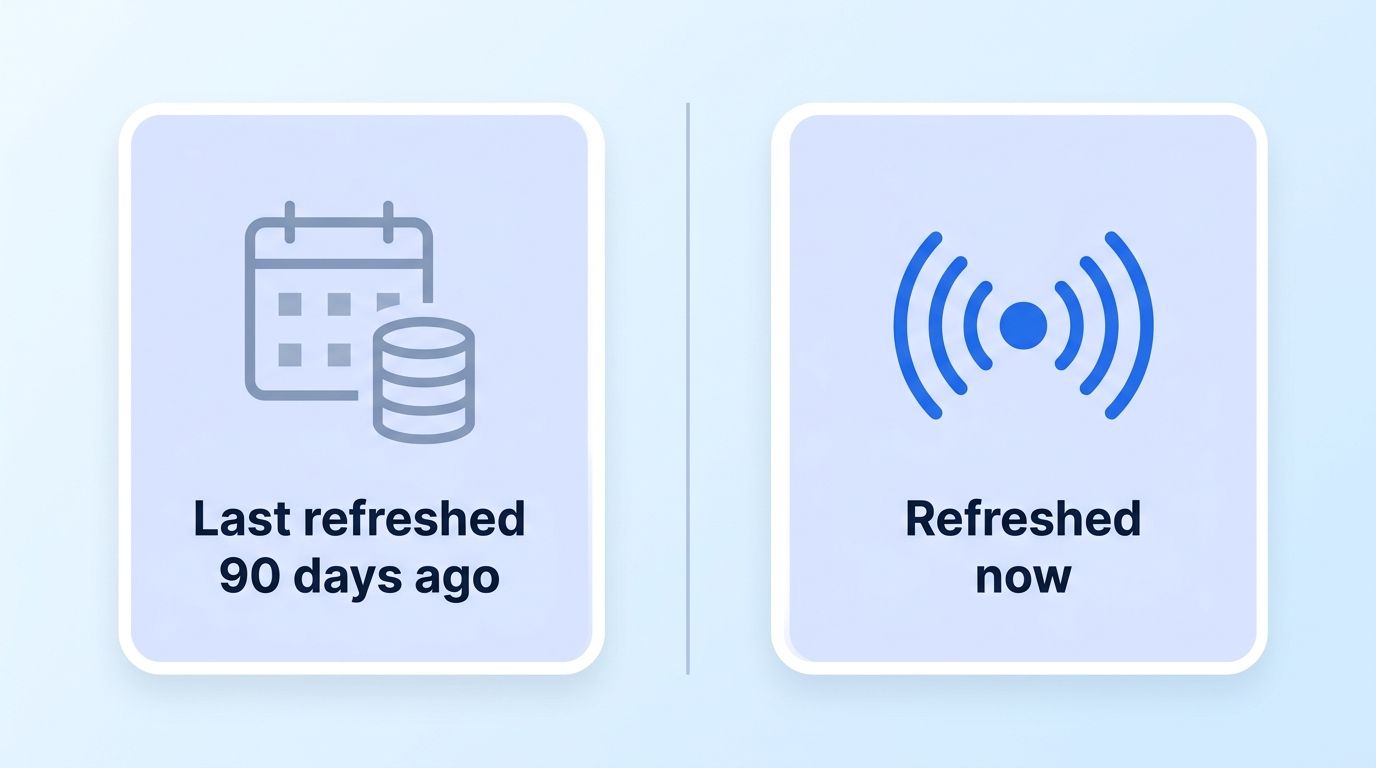
People Data Labs is explicitly built as a bulk dataset product with periodic refresh cycles, not a live-lookup API - a meaningful distinction if "real-time" matters to your use case. PDL splits usage across roughly eight separate, non-interchangeable credit types (person enrich, company enrich, search, and more), so a plan sized for one workload type may not stretch to cover another.
See our People Data Labs comparison for more on how a static, multi-billion-record database differs from a request-time lookup in practice.
Not for: any workflow where "today's job title" matters. A record last refreshed months ago won't catch a job change that happened last week, and PDL's own positioning doesn't claim otherwise.
6. Lusha: Best for Individual Reps Who Need Phone-Verified Contacts
Lusha prices per seat rather than per workload, with a permanently free tier capped at a small monthly credit allowance and phone-number reveals costing more credits than email matches, per Lusha's publicly listed tiers. That per-seat structure signals who the product is built for: individual reps clicking "reveal" one contact at a time, not engineering teams running programmatic pipelines.
Lusha reportedly integrates with a wide range of CRMs including Salesforce, HubSpot, and Pipedrive, though full two-way sync is commonly reserved for higher tiers - confirm current integration depth on Lusha's own site before committing to a migration path.
Not for: teams building an automated, high-volume enrichment pipeline. Lusha's UX and pricing both assume a human clicking a button, not a script making thousands of calls a day.
7. Why Is ZoomInfo Best for Enterprises Already Committed to an Annual Contract?
ZoomInfo publishes no self-serve pricing at all - every plan, including API access, is negotiated per contract. That's worth knowing before you request a demo: there's no free tier, no published dollar figure, and no way to start testing the API the same day you decide to evaluate it.
What ZoomInfo does offer is arguably the deepest native CRM integration on this list, with Salesforce and HubSpot connections built for large sales orgs already standardized on one of those platforms. See our ZoomInfo comparison for the self-serve-versus-contract tradeoff in more detail.
Not for: solo developers, small teams, or anyone who wants to sign up and start calling an endpoint today. There's no self-serve path at all, which rules ZoomInfo out immediately for exactly the developers this list is written for.
8. Cognism: Best for Compliance-Heavy, EU-Focused Sales Orgs
Cognism, like ZoomInfo, sells exclusively through negotiated annual contracts with no public pricing page. API access is sold as a separate add-on product line - branded Instant Enrich and Scheduled Enrich - billed on top of seat costs rather than included by default.
Cognism's differentiator is "Diamond Data," a phone-verified mobile-number tier aimed at markets with strict do-not-call and GDPR compliance requirements. That's a real strength for EU-heavy sales orgs, but it doesn't change the access model: there's still no trial-and-build path for a developer who just wants to test an endpoint before committing budget.
Not for: developers who want to explore an API before buying it. Every other tool on this list, aside from ZoomInfo, offers some form of self-serve or free-tier access - Cognism doesn't.
How Do You Migrate Off Clearbit's Enrichment API?
Migrating off Clearbit means rebuilding two things that rarely get enough attention up front: your field mapping and your rate-limit handling. Neither carries over automatically, and treating the switch as a simple find-and-replace on your API client is how migrations quietly break in production weeks later.
<!-- [PERSONAL EXPERIENCE] -->Watching teams migrate off a sunset API is a familiar pattern: the initial swap looks done because the response comes back as JSON with roughly the right shape, and nobody notices the mismatched fields until a downstream report shows every contact's job title as blank. Test against real records before you cut over, not just a sample response from the docs.
Field Mapping: What Doesn't Carry Over
Clearbit's combined enrichment response nested person and company data together in a single call. Most alternatives, including Datamagnet, split these into separate endpoints - a People Profile call and a Company Profile call - which changes how you'll structure request logic, not just field names.
Expect differences in taxonomy too: headcount fields, industry categories, and technographic data rarely use identical key names or classification schemes across vendors. Build a normalization layer that maps each provider's schema to your internal data model, rather than assuming any alternative is a byte-for-byte drop-in replacement for Clearbit's response format.
Rate Limits: What Changes When You Leave a Bundled Quota
Clearbit's limits used to sit inside your HubSpot subscription tier, invisible until you hit them. Every alternative on this list prices and throttles independently - by credits per month, requests per minute, or both - so the same monthly volume can cost more or less depending on which credit "bucket" a request falls into.
Citation capsule: A migration isn't complete until you've replaced the invisible parts of the old integration, not just the visible response fields. Rate limits, error codes, and retry behavior all differ by vendor, and code that silently retried on Clearbit's old 429 response may not handle a new provider's throttling the same way.
Build in programmatic monitoring of your remaining quota using an endpoint like Datamagnet's Credit Balance check, and handle throttling explicitly using the vendor's documented error responses rather than assuming a generic retry-after header works the same way everywhere.
Get Your API Access Back
Clearbit's slow absorption into HubSpot Breeze isn't unique - it's what happens whenever a platform company buys a standalone, API-first tool. The eight alternatives above split cleanly into two groups: five offer some form of self-serve or free-tier access you can start using today, and two (ZoomInfo, Cognism) require a sales conversation before you write a single line of code.
<!-- [ORIGINAL DATA] -->Across the eight tools compared here, only two - Datamagnet and Coresignal - advertise genuine request-time data fetching rather than a periodically refreshed database, which is worth weighing heavily if your use case depends on catching changes (a new job, a headcount shift) within days rather than months.
If direct, self-serve API access without a sales call is what you're after, check current pricing and start with 10 free credits - no card required to see the response format for yourself.
Frequently Asked Questions
What happened to Clearbit after the HubSpot acquisition?
HubSpot completed its acquisition of Clearbit in December 2023 and folded the product into its "Breeze Intelligence" line by 2024. Clearbit's free tools were sunset in stages, with the free Logo API deprecated in March 2025 and fully shut down in December 2025 (HubSpot Developer Changelog, 2025).
Is Clearbit's API still available as a standalone product?
No. Clearbit's enrichment capabilities are now accessed through a HubSpot subscription rather than a separate signup flow. Developers who want a standalone, API-first replacement need to evaluate one of the alternatives covered here, such as Datamagnet or Coresignal.
Which Clearbit alternative offers real-time data instead of a cached database?
Of the eight alternatives compared here, Datamagnet and Coresignal both advertise live, request-time data fetching. People Data Labs, Apollo.io, Lusha, ZoomInfo, and Cognism rely primarily on periodically refreshed databases, meaning a record could be weeks or months out of date depending on the last refresh cycle.
How much does it cost to replace Clearbit with a developer-first API?
It depends heavily on the vendor and pricing model. Datamagnet, Coresignal, Apollo.io, and Clay publish self-serve, credit-based pricing you can review without a sales call. ZoomInfo and Cognism publish no pricing at all and require a negotiated annual contract, which industry pricing trackers estimate can run into five or six figures a year depending on scale.
Do I need to rebuild my CRM integration when I switch off Clearbit?
Likely yes, at least partially. Field names, response structure, and rate-limit behavior differ across vendors, so a direct find-and-replace on your existing Clearbit integration code will probably miss mismatched fields. Build a mapping layer between the new vendor's schema and your CRM's fields, and test against real records before cutting over in production.
Sources
- HubSpot, HubSpot Completes Acquisition of B2B Intelligence Leader Clearbit, retrieved 2026-09-05, https://www.hubspot.com/company-news/hubspot-completes-acquisition-of-b2b-intelligence-leader-clearbit
- TechCrunch, HubSpot picks up B2B data provider Clearbit to enhance its AI platform, retrieved 2026-09-05, https://techcrunch.com/2023/11/01/hubspot-picks-up-b2b-data-provider-clearbit-to-enhance-its-ai-platform/
- HubSpot Developer Changelog, Upcoming Sunset of Clearbit's Free Logo API, retrieved 2026-09-05, https://developers.hubspot.com/changelog/upcoming-sunset-of-clearbits-free-logo-api
- Postman, 2025 State of the API Report, retrieved 2026-09-05, https://www.postman.com/state-of-api/2025/
- The Business Research Company, Data Enrichment Solutions Global Market Report, retrieved 2026-09-05, https://www.thebusinessresearchcompany.com/report/data-enrichment-solutions-global-market-report
- Apollo Developer Docs, Rate Limits, retrieved 2026-09-05, https://docs.apollo.io/reference/rate-limits
- Coresignal, Pricing and Subscriptions, retrieved 2026-09-05, https://docs.coresignal.com/introduction/pricing-and-subscriptions
- Datamagnet, Clearbit Alternative comparison page, retrieved 2026-09-05, https://www.datamagnet.co/vs-clearbit/
