
Disclosure: This article is published by Datamagnet. Vendor claims below are self-reported by each company unless otherwise noted, and pricing was checked 2026-09-19.
7 Best Clay Alternatives for GTM Engineers in 2026
Clay closed a $100 million Series C at a $3.1 billion valuation in August 2025 (Crunchbase News, 2025), and its ARR reportedly tripled from roughly $31 million to $100 million over the same year (Sacra, 2025). It's the default answer whenever someone asks how to build a waterfall enrichment workflow - but "default" doesn't mean "only," and it doesn't mean "right for you."
If you're a GTM engineer who'd rather chain API calls than drag columns around a spreadsheet, or your team just needs one clean data source instead of Clay's 75-provider waterfall, this guide covers seven real alternatives - what each does well, what it doesn't, and what it actually costs as of this month.
TL;DR
- Clay orchestrates a waterfall across 75+ third-party providers from inside a spreadsheet-style table (Clay, 2026), and its Launch plan starts at $167/month billed annually for 3,000 Data Credits and 15,000 Actions (Clay pricing, retrieved 2026-09-19).
- Three of the seven alternatives here - Datamagnet, Coresignal, and n8n paired with direct APIs - skip the spreadsheet entirely and let you call data live from your own code or workflow tool.
- Datamagnet fetches LinkedIn person and company data live at request time for 1 credit per lookup, but it's a poor fit if your main goal is finding emails or phone numbers - it doesn't return either.
- In 2025, 82% of organizations reported adopting an API-first approach to development, with 25% calling themselves fully API-first - a 12-point jump from 2024 (Postman, 2025 State of the API Report, retrieved 2026-09-19).
- Only ZoomInfo on this list sells exclusively through negotiated annual contracts, with reported average deal sizes north of $30,000/year (Vendr, 2026).
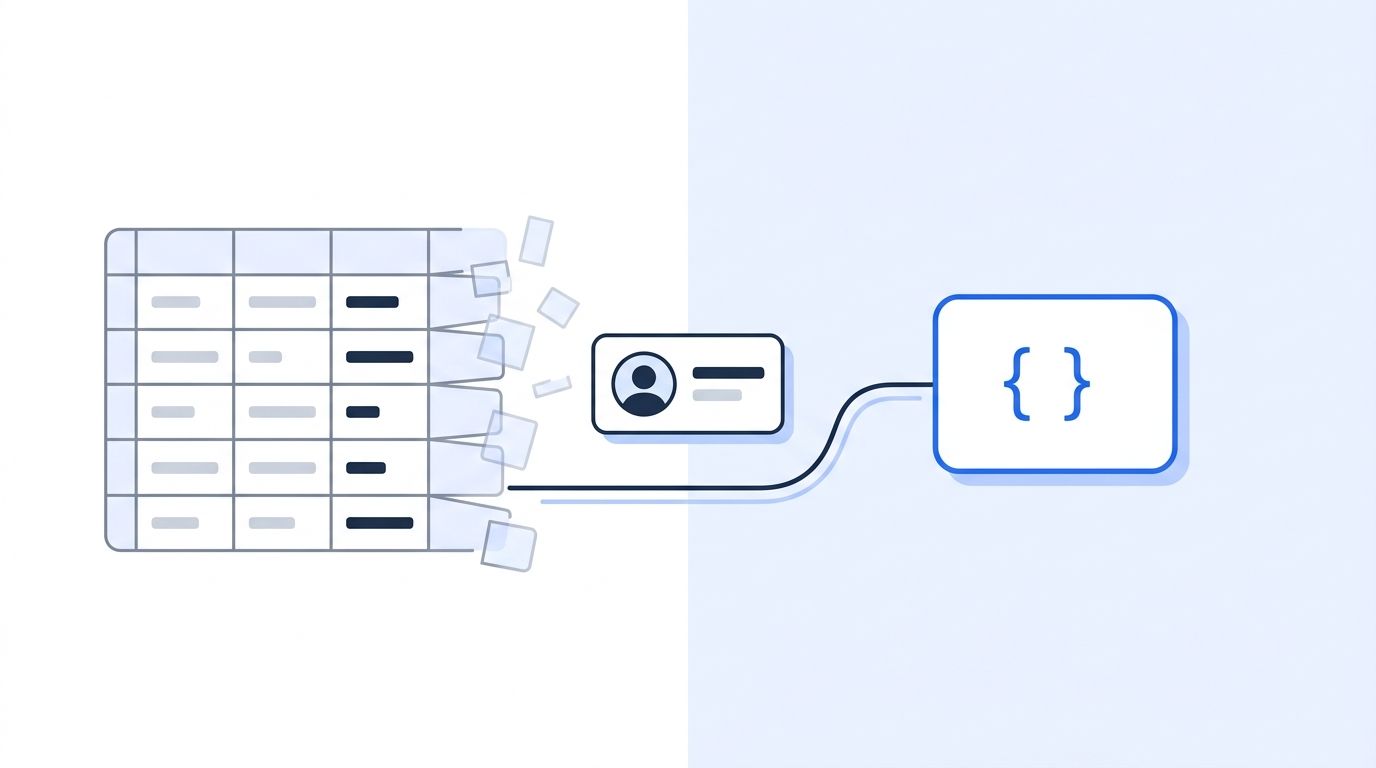
What Is Clay and Why Are GTM Engineers Looking Elsewhere?
Clay is a spreadsheet-style workspace that runs "waterfall enrichment" - querying dozens of data providers in sequence for each row until one returns a match - so you don't have to stitch those providers together yourself. It's genuinely useful for that specific job, which is exactly why it raised at a $3.1 billion valuation just one year after a much smaller round (Crunchbase News, 2025).
The catch is the operating model. Every workflow lives inside a table UI, priced in two separate currencies - Data Credits and Actions - across Free, Launch, Growth, and Enterprise tiers (Clay pricing, retrieved 2026-09-19). That's a fine trade for a sales-ops team building lead lists by hand. It's a worse fit for a GTM engineer who already has a codebase, a workflow tool, or a preference for calling an API directly instead of configuring table columns.
<!-- [UNIQUE INSIGHT] -->Here's the pattern worth noticing: "GTM engineer" has emerged as a distinct job title precisely because GTM work started looking like software work - APIs, webhooks, version-controlled logic - rather than spreadsheet formulas. A tool built around a table UI will always feel slightly foreign to someone hired specifically because they'd rather write ten lines of code than configure ten spreadsheet columns.
Citation capsule: Clay's waterfall model queries up to 75 providers per field and stops at the first successful match, billing Data Credits only for attempts that actually return data - not for the failed lookups along the way (Clay FAQ, 2026). The real cost driver isn't failed attempts; it's how many successful provider calls a given row needs before it resolves.
What Are the Best Clay Competitors for GTM Teams at a Glance?
The best Clay competitors for GTM teams split into three groups: standalone data APIs you call directly, workflow tools you use to build your own waterfall, and all-in-one sales platforms that bundle enrichment with outreach. Picking the right group matters more than picking a specific vendor within it.
| Tool | Model | Data Freshness | Pricing (checked 2026-09-19) | Best For |
|---|---|---|---|---|
| Datamagnet | REST, live fetch | Real-time | Pay-as-you-go credits, 10 free, 1 credit/profile | Live LinkedIn data via API, no spreadsheet |
| Apollo.io | REST + sales suite | Mostly cached | $49-$119/user/mo annual, weighted credits | Enrichment bundled with outreach |
| n8n + direct APIs | Workflow automation | Depends on source API | Free self-hosted; Cloud from €20/mo | Building your own waterfall in code |
| FullEnrich | Waterfall orchestration | Depends on provider | $55/mo for 1,000 credits (50 free to start) | Lightweight email/phone waterfall |
| Coresignal | REST + bulk datasets | Real-time + periodic snapshots | Mini tier from $49/mo, 2,500 credits | Live API and bulk data in one vendor |
| People Data Labs | REST, bulk-oriented | Cached/batch-refreshed | $98/mo self-serve, from 350 records | Large batch enrichment jobs |
| ZoomInfo | REST, contract-gated | Mixed (database + signals) | No public pricing, annual contract | Enterprises wanting native CRM depth |
1. Why Is Datamagnet Best for GTM Engineers Who Want Live LinkedIn Data Without a Spreadsheet?
Datamagnet fetches a LinkedIn person or company profile live at request time for 1 credit, rather than serving it from a stored database - so a GTM engineer calling the API gets today's job title and headcount, not a snapshot from whenever a record was last refreshed (Datamagnet LinkedIn People API, 2026). There's no table UI to configure: you send a request, you get structured JSON back.
Beyond basic profile lookups, Datamagnet adds ICP People Search and ICP Company Search for finding accounts and contacts by filter instead of a starting list, plus a Sales Navigator API that turns a saved search URL into paginated JSON. Layer in post engagement data and job-change signals, and you get intent context Clay's waterfall doesn't natively track on its own.
Not for: teams whose primary use case is finding emails or phone numbers. Datamagnet doesn't return either - it's built for live LinkedIn profile, company, engagement, and signal data, not contact-detail waterfalls. If email and phone discovery is the job, pair it with a dedicated contact-finding tool or look at #4 below.
2. Apollo.io: Best for Teams That Want Enrichment Bundled With Outreach
Apollo prices per seat rather than per workload: Free is $0, Basic runs $49/user/month billed annually, Professional runs $79/user/month annually, and Organization/Custom runs $119/user/month annually with a 3-seat minimum. Apollo's own pricing page doesn't render specific per-seat dollar figures in its page content, so these numbers come from third-party trackers instead (Warmly.ai, Apollo Pricing 2026, retrieved 2026-09-22; corroborated by Vendr, retrieved 2026-09-22). Credits are weighted - an email export costs less than a mobile-number reveal - and Apollo's own help documentation caps paying-plan usage at whichever is lower: total spend divided by $0.025, or 1 million credits a year.
That model makes sense once you know what Apollo actually is: a sales engagement platform - sequences, a dialer, CRM sync - with an enrichment API layered on top, not a pure data tool built primarily for developers. If your team already lives in Apollo for outreach, the bundled enrichment can replace a chunk of what Clay would otherwise do.
Not for: teams that only want a clean enrichment endpoint without paying for a full sequencing and dialer suite they'll never touch. See our Apollo comparison for a closer look at the seat-based-suite-versus-API tradeoff.
3. Why Is n8n the Best Choice for GTM Engineers Who Want to Build Their Own Waterfall?
n8n lets a GTM engineer replicate Clay's core idea - query multiple providers in sequence, keep the first good match - as a visual workflow that calls whatever APIs you choose, instead of a fixed table UI locked to Clay's provider list. Community Edition is free and self-hosted with unlimited executions; Cloud plans start at €20/month annually for 2,500 executions, scaling to €50/month for 10,000 executions and up (n8n pricing, retrieved 2026-09-19).
This is the most literal answer to "API-first option for teams that don't want to work in a spreadsheet." n8n's own mid-market customer base reportedly grew more than 10x year-over-year, with around 80% of new customers migrating from Zapier (YipitData, retrieved 2026-09-19) - a signal that workflow-native tooling is pulling users away from more rigid, UI-first platforms, the same pull Clay itself once benefited from versus plain spreadsheets.
<!-- [PERSONAL EXPERIENCE] -->Watching a GTM engineer set up their first n8n waterfall is a familiar pattern: the first version takes longer to build than clicking through Clay's provider list would have, and it's tempting to call that a loss. But the second and third workflows go faster, because the logic - call provider A, check the response, fall back to provider B - is reusable code, not a one-off table configuration you rebuild for every new list.
Not for: non-technical operators who want a working waterfall in minutes with zero setup. n8n rewards teams comfortable writing a bit of logic; Clay optimizes specifically for skipping that step. Pair n8n with Datamagnet's n8n integration to call live LinkedIn data directly from an HTTP Request node.
4. FullEnrich: Best for a Lightweight Waterfall Focused Specifically on Contact Details
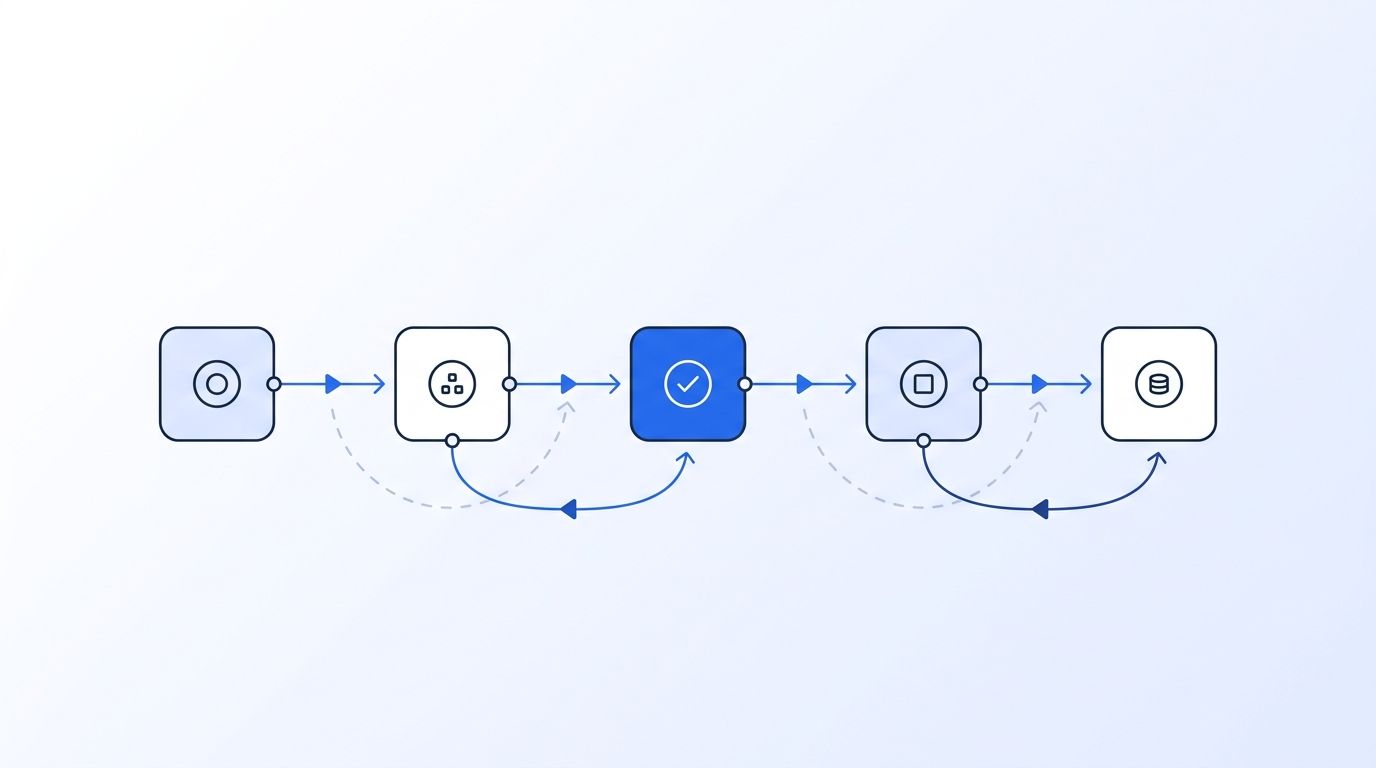
FullEnrich is a narrower, cheaper answer to the same waterfall idea, purpose-built for finding verified emails and mobile numbers rather than Clay's broader enrichment scope. A free trial gives you 50 credits with no card required, and the paid Pro plan runs $55/month for 1,000 credits at $0.055 per credit - work emails cost 1 credit each, mobile phones cost 10 credits each (FullEnrich pricing, retrieved 2026-09-19). Like Clay, failed lookups cost nothing - you only pay for a provider that actually returns a result.
Isn't it worth asking whether you need Clay's full 75-provider surface area, or just a fast, cheap way to fill in emails and phone numbers on an existing list? FullEnrich draws on 25+ data sources per lookup and states its email and phone find rate averages around 80%, with results varying by industry and geography (FullEnrich pricing, retrieved 2026-09-19) - a claim worth spot-checking against your own list before committing budget.
Not for: teams that need Clay's broader feature set - AI-assisted research columns, CRM sync, multi-step campaign building - on top of contact-finding. FullEnrich does one job and keeps the price down by not trying to do the rest.
5. Coresignal: Best for Teams That Need Both Live Lookups and Bulk Datasets
Coresignal offers both a real-time API and separately licensed bulk datasets, which is useful if part of your workflow needs an instant lookup and another part needs to process millions of records offline. Its entry-level Mini tier starts at $49/month for 2,500 credits, scaling up through Starter, Pro, Growth, Premium, Scale, and Elite tiers as the per-record cost drops with volume (Coresignal pricing, retrieved 2026-09-19).
The real-time-versus-snapshot split is worth understanding before you buy either product. See our Coresignal comparison for more on when a live API beats a periodically refreshed dataset, and vice versa.
Not for: teams that want one flat, simple pricing model. Choosing between the API product and the bulk-dataset product adds a decision Clay's single unified interface doesn't force on you.
6. Why Is People Data Labs Best for Bulk, Non-Time-Sensitive Enrichment?
People Data Labs is explicitly a batch-refreshed dataset product, not a live-lookup API - a meaningful distinction if "current as of today" matters to your use case. Self-serve pricing starts at $98/month (or $940/year) for 350 person records a month, with per-credit costs stepping down as volume increases, and a free tier capped at 100 obfuscated test records (People Data Labs pricing support article, retrieved 2026-09-19).
Citation capsule: People Data Labs prices its self-serve tier per credit, starting at $98 a month for 350 records, and splits usage across separate credit buckets for person enrichment, company enrichment, and search - so a plan sized for one workload type may not stretch to cover another without an upgrade.
Not for: any workflow where this week's job title matters. A record last refreshed months ago won't catch a recent job change, and PDL's own bulk-dataset positioning doesn't claim otherwise. Our People Data Labs comparison covers the static-database-versus-live-lookup tradeoff in more detail.
7. ZoomInfo: Best for Enterprises Already Committed to an Annual Contract
ZoomInfo publishes no self-serve pricing at all - every plan, enrichment included, runs through a negotiated annual contract. Vendr's marketplace data puts the average deal at roughly $33,500 across more than 1,000 tracked purchases, with entry-level Professional contracts reportedly starting near $14,995 a year (Vendr data via Landbase, 2026). That's a real number, but it's a floor, not a quote you can act on without a sales call.
What ZoomInfo does offer is arguably the deepest native CRM integration on this list, built for large sales orgs already standardized on Salesforce or HubSpot. See our ZoomInfo comparison for the self-serve-versus-contract tradeoff in more detail.
Not for: solo GTM engineers, small teams, or anyone who wants to start calling an endpoint today. There's no self-serve path at all, which rules ZoomInfo out immediately for most of the audience this list is written for.
Can You Use Datamagnet Inside Clay Instead of Replacing It?
Yes - worth noting before you assume this is strictly either/or. Datamagnet is itself one of the providers reachable through a Clay-style waterfall via Datamagnet's Clay integration, which fetches live LinkedIn data as an HTTP enrichment column inside an existing Clay table. Some teams keep Clay for orchestration and swap in a faster, live-fetch provider for the fields that matter most, rather than rebuilding the whole workflow from scratch.
<!-- [ORIGINAL DATA] -->Across the seven alternatives compared here, only three - Datamagnet, Coresignal, and an n8n-plus-direct-API setup - can skip a stored database and fetch data live at the moment of the request. The other four lean on periodically refreshed records for at least part of their catalog, which matters most if your workflow depends on catching a job change or headcount shift within days rather than months.
Get Live LinkedIn Data Without the Spreadsheet
Clay earned its $3.1 billion valuation by making waterfall enrichment approachable for teams that don't want to write code. But approachable and API-first pull in different directions, and a GTM engineer who already thinks in requests and responses often gets more value from a tool built around that mental model from day one - whether that's a direct API like Datamagnet, a workflow tool like n8n, or a leaner point solution like FullEnrich.
If live LinkedIn data via a clean API is what you're after, start with 10 free credits and no card required - no spreadsheet required to see the response format for yourself. Check current pricing once you're ready to scale past the free tier.
Frequently Asked Questions
What is the best free alternative to Clay?
n8n's Community Edition is free and self-hosted with unlimited workflow executions, though you still pay for whichever data APIs you call from it (n8n pricing, retrieved 2026-09-19). Datamagnet also offers 10 free credits with no card required, enough to test live LinkedIn lookups before committing to a paid plan.
Does Datamagnet replace Clay entirely?
Not for every use case. Datamagnet replaces the parts of Clay's waterfall built around live LinkedIn person and company data, ICP search, and engagement or job-change signals - but it doesn't return emails or phone numbers, so a workflow built around contact-detail waterfalls will still need a dedicated tool like FullEnrich or Apollo alongside it.
Which Clay alternative is cheapest for a small team?
FullEnrich's free trial gives you 50 credits with no card required, and its paid Pro plan runs $55/month for 1,000 credits (FullEnrich pricing, retrieved 2026-09-19), while Datamagnet's pay-as-you-go credits mean you only pay for what you use with no seat minimum. Both undercut Clay's Launch tier, which starts at $167/month billed annually for 3,000 Data Credits and 15,000 Actions (Clay pricing, retrieved 2026-09-19).
Is ZoomInfo a good Clay alternative for a startup?
Usually not. ZoomInfo sells exclusively through negotiated annual contracts with no public self-serve pricing, and reported average deal sizes run around $33,500 a year (Vendr data via Landbase, 2026) - a hard floor for a team used to Clay's self-serve, pay-as-you-go model.
Can I use more than one Clay alternative at once?
Yes, and many teams do. A common pattern pairs a live-fetch profile API like Datamagnet or Coresignal for account and contact data with a contact-detail waterfall like FullEnrich, orchestrated through a workflow tool like n8n instead of a single all-in-one platform.
Sources
- Crunchbase News, AI-Powered GTM Startup Clay's Valuation Doubles With CapitalG-Led Round, retrieved 2026-09-19, https://news.crunchbase.com/venture/ai-powered-gtm-startup-clay-valuation-doubles-capitalg/
- Sacra, Clay company profile and ARR estimates, retrieved 2026-09-19, https://sacra.com/c/clay/
- Clay, Pricing, retrieved 2026-09-19, https://www.clay.com/pricing
- Clay, Waterfall Enrichment, retrieved 2026-09-19, https://www.clay.com/waterfall-enrichment
- Clay, FAQ - Do unsuccessful searches consume Data Credits?, retrieved 2026-09-19, https://www.clay.com/faq/do-unsuccessful-searches-consume-data-credits-what-about-actions
- Postman, 2025 State of the API Report, retrieved 2026-09-19, https://www.postman.com/state-of-api/2025/
- n8n, Pricing, retrieved 2026-09-19, https://n8n.io/pricing/
- YipitData, n8n vs. Zapier: Workflow Automation, retrieved 2026-09-19, https://www.yipitdata.com/resources/blog/n8n-vs-zapier-workflow-automation
- FullEnrich, Pricing, retrieved 2026-09-19, https://fullenrich.com/pricing
- Warmly.ai, Apollo Pricing 2026: Plans From $59-$149/mo (Full Breakdown), retrieved 2026-09-22, https://www.warmly.ai/p/blog/apollo-pricing
- Vendr, Apollo Software Pricing & Plans 2026, retrieved 2026-09-22, https://www.vendr.com/marketplace/apollo-io
- Coresignal, Pricing, retrieved 2026-09-19, https://coresignal.com/pricing/
- People Data Labs, Pricing & Credits, retrieved 2026-09-19, https://support.peopledatalabs.com/hc/en-us/articles/25794271805211-Pricing-credits
- Landbase, ZoomInfo Pricing (citing Vendr marketplace data), retrieved 2026-09-19, https://www.landbase.com/blog/zoominfo-pricing
- Datamagnet, LinkedIn People API, retrieved 2026-09-19, https://www.datamagnet.co/people-api/
- Datamagnet, Pricing, retrieved 2026-09-19, https://www.datamagnet.co/pricing/
