
Disclosure: This article is published by Datamagnet. Vendor claims are self-reported unless otherwise noted.
Buyer Intent Signals vs. Firmographic Data: What Actually Predicts a Deal
Neither one predicts a deal on its own — but if you had to pick, buyer intent signals get you closer. In 2025, 6sense's Buyer Experience Report found that 94% of buying groups had already ranked their preferred vendor before a rep ever entered the conversation. Firmographic data tells you who fits your ICP. Intent signals tell you who's actually in the market right now. This piece breaks down where each one wins, where each one falls apart, and why the best pipeline teams stopped choosing between them.
TL;DR
- Firmographic data (industry, headcount, revenue) tells you if an account could be a customer. It has no idea if they're buying today.
- Buyer intent signals — job changes, engagement, content research — predict when. 6sense found 94% of buying groups pick a vendor before sales gets involved (6sense, 2025).
- Smartsheet saw an 84% jump in qualified leads and a 59% higher win rate by combining both, not choosing one (ZoomInfo, 2025).
- Choose firmographic-first if you're building your first ICP filter on a tight budget. Choose intent-first (job changes, champion tracking) once your ICP is defined and you need timing.
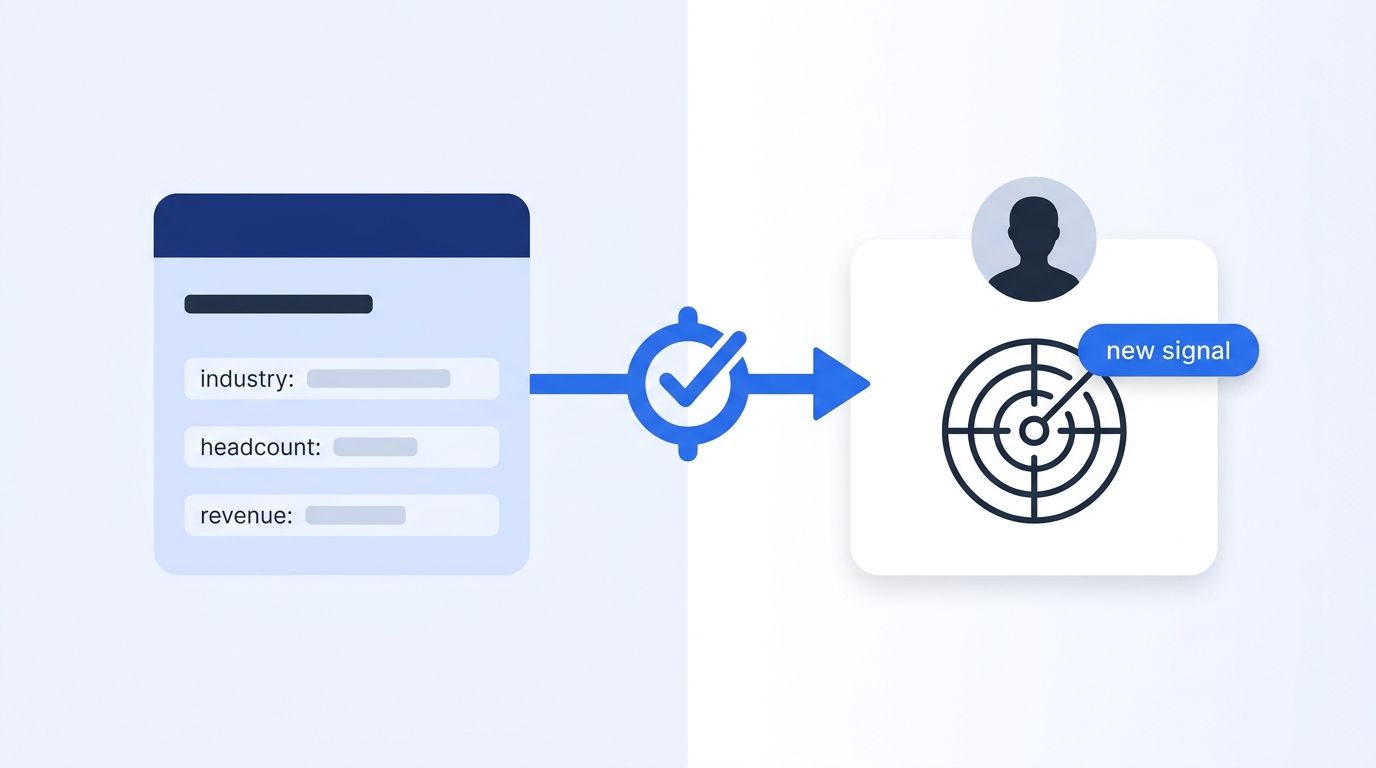
What's the Real Difference Between Intent Signals and Firmographic Data?
Firmographic data describes a company as it exists on paper — industry, employee count, revenue band, tech stack, headquarters location. Intent signals describe what that company is doing right now — researching a category, engaging with content, losing a champion to a job change. One is a snapshot. The other is a heartbeat.
You need firmographic data to build your ideal customer profile (ICP) in the first place. Without it, you can't tell a 50-person logistics startup from a 5,000-person enterprise buyer, and your reps waste calls on accounts that were never going to fit. Datamagnet's real-time firmographic data pulls headcount, industry, and hiring trends straight from a company's live LinkedIn presence instead of a stale quarterly snapshot.
Intent signals answer a different question: of the accounts that fit, which ones are actually moving? A director who just changed jobs, a company suddenly hiring for a role your product supports, a prospect engaging with a competitor's LinkedIn post — these are timing signals, not fit signals. Confuse the two and you'll either chase accounts that fit but aren't buying, or chase activity from accounts that were never a fit to begin with.
For a deeper technical dive, see our real-time job-change intent APIs guide.
Which Data Type Predicts Deal Timing Better?
Buyer intent signals win on timing, and it isn't close. In 2025, 6sense's report — based on more than 4,000 B2B buyers — found that 95% of eventual deal winners were already on the buyer's shortlist on day one, and that pre-contact favorite went on to win 80% of the time. Firmographic data has no mechanism to catch that; it can't tell you a buying group even exists yet.
Firmographic data is static by design. An account's headcount or industry code doesn't change week to week, so it can't flag the moment a prospect starts researching. In 2026, Gartner's ongoing B2B Buying Journey research found buyers spend just 17% of their total purchase time actually meeting with potential suppliers — the other 83% happens in independent research, internal buying-group discussions, and offline conversations a firmographic model never sees.
That gap is exactly what signal-based selling exists to close. Datamagnet's LinkedIn signal API tracks job changes, new posts, and engagement events in real time, so a rep can act while a prospect is still in-market instead of finding out after the deal already closed with someone faster.
Verdict: intent signals win on timing — firmographic data can't see a buying window open, only who's technically eligible to walk through it.
Which One Correlates More Strongly With Win Rate?
Intent signals correlate more strongly with win rate individually, but the real lift comes from stacking both. Forrester's Q1 2023 Global B2B Intent Data Survey found more than 85% of companies using intent data reported measurable business benefits — higher outbound response rates and more successful prospecting — and over 70% now run multiple intent providers side by side.
Bombora's case study on Box is a cleaner isolated read: layering intent and identity-resolution data onto its targeting produced a 75% conversion lift on quote-request forms in an A/B test against Box's standard homepage experience (Bombora, 2025). Firmographic-only targeting has no equivalent published lift number, because filtering by industry and headcount alone doesn't change when someone converts.
Here's the catch: intent data performs best layered on top of firmographic fit, not instead of it. Smartsheet's own team, in a ZoomInfo customer case study, described combining firmographic, contact, and behavioral data together — and saw an 84% increase in MQLs sent to sales, a 26% increase in opportunity rate, and a 59% increase in win rate versus firmographic and contact data alone.
The pattern across every verified case study here is the same: intent data doesn't replace the win-rate lift firmographic fit provides — it multiplies it. Teams that treat the two as competing inputs instead of layered ones are leaving both stats on the table.
Verdict: intent signals win, but only when firmographic fit is already filtering the account list underneath them.

Which Is Cheaper and Easier to Operationalize?
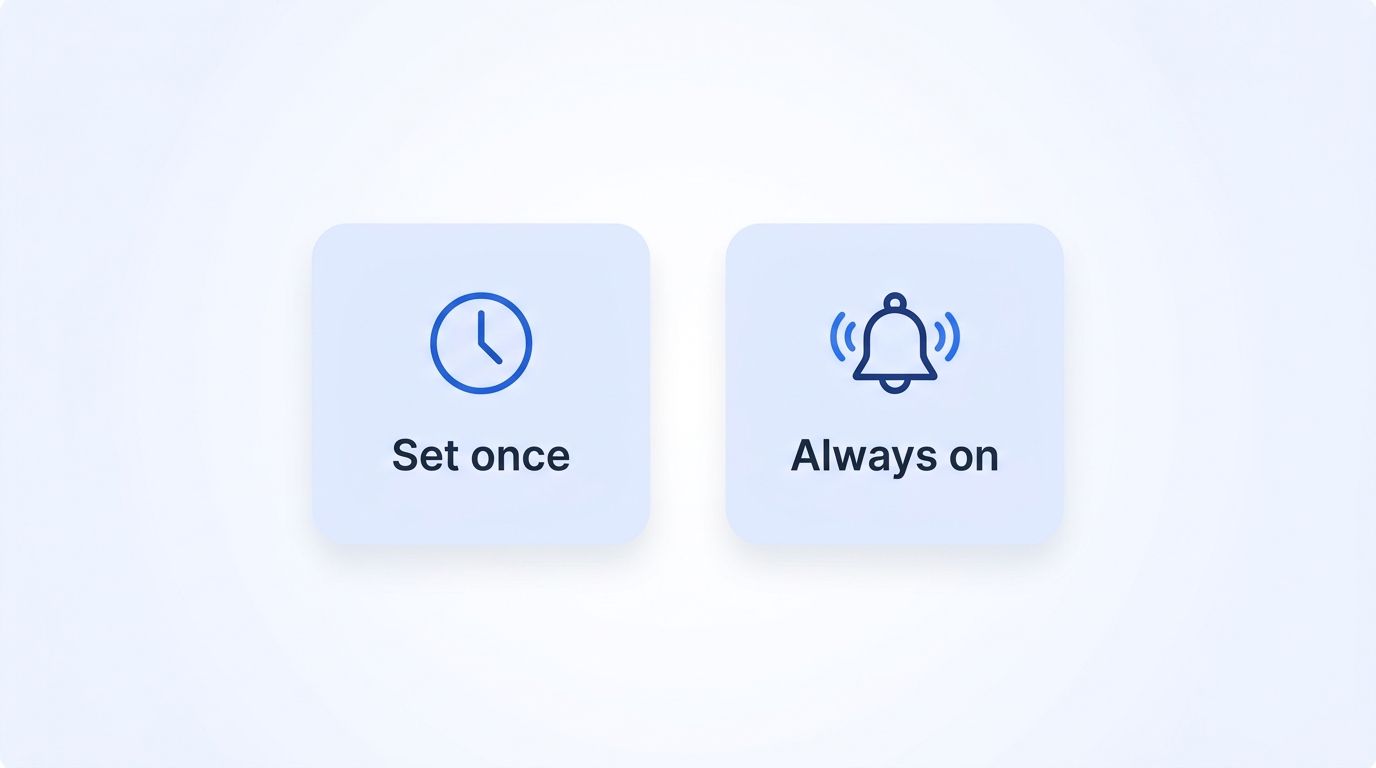
Firmographic data wins on cost and setup time, and this is where a lot of teams stop and never move past it. A firmographic ICP filter — industry, headcount band, revenue range, location — is a one-time build. You set the filters once in your CRM or a tool like Datamagnet's ICP company search filters, and the list stays useful for months without any ongoing monitoring.
Intent signals require standing infrastructure: a monitor that keeps watching, a webhook or alert pipeline that routes the signal to a rep, and a process for someone to actually act on it before the window closes. Anteriad's 2024 B2B Marketing Outlook study, fielded across 429 marketing decision-makers, found marketers using intent data report 57% confidence in accurately targeting their ICP, versus 48% for marketers relying on firmographic data alone — a real gap, but one that took real investment to earn.
Isn't that trade-off exactly why so many teams start with firmographics and add signals later? It usually is. There's no solid published statistic on how many hours reps burn chasing firmographically-perfect accounts that were never in-market — that specific number doesn't hold up to source-checking anywhere we could verify it — but the operational cost imbalance between "set it once" and "monitor it forever" is real and worth planning for before you buy an intent platform.
Verdict: firmographic data wins on cost and simplicity — it's the right place to start if your ICP isn't defined yet.
Which One Catches Buying-Committee Turnover?
Only intent signals catch this, and it's arguably the single clearest case for signal-based selling. LinkedIn's own platform data, drawn from three years of profile-change activity, found director-level-and-above professionals are 55% more likely to start a new role in January than in any other month. New leaders are 62% more likely to accept a Sales Navigator InMail in their first 90 days than the general population — a narrow, real window firmographic data can't detect at all.
Firmographic records don't update when a champion leaves. The company still has the same headcount, the same industry code, the same revenue band — but the person who championed your deal internally is gone, and per LinkedIn's research, 8 in 10 sellers have lost a deal for exactly that reason. A firmographic-only pipeline keeps the account marked "qualified" long after the actual relationship inside it has evaporated.
This is what champion tracking is built to solve. Datamagnet's champion tracker cookbook monitors named contacts for job-change events, so a rep gets an alert the moment a champion moves — while there's still time to re-engage them at their new company before a competitor does.
Verdict: intent signals win decisively — firmographic data has no way to detect a champion walking out the door.
What Happens When You Combine Both?
Combining both beats either one alone, and the size of the gap is bigger than most teams expect. Smartsheet's win-rate lift — 59% higher when firmographic, contact, and behavioral data were layered together — didn't come from picking a winner between the two data types. It came from refusing to choose.
That combination matters more now than it used to, because so much of the buying process happens where neither data type alone can see it. In 2026, TrustRadius's B2B Buying Disconnect Report — a survey of 1,862 tech buyers fielded in January 2026 — found 63% of B2B tech buyers now use AI tools during their purchase research, and 74% lean on peer reviews before ever contacting a vendor. Firmographic data can't see that research. Generic intent data often can't either, unless it's tied to a specific, monitorable event like a job change or a direct engagement.
The practical version of "combine both" looks like this: use firmographic filters like ICP company search to define who's eligible, then layer a signal monitor — job change, new post, or person engagement — on top to flag who's actually moving inside that eligible list. Fit narrows the list. Signal tells you when to call.
Who Should Choose What
Early-stage teams with no defined ICP yet: start with firmographic datasets. You need to know who you're even selling to before you can afford to monitor them.
Teams with a defined ICP and a real pipeline to protect: add intent signals, starting with job-change and champion tracking. This is where the win-rate and timing gains actually show up.
Customer success and expansion teams: prioritize job-change and champion-tracking signals over broad firmographic scoring — the person who championed your renewal matters more than the account's headcount once they're already a customer.
Enterprise ABM teams with budget for both: run firmographic fit as the gate and intent signals as the trigger. That's the combination behind Smartsheet's 59% win-rate lift, and it's not reproducible with either data type running alone.

Frequently Asked Questions
Is buyer intent data more accurate than firmographic data?
They measure different things, so "more accurate" depends on the question. Intent data is more accurate for timing — 6sense found 94% of buying groups pick a vendor before sales even engages (6sense, 2025). Firmographic data is more reliable for fit, since it doesn't fluctuate week to week.
Can firmographic data alone predict which accounts will buy?
Not reliably. Firmographic data tells you which accounts could be customers based on industry, size, and revenue, but it has no mechanism to detect active buying behavior. Forrester's intent data research found companies using intent signals on top of firmographic fit report measurably better prospecting outcomes than firmographic filtering alone.
How do I combine intent signals and firmographic data in my sales stack?
Use firmographic filters — industry, headcount, location — to build your target account list first, then layer signal monitors like job-change and engagement tracking on top of that same list. Smartsheet's case study showed an 84% increase in qualified leads from running both together instead of firmographic data alone.
Is buyer intent data worth the cost for a small sales team?
It depends on whether your ICP is already defined. Anteriad's 2024 research found intent-data users report 57% confidence in accurate ICP targeting versus 48% for firmographic-only teams — a real gap, but one that assumes you already know who to point the signal at. Teams without a defined ICP usually get more value starting with firmographic data first.
What's the difference between intent data and job-change signals?
Job-change signals are a specific, high-precision type of intent data — they track when a named person moves companies or roles, rather than inferring general research activity. LinkedIn's research found director-level professionals are 55% more likely to change roles in January, and new leaders are 62% more receptive to outreach in their first 90 days, making job-change tracking one of the most reliably timed intent signals available.
The Verdict
| Category | Winner |
|---|---|
| Deal timing | Buyer intent signals |
| Win-rate correlation | Buyer intent signals (layered on firmographic fit) |
| Cost and ease of setup | Firmographic data |
| Buying-committee turnover | Buyer intent signals |
| Overall | Combine both — firmographic data defines who's eligible, intent signals tell you when to call |
Every verified case study in this comparison — Box, Smartsheet, 6sense's buyer panel — tells the same story: teams that pick one data type over the other are optimizing for the wrong trade-off. The real decision isn't intent versus firmographic. It's which one you build first, and how fast you layer the second one on top.
If you're still building your first ICP, start with firmographic data — it's cheaper, static, and immediately usable. Once that list exists, track champions and buying signals on top of it before a competitor's rep gets there first.
