
Disclosure: Datamagnet publishes this article. Vendor and product capabilities described below are based on public documentation, retrieved August 13, 2026.
The 2026 Buyer Intent Data Buyer's Guide: How to Choose the Right Vendor
Most of your buyers make up their minds before a rep ever says hello. In 2025, B2B buyers completed 61% of their purchase journey before contacting a vendor (6sense, 2025 B2B Buyer Experience Report), down from 69% just a year earlier. That gap is exactly what buyer intent data is supposed to close.
Every vendor in this space claims real-time accuracy and airtight coverage. Not all of them can back it up. This guide walks through what buyer intent data actually is, the signal types worth paying for, and a concrete framework for evaluating a vendor before you sign a contract.
Key Takeaways
- B2B buyers now complete 61% of their purchase journey before contacting sales, down from 69% in 2023-2024 (6sense, Nov 2025).
- Companies that respond to a qualified lead within 5 minutes are roughly 21x more likely to convert it than teams waiting 30 minutes (MIT/InsideSales.com Lead Response Management study, widely re-audited).
- 65% of data buyers say they struggle to validate the accuracy and provenance of third-party data (IAB, State of Data 2024) - ask every vendor how they source and refresh their signals.
- GDPR fines have hit €7.1 billion since 2018, with €1.2 billion issued in 2025 alone (DLA Piper, Jan 2026) - compliance isn't optional in vendor selection.
- Evaluate on five axes: signal freshness, data provenance, delivery method, compliance posture, and pricing transparency - not on the size of the vendor's logo wall.
What Is Buyer Intent Data, and Why Does It Matter Right Now?
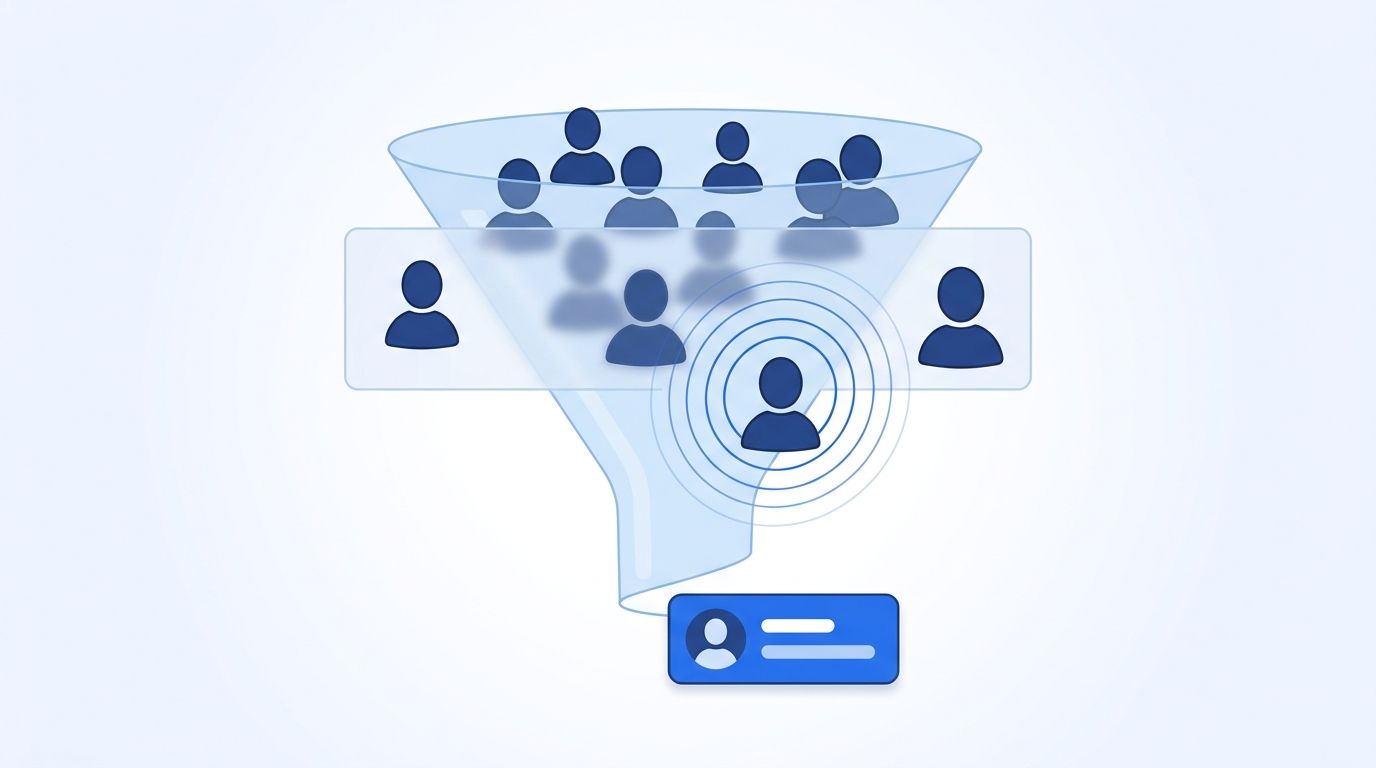
Buyer intent data is any signal that shows a person or company is actively researching a purchase, before they've told you directly. That includes anonymous website visits, content downloads, job changes, funding announcements, and engagement with competitor content. The point isn't to guess who might buy - it's to catch the moment someone already is.
It matters now because the buying window keeps shrinking. The average B2B buying cycle dropped from 11.3 months in 2024 to roughly 10 months in 2025, meaning buyers reach out to sellers six to seven weeks sooner than they used to (6sense, 2025 B2B Buyer Experience Report). Miss the early signal and you're competing for a slot that's already half-decided.
<!-- [UNIQUE INSIGHT] -->Here's the part most buying guides skip: intent data isn't a lead-gen channel, it's a prioritization layer. It doesn't create demand that wasn't there. It tells you which of the accounts already in your ICP are moving right now, so your reps stop splitting attention evenly across a list where 95% of the names aren't ready.
How Much of the Buying Journey Happens Before Sales Gets Involved?
Almost all of it, and that share is growing. Ninety-four percent of buying groups rank a preferred vendor before ever speaking to a salesperson, and that early favorite goes on to win the deal 77% of the time (6sense, 2025 B2B Buyer Experience Report). If your team isn't visible during that silent research phase, you're not really in the running.
Citation capsule: B2B buyers finished 61% of their purchase journey before contacting a vendor in 2025, down from 69% the year before (6sense, Nov 2025). That earlier engagement window is exactly what buyer intent data is designed to surface before a competitor does.
The AI layer is accelerating this. Gartner found that 67% of B2B buyers now favor a completely rep-free purchasing experience, and 45% used AI tools during a recent purchase (Gartner, via Digital Commerce 360, Mar 2026). Separately, TrustRadius found 63% of B2B software buyers used AI to research a recent purchase, though 94% of those buyers still fact-check what the AI tells them (TrustRadius, 2026 B2B Buying Disconnect Report, Jan 2026). Buyers trust AI to research faster. They still don't trust it blindly - which is your opening.
What Are the Main Types of Buyer Intent Data?
Buyer intent data breaks into four broad categories, and most useful programs blend at least two of them. Each catches a different stage of the buying journey, and no single type covers the whole funnel on its own.
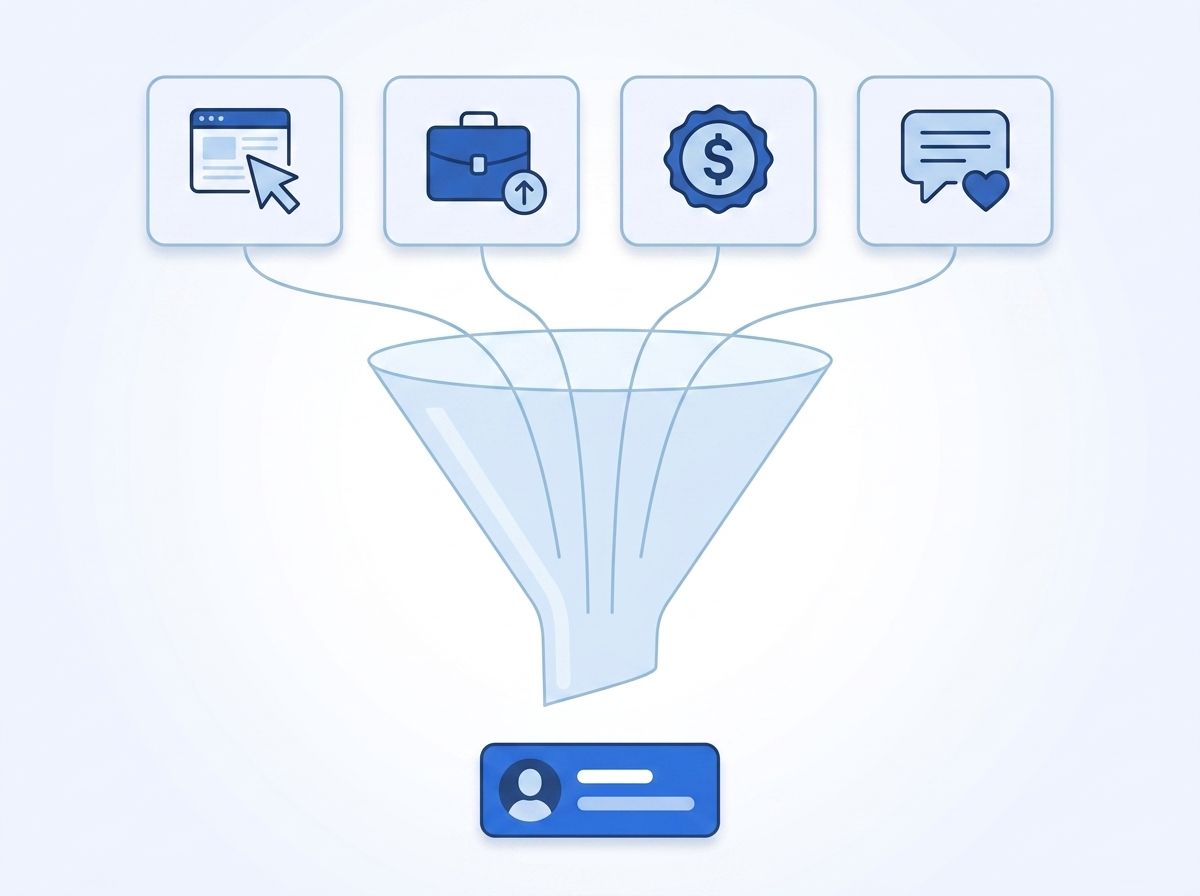
- First-party intent - Behavior on your own site or product: pricing page visits, repeat logins, doc reads. You own this data outright, and it's the highest-confidence signal since you know exactly who triggered it.
- Third-party (co-op) intent - Aggregated research activity pulled from a network of publisher sites, showing a company researching a topic across the web, not just yours. Coverage is broader; confidence per signal is lower.
- Technographic and firmographic triggers - Events like a company changing its tech stack, closing a funding round, or a target contact changing jobs. These predict when budget or authority shifts, not necessarily active research.
- Engagement and social signals - Someone liking, commenting on, or sharing content from you or a competitor on LinkedIn. Cheap to detect, easy to act on, and often the earliest visible signal of all.
For internal links to related content, see how job-change signal APIs apply the trigger-event model specifically to career moves, one of the strongest firmographic triggers in the list above.
First-Party vs. Third-Party Intent Data: Which Should You Trust More?
Trust first-party intent for confidence, and third-party for reach - they answer different questions. First-party signals tell you a specific, identified account is actively engaging with you right now. Third-party co-op signals tell you an account is researching the category somewhere on the web, which is useful for top-of-funnel prioritization but carries more noise.
Isn't it a little suspicious that most third-party intent platforms won't tell you exactly which sites their signal comes from? That opacity is the industry's biggest trust gap. Sixty-five percent of data buyers report struggling to validate the accuracy and provenance of third-party data they purchase (IAB, State of Data 2024). Before you buy, ask a vendor to show you - not just tell you - where a signal originated.
<!-- [PERSONAL EXPERIENCE] -->Teams that lean entirely on third-party co-op intent tend to hit the same wall: the signal says an account is "researching," but nobody can point to a specific person, page, or moment. Reps burn calls on accounts that turn out to be a single junior employee reading a comparison article. Pairing co-op signals with a first-party or trigger-event layer - something with an identifiable person and timestamp attached - consistently produces cleaner pipeline than either source running alone.
How Fast Do You Need to Act on a Buying Signal?
Faster than most teams currently do. Companies that respond to a qualified lead within five minutes are roughly 21x more likely to convert it than teams waiting 30 minutes, and a separate audit of 2,241 companies found the average first-response time runs 42 hours (MIT/InsideSales.com Lead Response Management research, still the most-cited benchmark on speed-to-lead). A perfectly accurate intent signal is worthless if it sits in an inbox for two days.
This is why delivery method matters as much as data quality when you're vendor-shopping. A signal delivered through a real-time webhook reaches your CRM or Slack channel the moment it fires. A signal sitting in a weekly export report is already stale before a rep opens the file. Datamagnet's own signal monitors - covering job changes, new posts, and keyword, company, and person engagement - push events out as they happen rather than batching them.
What Should You Look for When Evaluating an Intent Data Vendor?
Evaluate a vendor on five axes, not on their case study logos. The five that actually predict whether a platform will work for your team: signal freshness, data provenance, delivery method, compliance posture, and pricing transparency.
- Signal freshness - Ask exactly how old a signal is by the time it reaches you: seconds, hours, or days. Vendors that dodge this question are usually batching.
- Data provenance - Ask where each signal type comes from and how it's verified. Given that 65% of buyers can't validate third-party data provenance today (IAB, State of Data 2024), a vendor who answers this clearly is already ahead of the field.
- Delivery method - Real-time webhook, API pull, or CSV export. Match this to how fast you can actually act (see the response-time math above).
- Compliance posture - GDPR, CCPA, and platform-specific terms of service. Covered in detail next.
- Pricing transparency - Most enterprise intent platforms require custom, quote-based annual contracts rather than published list pricing. That's normal - but a vendor who won't explain what drives the quote (seats, account volume, signal types) is a harder vendor to budget against.
For evaluation frameworks that extend beyond intent data specifically, see this guide on ICP company search filters, which covers how to define the account criteria your intent signals should be scored against in the first place.
What Compliance and Privacy Risks Come With Buying Intent Data?
Real ones, and they're getting more expensive. GDPR fines have totaled €7.1 billion since the regulation took effect in May 2018, with €1.2 billion issued in 2025 alone, and data breach notifications across Europe now average more than 400 a day, up 22% year over year (DLA Piper, GDPR Fines and Data Breach Survey, Jan 2026). Any vendor processing intent signals about EU-based contacts is inside that enforcement zone, and so are you if you buy from them.
In the US, don't assume B2B contact data is exempt from consumer privacy law by default anymore. California's B2B exemption under the CCPA expired on January 1, 2023, meaning business contacts in California now carry the same data rights as consumers (California Attorney General, CCPA). Ask any intent data vendor for their data processing agreement and their policy on public-source versus scraped data before you sign. Datamagnet's own security and data practices page is a reasonable template for what that disclosure should look like.
What Are the Red Flags of a Bad Intent Data Vendor?
The clearest red flag is a vendor who can't explain their own data in plain language. If a sales engineer can't tell you where a signal comes from, how fresh it is, or how it's verified, that's not a knowledge gap on their end - it's usually a sign the pipeline behind the product is thinner than the demo suggests.
Watch for these specific patterns during evaluation:
- Unverifiable ROI claims - Numbers like "4x conversion" or "232% ROI" with no named study or methodology attached. Ask for the source; if there isn't one, discount the claim entirely.
- Vague coverage numbers - "Millions of companies tracked" without a breakdown of how many are actively refreshed versus stale in a database.
- No delivery-latency answer - If they can't tell you the time between an event happening and you receiving it, assume it's a batch process dressed up as real-time.
- No compliance documentation available on request - A legitimate vendor has a DPA and a public data-sourcing policy ready to share, not "we'll get back to you."
- Opaque, non-negotiable pricing with no usage transparency - Custom quotes are normal; refusing to explain what drives the number is not.
Across the vendor evaluations we've run internally, the single strongest predictor of a good fit wasn't price or logo coverage - it was whether the vendor's own sales team could answer a technical question about signal latency without looping in an engineer. Teams that answered in the room, specifically, closed evaluations faster and reported fewer surprises three months into the contract.
Should You Build Your Own Intent Signal Layer or Buy One?
Buy the plumbing, build the scoring. Most teams don't need to build their own LinkedIn or web-crawling infrastructure - that's a maintenance burden with no strategic upside. What's worth building in-house is how you weight and route signals once they arrive, since that logic is specific to your ICP and sales motion.
An API-first approach makes this split practical. Instead of a monolithic platform that scores everything for you, individual signal endpoints - keyword engagement, company engagement, job changes, and funding rounds - let you pull raw events and apply your own scoring model on top. That's a meaningfully different architecture from a vendor like ZoomInfo, where scoring logic is largely a black box you configure through dropdowns.
See Buyer Intent Signals in Real Time
Buyer intent data only pays off if it reaches a rep before the moment passes. Datamagnet's Signal API delivers job-change, funding, and engagement signals as webhooks the moment they fire, so your evaluation criteria - freshness, provenance, delivery speed - aren't a hypothetical checklist, they're the default. Compare Datamagnet's pricing and signal types and see how a 5-minute signal-to-Slack pipeline changes your response math.
Frequently Asked Questions
What is buyer intent data?
Buyer intent data is behavioral or event-based evidence that a specific person or company is actively researching a purchase before they contact a vendor directly. It includes website visits, content engagement, job changes, and funding events, and it exists specifically to catch the roughly 61% of the buying journey that now happens before sales gets involved (6sense, 2025).
How is buyer intent data different from firmographic data?
Firmographic data describes what a company is - headcount, industry, revenue. Intent data describes what a company is doing right now, like researching a category or losing a key champion to a competitor. The two work together: firmographic filters define your target list, and intent signals tell you which accounts on that list are actively in-market this week rather than sometime this year.
How much does buyer intent data cost?
Most enterprise intent platforms don't publish list pricing - expect custom, quote-based annual contracts scaled to seat count, account volume, and which signal types you use. Treat any specific dollar figure you find on a comparison blog with skepticism unless it links back to the vendor's own pricing page, since none of the major platforms confirm exact numbers publicly.
Is third-party intent data reliable?
It's directionally useful but harder to verify than first-party or trigger-event data. Sixty-five percent of data buyers report struggling to validate the accuracy and provenance of third-party data they purchase (IAB, State of Data 2024), so pair co-op signals with a first-party or identified-event source rather than trusting third-party intent alone.
How fast should you respond to a buying signal?
As close to real time as your process allows. Companies responding to a qualified lead within five minutes are roughly 21x more likely to convert it than those waiting 30 minutes, while the average company across a 2,241-company audit took 42 hours to respond at all (MIT/InsideSales.com Lead Response Management research). A webhook-delivered signal closes that gap; a weekly export report reopens it.
Sources
- 6sense, 2025 B2B Buyer Experience Report, retrieved 2026-08-13, https://6sense.com/newsroom/the-timeline-for-influencing-b2b-buyers-is-shrinking-insights-from-6senses-2025-buyer-experience-report/
- Gartner, cited in Digital Commerce 360, "Gartner: Two-thirds of B2B buyers prefer rep-free purchasing as AI reshapes sales," retrieved 2026-08-13, https://www.digitalcommerce360.com/2026/03/17/gartner-b2b-buyers-rep-free-purchasing-ai-reshapes-sales/
- TrustRadius, 2026 B2B Buying Disconnect Report, retrieved 2026-08-13, https://www.prnewswire.com/news-releases/trustradius-2026-b2b-buying-disconnect-report-reveals-ai-has-changed-how-buyers-research-but-not-what-they-trust-302825792.html
- IAB with BWG Strategy, State of Data 2024, retrieved 2026-08-13, https://www.iab.com/insights/2024-state-of-data-report/
- DLA Piper, GDPR Fines and Data Breach Survey: January 2026, retrieved 2026-08-13, https://www.dlapiper.com/en/insights/publications/2026/01/dla-piper-gdpr-fines-and-data-breach-survey-january-2026
- California Attorney General, California Consumer Privacy Act, retrieved 2026-08-13, https://oag.ca.gov/privacy/ccpa
- Datamagnet, Webhooks documentation, retrieved 2026-08-13, https://docs.datamagnet.co/api-reference/webhooks
- Datamagnet, Create Signal endpoint, retrieved 2026-08-13, https://docs.datamagnet.co/api-reference/endpoints/signal-create
