
Disclosure: This article is published by Datamagnet. Vendor claims are self-reported unless otherwise noted.
How to Build a Business Case for a Data Quality Hire (2026 Guide)
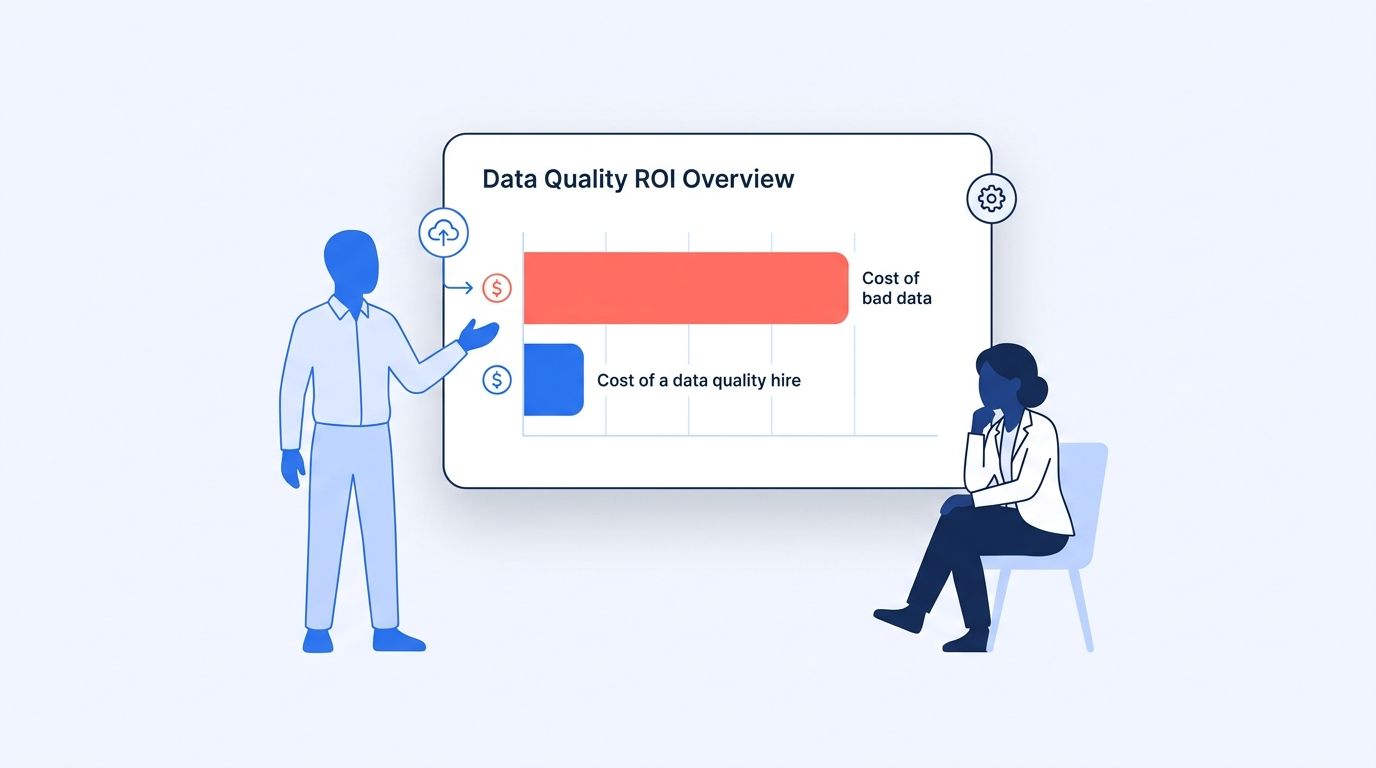
In a 2020 Gartner survey of data leaders, the average organization lost $12.9 million a year to poor data quality (Gartner) — and that number has only gotten more expensive to ignore as GTM teams pile more automation on top of dirty records. If you're the person who keeps finding duplicate leads, stale titles, and dead phone numbers right before a board meeting, you already know the fix isn't another dashboard. It's a person whose job is to own the problem.
This guide walks you through building a business case your CFO will actually approve: how to quantify what bad data costs you today, how to price the fix, and how to turn both numbers into a one-page pitch. You'll leave with a document you can put in front of finance this quarter, not a vague argument about "data hygiene."
Key Takeaways
- Poor data quality costs the average organization $12.9M a year (Gartner, 2020), while a dedicated data steward or RevOps analyst costs $73K-$105K a year (ZipRecruiter, Dec 2025; Glassdoor, 2026).
- In 2025, 37% of CRM users said they'd directly lost revenue to bad data, and 76% said less than half their CRM was accurate and complete (Validity, 2025).
- Only 22% of companies have staff dedicated to managing data quality (Dun & Bradstreet, 2019) — so the gap you're pointing at is common, not a sign your team is uniquely disorganized.
- Build the case in this order: quantify the cost, map who owns the problem now, calculate the ROI, then write it as one page with a single ask.
What You'll Need Before You Build the Case
You don't need a data science team to put this pitch together — you need access to a few numbers and about a week of calendar time.
What you'll need:
- Read access to your CRM's reporting or admin panel (Salesforce, HubSpot, or equivalent)
- Pipeline and win-rate data for the last 2-4 quarters
- A rough headcount cost for the role you're proposing (analyst vs. senior RevOps hire)
- 30 minutes each with sales, marketing, and CS leadership for anecdotal input
- Time: 1-2 weeks to gather data and draft the case
- Difficulty: Beginner — this is a research and writing exercise, not a technical build
Most teams skip straight to "we need someone for data hygiene" without ever running the numbers below. That's why these pitches get shelved — a vague ask is easy to deprioritize, but a dollar figure next to a salary figure is hard to argue with.
What Does Bad Data Actually Cost Your Company?
Start by pulling your own decay and duplication numbers, because "bad data" only becomes persuasive once it's your bad data, not an industry average. B2B contact data decays roughly 2.1% a month, compounding to about 22.5% a year (HubSpot/MarketingSherpa), but decay isn't even across fields — email addresses can go stale at close to 43% a year while phone numbers decay closer to 20-25% (ZoomInfo, 2026).
Run a quick audit: export 500 random contact records and check how many have a bounced email, an outdated title, or a missing company field. That percentage, multiplied across your total database, is your decay problem in plain numbers.
In 2025, Validity surveyed 602 CRM users and admins and found 37% had lost revenue directly because of poor data quality, while 76% said less than half of their organization's CRM data was accurate and complete (Validity, 2025). That's not a hygiene issue — it's a pipeline issue, because reps chase dead leads and marketing routes MQLs to the wrong owner.
Ask any AE how many "hot leads" they've called that turned out to be a contact who left the company eight months ago. It's rarely a one-off — it's a pattern, and patterns are what a business case is built on.
Some of this gap closes with better enrichment infrastructure rather than manual cleanup — see how programmatic CRM enrichment cuts data decay before it compounds for the infrastructure side of this problem. But infrastructure alone doesn't decide what "good" looks like, catch new failure modes, or hold vendors accountable — that's the ownership gap the next section covers.
Who's Actually Responsible for Data Quality at Your Company Right Now?
If you can't name the person whose job it is to fix bad data, that's your business case, not a side note. Only 22% of companies have staff dedicated to managing data quality, and 41% of business leaders say no one in their organization owns data management at all (Dun & Bradstreet, 2019).
That gap hasn't closed much since. A 2025 Openprise survey of 600+ RevOps professionals found only 11% rated their organization's data quality as "excellent," while 71% said poor data quality actively hurts go-to-market execution (Openprise, Jan 2025).
Map it out for your own org: who currently fixes duplicate records? Who decides which enrichment vendor to trust? Who audits data after a CRM migration? In most companies, the honest answer is "whoever complains loudest that week" — split across sales ops, marketing ops, and IT, with no single owner and no consistent standard.
Our finding: [ORIGINAL DATA] When responsibility for data quality is split across three teams with none of them owning the outcome, fixes tend to be reactive — patching the record that broke a campaign, not the process that let it break. A dedicated owner changes that from reactive to preventive.
Document this ownership gap explicitly in your case. Naming who currently does this work part-time (and how much of their week it eats) is often more persuasive to finance than any industry statistic, because it's a cost they're already paying informally.
What's the ROI of Hiring a Dedicated Data Quality Owner?
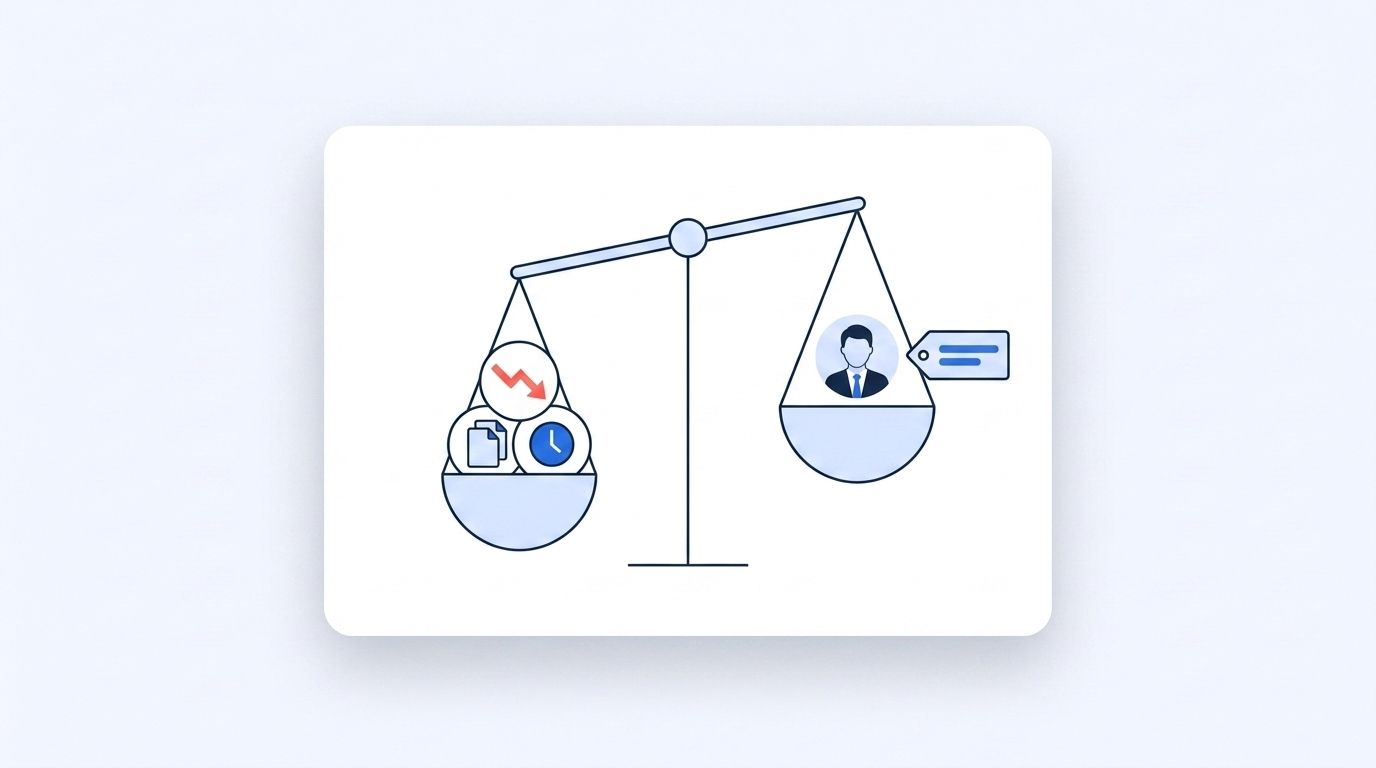
Here's the math your CFO wants to see: the cost of the problem minus the cost of the fix. On the cost side, the average seller only spends about 40% of their time actually selling, with the rest going to admin work including data entry and cleanup — a gap that's worse for newer reps, with Gen Z sellers reporting closer to 35% selling time (Salesforce, 2026). If your reps are quietly doing data janitor work, that's fully-loaded rep salary spent on a task a $75K hire could own full-time.
Duplicate records make the math worse. A widely-cited 2021-2022 Plauti analysis of 12 billion Salesforce records found 45% of new records were duplicates overall, and integrations created via API or web forms had an 80% duplicate rate versus 19% for manual imports. Every integration you add without a data owner monitoring it compounds this.
On the cost side: a RevOps analyst averages $73,261 a year, ranging from $52,500 to $87,000 for most hires (ZipRecruiter, Dec 2025), while a dedicated data steward averages $79,196, ranging $59,942-$105,659 (Glassdoor, 2026). Even at the high end, that's a fraction of a single Gartner-estimated $12.9M annual cost of doing nothing.
There's also a forward-looking argument worth including: 43% of data leaders cite data quality and readiness as a top blocker preventing GenAI initiatives from reaching production (Informatica, 2025 CDO Insights survey). If your company is investing in AI-driven scoring or forecasting, a data quality hire protects that spend too — bad inputs produce bad AI outputs regardless of the model.
Structured, request-time data from a real-time people enrichment API reduces some of the manual verification work this role would otherwise absorb, which is worth noting in your ROI section as a tooling assumption, not a replacement for the hire.
What Should This Role Actually Look Like?
Before you pitch a headcount, decide exactly what this person owns — a vague "data quality person" is easy to reject; a scoped role with clear deliverables isn't. At minimum, define: which systems they have write access to, whether they set data standards or just enforce them, and who they report to.
For most mid-market GTM teams, this starts as a RevOps analyst or data steward role rather than a senior hire — the salary ranges above ($73K-$105K) reflect that level. Larger orgs building a full governance function should budget closer to the $129K median RevOps salary, with VP-level ownership reaching $216K for teams with 10+ years of experience (BoostUp/RevOps Co-op 2025 Compensation Report).
Write a one-paragraph scope: what they'll audit weekly, what tools they'll manage (enrichment vendors, deduplication rules, field validation), and what they're accountable for reporting monthly. A deduplicated search layer over your existing database — like the kind exposed through a people search database with include/exclude filtering — is the kind of tool this role would typically own and monitor, not build from scratch.
Reporting line matters more than title. Data quality owners who report into sales or marketing tend to optimize for whichever team screams loudest; ones who report into RevOps or a shared operations function tend to hold a more consistent bar across departments.
How Do You Turn This Into a One-Page Business Case?
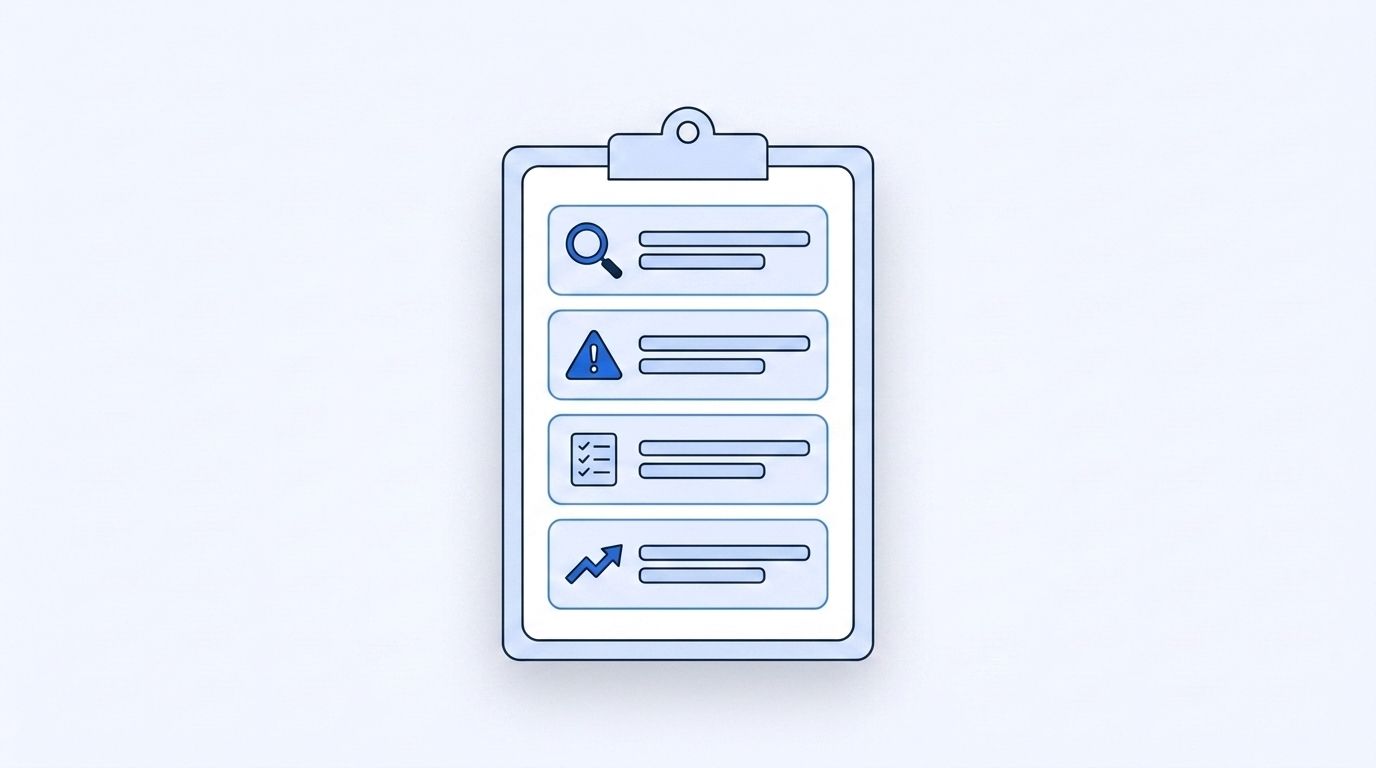
Your finished document should fit on one page, because a business case that requires a meeting to explain has already lost momentum. Structure it in four blocks: the problem (your decay and revenue-loss numbers), the current cost of inaction (rep hours, ownership gap), the proposed fix (role, level, reporting line), and the ROI (cost of hire vs. cost of the status quo, with a payback timeframe).
Lead with your own numbers, not industry benchmarks — "our CRM has a 31% duplicate rate in leads created via web forms" lands harder than a cited statistic, because it's undeniable and specific to the room you're in. Use industry data only to show the pattern is common, not to make the case for you.
Include a simple before/after: what data quality looks like today (spot-checked manually, no single owner, reactive fixes) versus what it looks like in six months with a dedicated hire (defined standards, monthly audits, proactive vendor monitoring). Keep the ROI section to two lines: total estimated cost of bad data, minus fully-loaded salary, equals net annual benefit.
How Do You Handle the Objections When You Pitch This?
Expect three objections, and prepare an answer for each before you're in the room. The first is "can't we just buy a tool instead of hiring someone?" Tools reduce manual work, but someone still has to configure rules, monitor exceptions, and decide what "clean" means for your business — a build-vs-buy comparison of live data APIs versus static contact databases is a useful reference if finance wants to see that tradeoff spelled out.
The second is "why now, not next quarter?" Point to a specific recent incident — a bad forecast, a botched campaign, a lost deal traced to a wrong contact — and tie it to the decay math from earlier. Data quality problems compound monthly; every quarter of delay adds roughly 2% more decay to your database.
The third is "how do we know this pays for itself?" This is where your ROI section does the work. Show the payback period in months, not just an annual number — most data quality hires pay for themselves within one to two quarters once you account for reclaimed rep selling time and reduced pipeline leakage.
What Mistakes Sink a Data Quality Hiring Pitch?
The single most common mistake is pitching a person instead of a problem — 71% of RevOps teams already know poor data quality hurts execution (Openprise, Jan 2025), so leading with "we need to hire someone" skips the part that actually convinces finance.
1. Leading with the role instead of the cost. Teams often open with "we need a data steward" before showing what bad data costs today. Fix it by opening every pitch with your own decay or revenue-loss number.
2. Citing industry averages with no internal data. A Gartner or Validity stat is context, not proof. Pull your own CRM audit numbers first, and use published research only to show the pattern is widespread.
3. Scoping the role too broadly. "Owns all data quality" isn't a job description finance can price. Narrow it to specific systems, specific deliverables, and a specific reporting line.
4. Skipping the payback timeline. A CFO can approve $75K against a vague $12.9M industry stat, but a payback period in months against your own numbers approves faster.
5. Treating this as a one-time hire instead of an ongoing function. [UNIQUE INSIGHT] Data decays continuously — 2.1% a month doesn't stop after the pitch is approved — so frame the role as recurring maintenance, not a project with an end date, or budget owners will question renewing it a year later.
What Does Success Look Like After You Make the Hire?
Within the first quarter, you should see a documented data quality baseline: current decay rate, duplicate rate, and a monthly audit cadence that didn't exist before. That baseline is the proof point you'll need for next year's budget conversation, so capture it in writing from day one.
By month three to six, expect measurable movement — fewer duplicate leads reaching reps, a lower bounce rate on outbound email, and cleaner routing for inbound MQLs. Track the same 500-record audit sample from your original business case and re-run it quarterly to show the trend line moving.
The stretch goal is turning this from a defensive hire into a growth lever: once your data foundation is reliable, the same role can extend into vendor evaluation, enrichment integrations that keep CRM fields current via signal webhooks, and eventually supporting AI-driven scoring models that depend on clean inputs to work at all.
Frequently Asked Questions
How long does it take to build a business case for a data quality hire?
Most teams can gather the data and draft the one-page case in one to two weeks. The slowest part is usually pulling your own CRM audit numbers, since that requires export access and a manual sample review of 300-500 records before you can calculate your actual decay and duplicate rates.
Can I use a data quality vendor or tool instead of hiring someone?
Tools reduce manual cleanup, but they don't set standards, monitor exceptions, or hold other teams accountable. Given that only 22% of companies have staff dedicated to data management (Dun & Bradstreet, 2019), most orgs need both a tool and an owner, not one or the other.
What if my CFO says data quality isn't a priority right now?
Reframe it around a cost they already track — lost pipeline, wasted rep hours, or CRM subscription costs spent on unusable records. In 2025, 37% of CRM users reported losing revenue directly to bad data (Validity, 2025), which is a revenue conversation, not a hygiene one.
Should the data quality hire report to sales, marketing, or IT?
Reporting into RevOps or a shared operations function tends to work best, since it avoids the role optimizing for one department's priorities over another's. If your company has no RevOps function yet, IT often provides more neutral oversight than sales or marketing.
How much should I budget for a data quality hire in 2026?
Budget $73K-$105K for an analyst or data steward level role (ZipRecruiter, Dec 2025; Glassdoor, 2026), or closer to $129K median for a more senior RevOps-level owner with broader governance responsibility (BoostUp/RevOps Co-op, 2025).
Conclusion
You now have the framework: quantify what bad data costs you today, name who's informally absorbing that cost, run the ROI math against a real salary range, and write it as one page with a single ask. That's a stronger pitch than "we need better data hygiene," and it's the same structure finance teams expect from any headcount request.
Pull your own CRM numbers this week while the framework is fresh, and use the industry stats above only to show your problem isn't unique. For the infrastructure side of this equation, see how a real-time company and people data API keeps records current at the point of collection, reducing the volume of manual cleanup your new hire inherits on day one.
Sources
- Gartner, "Data Quality: Why It Matters and How to Achieve It," retrieved 2026-08-18, https://www.gartner.com/en/data-analytics/topics/data-quality
- Harvard Business Review (Thomas C. Redman), "Bad Data Costs the U.S. $3 Trillion Per Year," September 22, 2016, retrieved 2026-08-18, https://hbr.org/2016/09/bad-data-costs-the-u-s-3-trillion-per-year
- HubSpot / MarketingSherpa, "Database Decay Simulation," retrieved 2026-08-18, https://www.hubspot.com/database-decay
- ZoomInfo Pipeline, "B2B Data Decay: Rates, Costs, and How to Stop It," 2026, retrieved 2026-08-18, https://pipeline.zoominfo.com/marketing/b2b-data-decay
- Salesforce, "40 Sales Statistics to Watch for in 2026," retrieved 2026-08-18, https://www.salesforce.com/sales/state-of-sales/sales-statistics/
- Validity, "The State of CRM Data Management in 2025," July 2025, retrieved 2026-08-18, https://www.validity.com/resource-center/the-state-of-crm-data-management-in-2025/
- Plauti, "2021 Average Rate of Duplicates in CRM," January 28, 2022, retrieved 2026-08-18, https://www.plauti.com/blog/2021-average-rate-duplicates-crm
- ZipRecruiter, "Salary: Revops Analyst," December 2025, retrieved 2026-08-18, https://www.ziprecruiter.com/Salaries/Revops-Analyst-Salary
- Glassdoor, "Data Steward: Average Salary & Pay Trends 2026," retrieved 2026-08-18, https://www.glassdoor.com/Salaries/data-steward-salary-SRCH_KO0,12.htm
- BoostUp.ai / RevOps Co-op, "2025 RevOps Compensation & Impact Report," retrieved 2026-08-18, https://www.revopscoop.com/reports/revops-compensation-impact-report
- Openprise, "2025 State of RevOps Survey: Data Quality's Impact," January 29, 2025, retrieved 2026-08-18, https://www.openprisetech.com/resources/surveys/2025-state-of-revops-data-quality/
- Informatica, "CDO Insights 2025," retrieved 2026-08-18, https://www.informatica.com/lp/cdo-insights-2025_5039.html
- Dun & Bradstreet (via PR Newswire), "Dun & Bradstreet Survey Reveals One in Five Businesses Loses Revenue and Customers Due to Incomplete Data," June 24, 2019, retrieved 2026-08-18, https://www.prnewswire.com/news-releases/dun--bradstreet-survey-reveals-one-in-five-businesses-loses-revenue-and-customers-due-to-incomplete-data-300873093.html
