
Disclosure: This article is published by Datamagnet. Vendor claims are self-reported unless otherwise noted.
Build vs. Buy: When Should GTM Engineers Build Their Own Enrichment Layer?
Most GTM engineers should buy the data layer and build the workflow on top of it — but that answer flips fast once you have real engineering headcount and a narrow, high-value use case. In 2026, Retool found 35% of software teams have already replaced at least one SaaS tool with custom-built code, and 78% expect to build more in-house tools this year. This piece breaks down what building an enrichment layer actually costs, how fast in-house data decays without maintenance, and where the legal line sits before you write a single scraper.
TL;DR
- Building an in-house enrichment pipeline costs more than the salary line suggests. KORE1 puts the all-in first-year cost of one data engineer at $160,000–$290,000 once payroll tax, tooling, and recruiting fees stack up (KORE1, 2026).
- Scraping LinkedIn yourself carries real legal risk — hiQ Labs was hit with a $500,000 judgment and a permanent injunction in its case against LinkedIn (Zwillgen, 2022).
- In 2026, 65.8% of web-scraping professionals used more proxies than the year before just to keep pace with anti-bot defenses (Apify, 2026) — DIY scraping infrastructure gets more expensive over time, not less.
- Build the orchestration layer (routing, scoring, CRM sync); buy the raw data layer (people, company, and signal lookups) unless you have a narrow use case an API genuinely can't cover.
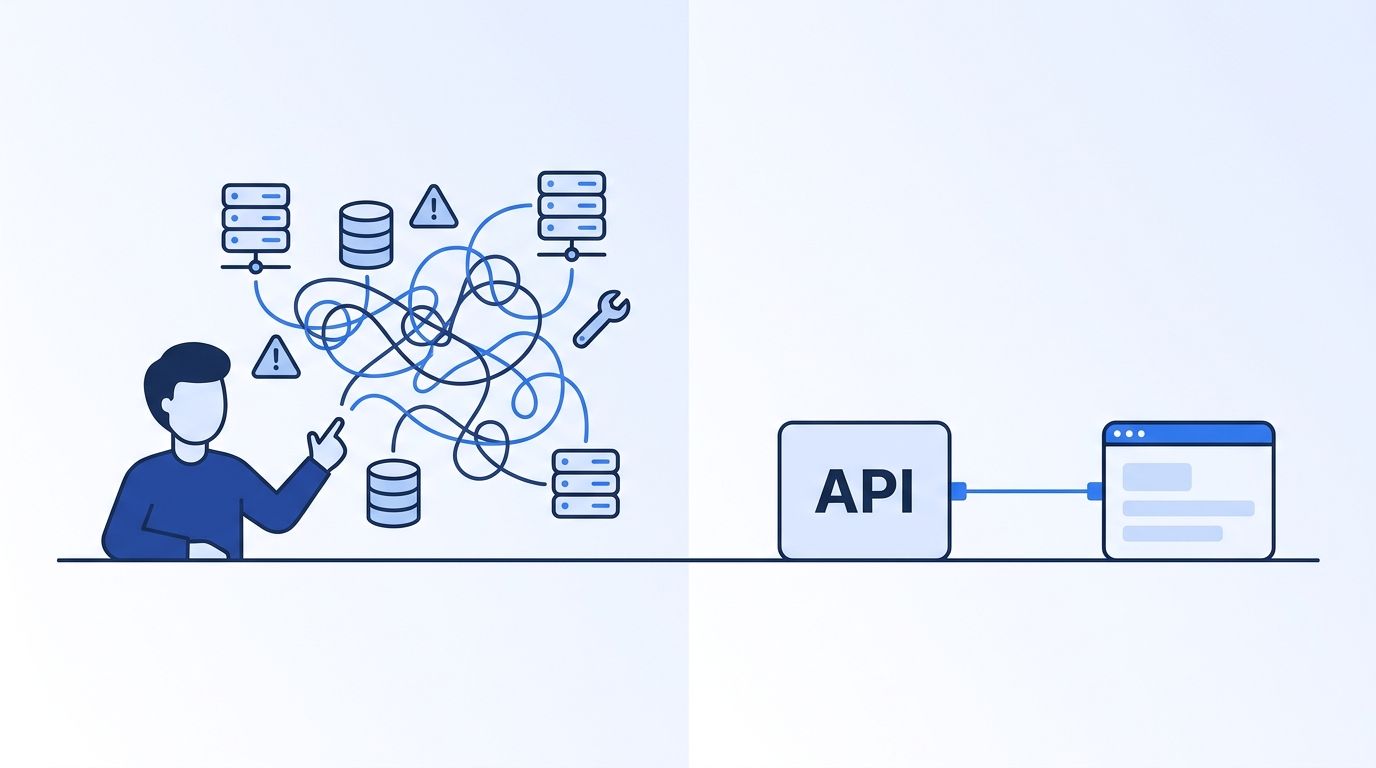
What Does "Building Your Own Enrichment Layer" Actually Involve?
Building an enrichment layer means owning four separate systems, not one script. You need a collector (scraping or API polling against LinkedIn or another source), a parser that turns raw HTML or JSON into structured fields, a matching layer that deduplicates and resolves records against your CRM, and a refresh job that re-pulls stale records on a schedule. Most teams underestimate this until the refresh job breaks in production.
The part that catches most GTM engineering teams off guard isn't the initial build — it's that a "done" enrichment pipeline is never actually done. Every anti-bot update on the source site, every schema change in your CRM, and every new field a sales team requests becomes a maintenance ticket, and none of those tickets show up in the original project estimate.
That's a meaningfully different scope than what a vendor API replaces. Datamagnet's API documentation collapses collection, parsing, and normalization into a single authenticated request — the People Profile endpoint and Company Profile endpoint return structured JSON on demand, so the only system you still own is the matching and routing logic specific to your CRM.
How Much Does It Really Cost to Build an In-House Enrichment Pipeline?
It costs more than one salary line. In 2026, Indeed's Data Engineer Salaries report puts the average U.S. base salary at $137,157, based on more than 10,200 salary data points collected over the trailing 36 months. That's before payroll tax, benefits, tooling, and recruiting fees get added on top.
KORE1's 2026 hiring benchmarks put the true all-in first-year cost of a mid-to-senior data engineer hire at $160,000 to $290,000 once those extras stack up — and that's assuming you fill the role quickly. The same report puts internal time-to-fill at 6 to 10 weeks, which means the pipeline you're building isn't even started until nearly two months after you decide to build it.
Here's the part that rarely makes it into the build-vs-buy spreadsheet: a Fivetran and Wakefield Research survey of 300 data and analytics leaders found data engineers spend roughly 44% of their time building and maintaining pipelines rather than doing net-new analytical work — and 85% of leaders said unreliable pipeline data had already led to a costly business decision. Isn't that the exact failure mode a build decision is supposed to prevent?
Why Does In-House Contact Data Go Stale So Fast?
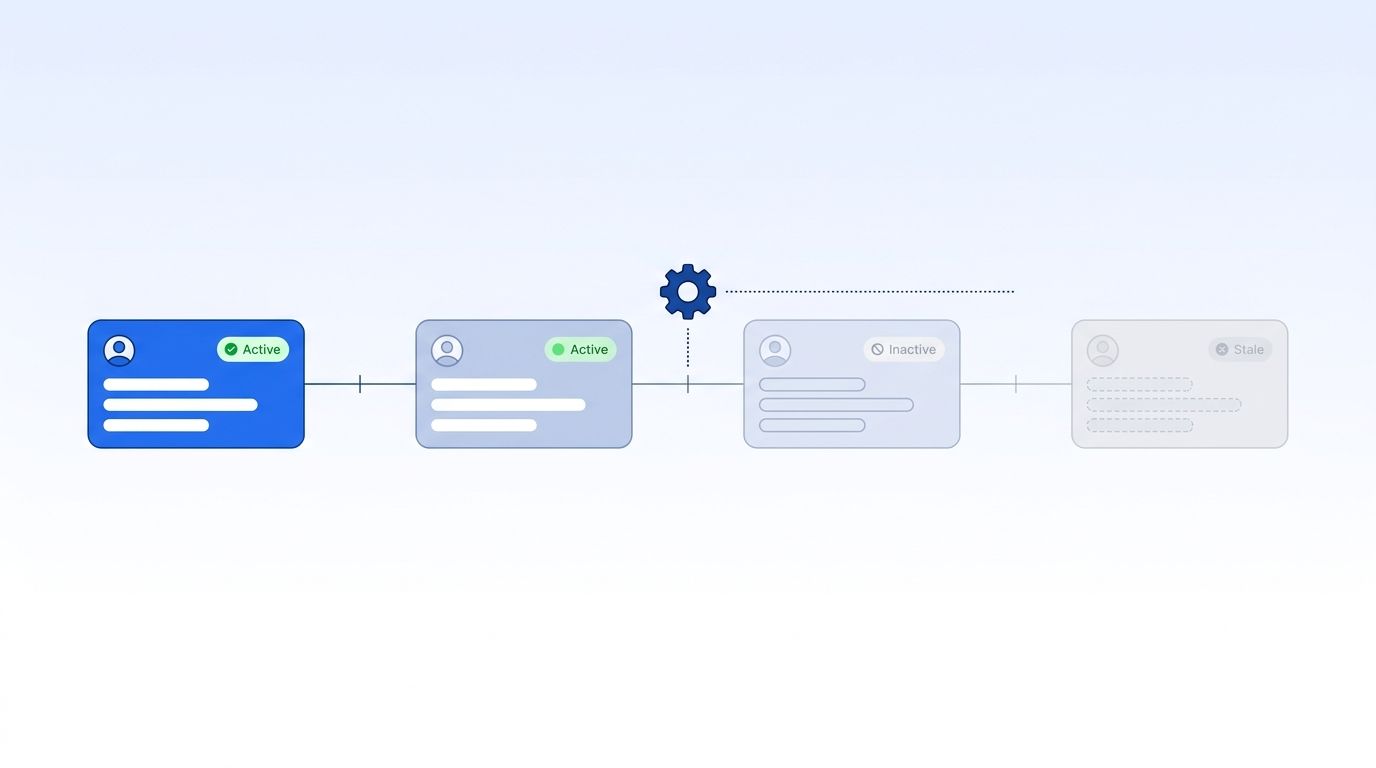
Because the source data underneath it never stops moving. In 2026, ZoomInfo Pipeline's GTM data-quality guide estimates B2B contact data decays at roughly 25% to 30% annually — a 10,000-record CRM loses somewhere between 2,500 and 3,000 usable contacts a year with zero maintenance. A refresh job isn't optional infrastructure; it's the entire point of the build.
That decay compounds into revenue loss, not just dashboard noise. Validity's 2025 State of CRM Data Management survey of 602 CRM users and stakeholders found 37% reported losing revenue directly because of poor data quality, and 76% said less than half their CRM records were fully accurate and complete. A build-your-own pipeline inherits that decay problem the moment it ships — the refresh job you scoped in month one has to run forever, on a schedule that doesn't slip.
Talking with GTM engineering teams evaluating a build, the refresh cadence is almost always the thing they budgeted least for. A one-time scraper is a weekend project. A scraper that still returns accurate job titles eighteen months later, after three site redesigns and a rate-limit change, is a standing engineering commitment.
Is Scraping LinkedIn Yourself Legally Risky?
Yes, and the case law already has a price tag attached. hiQ Labs — a company that scraped public LinkedIn profiles to sell workforce analytics — spent nearly a decade fighting LinkedIn in court over the practice. The case ended in December 2022 with hiQ agreeing to a $500,000 judgment and a permanent injunction requiring it to stop scraping LinkedIn and delete all scraped source code, data, and algorithms, according to a legal analysis published by Zwillgen.
That outcome still sets the practical ceiling on DIY scraping risk in 2026. Beyond the legal exposure, the technical cost of scraping keeps climbing too — Apify and The Web Scraping Club's 2026 State of Web Scraping Report found 65.8% of scraping professionals used more proxies in 2025 than the year before, and 58.3% increased proxy spend even as per-unit proxy prices fell, evidence that anti-bot defenses are getting stricter, not looser. Datamagnet's security and data practices page documents the alternative: public-sources-only collection, respect for robots.txt, and GDPR/CCPA-compliant handling, built into the API instead of bolted onto a scraper after the fact.
Verdict: building a scraper doesn't just cost engineering time — it adds a legal and compliance line item most build-vs-buy spreadsheets leave out entirely.
Is the Build-vs-Buy Pendulum Actually Swinging Toward Build?
For general software, yes — but GTM data specifically is the exception, not the rule. Retool's February 2026 survey of 817 builders found 35% of teams have already replaced at least one SaaS tool with custom-built software, and 78% expect to build more custom internal tools in 2026. That's a real, broad shift toward "build" across enterprise software categories.
GTM engineering doesn't follow that pattern when it comes to the raw data layer specifically. The State of GTM Engineering Report 2026, covering 228 respondents across 32 countries and cited via GTME Pulse, found 84% of GTM engineers already use Clay and 92% use a CRM — both bought, not built. The same report found 55% of companies still don't fully understand what a GTM engineer's role even covers, which suggests most teams are still figuring out where to point their limited build capacity, and it usually isn't at raw data collection.
When Does It Actually Make Sense to Build?
Build when you have a narrow, high-frequency need an API genuinely doesn't cover and the engineering capacity to maintain it forever, not just launch it. A well-resourced team building custom scoring logic on top of raw enrichment data, or stitching together proprietary first-party signals no vendor collects, is a legitimate build case — that's orchestration and business logic, not data collection.
Building makes far less sense when the goal is simply "get LinkedIn data into our CRM." That's the exact problem an enrichment API exists to solve, and building it yourself means re-solving collection, parsing, matching, legal risk, and refresh cadence — four to five separate engineering problems — just to arrive at the same structured record a single API call already returns.
RevSure's 2026 analysis of GTM engineering build timelines estimates standing up an in-house GTM data and automation capability takes 3 to 4 months of engineering time plus ongoing maintenance, versus roughly 3 weeks to activate an equivalent capability on a vendor platform. Treat that gap as directional rather than exact — RevSure sells the "buy" side of that comparison — but it lines up with the hiring timelines KORE1 documented independently.
When Should You Buy Instead?
Buy when speed to a working pipeline matters more than owning every layer of the stack. In 2026, 54% of the fastest-growing private B2B SaaS companies — including OpenAI, Stripe, Ramp, Notion, and Databricks — employ a GTM engineer or adjacent role, compared with just 3% to 7% of the broader private B2B SaaS market, according to independent analysis from The Signal. Those fast-growing teams are building automation and orchestration on top of bought data, not building the data collection layer itself.
The sales intelligence and enrichment category they're buying from is a large, fast-growing market, not a niche add-on — Mordor Intelligence sizes it at $4.42 billion in 2025, growing to an estimated $4.99 billion in 2026 at a 12.89% CAGR through 2031. That growth reflects teams making the same calculation: buying the data layer frees up engineering capacity for the parts of the stack a vendor can't build for you.
That's the split Datamagnet is built around: pay-as-you-go pricing for the raw data layer, so your engineers spend their 44% on your product instead of someone else's LinkedIn scraper. If your team migrated off an older scraping-based tool before, our Proxycurl migration guide walks through endpoint mapping for teams making that exact switch, and our quickstart guide covers the first authenticated request.
Frequently Asked Questions
How much does it cost to build an in-house LinkedIn enrichment pipeline?
Expect $160,000 to $290,000 in all-in first-year cost for one data engineer, once payroll tax, benefits, tooling, and recruiting fees are added to the $137,157 average base salary Indeed reported for 2026 (KORE1, 2026). That figure doesn't include ongoing maintenance once the pipeline ships.
Is it legal to scrape LinkedIn data for enrichment?
It carries real legal risk. hiQ Labs, a company that scraped public LinkedIn profiles, was hit with a $500,000 judgment and a permanent injunction to stop scraping and delete all scraped data after its case against LinkedIn concluded in December 2022 (Zwillgen, 2022).
How long does it take to build a GTM enrichment layer versus buying one?
Building typically takes 3 to 4 months of engineering time before launch, plus ongoing maintenance, versus roughly 3 weeks to activate an equivalent capability on a vendor API platform, per RevSure's 2026 GTM engineering timeline analysis. Treat that gap directionally — it's a vendor-published estimate — but it's consistent with independently reported data-engineer hiring timelines.
How fast does B2B contact data go stale if nobody maintains it?
Fast. ZoomInfo Pipeline's 2026 GTM data guide estimates B2B contact data decays 25% to 30% annually, meaning a 10,000-record CRM loses roughly 2,500 to 3,000 usable contacts a year without active refresh. Any in-house build has to run a refresh job on a permanent schedule to avoid that decay.
When should a GTM engineering team buy instead of build?
Buy when the goal is getting structured people or company data into your stack quickly. In 2026, 54% of the fastest-growing private B2B SaaS companies employ a GTM engineer role and still buy their core data layer rather than building it, according to independent analysis from The Signal — they spend engineering time on orchestration, not on rebuilding a scraper.
The Verdict
| Category | Winner |
|---|---|
| Upfront cost | Buy — an API subscription beats a $160K–$290K first-year hire |
| Time to launch | Buy — roughly 3 weeks versus 3-4 months to stand up a build |
| Ongoing maintenance | Buy — refresh jobs and anti-bot changes become the vendor's problem, not yours |
| Legal and compliance risk | Buy — a compliant API avoids the hiQ v. LinkedIn exposure entirely |
| Full control over data logic | Build — you own the collection, matching, and scoring rules end to end |
| Overall | Buy the data layer, build the orchestration on top of it — unless you have a narrow use case no API covers and the headcount to maintain it forever |
If you're deciding right now, start with the free tier of an enrichment API and see how far it gets your pipeline before committing engineering headcount to a build. For teams that already know they need programmatic enrichment at scale, our guide to programmatic CRM enrichment covers the workflow patterns that hold up once you're past the build-vs-buy decision.
