
Disclosure: This article is published by Datamagnet. Vendor claims are self-reported unless otherwise noted.
9 Best Outbound Sales Platforms for SDR Teams in 2026
The average cold email now pulls a 3.43% reply rate, while the top tier of senders clears 10.7% or better (Instantly.ai, Cold Email Benchmark Report 2026, retrieved 2026-07-21). That gap isn't luck. It's mostly the platform, the data feeding it, and how the sequence is built.
Picking a stack is harder than it should be. Sales engagement, cold email sending, AI dialing, and AI-generated outreach used to be four separate categories — now they overlap, get bundled, and get pitched by every vendor as "the one platform you need." We evaluated nine tools SDR teams actually run in production in 2026, based on public pricing, disclosed funding and scale, and named differentiators you can verify yourself.
TL;DR
- Average cold email reply rate sits at 3.43% in 2025, with top-tier senders exceeding 10.7% (Instantly.ai, 2026).
- Cold calling connects on 9.9% of dials, and it takes roughly 370 dials to book one meeting (Belkins, 2026).
- Only 41.2% of software-industry SDRs hit quota in the past year, versus 54.6% across all industries (RepVue, data as of Aug 2025).
- Outreach, Salesloft, and Apollo lead the sequencing/engagement category; Clay leads orchestration; Nooks and Regie.ai lead the AI-native tier.
- 70% of B2B sellers say they're overwhelmed by the number of tools required to do their job (Gartner, 2024) — fewer, better-connected tools tend to win.
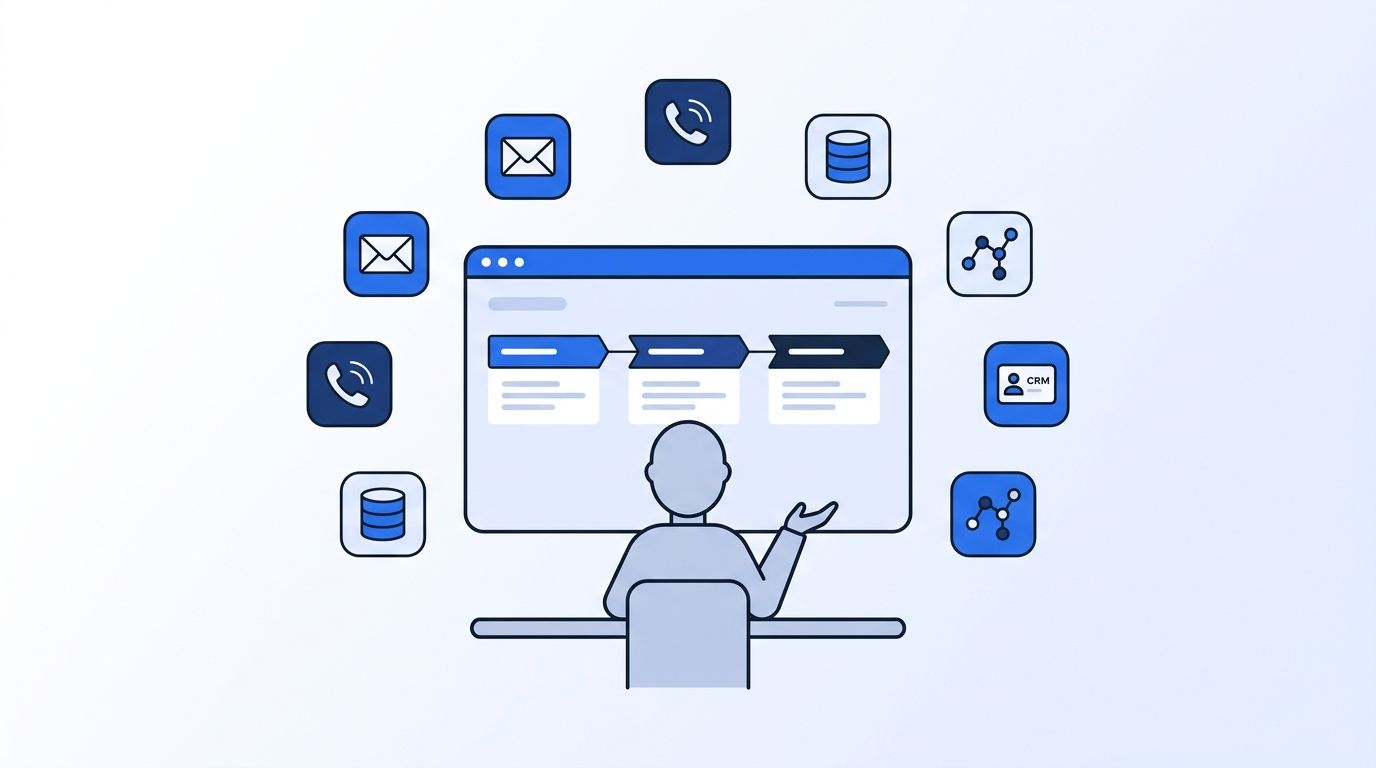
How Do You Choose an Outbound Sales Platform in 2026?
In 2026, the category has split into three tiers: full sales engagement platforms (sequencing plus dialing plus reporting), dedicated cold email senders (volume and deliverability), and AI-native tools (agents that write or dial without a human in the loop). Gartner formalized this shift by retiring the standalone "Sales Engagement Platform" category and replacing it with Revenue Action Orchestration in its December 2025 Magic Quadrant, naming Gong, Clari, and Outreach as Leaders and Salesloft a Visionary (Gartner via Outreach, Dec 2025).
Don't pick based on which category sounds newest. Pick based on where your bottleneck actually is — sending volume, data quality, dialing throughput, or headcount. That's the lens we used to rank the nine below, and it's the same lens worth applying to any tool your team demos next. For teams building or buying the AI SDR data engine underneath these platforms, the data layer matters as much as the sending layer — a great sequence built on stale contact records still bounces.
Most buying guides rank these tools by feature checklist. The more useful question in 2026 is which layer of the stack you're actually short on: most teams don't need a fourth sequencing tool, they need better data feeding the one they already have.
1. Outreach — Why Is It Best for Enterprise Revenue Orchestration?
Outreach earned a Leader designation in Gartner's inaugural Revenue Action Orchestration Magic Quadrant, one of just three vendors (with Gong and Clari) to land there among 12 evaluated in December 2025 (Outreach, 2025). That's a meaningful signal for teams buying at scale, since it reflects independent analyst evaluation, not vendor marketing copy.
Outreach doesn't publish list pricing — everything runs through a custom quote across its Amplify Core, Plus, and Pro tiers, with buyer guides estimating $100-$160+ per user per month before add-ons (Vendr). The platform last disclosed funding in 2021: a $200M Series G at a $4.4B valuation (PR Newswire, June 2021).
Best for: Enterprise RevOps teams that need sequencing, forecasting, and conversation intelligence under one contract and can absorb the price.
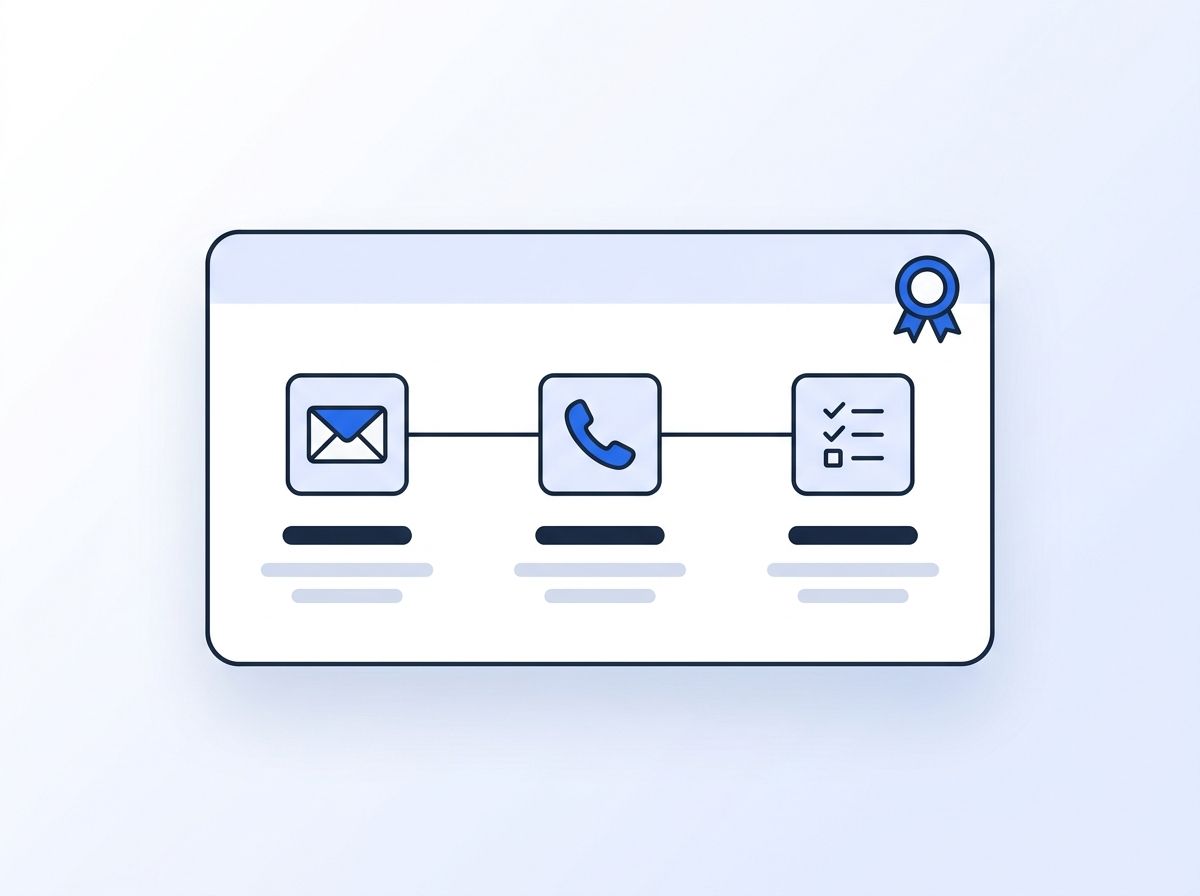
2. Salesloft — Why Is It Best for Built-In Conversation Intelligence?
Following its merger with Clari (closed December 3, 2025), Salesloft folded conversation intelligence directly into its "Rhythm" engine, which prioritizes engagement signals across channels into a single action queue — no separate Gong-style add-on required for teams on the combined suite. The merged entity now reports managing more than $10 trillion in revenue across 5,000+ global customers.
Pricing is quote-only; third-party negotiation guides put it around $125-$165 per user per month before mandatory add-ons like dialer, data, and deliverability modules (11x.ai).
Best for: Teams that want engagement and conversation intelligence on one data layer instead of stitching Salesloft to a separate Gong or Chorus contract.
3. Apollo.io — Why Combine a Contact Database With Sequencing?
Apollo pairs a database of 230M+ verified contacts and 30M+ companies with sequencing and dialing in a single SKU, so you're not buying data and engagement as two separate line items (Apollo.io). That bundling is the whole pitch, and it's why Apollo tends to win deals against tools that only do one half of the job.
Pricing starts free (75 credits/month), then Basic at $49/user/month, Professional at $79/user/month, and Organization at $119/user/month with a 3-seat minimum (Warmly). Apollo has raised $251M total, reaching a $1.6B valuation in 2023, with roughly 100,000 paying customers on the platform. For a side-by-side on where Apollo's database model diverges from a request-time API, see our Apollo alternative comparison.
Best for: SDR teams that want prospecting and sequencing under one login without managing a separate data vendor contract.
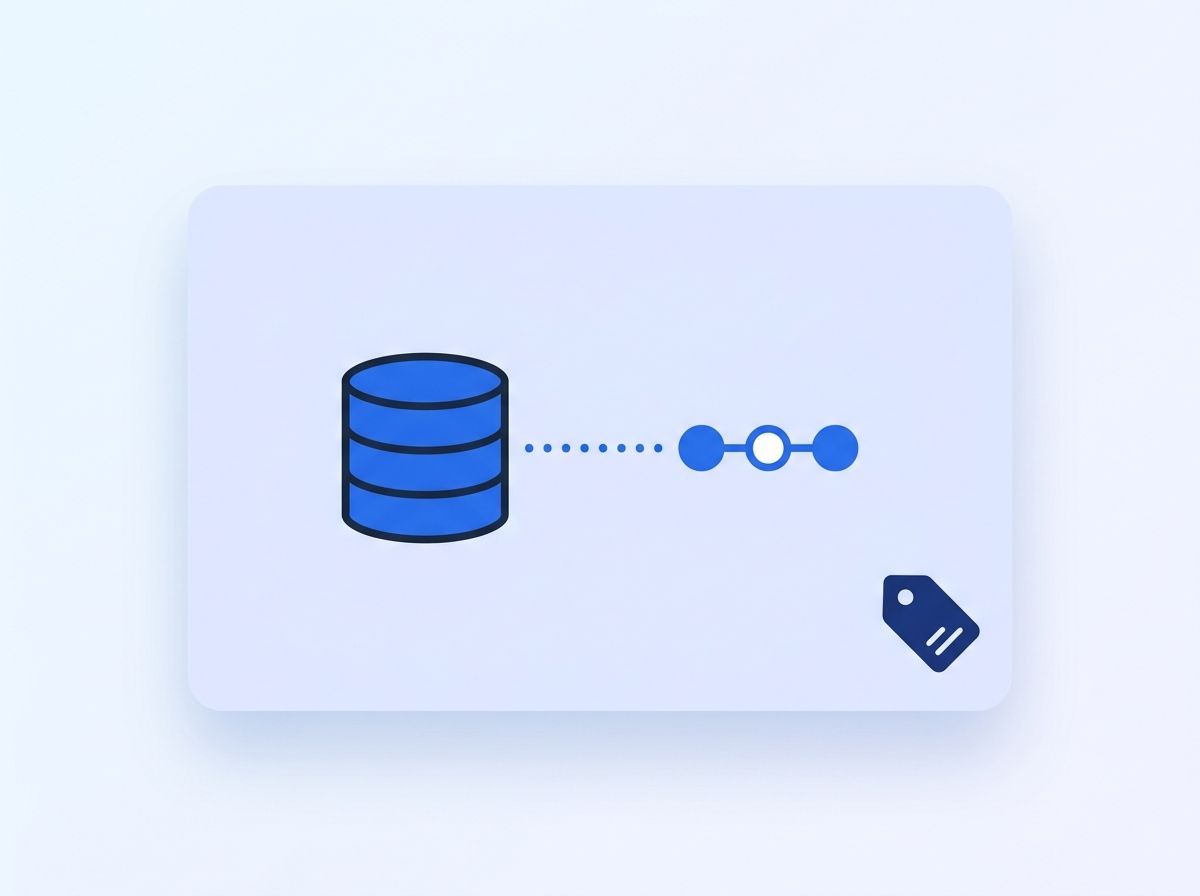
4. Clay — Why Is It Best for Custom Enrichment Workflows?
Clay's node-based canvas lets a team orchestrate 100+ third-party data and enrichment providers with waterfall logic and AI agent steps inside one workflow — it's less a single database and more a control layer that sits on top of dozens of them (Clay). That architecture is why GTM engineers reach for Clay when Apollo or a single-vendor database runs out of coverage.
A free plan is available; Launch starts at $185/month, Growth at $495/month, with custom Enterprise pricing above that. Clay closed a $100M Series C in August 2025 at a $3.1B valuation, led by CapitalG with Sequoia, Meritech, First Round, and others participating (TechCrunch, Aug 2025). Teams building waterfall enrichment on top of Clay can pull LinkedIn people and company data directly through the Datamagnet + Clay integration as one of the enrichment sources in the canvas.
Best for: GTM engineers who need to chain multiple data vendors and want programmatic control over enrichment logic, not a fixed database.
5. Instantly.ai — Best for High-Volume Cold Email at Low Cost
Instantly splits its product into three modular subscriptions — sending, a lead database (formerly SuperSearch), and CRM — and includes unlimited mailbox connections and unlimited warmup on every paid plan, so volume isn't gated by how many inboxes you connect (Landbase).
The Growth plan starts around $37.60/month billed annually (roughly $47/month monthly), scaling to $358/month on the Light Speed tier, with custom Enterprise pricing above that (ColdEmailKit). Instantly reports more than 40,000 customers, from solo founders to agencies; the company hasn't publicly disclosed funding.
Best for: Teams whose bottleneck is sending volume and deliverability, not data or dialing.
Why Does the Cold Email Reply Rate Gap Matter?
That's a 3x gap between an average sender and an elite one, and it rarely comes down to a single subject line. Elite senders combine list quality, warmup discipline, and sending infrastructure — which is exactly why the "which tool" question and the "whose data" question can't be separated. A dialer or sender is only as good as what it's pointed at.
6. Smartlead — Why Is It Best for Agencies Running Multiple Client Inboxes?
Smartlead allows unlimited mailbox connections with automated inbox rotation and a shared warmup pool across every plan — capacity is capped by active leads and monthly sends, not by mailbox count (PuzzleInbox). That structure is what makes it a default pick for agencies juggling dozens of client domains at once.
Pricing runs from $39/month (2,000 contacts) to $94/month (adds API and CRM), $174/month for agency-focused Unlimited Smart, and $379/month for high-volume Unlimited Prime. The company is reportedly bootstrapped, with a third-party revenue estimate around $14M ARR in 2024 (GetLatka) — treat that figure as an estimate, not a company-disclosed number.
Best for: Agencies and multi-brand teams that need to run cold email across many domains without per-inbox pricing penalties.
7. Nooks — Best for AI-Powered Parallel Dialing
Nooks builds around a "virtual sales floor" concept: reps dial in parallel while managers coach live and can whisper into calls in progress, which is a different bet than tools that just automate dialing speed (Nooks). It's the closest thing on this list to recreating a physical bullpen for a distributed team.
Nooks doesn't publish pricing; third-party estimates put effective cost around $5,000 per user per year, though that figure isn't company-confirmed. The company has raised roughly $65-70M total, including a $43M Series B led by Kleiner Perkins in October 2024 (PR Newswire, Oct 2024).
Best for: Teams running a high-volume, coached dialing motion who want manager visibility across every call in real time.
8. Regie.ai — Why Is It Best for Fully Autonomous AI SDR Outreach?
Regie.ai's RegieOne platform is built around autonomous agents that prospect without a human triggering each step, which puts it a level past tools that only assist a human SDR (PR Newswire, Feb 2025). Isn't that the actual promise of "AI SDR" — not a smarter draft button, but a rep that runs its own pipeline?
Published pricing sits at $180/user/month for the AI SEP plan (10-seat minimum) and $499/user/month for the Force Multiplier Rep plan (5-seat minimum), though some sources describe a simplified flat annual model too — treat exact numbers as directional. Regie.ai raised a $30M Series B in February 2025, co-led by Scale Venture Partners and Foundation Capital, reporting 300% year-over-year ARR growth at announcement. For teams layering signal-based triggers — job changes, funding events, hiring surges — into an autonomous sequence, our real-time job change signal API roundup covers the trigger data these agents run on.
Best for: Lean teams that want AI to run full outbound motions end to end, not just draft copy for a human to send.
9. HubSpot Sales Hub — Best for Sequencing Built Into Your CRM
HubSpot Sales Hub runs on the same underlying CRM object model as HubSpot's Marketing and Service Hubs, so sequences, lead scoring, and deal data share one data layer instead of syncing across a separate sales engagement tool (HubSpot). For teams already on HubSpot CRM, that eliminates an entire integration surface other platforms on this list require.
Pricing starts at $15/seat/month (Starter), $100/seat/month (Professional, adds sequences and custom reporting), and $150/seat/month (Enterprise, adds predictive lead scoring and call transcription, plus a roughly $3,500 one-time onboarding fee). HubSpot closed 2025 with 288,706 paying customers, per its Q4 2025 SEC filing (SEC, Dec 2025). Teams enriching HubSpot records with live LinkedIn data can wire it in directly through the Datamagnet + HubSpot integration.
Best for: SMB and mid-market teams that want sales engagement inside their CRM rather than as a bolted-on separate contract.
Comparison Table: 9 Outbound Sales Platforms at a Glance
| Platform | Best For | Starting Price | Key Differentiator |
|---|---|---|---|
| Outreach | Enterprise revenue orchestration | Custom (~$100-160/user/mo est.) | Gartner RAO Magic Quadrant Leader (Dec 2025) |
| Salesloft | Built-in conversation intelligence | Custom (~$125-165/user/mo est.) | Merged with Clari; native "Rhythm" engine |
| Apollo.io | Database + sequencing in one SKU | Free tier, then $49/user/mo | 230M+ contact database bundled with sending |
| Clay | Custom enrichment workflows | Free, then $185/mo | 100+ providers in one waterfall canvas |
| Instantly.ai | High-volume cold email | ~$38-47/mo | Unlimited mailboxes + warmup on all plans |
| Smartlead | Multi-client agency sending | $39/mo | Unlimited mailbox rotation, shared warmup |
| Nooks | AI parallel dialing | Custom (~$5,000/user/yr est.) | Live coaching/whisper across parallel dials |
| Regie.ai | Autonomous AI SDR | $180/user/mo (10-seat min) | Fully autonomous prospecting agents |
| HubSpot Sales Hub | CRM-native sequencing | $15/seat/mo | Shared data layer with Marketing/Service Hubs |
How Did We Evaluate These Platforms?
We started from the tools SDR teams and GTM engineers actually reference when discussing 2026 stack decisions, then narrowed to nine based on three criteria: public verifiability (pricing and scale claims we could trace to a named source), category coverage (at least one platform representing sequencing, cold email sending, data orchestration, AI dialing, and autonomous AI SDR), and whether the platform earned an independent signal of scale — a funding round, a Gartner placement, or a disclosed customer count.
Where a pricing or scale figure came only from a third-party estimate rather than a company disclosure, we labeled it as an estimate in the section above (Nooks pricing, Smartlead revenue, and Regie.ai's exact per-seat model) rather than presenting it as confirmed. No vendor on this list paid for placement.
Software-industry SDRs hit quota at a lower rate than the cross-industry average, and 78% of sellers overall missed quota in 2025, up from 69% in 2024, according to a report analyzing $48 billion in pipeline data across 2,000 CROs (Ebsta x Pavilion, 2025). That's the backdrop every platform on this list is selling against — and it's why 84% of sales teams without an all-in-one platform say they plan to consolidate their tech stack (Salesforce, 2026 State of Sales Report).
AI is already inside most of these workflows, whether teams realize it or not. 37% of sales reps report using AI tools directly, more than any other tool category, and only 8% say they use no AI at all (HubSpot, 2025 State of Sales). Separately, 87% of sales orgs use AI somewhere in their workflow, and 55% use it specifically for prospecting (Salesforce, 2026). If your evaluation doesn't ask how each platform handles AI-assisted personalization at the prospecting stage — where the data comes from, via something like ICP-based people search — you're missing where most of the 2026 differentiation actually sits.
Frequently Asked Questions
What's the best outbound sales platform for SDR teams overall?
For most mid-market and enterprise teams, Outreach or Salesloft is the safest default given their Gartner Leader/Visionary standing in the December 2025 Revenue Action Orchestration report. Smaller teams often get more value starting with Apollo, which bundles data and sequencing at a fraction of the price.
Is Apollo.io good enough for a small SDR team, or do you need Outreach or Salesloft?
Apollo covers most small-team needs since it bundles a 230M+ contact database with sequencing starting free. Teams graduate to Outreach or Salesloft once they need deeper forecasting, conversation intelligence, or enterprise-grade admin controls that Apollo doesn't fully match.
What's the difference between a sales engagement platform and a cold email tool?
Sales engagement platforms like Outreach and Salesloft manage multi-channel sequences (email, calls, tasks) plus reporting and forecasting. Cold email tools like Instantly and Smartlead focus narrowly on sending volume, inbox rotation, and deliverability — they're built to scale sends, not manage a full sales motion.
Do AI SDR tools like Regie.ai actually replace human SDRs in 2026?
Not entirely. Regie.ai and similar tools automate full prospecting sequences, but 92% of sales teams still keep humans in the loop for qualified conversations. The realistic 2026 pattern is AI handling volume-heavy prospecting while humans manage warm conversations and closing.
How often should a team re-evaluate its outbound sales stack?
Annually at minimum, tied to renewal dates, since 70% of B2B sellers already report feeling overwhelmed by tool sprawl (Gartner, 2024). Consolidation toward fewer, better-integrated platforms tends to beat adding another point solution.
The Bottom Line
Outreach and Salesloft remain the safest picks for enterprise teams that need forecasting and conversation intelligence alongside sequencing. Apollo is the best starting point for smaller teams that want data and sending in one bill. If your bottleneck is enrichment coverage, Clay's orchestration layer beats any single-vendor database — and if it's dialing throughput, Nooks and Regie.ai represent the two competing bets on where AI takes the SDR seat next.
Whichever platform you land on, the sequence is only as good as the record behind it. Stale or mismatched contact data caps the reply rate ceiling no matter which tool sends the email. What's your current stack missing — volume, data, or dialing capacity? That answer, more than any feature list, should decide your next contract.
