
Disclosure: This article is published by Datamagnet. Vendor claims are self-reported unless otherwise noted.
9 Best Data Providers for International B2B Expansion in 2026
In 2026, the global sales intelligence market is worth $4.85 billion, and only 42.3% of it sits in North America (Fortune Business Insights, 2026). That means most B2B data spend now happens outside the US — yet most vendors are still built like North America is the whole map.
Picking a data provider for a domestic sales team is one problem. Picking one that holds up when you launch in Germany, Singapore, or Brazil is a different problem entirely — coverage gaps, phone-verification rules, and data-transfer law all vary by region. This guide ranks 9 providers on the criteria that actually matter for cross-border expansion.
TL;DR
- The sales intelligence market outside North America is worth $2.8B and growing, with Europe (23.9%) and Asia Pacific (22.8%) the next-largest regions (Fortune Business Insights, 2026).
- In 2026, 71% of the 194 economies tracked have data protection legislation in place — but coverage ranges from 96% in Europe to 50% in Africa (UNCTAD, 2026).
- GDPR enforcement isn't slowing down: European regulators issued roughly €1.2 billion in fines in 2025 alone, pushing the cumulative total since 2018 past €7.1 billion (DLA Piper, 2026).
- 36% of companies have delayed or pulled back from international market entry over localization challenges, and poor localization costs an estimated 20% of potential revenue (Lokalise, 2026).
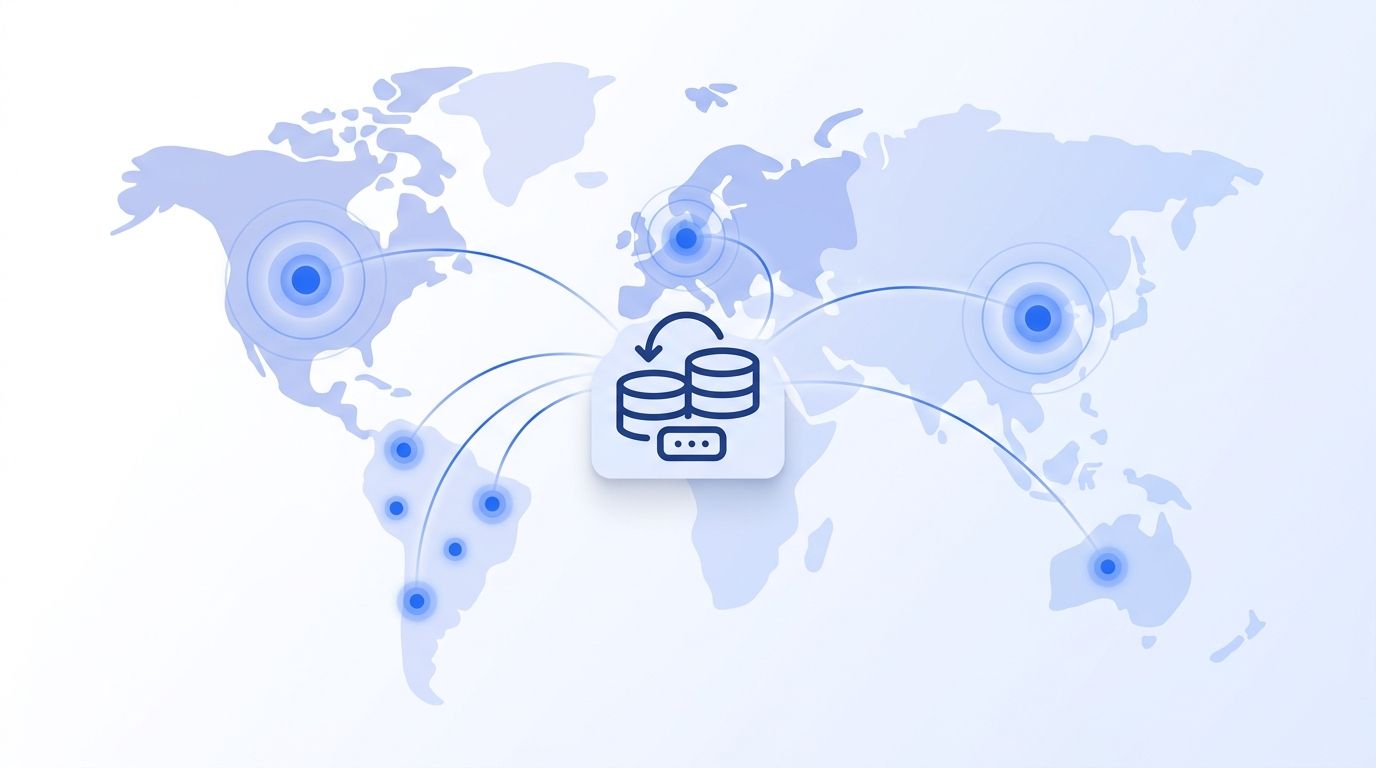
Why Does International Expansion Need a Different Kind of Data Provider?
A vendor that's 95% accurate in the US isn't automatically 95% accurate in Poland or the Philippines. Coverage depth, phone-verification rules, and legal data-transfer requirements all shift by region, and a database built for North American sales floors often thins out fast once you leave it.
Here's the part most buyers skip: compliance complexity is now a growth blocker, not just a legal footnote. In 2025, 85% of executives said compliance requirements had gotten more complex over the prior three years, and 77% said that complexity had already hurt areas of the business tied to growth (PwC, 2025). Only 7% of the 1,802 executives surveyed across 63 territories called their own compliance program "leading."
Most vendor comparisons treat "global coverage" as a single number — total contacts, total countries. That number hides the real question: is the data in your target region fresh and consent-compliant, or is it a stale bulk import that happens to have the right postal code? A country count tells you reach. It doesn't tell you whether the phone numbers still connect.
For a broader breakdown of vendor fit by use case (not just region), see our B2B data vendor comparison by use case before you narrow your shortlist.
1. Datamagnet — Best for Data That Doesn't Go Stale Between Regions
Datamagnet fetches company and people data live at request time instead of pulling from a periodically refreshed database, which matters most in exactly the regions where records change fastest and get stale slowest to fix. There's no batch export sitting in a warehouse waiting for its next sync.
That live-request model shows up directly in the Company Profile endpoint, which returns current headcount, industry, and location data the moment you call it — not whatever a vendor's crawler captured last quarter. For teams building an international account list from scratch, the ICP Company Search endpoint lets you filter by industry, headcount, and location with plain-English values instead of hunting for region-specific ID codes.
Best for: GTM engineering teams that want a single API contract across every region instead of stitching together region-specific data vendors.
Pricing: Pay-as-you-go credits, with 10 free credits to test coverage in your target market before committing.

2. Dun & Bradstreet — Best for Verifying Legal Entities Across Borders
Dun & Bradstreet's D-U-N-S Number system anchors a global business database of more than 600 million records, and the D-U-N-S identifier is recognized, recommended, or required by 240-plus government, trade, and industry bodies worldwide (Dun & Bradstreet, 2026). In 2026, 90% of the Fortune 500 still rely on it for entity verification.
That makes D&B less of a prospecting tool and more of a compliance layer — confirming a legal entity actually exists, is registered correctly, and is creditworthy before you sign a contract with it or route a shipment to it.
Best for: Finance, legal, and procurement teams that need to verify a foreign entity's legal status before a deal closes, not just find a contact name.
Pricing: Custom, quote-based — D&B doesn't publish self-serve pricing.
3. Cognism — Best for GDPR-First, Phone-Verified EMEA Data
Cognism screens phone data against do-not-call-equivalent registers in 15 countries, more than any other provider commonly cited in EMEA comparison reviews, with its deepest coverage across the UK, DACH region, Benelux, and the Nordics (Cognism, 2026). The company positions this compliance screening as a core product feature, not an add-on.
Cognism reports its manually phone-verified "Diamond Data" hits an 87% connect-accuracy rate — a self-reported figure worth validating against your own dial results before you scale a team around it.
Best for: Outbound teams cold-calling into the EU or UK who need compliance screening baked into the data, not bolted on afterward.
Pricing: Custom, seat-based annual contracts — no published self-serve tier.
4. ZoomInfo — Why Is It Best for Enterprises Layering International Data Onto a US Stack?
ZoomInfo's database spans contacts across more than 150 countries, but independent reviewers consistently note that accuracy and depth drop once you leave the US and Canada. ZoomInfo built a dedicated response to that gap: "Data Passport," a product line with Europe, North America Plus, and Global tiers sold specifically to plug regional coverage holes.
If your team is already standardized on ZoomInfo for domestic pipeline and just needs a regional add-on rather than a full switch, Data Passport is the more realistic path than assuming your existing plan already covers the new market. Our ZoomInfo comparison walks through where a live-data, pay-as-you-go model changes that math.
Best for: Enterprise RevOps teams with an existing ZoomInfo contract who need to bolt on regional coverage rather than migrate.
Pricing: Custom, seat-based — Data Passport tiers are sold as an add-on to a base contract.
5. Apollo.io — Best Budget Option for Early-Stage International Prospecting
Apollo's own materials cite contact counts ranging from roughly 210 million to 275 million, and company counts from 35 million to 73 million, depending on which page you land on. That's a wide enough spread that treating any single number as precise is a mistake — but the credit-based, self-serve pricing model is real and does scale down as easily as it scales up.
That flexibility is the actual draw for a small team testing a new region: no annual minimum, no dedicated onboarding call, just a card on file and a filtered search. The tradeoff is the same one that shows up across most SMB-tier platforms — data depth thins fast outside English-speaking, high-tech markets.
Best for: Small teams testing a new international market before committing budget to a bigger platform.
Pricing: Free tier available; paid plans scale by credits and seats. See our Apollo.io comparison for where per-credit costs diverge from usage-based APIs at volume.
6. Coresignal — Why Is It Best for Bulk International Datasets?
Coresignal positions itself explicitly as a dataset provider rather than a live lookup API, offering more than 3 billion continuously updated records with over 500 data points per profile, spanning 73 million-plus companies across 185-plus countries (Coresignal, 2026).
That bulk-dataset model fits a specific workflow: data science and BI teams that want to pull a full regional dataset into a warehouse and run their own matching and scoring, rather than calling an API record by record. Our Coresignal comparison breaks down when a dataset purchase beats a request-time API for this use case.
Best for: Data teams building proprietary scoring models on top of raw international firmographic and people data.
Pricing: Custom, dataset-license pricing based on volume and refresh cadence.
7. People Data Labs — Best for Large-Scale Person-Level Global Enrichment
People Data Labs claims roughly 3 billion person records and cites country coverage across 244 to 249 countries and territories, depending on the listing (People Data Labs, 2026). To its credit, PDL is upfront that coverage is strongest for North American tech workers and drops for non-English-speaking regions and smaller companies — a caveat worth taking seriously rather than glossing over.
That honesty is useful: it tells you exactly where to pressure-test the data before you build a whole regional campaign on top of it. Our People Data Labs comparison covers the coverage gaps in more detail.
Best for: Teams enriching large existing contact databases at scale, where some regional accuracy variance is an acceptable tradeoff for volume.
Pricing: Custom, usage-based pricing by record volume.
8. Bright Data — Best for Custom, DIY International Data Collection
Bright Data's proxy network claims more than 400 million monthly residential IPs across 195-plus countries, plus over 1.3 million datacenter IPs in 98 countries and 7 million-plus mobile connections, with its largest single-country pools in the US, India, and Brazil (Bright Data, 2026).
That infrastructure isn't a finished sales database — it's the plumbing teams use to build their own international data collection pipeline. It's the right fit if you have engineering resources to build and maintain scrapers and parsers; it's the wrong fit if you need structured records on day one. Our Bright Data comparison covers that build-versus-buy tradeoff directly.
Best for: Engineering teams with the resources to build and maintain their own international data collection pipeline.
Pricing: Usage-based, billed by bandwidth or successful requests.
9. Crunchbase — Why Is It Best for Timing Market Entry Around Funding Events?
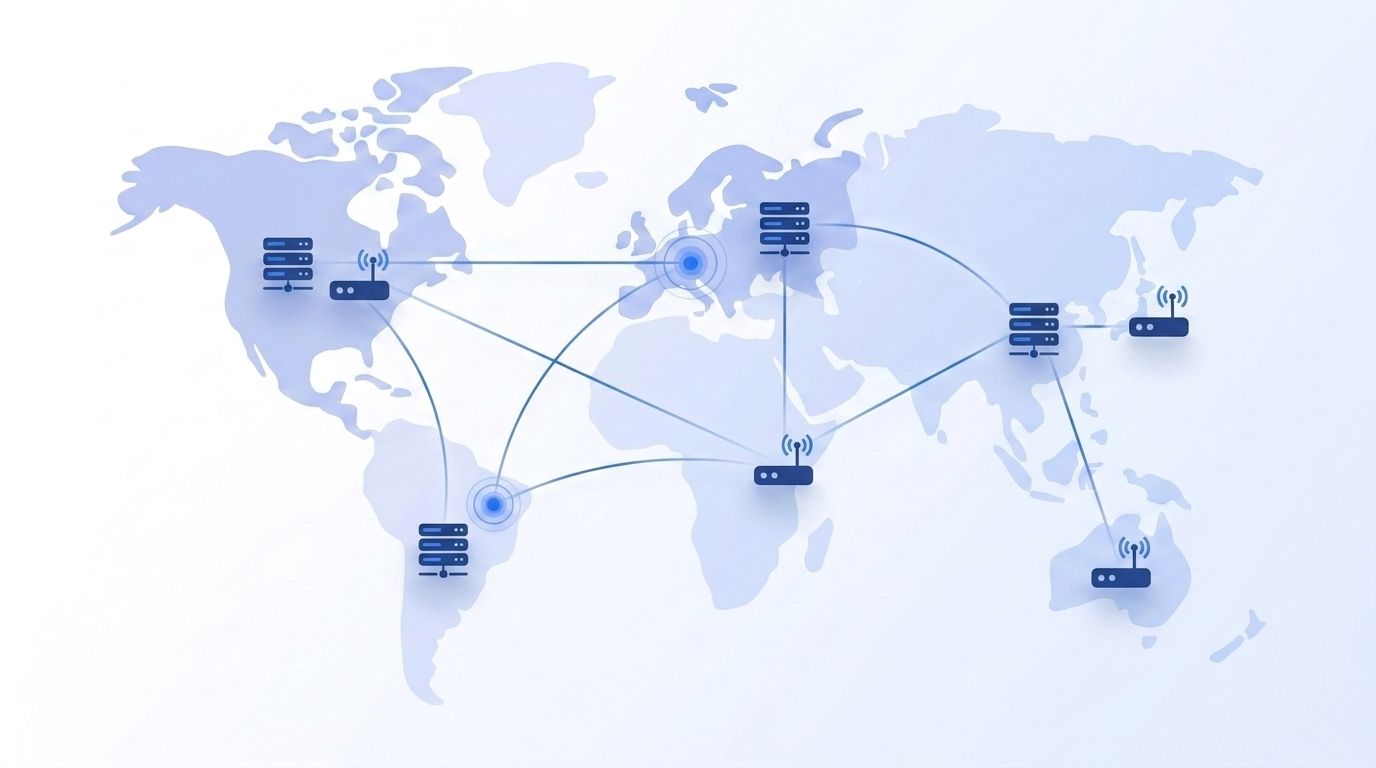
Crunchbase tracks global company funding rounds, investor networks, and acquisition activity, which makes it less a contact database and more a signal source for when to enter a market. A funding round in a target region is often the clearest public signal that a company has budget to spend on new vendors.
We couldn't verify a current, dated figure for Crunchbase's total database size — its own materials and third-party listings cite inconsistent numbers — so we're not going to repeat an unverifiable one here. What's consistent across reviews is its use as a research layer for identifying newly funded companies before you build an outbound list.
Best for: Teams timing international outreach around funding announcements rather than static firmographic filters.
Pricing: Free tier available; paid plans add advanced search and export.
How Much Does Cross-Border Compliance Actually Cost You?
In 2026, European regulators had issued roughly €1.2 billion in GDPR fines during 2025 alone, keeping enforcement at the same pace as the year before and reversing a prior downward trend (DLA Piper, 2026). Cumulative fines since GDPR took effect in May 2018 now total roughly €7.1 billion, with Ireland's Data Protection Commission alone responsible for over €4 billion of it.
Why does that matter for a data provider decision specifically? Because the data you buy is the thing that creates the exposure. A vendor that can't tell you where its records came from or how consent was captured hands you someone else's compliance risk along with the phone number. Our security and data practices page covers how Datamagnet sources public data and handles GDPR/CCPA requests, if you want a template for what to ask any vendor.
Coverage of data protection law itself isn't uniform either, which is exactly why a "GDPR compliant" badge on a vendor's homepage doesn't tell you much about their readiness for, say, Kenya or Vietnam.
Why Does Localized Data Outperform Generic Contact Lists?
Would you trust a vendor pitch that clearly wasn't written for your country? Most buyers wouldn't, and the research backs that up: 76% of consumers say they're more likely to buy when product information is presented in their own language, and roughly 40% say they'll never buy from a website in another language at all (CSA Research, 2025). That's consumer-side research, but the same instinct shows up in B2B — a contact list with the wrong name format or a disconnected local number reads as sloppy before your rep even opens their mouth.
Teams that have tried expanding into a new region off a generic, unlocalized contact list usually describe the same failure pattern: reply rates that looked fine on paper but connect rates that quietly collapsed once reps started dialing. The list wasn't wrong exactly — it just wasn't built for that market.
The business cost of skipping this step is measurable. 36% of companies say they've delayed or pulled back from international market entry specifically over localization challenges, and poor localization is estimated to cost businesses 20% of potential revenue on average (Lokalise, 2026).
Which of the 9 Providers Fits Your International Expansion Needs?
| Provider | Best For | Model | Compliance Focus | Pricing |
|---|---|---|---|---|
| Datamagnet | GTM engineers wanting one API contract globally | Live request-time API | Public-source, GDPR/CCPA-aware | Pay-as-you-go, 10 free credits |
| Dun & Bradstreet | Legal entity verification | Business identity database | Trade/credit compliance | Custom quote |
| Cognism | GDPR-first EMEA calling | Phone-verified contact data | DNC screening in 15 countries | Custom, seat-based |
| ZoomInfo | Adding regional data to a US stack | Database + Data Passport add-on | Varies by tier | Custom, seat-based |
| Apollo.io | Early-stage market testing | Self-serve credit database | Standard GDPR/CCPA | Free tier + credits |
| Coresignal | Bulk regional datasets | Licensed dataset | Dataset-level terms | Custom, volume-based |
| People Data Labs | Large-scale person enrichment | Record-based database | Standard GDPR/CCPA | Custom, usage-based |
| Bright Data | DIY collection infrastructure | Proxy/collection network | Depends on implementation | Usage-based |
| Crunchbase | Timing entry around funding | Funding/company database | Standard terms | Free tier + paid |
How Did We Select These Providers?
We started from the vendor list already covered in our broader B2B data vendor comparison and narrowed it to providers with a documented international footprint — coverage claims, compliance positioning, or region-specific products, not just a generic "global" label on a homepage.
Each provider was evaluated against four criteria:
- Country/region depth: documented coverage claims, not just a total record count
- Compliance posture: GDPR/CCPA handling, phone-verification screening, or entity-verification standards
- Data freshness model: live request-time data versus periodic bulk refresh
- Pricing accessibility: whether a team can test a new region without a long procurement cycle
We treated every vendor-published statistic as self-reported unless a source outside the vendor confirmed it, and flagged the figures that varied across a vendor's own materials instead of picking whichever number looked best. No vendor on this list paid for placement.
Frequently Asked Questions
What's the best data provider for international B2B expansion overall?
Datamagnet fits teams that want one API contract across every region, since its request-time model avoids the stale-data problem that hits periodically refreshed databases hardest outside their home market. For legal entity verification specifically, Dun & Bradstreet remains the standard, with 90% of the Fortune 500 relying on its D-U-N-S system (Dun & Bradstreet, 2026).
Is ZoomInfo good enough for expanding outside North America?
ZoomInfo covers more than 150 countries, but reviewers consistently report thinner accuracy outside the US and Canada. ZoomInfo's own "Data Passport" product, sold as a regional add-on across Europe, North America Plus, and Global tiers, is effectively an admission of that gap — budget for it as a separate line item, not an included feature.
How do I check if a data provider is GDPR-compliant before signing a contract?
Ask for a documented sourcing methodology and consent-handling process, not just a "GDPR compliant" claim. With European regulators issuing roughly €1.2 billion in fines in 2025 alone (DLA Piper, 2026), vendors without a public, specific answer are a real legal risk, not a formality.
What's the difference between a live API and a bulk dataset provider?
A live API like Datamagnet fetches data at the moment you request it, so records reflect current state. A bulk dataset provider like Coresignal or People Data Labs sells a periodically refreshed export you load into your own warehouse — better for large-scale analysis, worse for catching a change that happened yesterday.
Does localized data actually improve international response rates?
Directionally, yes. Consumer research found 76% of buyers are more likely to purchase when information appears in their own language, and 40% won't buy from a foreign-language source at all (CSA Research, 2025). The same principle — familiarity builds trust — applies to how a cold outreach list reads to the person receiving it.
How Do You Get International Expansion Right?
There's no single winner here — Datamagnet fits teams that want live, request-time data across every region through one API, Dun & Bradstreet fits entity verification, and Cognism fits EMEA calling compliance specifically. If you're testing a new market on a tight budget, start with a self-serve option like Apollo.io before committing to an annual contract.
The one mistake to avoid: assuming a vendor's domestic accuracy numbers travel with it into a new country. Test the data in your actual target market before you build a campaign on top of it. You can check Datamagnet's live coverage in your target region with 10 free credits before you commit to a plan.
