
Disclosure: This article is published by Datamagnet. Vendor claims are self-reported unless otherwise noted.
9 Best CRM Enrichment Integrations for Salesforce in 2026
Is your Salesforce data actually trustworthy? Probably not. In 2025, 76% of CRM users said less than half their organization's data was accurate or complete, and 37% said bad data had already cost them revenue (Validity, The State of CRM Data Management in 2025, 2025). That's the problem every enrichment integration on this list is trying to solve.
Picking the right one isn't simple. Some tools ship a native AppExchange package. Others only reach Salesforce through an API or a middleware layer like Clay or n8n. We compared 9 options on Salesforce integration depth, pricing model, and what each one is genuinely best for — not just the marketing copy.
TL;DR
- 76% of CRM users say under half their data is accurate; 37% report losing revenue over it (Validity, 2025).
- Salesforce AppExchange now lists 6,233 apps, up 10% year over year, so "native integration" no longer means one obvious choice (Salesforce AppExchange, 2026).
- Clearbit's standalone tools shut down December 8, 2025 and folded into HubSpot-only Breeze Intelligence, leaving Salesforce-only teams with no direct path (HubSpot, 2025).
- ZoomInfo and Apollo.io lead on native Salesforce depth; API-first tools like Datamagnet and People Data Labs trade a native app for lower cost and more flexibility.
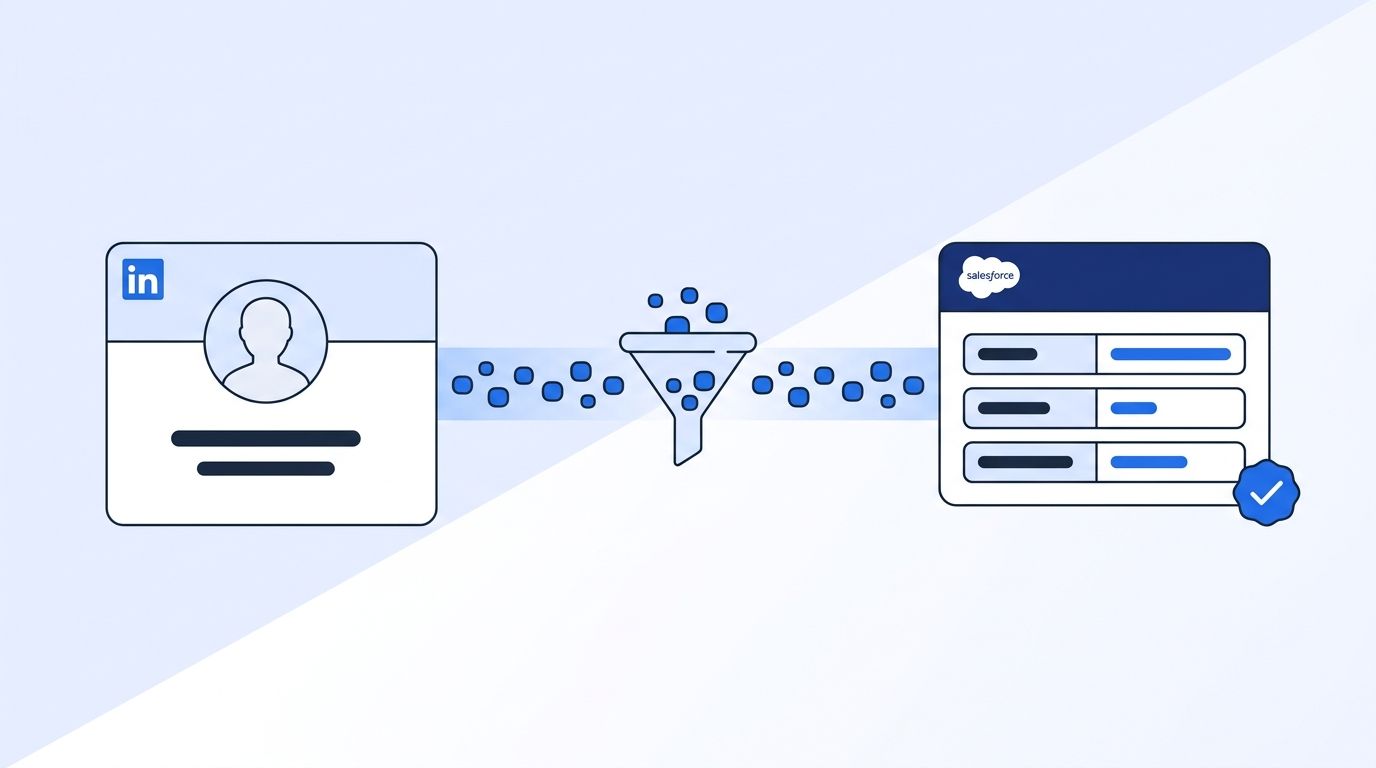
Why Does Salesforce CRM Enrichment Look Different in 2026?
Salesforce AppExchange now carries 6,233 listed apps, up from 5,661 a year earlier — a 10% jump that gives buyers more enrichment choices than ever, and more decision fatigue to go with it (SFApps.info, Salesforce Apps Stats 2026, 2026). Ninety-one percent of Salesforce customers already run at least one AppExchange app, so enrichment rarely arrives as a first install — it's bolted onto an existing, messy stack (Salesforce AppExchange, 2026).
The vendor field also got smaller in one important way. Clearbit — for years a default CRM enrichment pick — sunset its standalone API and Logo API on December 8, 2025, folding everything into Breeze Intelligence, a credit-gated add-on that only works with a paid HubSpot subscription (HubSpot, Clearbit Logo API sunset changelog, 2025). [UNIQUE INSIGHT] If your team runs Salesforce and not HubSpot, that shutdown didn't just remove a vendor option — it removed an entire pricing tier, since Breeze Intelligence has no confirmed path for non-HubSpot customers. For a deeper look at what changed, see our programmatic CRM enrichment guide.
That's the backdrop for every comparison below: more AppExchange noise, one fewer major independent vendor, and a growing split between tools that live inside Salesforce and tools you have to wire in yourself.
1. Why Is ZoomInfo Best for Enterprise Salesforce AppExchange Depth?
ZoomInfo ships more than one dedicated Salesforce app, including a "Revenue Agent" built specifically for Salesforce's Agentforce layer — deeper native integration than almost anything else on this list. Enterprise plans typically start north of $15,000 a year on a contract-only basis, positioning ZoomInfo as a premium pick for teams that value platform depth over affordability.
Why it's great: ZoomInfo maintains multiple purpose-built AppExchange listings rather than a single generic connector, so account and contact intelligence surfaces directly inside standard Salesforce records and Agentforce workflows without a middleware hop.
Best for: Enterprise revenue teams already committed to Salesforce and Agentforce who want enrichment embedded at the platform level, not bolted on.
Key feature: The Agentforce-native Revenue Agent app pulls account intelligence straight into Salesforce's AI agent layer, a capability few competitors have matched yet.
Pricing: Contract-only. SalesOS plans have historically run from roughly $15,000 to $40,000+ per year, plus per-seat add-ons — ZoomInfo doesn't publish list pricing, so budget for a sales call before you get a real number.
2. Why Is Apollo.io Best for Self-Serve Salesforce Sync?
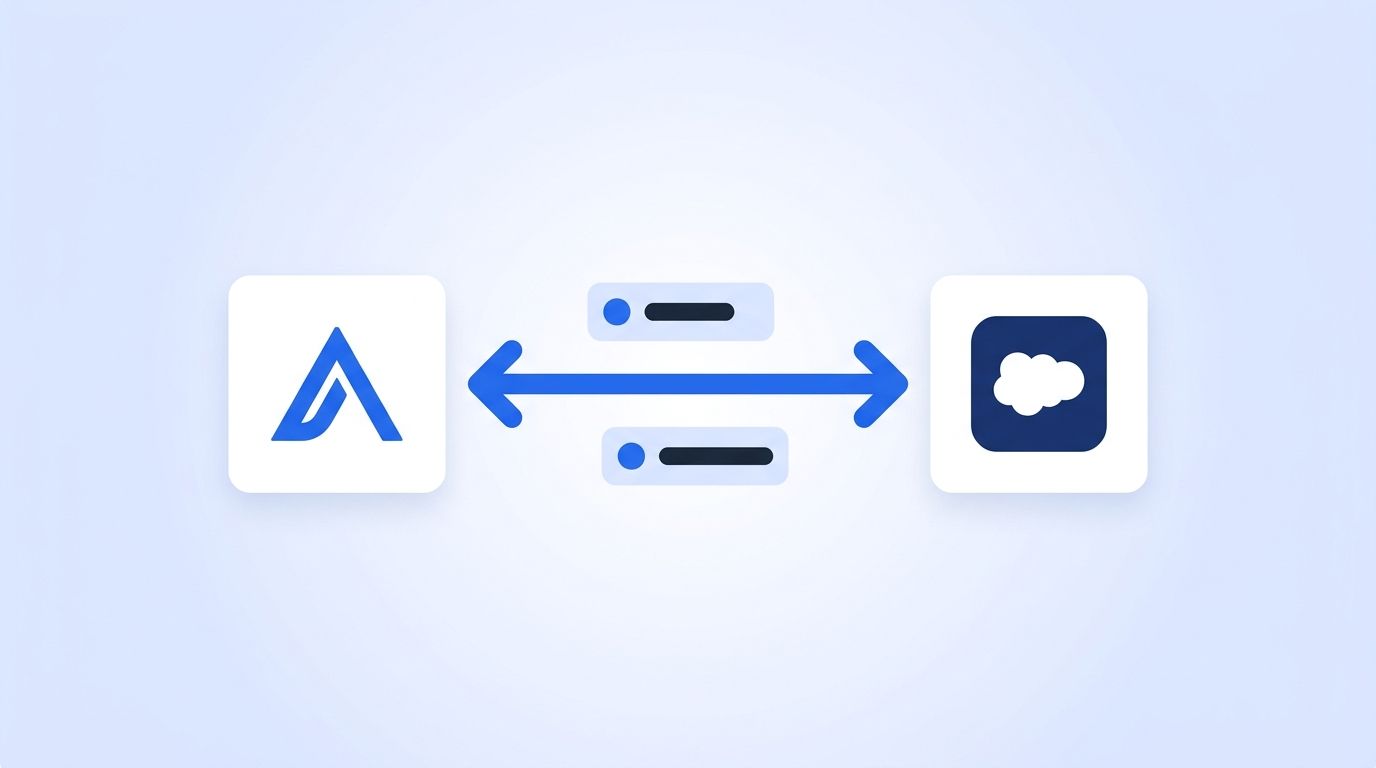
Apollo.io is the rare enrichment vendor with real self-serve pricing and a bi-directional Salesforce sync, which means a rep can turn on enrichment without waiting on procurement. Plans start free and scale to $49–$119 per user per month, with credit-based phone and mobile lookups letting teams control spend record by record instead of committing to a flat platform fee.
Why it's great: Contacts, activities, and deals sync both ways between Apollo and Salesforce, and even the Basic plan includes core sync — advanced workflow automation and reporting require a Professional or Organization plan.
Best for: Growing sales teams that want to start enriching Salesforce records this week, not next quarter.
Key feature: Credit-based phone and mobile enrichment (roughly 9+ credits per contact) lets teams control spend per record instead of paying a flat platform fee.
Pricing: Free at $0, then $49, $79, or $119 per user per month billed annually. At scale, enrichment credits beyond the seat allotment often add $15,000–$40,000/year on top (Apollo.io, 2025-2026).
3. Why Is Clay Best for Multi-Source Waterfall Enrichment?
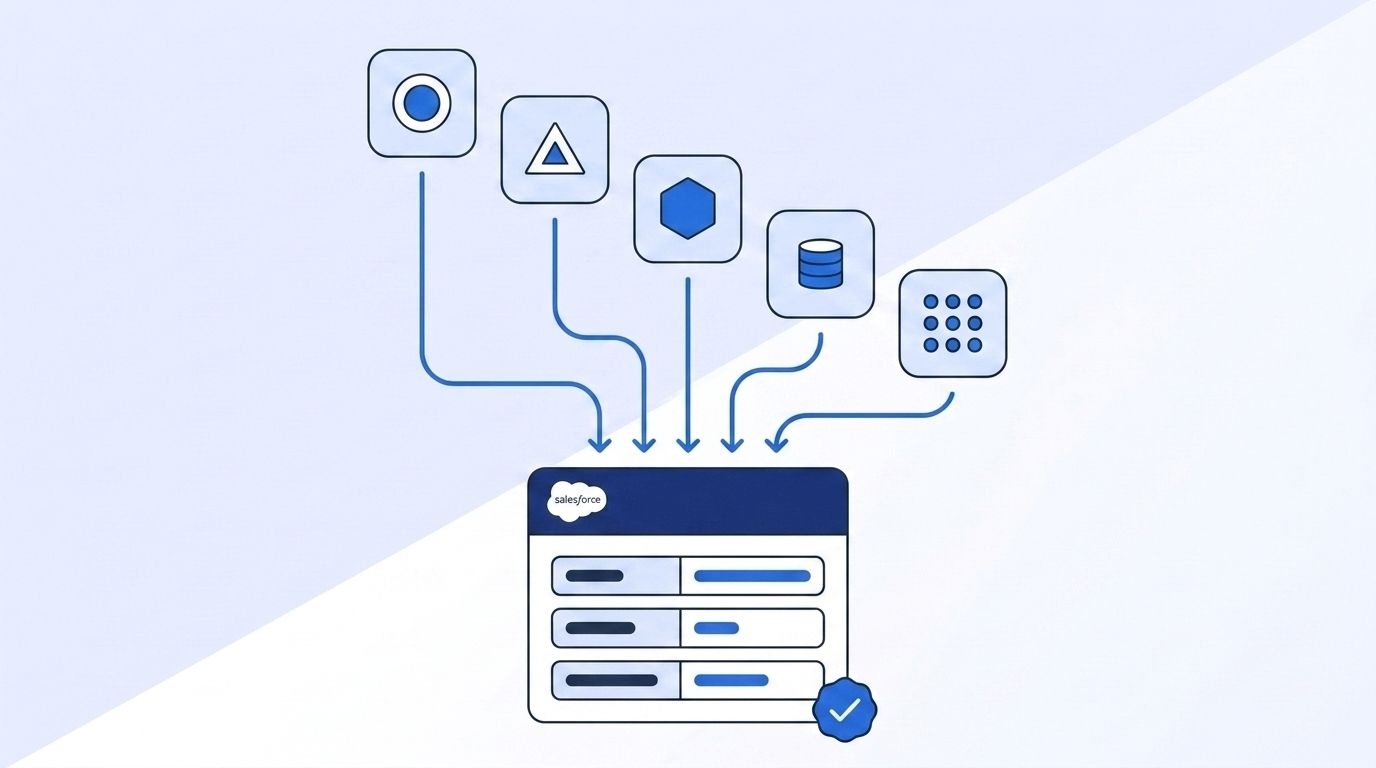
Clay doesn't own a single proprietary database — it cascades a record through dozens of data providers until it finds a match, then pushes the result straight into Salesforce as a Lead, Contact, or Account. That waterfall approach typically beats any single-vendor match rate, and per-row credits priced at $0.02–$0.12 mean cost scales with actual usage rather than a fixed seat license.
Why it's great: That waterfall approach usually beats any single-vendor match rate, since a record that misses in one provider's database can still land in another's. Native Salesforce and HubSpot connectors handle the writeback automatically.
Best for: RevOps and GTM engineering teams who want match-rate flexibility and are comfortable configuring a workflow tool instead of installing a fixed app.
Key feature: Per-row enrichment credits ($0.02–$0.12/row) mean cost scales with actual usage, not a flat seat license — useful for teams enriching in bursts rather than continuously.
Pricing: Launch starts at $185/month, but Salesforce integration only becomes available on the $495/month Growth plan and above (Clay, 2025-2026).
4. Why Is Datamagnet Best for Real-Time LinkedIn-Sourced Data via API?
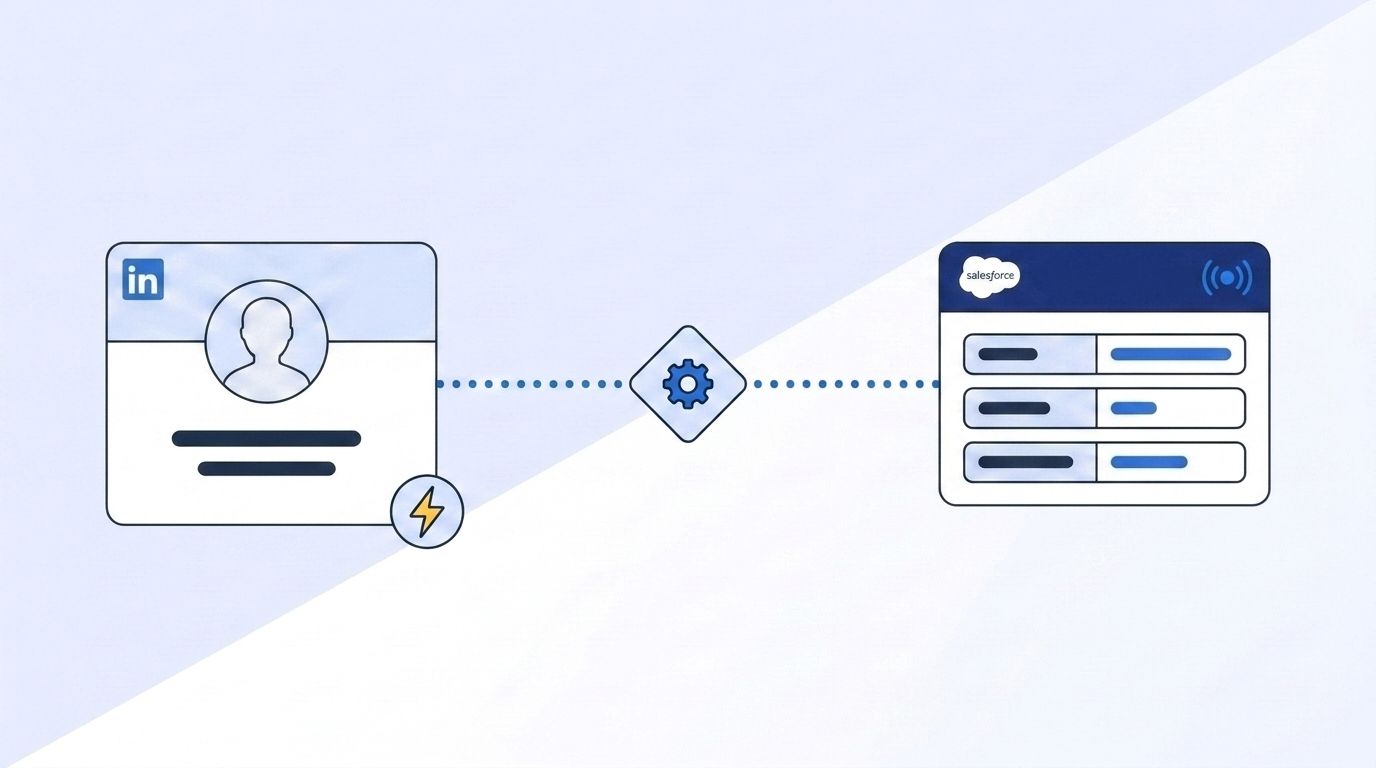
Datamagnet fetches people and company data straight from LinkedIn at request time instead of serving it from a static database, so a Salesforce record gets the profile as it exists today, not as it existed at the last database refresh.
Why it's great: The Company Profile and People Profile endpoints return structured firmographic and person-level data on demand, and job-change and engagement signals can trigger re-enrichment automatically when a contact moves roles.
Best for: Teams that want live LinkedIn data inside Salesforce and are comfortable routing it through Clay or n8n rather than a native AppExchange app — Datamagnet doesn't ship one yet.
Key feature: Real-time collection means no stale-database problem; every request pulls current headcount, title, and company data instead of a cached snapshot.
Pricing: Pay-as-you-go credits starting with 10 free credits, no annual contract required. See current pricing for exact rates.
5. Why Is Lusha Best for Budget-Conscious Teams Starting Out?
Lusha pairs a genuine free tier with a native Salesforce push, which is an unusual combination — most vendors gate CRM sync behind an enterprise contract. Contacts revealed through the browser extension or search can be pushed straight into Salesforce as Leads, Contacts, or Accounts with field mapping, and pricing stays public through the mid tiers at $29.90–$52.45 per user per month.
Why it's great: Contacts revealed in Lusha's extension or search can be pushed straight to Salesforce as Leads, Contacts, or Accounts with field mapping, and pricing stays public and self-serve up through the mid tiers.
Best for: Small and mid-market Salesforce teams who need enrichment now and don't have budget for a five-figure annual contract.
Key feature: Full Salesforce sync, API access, and intent data require the Scale tier, so budget an extra $200–$500/month once you outgrow the entry plans (Lusha, 2025-2026).
Pricing: Free at 70 credits/month, Pro at $29.90/user/month, Premium at $52.45/user/month, billed annually.
6. Cognism — Best for GDPR-Compliant EU Mobile Coverage
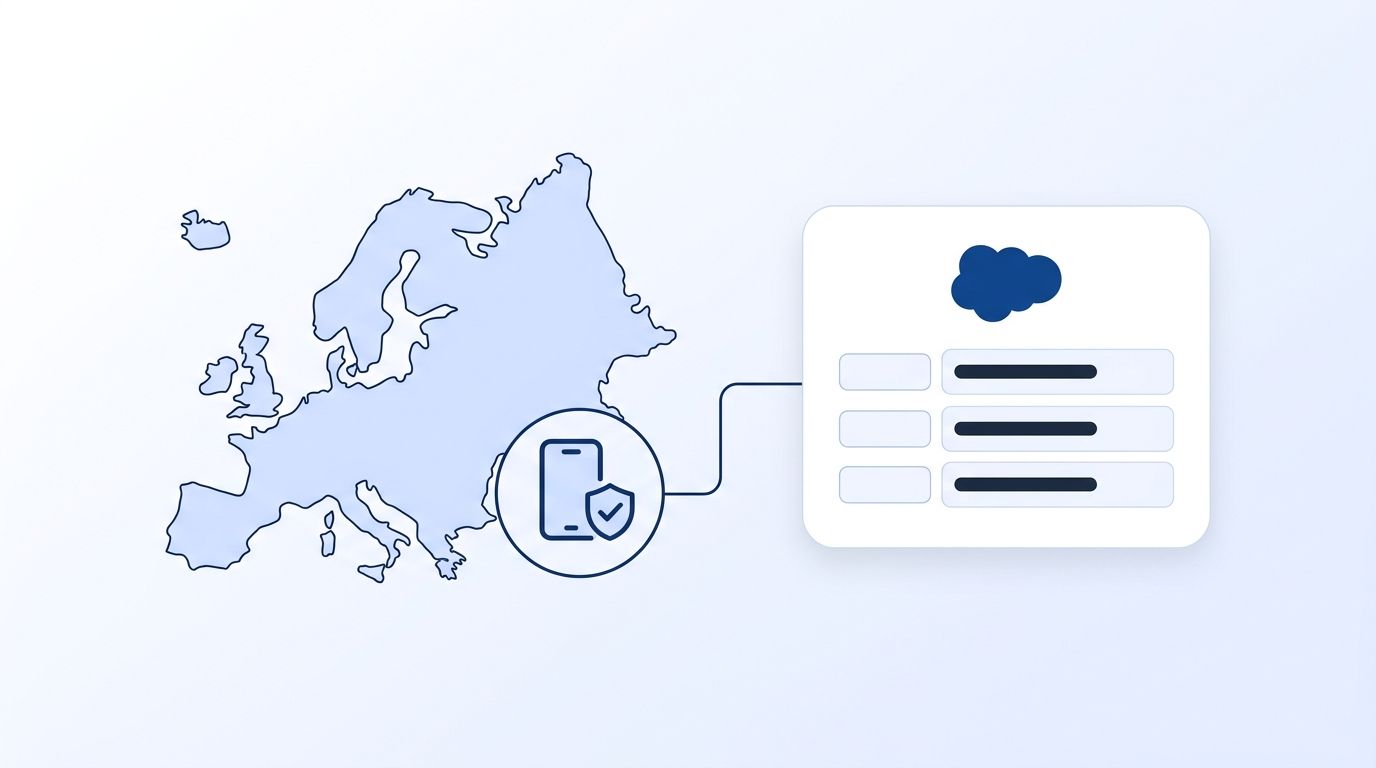
Cognism built its reputation on verified mobile numbers in regions where most US-centric vendors struggle — a real gap if your Salesforce pipeline includes EU accounts. Its Diamond Data tier verifies mobile numbers for GDPR-compliant dialing, and a native Salesforce connector on the Enterprise tier pushes that data directly into account and contact records.
Why it's great: The "Diamond Data" tier verifies mobile numbers for GDPR-compliant dialing, and a native Salesforce connector (Enterprise tier) pushes that data directly into records, with a separate Bombora intent add-on available for buying-signal enrichment.
Best for: Sales teams selling into Europe who need dial-able mobile coverage, not just email addresses, without running afoul of GDPR consent rules.
Key feature: Compliance-first data sourcing means fewer bounced calls and fewer legal headaches than scraping-based alternatives.
Pricing: Contract-only, typically $15,000–$60,000+/year depending on seats and credits, with intent data add-ons running $10,000–$20,000/year extra. Cognism doesn't publish list pricing, so treat these as directional.
7. Why Is 6sense Best for Intent-Driven ABM Enrichment?
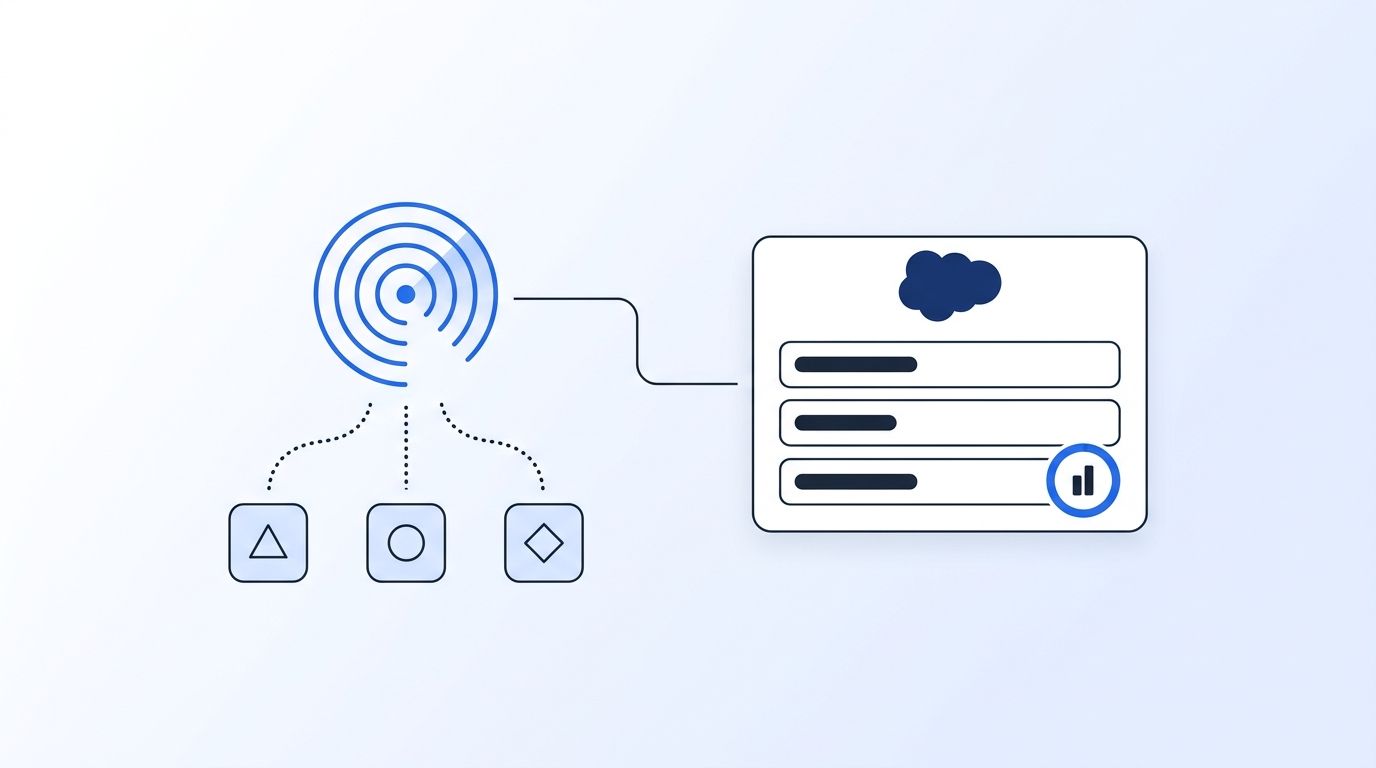
6sense ships two dedicated Salesforce apps — one for CRM data sync, one purely for enrichment export — and layers intent signals on top of standard firmographic data. Self-reported coverage spans 16,000+ B2B intent topics across 4.9 million domains, letting Salesforce records show not just who a company is, but whether it's actively researching your category.
Why it's great: 6sense claims coverage across 16,000+ B2B intent topics and 4.9 million domains (self-reported), which lets Salesforce records show not just who a company is, but whether it's actively researching your category.
Best for: ABM-focused revenue teams who want intent scoring baked into the same records their AEs already work from.
Key feature: Two purpose-built Salesforce apps split the sync and enrichment jobs cleanly, instead of forcing one connector to do both.
Pricing: Contract-only. Buyer-reported pricing trackers put the median around $50,000–$65,000/year, with paid plans starting near $50,000/year — confirm directly with 6sense before budgeting, since these figures come from third-party purchase-data aggregators, not 6sense's own pricing page.
8. Demandbase — Best for Full-Stack ABM With Advertising Activation
Demandbase goes a step past enrichment into a full ABM stack, bundling intent, technographic, and firmographic data with advertising activation — useful if enrichment is just one piece of a broader account-based motion. Salesforce and HubSpot integration is built into onboarding rather than sold as an add-on, and the native ABM app writes intent and technographic signals directly onto account records.
Why it's great: Salesforce and HubSpot integration is built into onboarding rather than sold separately, and the native ABM app writes intent and technographic signals directly onto Salesforce account records.
Best for: Marketing-and-sales teams running coordinated ABM campaigns who want enrichment data to also drive ad targeting, not just CRM fields.
Key feature: Bundled advertising activation means the same enriched account data that populates Salesforce can also target that account across paid channels.
Pricing: Contract-only, ranging roughly $18,000–$300,000+/year depending on scope, with an onboarding fee (commonly cited near $29,000) covering Salesforce setup — verify exact figures with Demandbase sales, since public trackers vary.
9. Why Is People Data Labs Best for Engineering-Led Custom Builds?
People Data Labs has no native Salesforce app and no maintained no-code connector — it's a pure API, which is exactly the point for teams that want full control over how enrichment logic works. A free tier covering 100 lookups a month plus transparent per-credit pricing makes it easy to prototype a pipeline before committing engineering time to a full Salesforce build.
Why it's great: [ORIGINAL DATA] Comparing entry pricing across every self-serve tool on this list, PDL comes in cheapest per record — but that low cost assumes engineering time to build the Salesforce pipeline yourself, typically through middleware like Clay or Census.
Best for: GTM engineering teams with the resources to build and maintain a custom enrichment pipeline instead of paying a premium for a pre-built one.
Key feature: A free tier (100 lookups/month) plus transparent per-credit pricing makes it easy to prototype before committing engineering time to a full build.
Pricing: Free at 100 lookups/month, Pro at $98/month (350 person credits + 1,000 company lookups, ~$0.28/credit), Enterprise custom from roughly $2,500/month.
Comparison Table: All 9 Tools Side by Side
| Tool | Best For | Salesforce Integration | Starting Price |
|---|---|---|---|
| ZoomInfo | Enterprise AppExchange depth | Native app (multiple, incl. Agentforce) | ~$15,000/yr, contract-only |
| Apollo.io | Self-serve sync | Native bi-directional sync | $0 free, then $49/user/mo |
| Clay | Waterfall enrichment | Native connector (Growth plan+) | $185/mo ($495/mo for Salesforce) |
| Datamagnet | Real-time API data | Via Clay/n8n middleware | 10 free credits, pay-as-you-go |
| Lusha | Budget-conscious teams | Native push (Scale tier for full sync) | $0 free, $29.90/user/mo |
| Cognism | GDPR EU mobile coverage | Native connector (Enterprise tier) | ~$15,000/yr, contract-only |
| 6sense | Intent-driven ABM | 2 native apps (sync + enrichment) | ~$50,000/yr, contract-only |
| Demandbase | Full-stack ABM + ads | Native, bundled in onboarding | ~$18,000/yr, contract-only |
| People Data Labs | Engineering-led custom builds | API only, no native app | $0 free, $98/mo Pro |
How Did We Select These Tools?
We started with 12 CRM enrichment vendors that show up repeatedly in Salesforce AppExchange listings, RevOps forums, and enrichment vendor-comparison content, then narrowed the list to 9 using five criteria: Salesforce integration depth, pricing transparency, data freshness model, coverage specialization, and setup effort, each weighed against how the vendor actually performs inside a Salesforce environment rather than in isolation.
- Salesforce integration depth — native AppExchange app, API-only, or middleware-dependent
- Pricing transparency — self-serve public pricing vs. contract-only opacity
- Data freshness model — real-time API fetch vs. static database with refresh cycles
- Coverage specialization — general firmographic/contact data vs. intent, ABM, or region-specific strengths (like Cognism's EU mobile coverage)
- Setup effort — install-and-go vs. requires engineering or middleware
Evaluation was based on each vendor's own documentation, AppExchange listings, and published or buyer-reported pricing data (including Vendr purchase-data aggregators for contract-only tools) rather than hands-on trials of every platform — we've flagged every price above that comes from a third-party tracker instead of a vendor's own page. No vendor on this list paid for placement.
Frequently Asked Questions
These are the questions RevOps and sales teams ask most often when comparing CRM enrichment options for Salesforce, covering the overall best pick, whether budget tiers from Lusha or Apollo hold up, the Clearbit shutdown, and how the build-vs-buy decision shakes out for API-only tools like Datamagnet or People Data Labs.
What's the best CRM enrichment integration for Salesforce overall?
ZoomInfo has the deepest native Salesforce presence, including an Agentforce-specific app, which makes it the strongest pick for enterprise teams already committed to the platform. For self-serve budgets, Apollo.io offers the best mix of real Salesforce sync and public pricing starting at $49/user/month.
Is Lusha or Apollo good enough for a small Salesforce team?
Yes, for most small teams. Both offer native Salesforce push at entry price points — Lusha from $29.90/user/month, Apollo from $49/user/month — without an annual contract. You'll likely outgrow the entry tier once you need full sync or intent data, but it's a reasonable starting point.
What happened to Clearbit for Salesforce users?
Clearbit's standalone API and Logo API shut down December 8, 2025, folding into HubSpot's Breeze Intelligence, a credit-gated add-on tied to a paid HubSpot subscription (HubSpot, 2025). Salesforce-only teams that relied on Clearbit now need a different vendor entirely.
Do I need a native AppExchange app, or is an API-only tool enough?
It depends on your team's engineering capacity. A native app like ZoomInfo's or Lusha's gets you running faster with no code. An API-first tool like Datamagnet or People Data Labs costs less per record but requires routing data through middleware such as Clay or n8n before it lands in Salesforce.
How often does this list get updated?
We review CRM enrichment vendor pricing and Salesforce integration status regularly, since — as the Clearbit shutdown showed — this market shifts fast. Check the updatedAt date at the top of this post for the last refresh.
What's the Bottom Line on Salesforce CRM Enrichment Tools?
ZoomInfo wins on native Salesforce depth for enterprise teams that can absorb a five-figure-plus contract. If budget matters more than a pre-built app, Apollo.io and Lusha both get real Salesforce sync running at self-serve prices. Need EU mobile coverage or ABM-grade intent data? Cognism and 6sense specialize there. And if your team would rather build a custom, real-time pipeline than pay for one, Datamagnet's API paired with Clay or n8n gets LinkedIn-fresh data into Salesforce without a database refresh cycle in the way.
For a deeper look at why real-time enrichment beats static databases, see our guide on programmatic CRM enrichment benefits, or compare Datamagnet directly against ZoomInfo and People Data Labs if you're weighing a switch.
