
Disclosure: This article is published by Datamagnet. Vendor claims are self-reported unless otherwise noted, and product capabilities described below reflect public documentation retrieved 2026-08-12.
API-First vs. UI-First Sales Tools: Which Should GTM Engineers Prioritize?
You're staring at two options for the same problem: buy a UI-first platform your reps can click through in an afternoon, or build on an API-first tool that takes a sprint to wire up but never boxes you in. In 2025, 65.7% of martech teams named data integration — not price, not features — as their single biggest stack management hurdle (MarTech.org, "These are the challenges and barriers impacting your martech stack," 2025 State of Your Stack Survey). That number is exactly why this decision matters more than it used to.
Neither approach wins outright. UI-first tools get a rep productive in a day; API-first tools take longer to stand up but scale without breaking every time your process changes. This comparison covers integration depth, speed to value, AI-agent readiness, hiring cost, and pricing — the five dimensions that actually decide which approach fits your team.
TL;DR
- In 2025, 65.7% of martech teams cited data integration as their top stack challenge (MarTech.org) — API-first tools solve this at the source; UI-first tools mostly paper over it with point-and-click connectors.
- GTM Engineering job postings grew 205% year-over-year, from roughly 1,400 in mid-2025 to over 3,000 by January 2026, with SQL or Python required in 38% of listings (Bloomberry, "I analyzed 1000 GTM Engineering jobs," 2025-2026).
- Only 24% of B2B suppliers have adopted agentic AI in sales, versus 45% using AI generally (Deloitte Digital, cited by Digital Commerce 360, February 2026) — agentic workflows need an API layer underneath them, not a UI.
- Choose UI-first if your team has no engineering capacity and needs a rep live this week. Choose API-first if you're building for scale, custom logic, or AI agents that act on your behalf.
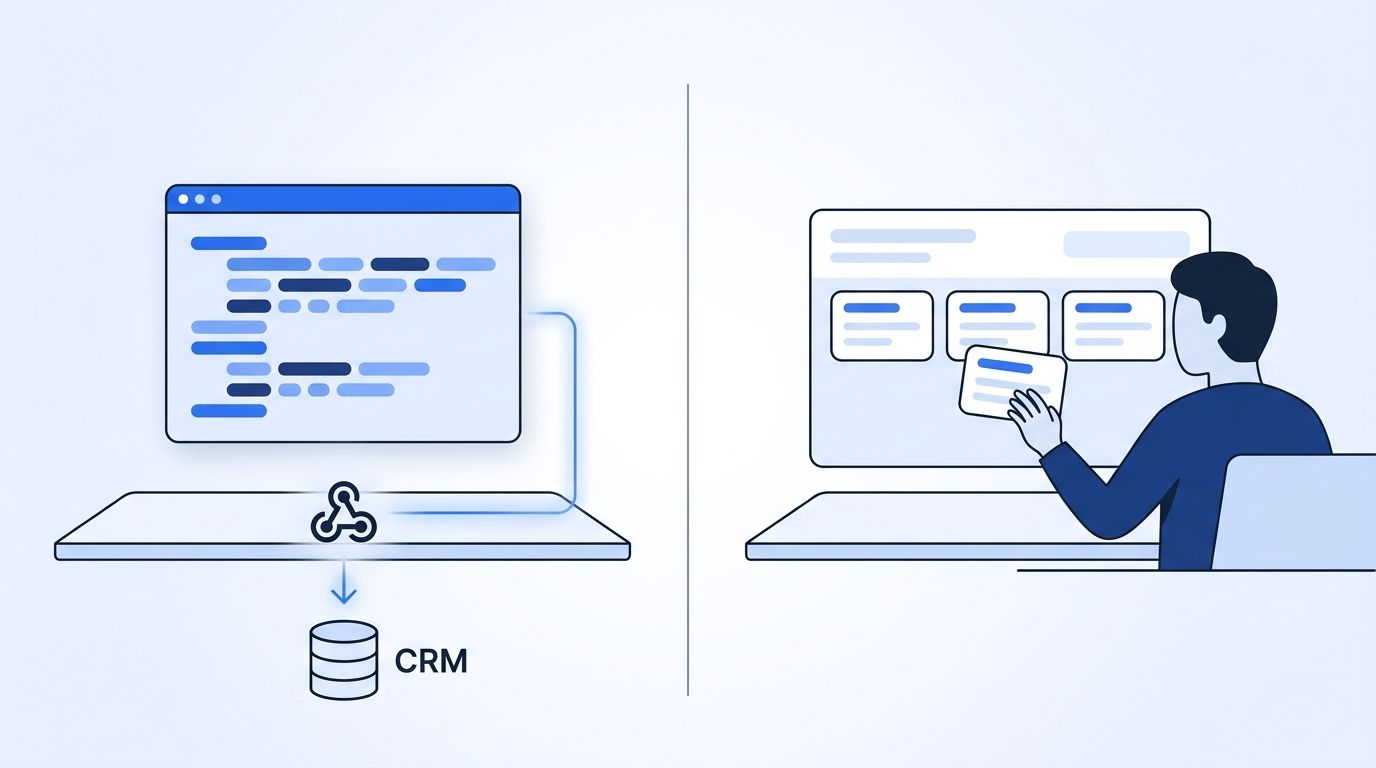
API-First vs. UI-First Sales Tools at a Glance
Before the category-by-category breakdown, here's how the two approaches stack up on the dimensions GTM engineers actually weigh when deciding where to invest build time.
| Category | API-First Tools | UI-First Tools |
|---|---|---|
| Best For | Custom workflows, agentic AI, multi-system orchestration | Fast rollout, non-technical teams, standardized processes |
| Setup Time | Days to weeks (engineering time upfront) | Hours to days (click-through configuration) |
| Pricing Model | Usage-based or per-credit, scales with volume | Per-seat licensing, scales with headcount |
| Integration Depth | Native — webhooks, structured JSON, direct data access | Shallow — pre-built connectors, limited to vendor's roadmap |
| AI-Agent Readiness | High — agents call endpoints directly | Low — agents need screen-scraping or RPA workarounds |
| Non-Technical Usability | Low — requires a builder who can read docs | High — reps configure it themselves |
| Maintenance Burden | Owned by your team; you fix what breaks | Owned by the vendor; you file a support ticket |
| Example Tools | Clay, n8n, Datamagnet, raw REST integrations | Outreach, Salesloft, Apollo's UI, HubSpot workflows |
| Our Verdict | Wins for scale and AI-readiness | Wins for speed and accessibility |
Which Wins on Integration Depth and Data Silos?
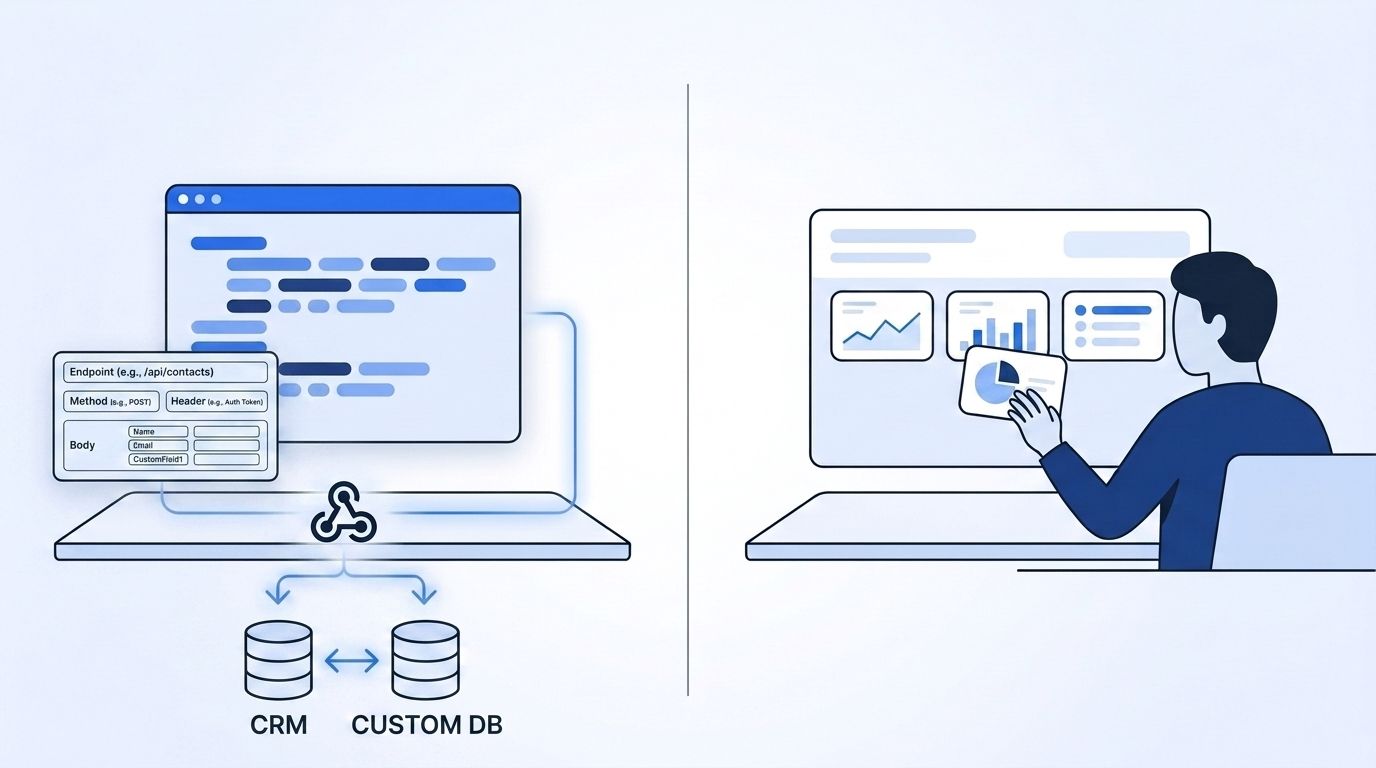
API-first tools win on integration depth, because the API is the interface — there's no pre-built connector to wait on when your data model doesn't match the vendor's assumptions. That distinction is exactly why 65.7% of teams call integration their top stack pain point (MarTech.org, 2025): most of that pain traces back to UI-first tools whose "integrations" are really just a limited menu of pre-approved connectors.
A UI-first platform ships with a marketplace of one-click integrations, which works fine until you need a field that isn't mapped or a trigger that isn't supported. At that point you're either waiting on the vendor's roadmap or bolting on a workaround. An API-first tool like Datamagnet's Company Profile endpoint hands you structured JSON you can shape however your CRM or data warehouse actually needs it, without waiting for anyone else's release cycle.
The nuance: UI-first connectors are genuinely fine for standard objects — contacts, deals, basic firmographics. It's the edge cases, custom fields, and multi-system logic where the gap shows up. Verdict: API-first wins for anything beyond standard field mapping.
Which Wins on Speed to First Value?
UI-first tools win on speed — a rep or admin can configure a sequence, a scoring rule, or a workflow in an afternoon with zero engineering involvement. That's the entire value proposition: point, click, ship. There's no widely-verified industry benchmark comparing exact onboarding hours for UI-first setup versus a custom API build, so treat any specific day-count you see quoted elsewhere with skepticism — but the directional truth holds up in every team we've talked to: UI-first tools are built for non-engineers to move fast on day one.
API-first tools invert that trade. You're reading documentation, handling authentication, and writing code before you see a single result. Datamagnet's Quickstart guide can get a working API call running in minutes, but wiring that call into a production workflow — error handling, retries, logging — still takes real engineering time that a UI tool skips entirely.
The trade you're actually making: UI-first buys you speed now and pays it back later in flexibility debt. API-first costs more now and pays it back later in fewer rebuilds. Verdict: UI-first wins for time-to-first-value; API-first wins for time-to-durable-value.
Which Is Built for Agentic AI and Automation?
API-first tools win decisively here, because an AI agent needs a machine-readable interface to act — it can't click a button the way a rep can. Only 24% of B2B suppliers have adopted agentic AI in sales, compared to 45% using AI in some form, and two-thirds of non-adopters say they plan to adopt it (Deloitte Digital, cited by Digital Commerce 360, February 2026). That adoption gap is largely an infrastructure gap: agentic workflows need endpoints and webhooks, not dashboards.
Webhook-driven infrastructure is the practical bridge here — a signal fires, and a webhook-based trigger hands the event straight to an agent instead of routing it through a screen an AI has to interpret visually. UI-first platforms are racing to add "AI features," but most of those features still run inside the same click-driven interface, which means an autonomous agent has to fake being a human user to operate them.
<!-- [UNIQUE INSIGHT] -->The framing most teams get wrong: they treat "AI-ready" as a checkbox feature a UI-first vendor can bolt on. It isn't. An agent that has to screen-scrape a dashboard is fundamentally slower and more brittle than one calling a documented endpoint — the readiness gap is architectural, not feature-level, and no UI update fixes it. Verdict: API-first is the only real option for agentic workflows today.
Which Wins on Team and Hiring Requirements?
UI-first tools win on team requirements — that's the whole point of a no-code interface. But the market is voting with its hiring the other way. GTM Engineering job postings grew 205% year-over-year, climbing from roughly 1,400 in mid-2025 to over 3,000 by January 2026, and 38% of those postings now list SQL or Python as a requirement (Bloomberry, "I analyzed 1000 GTM Engineering jobs," 2025-2026).
That growth reflects a real shift: teams are increasingly hiring a builder who can work directly against APIs, not just an admin who configures existing tools. The State of GTME Report 2026 surveyed 225-228 GTM engineers, RevOps, sales, and growth engineers across 32 countries and found 72% report measurable revenue impact from their work (Garrett Wolfe, "Releasing the State of GTME Report, 2026," March 2026) — a strong signal that the technical-builder role is proving its value, not just growing in headcount.
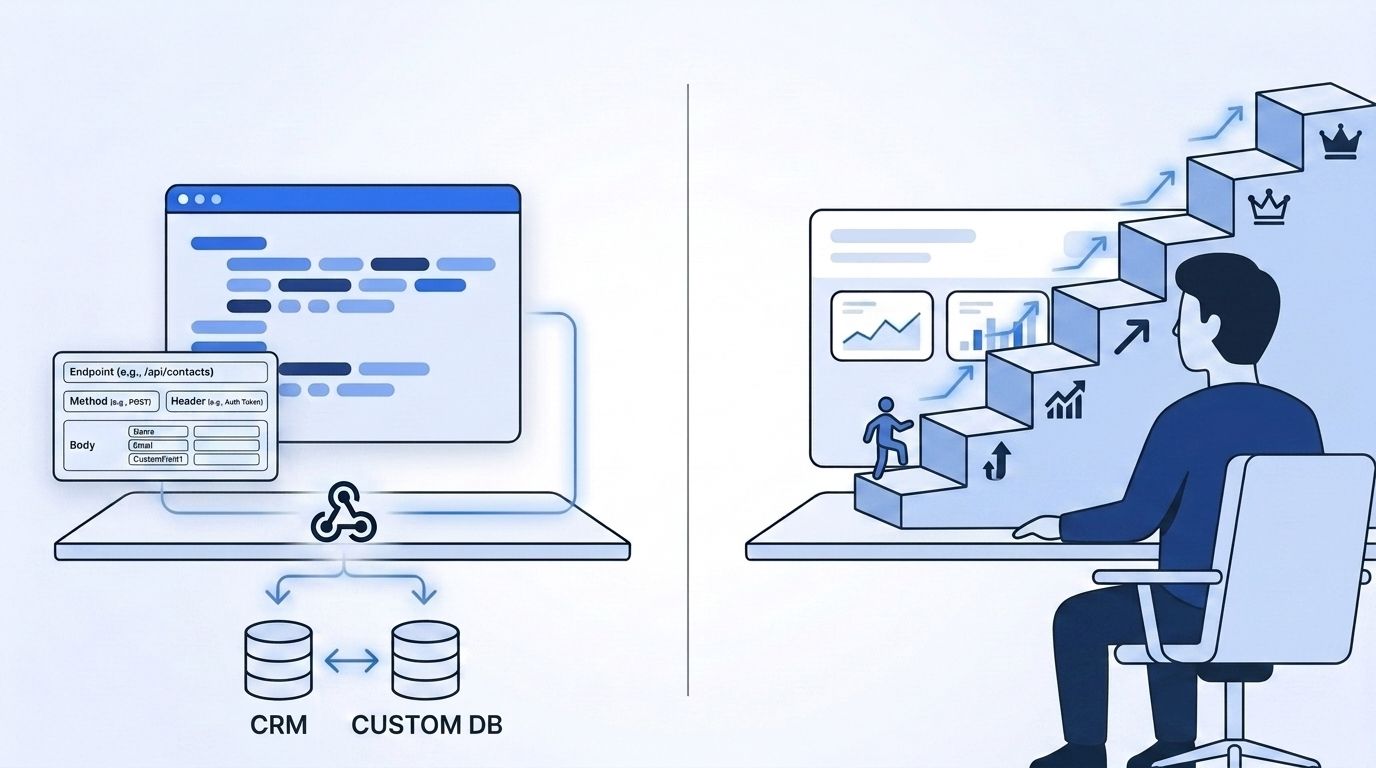
Hiring a GTM engineer isn't free, though. Median posted GTM Engineer salary sits around $127,500, with in-house roles trending closer to $135K and a broader market range of $132K-$241K depending on seniority and scope (Apollo, "What Do GTM Engineer Jobs Pay in 2026?," February 2026). That's the real cost of choosing API-first — you're not paying a per-seat license, you're paying a salary. Verdict: UI-first wins if you have no engineering budget; API-first wins once you can justify a builder headcount.
Pricing and Total Cost of Ownership
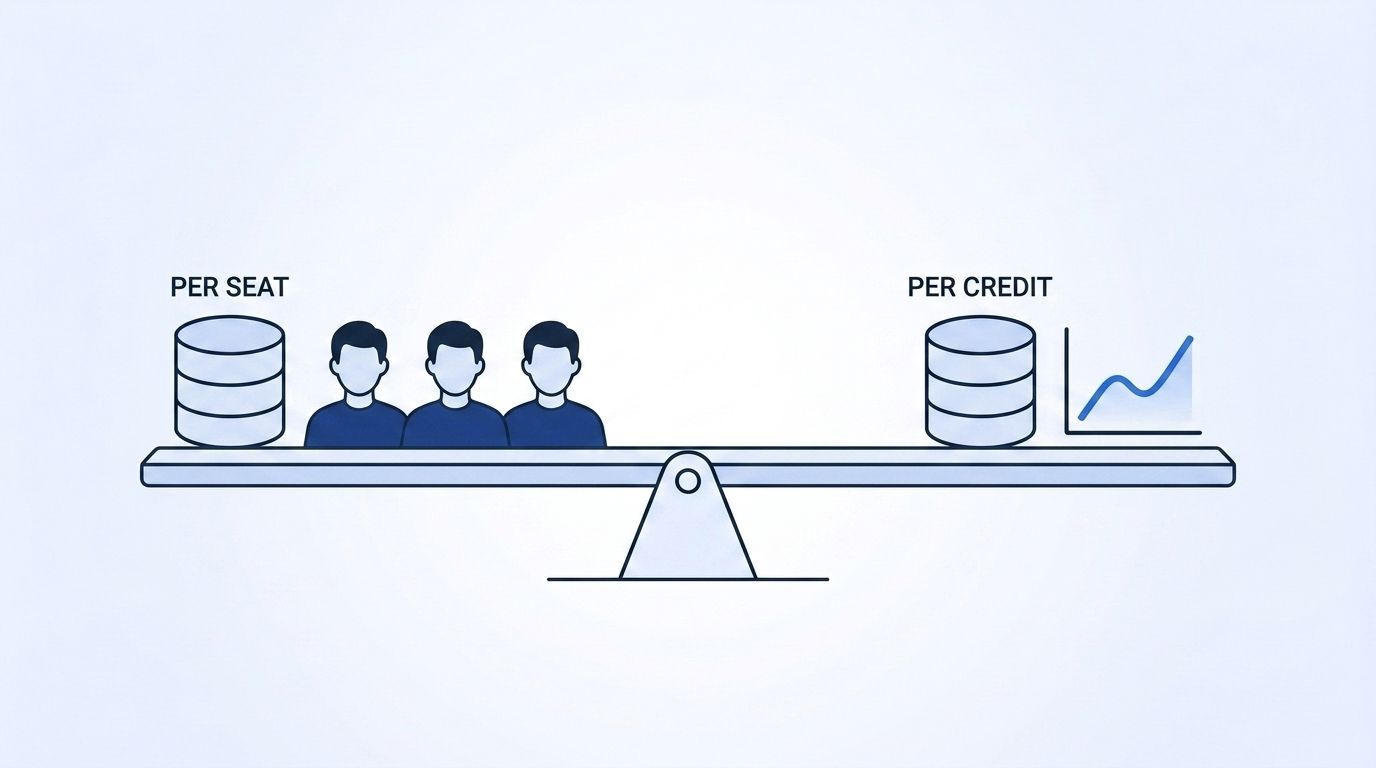
Neither model is cheaper in the abstract — the cost just shows up in a different line item. UI-first tools charge per seat, so cost scales with headcount regardless of usage. API-first tools typically charge per credit or per call, so cost scales with volume regardless of team size, which is why pay-as-you-go pricing tends to favor lean teams running high-volume workflows over large teams running light ones.
| Cost Factor | API-First Tools | UI-First Tools |
|---|---|---|
| Direct tool cost | Usage-based (per credit/call), scales with volume | Per-seat license, scales with headcount |
| Hidden cost | Engineering salary to build and maintain ($127K-$135K median for a GTM engineer) | Vendor lock-in on unsupported integrations and roadmap delays |
| Scaling pattern | Cost grows with data volume, not team size | Cost grows with headcount, not usage |
| Best fit | High-volume, lean teams | Large teams, standardized processes |
The hidden cost on the API-first side is the builder's salary — that $127,500-$135K median GTM engineer isn't a line item most UI-first budgets carry. The hidden cost on the UI-first side is less visible but just as real: the workaround hours your team spends every time a needed field or trigger isn't in the vendor's connector library. Verdict: API-first wins on unit economics at scale; UI-first wins on predictable, low-risk budgeting for smaller teams.
Who Should Prioritize API-First vs. UI-First?
Solo RevOps admins with no engineering support: Choose UI-first. You need something live this week, and a per-seat tool with pre-built connectors gets you there without writing a line of code.
Teams with a dedicated GTM engineer or developer: Choose API-first. You already carry the salary cost that makes custom-built workflows pay off, and you'll want the Signal API or similar endpoints to build automation your UI-first stack can't replicate.
Teams experimenting with agentic AI or AI SDRs: Choose API-first, full stop. Screen-scraping a UI to fake human interaction is a brittle foundation for anything autonomous — an agent needs an endpoint, not a dashboard.
Hybrid teams: Most GTM orgs end up running both — a UI-first platform for standardized rep workflows, and an API-first layer underneath for the custom logic, enrichment, and agent-driven automation the UI tool can't handle. If you're not sure where to start, Datamagnet's Quickstart walks through generating an API key and making your first call in minutes.
Frequently Asked Questions
Is API-first always better than UI-first for sales tools?
No. API-first wins on integration depth, AI-agent readiness, and cost-at-scale, but UI-first wins on setup speed and accessibility for non-technical teams. Teams with no engineering capacity and a standard workflow are usually better served by a UI-first tool, at least until scale or automation needs justify the build.
Can GTM engineers use API-first and UI-first tools together?
Yes, and most do. A common pattern pairs a UI-first platform like Outreach or Salesloft for rep-facing sequences with an API-first layer — often built on Datamagnet's endpoints or a tool like Clay — for enrichment, custom scoring, and triggers the UI tool can't natively support.
How much coding skill do you need to work with API-first sales tools?
Enough to read documentation, handle authentication, and write basic scripts — 38% of GTM Engineering job postings explicitly require SQL or Python (Bloomberry, 2025-2026). You don't need a full software engineering background, but you do need someone comfortable outside a point-and-click interface.
Do API-first tools cost more than UI-first tools?
It depends on volume and team size. API-first tools typically bill per credit or call, which can be cheaper at high volume with a lean team, but you also carry the cost of a builder — median GTM engineer salary runs $127,500-$135K (Apollo, 2026). UI-first tools bill per seat, which is more predictable but scales with headcount, not usage.
Is API-first sales tooling still worth building in 2026 given AI agents are getting better at using UIs?
Yes — agentic AI adoption in B2B sales sits at just 24% today (Deloitte Digital, February 2026), and the agents driving that adoption overwhelmingly call documented endpoints rather than simulate clicks. A webhook-driven, API-first foundation remains the more reliable base for agentic workflows for the foreseeable future.
The Verdict
| Category | Winner |
|---|---|
| Integration Depth | API-First |
| Speed to First Value | UI-First |
| Agentic AI Readiness | API-First |
| Team & Hiring Fit | UI-First (short-term), API-First (long-term) |
| Pricing at Scale | API-First |
| Overall | API-First for scale and automation; UI-First for speed and small teams |
There's no universal winner — only a better fit for where your team is right now. If you're a lean team with no engineering support and a standard sales process, a UI-first platform will get you live faster than any API integration project. If you're building custom workflows, layering in agentic AI, or scaling past what pre-built connectors can handle, the 205% year-over-year growth in GTM engineering hiring tells you where the rest of the market is headed.
Start by auditing where your current stack is already hitting connector limits — that's your clearest signal for where an API-first build pays for itself. For a hands-on starting point, see the Datamagnet API documentation to explore what an API-first data layer looks like in practice.
