
Disclosure: This article is published by Datamagnet. Vendor claims are self-reported unless otherwise noted.
Alternatives to Traditional B2B Database Providers: Real-Time APIs vs. Static Databases (2026)
Looking for alternatives to traditional B2B database providers usually means one thing: you got burned by stale data. Static databases like ZoomInfo and Dun & Bradstreet compile huge, pre-built files of contact records, while real-time API providers fetch data live at the moment you make a request. Neither model wins every category — the right pick depends on what you're actually trying to do.
TL;DR
- Static B2B databases (ZoomInfo, D&B, Apollo) still win on breadth, phone number coverage, and bundled intent data.
- Real-time APIs fetch data at request time, which avoids the 22.5%-70% annual decay rates static contact data can hit (ZoomInfo, 2026).
- 76% of organizations say less than half their CRM data is accurate and complete (Validity, 2025).
- Pricing models differ sharply: seat-based annual contracts for most static vendors vs. usage-based, pay-as-you-go for most real-time APIs.
- There's no single "best" alternative — match the model to whether you need broad prospecting lists or live, point-in-time verification.
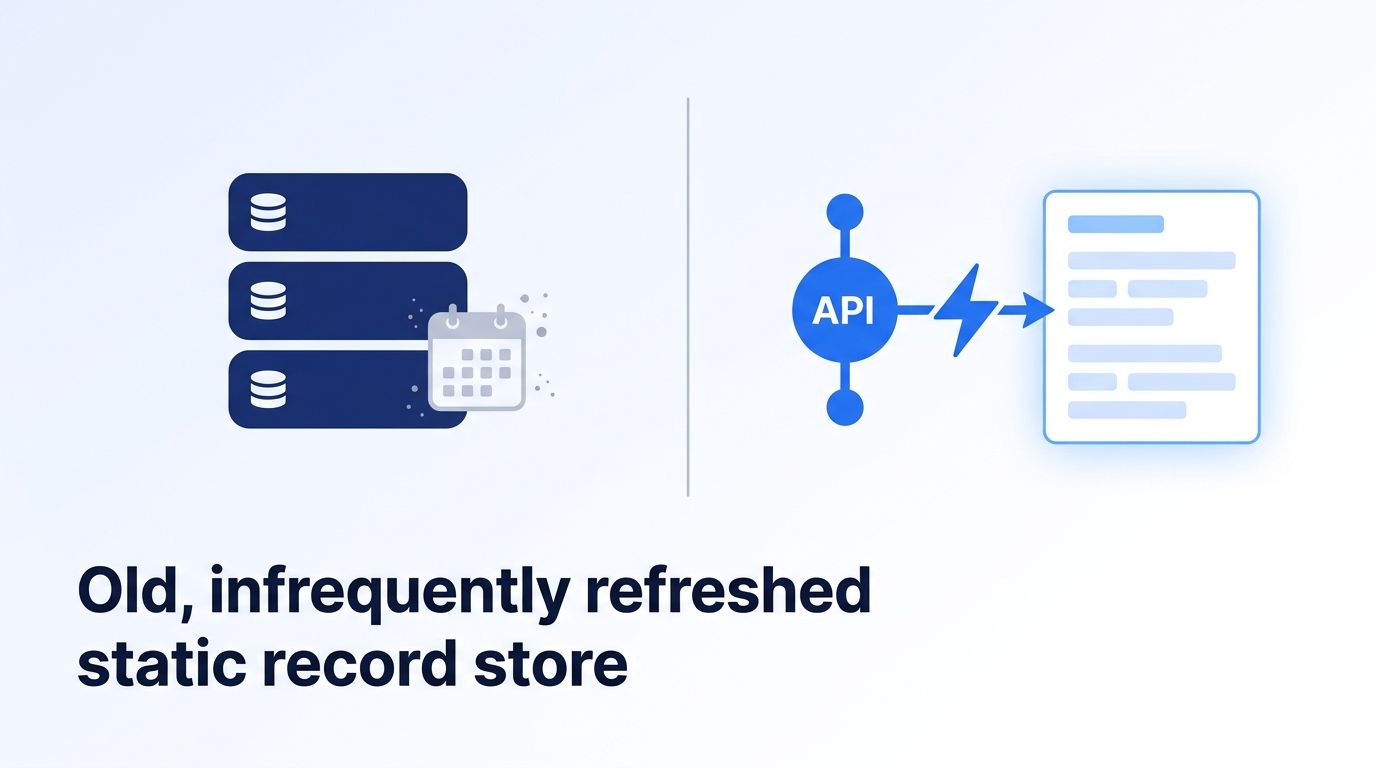
What's the Difference Between a Static B2B Database and a Real-Time API?
A static database is a pre-built file of contact and company records, refreshed on a schedule set by the vendor — daily, weekly, or monthly. A real-time API fetches and structures data at the exact moment you send a request, so there's no waiting for the next scheduled refresh cycle.
That difference sounds small until you map it onto how each model breaks. A static database is only as fresh as its last refresh job, and every record between refreshes is aging on its own clock. Both models rely on the same underlying match-and-append process to build a contact or company record — the delivery timing is where they diverge.
Static vendors also store what they've already collected, so they can answer "show me every VP of Sales in fintech" instantly from a warehouse. A real-time API can't browse a file that doesn't exist yet — it has to go get the record you asked for. That's a real constraint, and it's worth naming upfront instead of glossing over it.
Where Do Static Databases Like ZoomInfo and D&B Still Win?
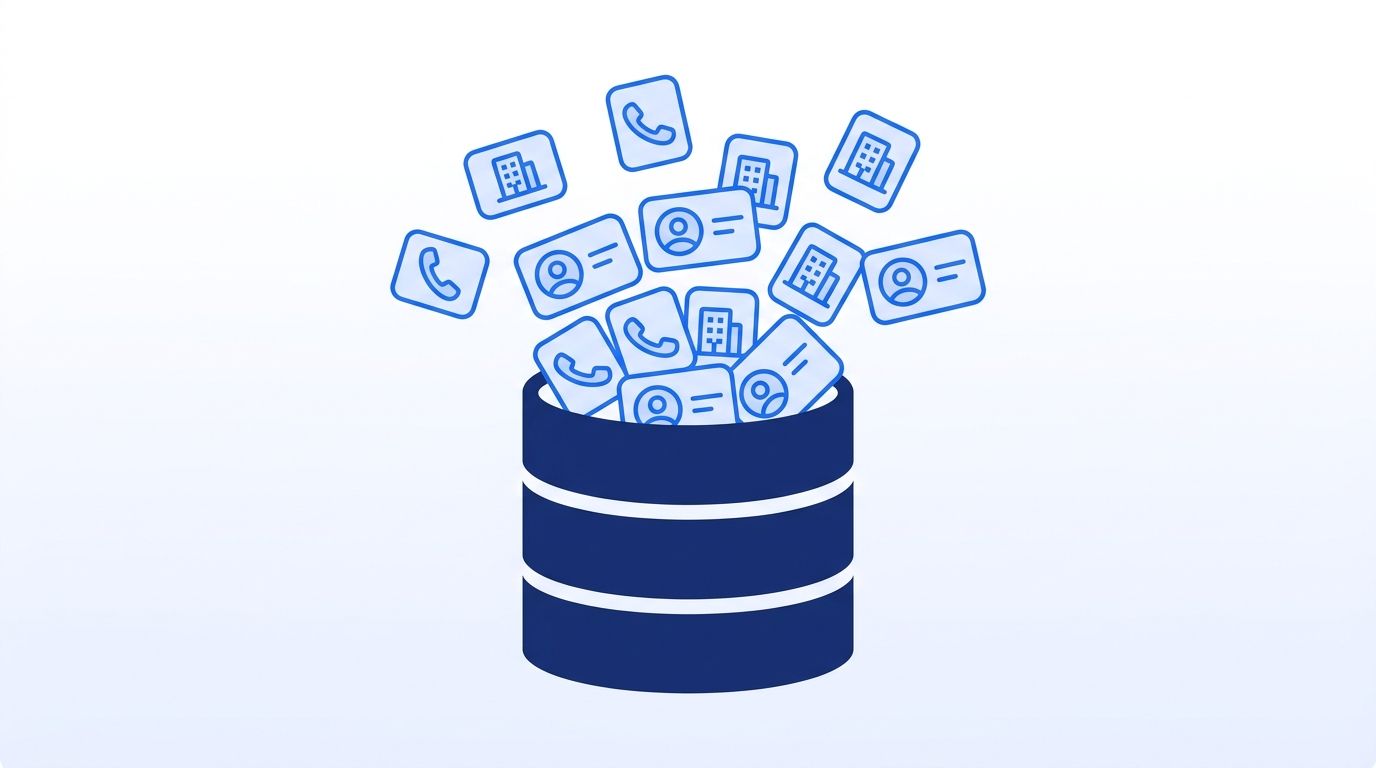
Static databases win on breadth, phone number coverage, and bundled third-party intent data — three things that take years of infrastructure to build and that a single live API call can't replicate. If your use case depends on any of those three, a static database is still the honest recommendation.
<!-- [UNIQUE INSIGHT] -->Breadth is the clearest advantage. ZoomInfo and D&B have spent years running phone-verification teams and licensing intent-data feeds across the open web, building record counts a request-time API simply can't match with one lookup. That scale is a genuine moat, not marketing — it's the reason "just switch to an API" isn't a universal answer.
Phone numbers specifically are a weak spot for most real-time, LinkedIn-based APIs, including ours. Direct-dial data requires a dedicated verification operation most API-first vendors haven't built, and haven't claimed to. Intent data is similar: static vendors bundle licensed, web-wide browsing signals that go well beyond what a single social platform's engagement data can show.
| Data type | Static databases (ZoomInfo, D&B, Apollo) | Real-time APIs (Datamagnet and similar) |
|---|---|---|
| Direct-dial phone numbers | Strong — dedicated verification teams and years of compiled data | Weak — most real-time LinkedIn-based APIs don't verify phone numbers at scale |
| Third-party intent data | Strong — licensed, web-wide browsing and buying signals | Narrower — usually limited to platform-specific engagement signals |
| Record breadth/volume | Strong — hundreds of millions of pre-compiled global records | Scoped — returns what you request, not a browsable warehouse |
| Point-in-time freshness | Weaker — accurate only as of the last refresh cycle | Strong — data reflects the moment of the request |
What Do Real-Time API Providers Do Differently?
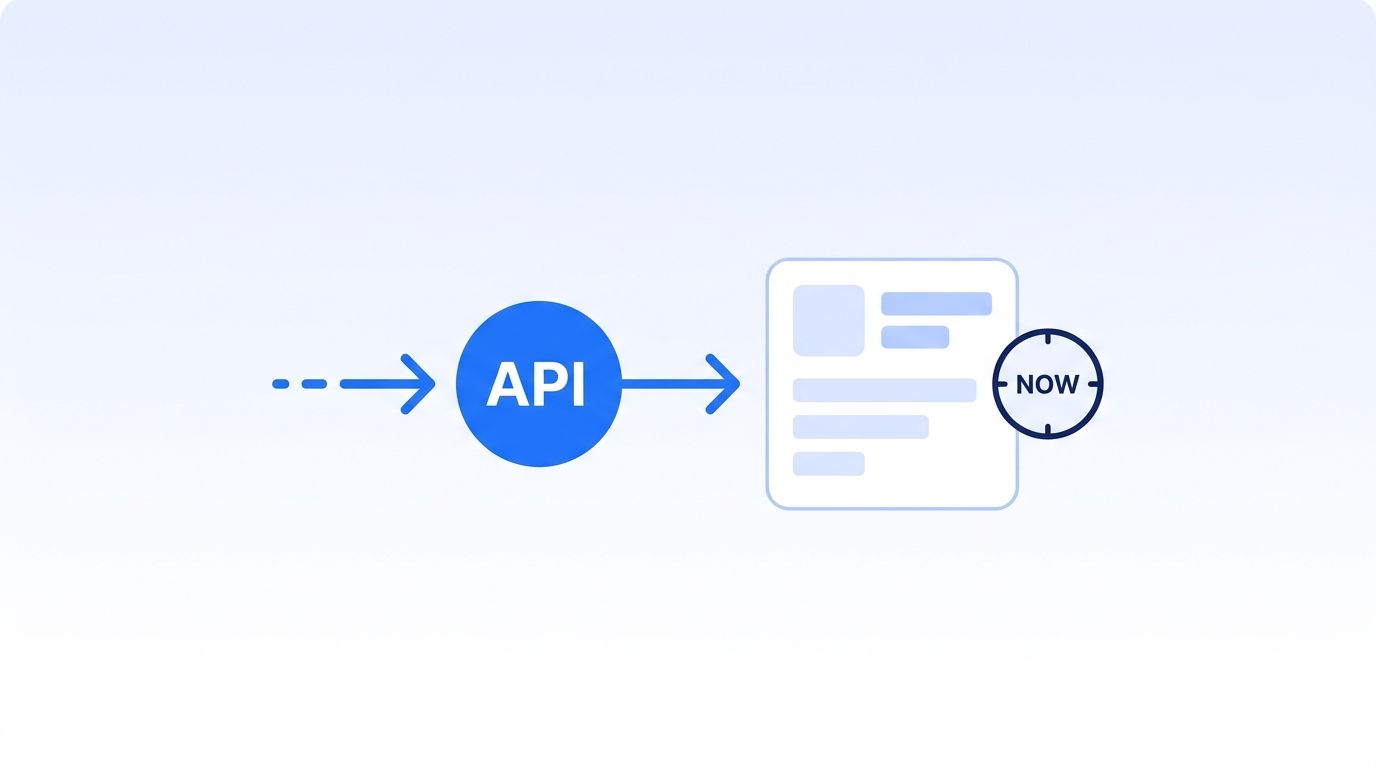
Real-time API providers skip the storage step entirely — they fetch structured data straight from the source at request time, so what you get back reflects that exact moment rather than a batch job from last week or last month. That trade removes decay risk but narrows how much you can query in bulk without making many individual calls.
In practice, this looks like sending a LinkedIn URL to an endpoint and getting back structured JSON on the spot. Datamagnet's Company Profile and People Profile endpoints work this way — no file to store, dedupe, or refresh on your end. For prospecting by criteria rather than by URL, the ICP People Search endpoint filters live by job title, seniority, and company instead of querying a static index.
Most real-time vendors, Datamagnet included, price this by the request rather than by the seat. That tracks with a broader shift in B2B software: 85% of surveyed SaaS companies (n=100) have adopted usage-based or consumption pricing in some form, and 77% of the largest software companies now use it (Metronome and Greyhound Capital, 2025). Pay-per-call pricing means you're never paying for records you never touch.
Static Databases vs. Real-Time APIs: The Full Trade-Off Table
Neither model wins across the board — static databases lead on phone data, intent data, and breadth, while real-time APIs lead on freshness, integration effort, and pricing flexibility. The right choice depends on whether your workflow needs a browsable warehouse or a live, point-in-time answer.
| Criterion | Static databases (ZoomInfo, D&B, Apollo) | Real-time APIs (Datamagnet, EnrichLayer) |
|---|---|---|
| Data freshness | Accurate as of last refresh; contact data can decay 22.5%-70%/year depending on the field (ZoomInfo, 2026) | Fetched at request time; no refresh-cycle decay window |
| Phone number coverage | Wins — dedicated verification infrastructure | Weak — not built for direct-dial data |
| Third-party intent data | Wins — licensed, web-wide signals | Narrower — platform-specific engagement signals only |
| Record breadth | Wins — hundreds of millions of pre-compiled records | Scoped to what's queried per request |
| Pricing model | Mostly seat-based, annual contracts | Mostly usage-based, pay-as-you-go |
| Integration effort | You store, dedupe, and refresh files yourself | Single API call returns structured JSON, no pipeline |
| Best fit | Broad prospecting lists, direct-dial outbound, model training | Point-in-time verification, live CRM enrichment, ABM personalization |
Sources: ZoomInfo, B2B Data Decay: Rates, Costs, and How to Stop It, retrieved 2026-09-30; Metronome and Greyhound Capital, State of Usage-Based Pricing 2025, retrieved 2026-09-30.
How Much Does Stale Contact Data Actually Cost Sales Teams?
Stale contact data costs sales teams pipeline, not just annoyance. In 2026, ZoomInfo's own data-quality research puts B2B contact decay at 22.5%-70% a year depending on the field, with email addresses decaying roughly 3.6% a month (ZoomInfo, 2026). That math runs against you every single day a database sits unrefreshed.
The CRM-level evidence backs this up. In a 2025 survey of 602 CRM users and admins across the US, UK, and Australia, 76% of organizations said less than half of their CRM data was accurate and complete, and 37% reported direct revenue loss tied to poor data quality (Validity, The State of CRM Data Management in 2025, 2025).
<!-- [UNIQUE INSIGHT] -->Layer that decay rate onto how often people actually change jobs, and the problem compounds. Median employee tenure sat at 4.1 years in January 2026, up slightly from 3.9 years in January 2024 (U.S. Bureau of Labor Statistics, Employee Tenure Summary, 2026). Job changes are the single biggest driver of contact data going stale — a title, email, or org chart position that was correct at purchase time won't stay correct for four years.
Isn't that the whole point of buying a database in the first place — so you don't have to think about this? Not quite. A file bought once and refreshed monthly still drifts out of sync with reality between refreshes, which is exactly the gap real-time lookups are built to close.
Which Real-Time API Alternatives Should You Consider?
There isn't one "best" real-time alternative to a static B2B database — the right pick depends on whether you need broad LinkedIn coverage, bulk file exports, or a narrow, low-cost lookup tool. Here's an honest, vendor-by-vendor breakdown, alphabetical rather than ranked.
| Vendor | Model | Data scope | Best fit | Where it's weaker |
|---|---|---|---|---|
| Bright Data | DIY scraping infrastructure, real-time | Broad scraping toolkit across many sites, not LinkedIn-specific | Teams with engineering resources to build custom collectors | No purpose-built B2B endpoints out of the box |
| Coresignal | Hybrid — real-time API plus bulk datasets | Live API and periodically-refreshed bulk files | Data science and model training at volume | Bulk-file side reintroduces decay between refreshes |
| Datamagnet | Real-time API, request-time LinkedIn data | Company, People, ICP Search, and engagement-signal endpoints | GTM teams needing live LinkedIn firmographics plus signals | No direct-dial phone data, no third-party intent feed |
| EnrichLayer (formerly Proxycurl) | Real-time API | Transparent per-credit pricing, LinkedIn-based enrichment | Developers migrating off a sunset Proxycurl integration | Narrower endpoint set than full-database vendors |
| People Data Labs | Static/bulk database with API access layer | Multi-billion-record static database | Large, one-time enrichment at scale | Underlying records still age between refresh cycles |
| ScrapIn | Real-time API | Live LinkedIn profile and company lookups | Simple, single-record live lookups | Lacks the search and signal breadth of larger platforms |
For a deeper side-by-side, see our full Datamagnet vs. ZoomInfo comparison or Datamagnet vs. Coresignal comparison — both walk through search, signals, and pricing beyond what fits in a summary table.
Which Model Fits Your Team?
Pick a static database if your team runs high-volume outbound that depends on direct-dial phone numbers or licensed intent data, or if you're building a one-time dataset for analysis. Pick a real-time API if you need live, point-in-time accuracy — CRM enrichment on record creation, ABM personalization, or checking whether a contact is still at that company today.
The market is shifting toward the request-time model. The global sales intelligence market was valued at $4.85 billion in 2025 and is projected to reach $12.45 billion by 2034, an 11.10% CAGR (Fortune Business Insights, Sales Intelligence Market Size, Share & Forecast, 2026). That growth reflects both models, but pay-as-you-go, API-first vendors are capturing a growing share of it.
A hybrid approach is common in practice: keep a static database for broad prospecting and phone coverage, and layer in a real-time API for CRM records that need to stay accurate day to day. Datamagnet's pricing page shows what usage-based access to live LinkedIn data costs if you want to test that layer without a seat contract.
Frequently Asked Questions
What's the main difference between a static B2B database and a real-time API?
A static database is a pre-built file refreshed on a schedule — daily, weekly, or monthly. A real-time API fetches and structures data at the moment of the request, so it reflects current conditions rather than the last refresh cycle, but it can't browse a warehouse the way a static file can.
Is ZoomInfo or D&B better than a real-time API for phone numbers?
Yes, for direct-dial phone coverage specifically. Static vendors like ZoomInfo and D&B have built dedicated phone-verification operations over years, which most real-time, LinkedIn-based APIs haven't replicated. If direct-dial calling is central to your outbound motion, a static database is still the stronger fit.
How much does B2B contact data decay each year?
ZoomInfo's own 2026 data-quality research estimates B2B contact data decays 22.5%-70% a year depending on the field, with email addresses decaying roughly 3.6% a month (ZoomInfo, 2026). That's the core argument for request-time lookups over a periodically-refreshed file.
Are real-time APIs more expensive than static databases?
It depends on volume. Static databases typically use seat-based annual contracts, while real-time APIs usually bill per request. Usage-based pricing is now standard across B2B SaaS — 85% of surveyed companies use some form of it (Metronome and Greyhound Capital, 2025) — which can be cheaper for teams that don't need bulk volume.
Which is the best alternative to ZoomInfo or D&B?
There's no single best alternative — it depends on what you're replacing ZoomInfo or D&B for. Bright Data and Coresignal fit teams needing bulk scraping or datasets; EnrichLayer, ScrapIn, and Datamagnet fit teams needing live, request-time LinkedIn data. None of them match a static database's phone or intent-data coverage yet.
Sources
- U.S. Bureau of Labor Statistics, Employee Tenure Summary, retrieved 2026-09-30, https://www.bls.gov/news.release/tenure.nr0.htm
- U.S. Bureau of Labor Statistics, Job Openings and Labor Turnover Survey (JOLTS) News Release, retrieved 2026-09-30, https://www.bls.gov/news.release/jolts.nr0.htm
- Validity, The State of CRM Data Management in 2025, retrieved 2026-09-30, https://www.validity.com/resource-center/the-state-of-crm-data-management-in-2025/
- ZoomInfo, B2B Data Decay: Rates, Costs, and How to Stop It, retrieved 2026-09-30, https://pipeline.zoominfo.com/marketing/b2b-data-decay
- Fortune Business Insights, Sales Intelligence Market Size, Share & Forecast, retrieved 2026-09-30, https://www.fortunebusinessinsights.com/sales-intelligence-market-109103
- Metronome and Greyhound Capital, State of Usage-Based Pricing 2025, retrieved 2026-09-30, https://metronome.com/state-of-usage-based-pricing-2025
